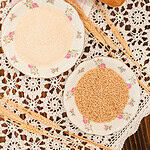
Bread Flour Blend Using Fresh Milled Flour
Learn how to mill and sift hard red, hard white, or a blend of wheat berries to make the equivalent of 1 cup of bread flour. This fresh, high-protein flour is perfect for sourdough, yeast breads, and hearty baking.
Servings: 1 cup of Bread Flour
Equipment
- 1 Grain Mill
- 1 #40 or #50 Sieve
- 1 Digital kitchen scale
- 1 Whisk
- 1 Measuring Cups/spoons
- 1 Large mixing bowl
- 1 Air Tight Container *Freezer Safe
Ingredients
Sifted Bread FLour
- 90 grams Hard Red Wheat Berries you will loss 20% - 30%weight by shifting you may have to mill more than 90 grams depending on your wheat.
- 90 grams Hard White Wheat Berries You will lose 20% - 30%weight by shifting. You may have to mill more than 90 grams, depending on your wheat.
Unsifted Bread Flour
- 60 grams Hard Red Wheat Berries
- 60 grams Hard White Wheat Berries
Instructions
Sifted Bread Flour Blend
- Mill the wheat berries – Measure out 180g-200g (about 1 1/2 cup) of hard red, hard white, or a 50/50 blend of wheat berries. Run them through your grain mill on the finest setting to create flour with the right protein content for bread baking.
- Sift the flour – Pass the freshly milled flour through a #40 or #50 sieve. This removes the largest bran and germ particles, giving you a lighter flour that behaves more like store-bought bread flour.
- Weigh the sifted flour – Collect the sifted flour and weigh out 120 g. This is the equivalent of 1 cup of store-bought bread flour and about 1 ¼ cups of fresh flour by volume.
- Save the sifted-out bran – Don’t throw away the bran and germ! Store them separately to use in pancakes, muffins, or for adding back into rustic loaves.
- Use or store immediately – Fresh flour can lose nutrients quickly. Use it right away in bread, sourdough, or yeast recipes, or store in an airtight container in the freezer for best freshness.
Unsifted Bread Flour Blend
- Mill the wheat berries – Measure out 120 g (about ⅔ cup) of hard red, hard white, or a 50/50 blend of wheat berries. Run them through your grain mill on the finest setting to create flour with the right protein content for bread baking.
- Skip sifting – Since you are keeping the bran and germ, there is no need to sift. Your flour will be denser, heartier, and higher in nutrition than sifted bread flour.
- Weigh the flour – Collect the flour and weigh out 120 g. This equals 1 cup of store-bought bread flour and about 1 ¼ cups of freshly milled flour by volume.
- Use or store immediately – Fresh flour can lose nutrients quickly. Use it right away in bread, sourdough, or yeast recipes, or store in an airtight container in the freezer for best freshness.
Notes
Understand protein content — Bread flour is strong because it has more protein (gluten potential). That’s why fresh-milled hard wheat works beautifully in yeast breads and sourdough.
Expect some loss — You’ll lose about 20–30% of your starting weight when sifting. That’s normal, and why you begin with more wheat berries than the final flour amount you need.
Don’t panic about sieves — If you only have a #40, that’s fine. A #50 sieve just makes the flour a little finer. Both work for bread flour and are worth experimenting with.
Volume vs. weight — Remember, 1 cup of store flour = 120 g, but it takes about 1 ¼ cups of fresh flour to equal the same weight. Always trust your scale over measuring cups if you can.
Plan ahead for recipes — Milling takes just a few minutes, but it’s easy to forget to start early. Weigh and mill your wheat before you begin mixing your dough so the flour is ready to go.
Flavor develops over time — Fresh flour has a cheery, nutty flavor that improves breads. If you’ve only used store flour before, you’ll notice your loaves taste fuller and more alive.
Blending is an option — Many bakers like half hard red, half hard white. It gives you both good gluten strength and a balanced flavor profile without being too strong or too mild.