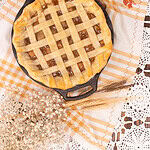
Homemade Pie Crust
Make a flaky pie crust with this simple, no fail recipe. Using the lobster claw method to create flaky layers that will have your guest and loved ones requesting your recipe!
Servings: 2 X 9 inch Pie Crust
Calories: 1366kcal
Equipment
- 1 Medium Size Mixing Bowl
- 1 Pastry Cutter, Food Processor or Cheese grater *to grate cold butter
- 1 Rolling Pin
- 1 Pie Pan
- 1 Set of Pie Weights
Ingredients
- 2 ½ cups all-purpose flour
- 10 tablespoons salted butter chilled
- ¼ cup vegetable shortening or lard chilled
- 6-10 tablespoons ice cold water
- 1 teaspoon sallt
Instructions
- Mix the dry ingredients: In a large bowl, combine the flour and salt, stirring briefly to distribute the salt evenly.
- Cut in the fats: Add the cold butter and shortening, working them into the flour until the mixture looks coarse with visible, pea-sized pieces. Use a cheese grater to grate into small pieces.
- Coat the Fat with flour using the lobster claw method: To make flaky layers use clean hands to gently rub the mixture between your thumbs and fingers. This helps coat the butter pieces without fully blending them, keeping the dough flaky without overworking it.
- Add the ice water: Sprinkle in ice-cold water one tablespoon at a time, mixing gently until the dough begins to hold together.
- Bring the dough together: Gather the dough lightly with your hands just until it forms a cohesive mass.
- Divide and chill: Divide the dough into two equal portions, shape into discs, wrap well, and refrigerate until firm.
- Prepare the work surface: Lightly flour your surface so the dough rolls without sticking.
- Roll out the dough: Roll one chilled disc into a round about one-eighth inch thick, turning it as you go for even thickness.
- Fit into the pie plate: Ease the dough into the pan, pressing gently into the bottom and sides, then trim the edges.
- Fill or top the pie: Add filling for a single-crust pie, or roll the second disc to use as a top crust.
- Assemble the pie: Place the top crust over the filling, trim, seal, and crimp the edges as desired.
- Pre-bake when needed: For wet fillings, line the crust with parchment and pie weights and par-bake until lightly set before filling.
- Bake the pie: Bake according to your pie recipe until the crust is golden and the filling is bubbling.
- Cool before slicing: Allow the pie to cool fully on a rack so the filling sets and the crust finishes properly.
Video
Notes
- Use the lobster claw method: Rub the butter lightly between your fingers and palms to coat each piece in flour while keeping it cold and intact.
- Measure water carefully: Keep ice cold and add it by the tablespoon so the dough stays chilled throughout mixing.
- Frozen butter works well: Butter can be frozen briefly or overnight, then grated and mixed into cold flour.
- Make ahead if needed: Flour and grated butter can be combined and chilled or frozen until you’re ready to finish the dough.
- Stop mixing early: The dough should hold together when pressed but still look slightly rough.
- Freshly milled flour option: If using freshly milled flour, choose soft white or soft red wheat and sift it through a number 60 sieve to create a fine, cake-flour-like texture suitable for pie crust.
Nutrition
Serving: 29" Pie Shells | Calories: 1366kcal | Carbohydrates: 119g | Protein: 17g | Fat: 91g | Saturated Fat: 50g | Polyunsaturated Fat: 36g | Trans Fat: 2g | Cholesterol: 173mg | Sodium: 467mg | Fiber: 4g