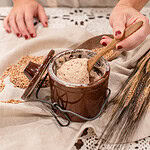
Sourdough Starter with Freshly Milled Flour | Recipe + Tips
A reliable, step-by-step method for making a sourdough starter with freshly milled flour using hard red or hard white wheat. Includes an optional day-one orange-juice kickstart, sifting "hot-soak" guidance, and clear readiness cues, tested in my cottage kitchen since 1999.
Servings: 1 active freshly milled flour sourdough starter
Equipment
- 1 Grain Mill
- 1 Wide Mouth Glass Jar
- 1 Digital kitchen scale
- 1 Wooden spoon or spatula
- 1 Rubber band or tape
- 1 Fine Sieves #50 or #60
Ingredients
Base Ingredients (for every feeding)
- 50 g Freshly milled hard red or hard white wheat flour sifted #50–60 — 50 g per feed
- 50 g Filtered or mineral water — 50 g per feed
- 50 g Fresh-squeezed orange juice optional, Day 1 only — 50 g
- 10-15 g Rye flour* optional only use on days 4-5 in place of part of the flour optional, for sluggish starter, Day 4–5 only — 10–15 g in place of part of the flour
Ingredient Totals (so you know what to mill or buy)
7 day build: ~350 g flour + 350 g water + 50 g orange juice if using
- 50 g Optional* Fresh squeezed orange juice instead of the water
- 350 g Freshly Milled FLour
- 350 g Water
- 10-15 g Rye flour (optional, for sluggish starter, Day 4–5 only) in place of part of the flour
14 day build: ~700 g flour + 700 g water
- 700 g Freshly Milled Flour
- 700 g Water
Instructions
- Day 1: Mix flour and liquid – In a clean jar, combine 50 g sifted freshly milled flour with 50 g filtered water (or orange juice, if using). Stir smooth, scrape down the sides, cover loosely, and rest at room temperature (70–75°F).
- What to expect: A few tiny bubbles or a mild citrus-grain scent if you used juice. Quiet is normal.
- Day 2: Observe and stir – Check for small bubbles or a fruity aroma. If quiet, don’t worry. Stir to add oxygen, scrape the sides, and cover loosely.
- What to expect: Sometimes still calm; sometimes lightly bubbly. Stay the course.
- Days 3–5: Begin feedings – Discard all but 30 g starter. Feed with 50 g flour + 50 g water, stir smooth, mark the level, and cover.
- What to expect: Around Day 3 or 4, you may see a false rise that collapses—this is normal. Keep feeding daily.
- Days 6–7: Build strength – Continue the same routine. If your starter doubles within 4–6 hours, it’s becoming strong—feed twice daily if needed.
- What to expect: More bubbles, a pleasant tang, and a domed top. If sluggish, feed once with a bit of rye flour for a boost.
- When it’s ready – A healthy starter will double reliably, smell clean and tangy, and appear stringy and web-like when lifted with a spoon. With freshly milled flour, this can happen in 5–10 days, though up to 14 is still normal.
Notes
- Hydration Tip: Freshly milled flour absorbs more water than store-bought flour. Aim for a thick pancake-batter texture; add a splash of water if it feels too stiff or dry.
- Sifting vs. Hot Soak: Sifting (#50–60) removes coarse bran for easier rise tracking.
- Prefer 100% grain? Try the Hot Soak Method — pour boiling water over the sifted-off bran, rest 15–30 minutes, cool completely, then mix it back into your starter or dough.
- Kahm Yeast vs. Mold: A thin, smooth white film is kahm yeast (harmless—just skim and keep feeding). Fuzzy or colored growth (pink, orange, green, or black) means mold—discard and restart.
Maintenance Routines
Room-Temperature “On The Countertop” Routine (Daily Bakers): Keep your starter on the counter; feed 1:2:2 by weight once daily (or twice if it rises and falls fast). Use what you need for baking; the rest becomes discard. “Refrigerator” Friendly “THICK STARTER” Routine (Choose Same Day or Next Day Version):- Thick Maintenance Jar: Feed 30 g starter + 150 g flour + 120 g water (1:5:4). Stir smooth, rest 1–2 hours at room temperature, then refrigerate loosely (never seal tightly). This thick starter can rest up to 30 days between feedings.
- Planning Ahead: If you bake several times a week, make enough thick starter at once to cover your upcoming recipes. For example, if you have four bakes that each require 150 g of starter, build about 600 g of thick starter in one batch. Keep it refrigerated and pull from it as needed—using it directly for overnight ferments or early-morning same-day builds.