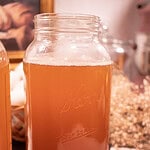
Water Kefir Grains Probiotic Fermented Drink Recipe
Make your own fizzy water kefir probiotic drink! It’s easy, customizable, and packed with gut-boosting benefits. Perfect for healthy hydration!
Servings: 1 half gallon
Calories: 32kcal
Ingredients
- 3 tbsps of cane sugar
- 1 tbsp of unsulphured molasses
- 30 to 32 ounces of room-temperature spring water
- ½ cup of kefir grains
Instructions
- Mix Ingredients: In a glass jar, mix 3 tablespoons of cane sugar and 1 tablespoon of unsulphured molasses with 30-32 ounces of room-temperature spring water. Stir until the sugar is fully dissolved.
- Add Kefir Grains: Add ½ cup of water kefir grains to the jar, making sure they are fully submerged in the sugar water solution.
- Cover the Jar :Cover the jar with a coffee filter or paper towel, and secure it with a rubber band to keep out contaminants.
- Place in Warm Area: Store the jar in a warm area, away from direct sunlight, at a temperature between 68-78°F.
- Ferment for 3-5 Days: Let the mixture ferment for 3-5 days. During this time, the kefir grains will consume the sugar and produce carbon dioxide.
- Check the Fermentation: After 2-3 days, observe the color and taste of the liquid. It should turn from clear to slightly cloudy and have a tart taste.
- Strain the Kefir Grains: Once fermentation is complete, strain the kefir grains from the liquid using a plastic strainer.
Video
Notes
Nutrition
Serving: 1g | Calories: 32kcal | Carbohydrates: 7g | Protein: 1g | Cholesterol: 1mg | Sodium: 66mg | Sugar: 7g