Homemade Beet Kvass
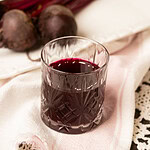
This beet kvass recipe turns raw beets, sea salt, and water into a deep ruby-red fermented drink with an earthy, salty, tangy flavor.
Servings: 15 servings
Equipment
- Half-gallon mason jar
- Coffee filter or fermenting lid
- Rubber band, if using a coffee filter
- Cutting Board
- Sharp knife
- Measuring spoon
- Fine mesh strainer
- Tightly sealed glass jar or bottle, for storage
Ingredients
- 4 –6 medium raw beets peeled and chopped into small pieces
- 2 tablespoons high-quality sea salt
- Filtered or spring water enough to fill the half-gallon jar while leaving 1 inch of headspace
- Optional Flavor Additions
- Fresh ginger
- Orange
- Lime
- Herbs or spices as desired
Instructions
- Prepare the beets – Peel and chop 4–6 medium raw beets into small pieces. If you're using organic beets, you can leave the skins on.
- Fill the jar – Place the chopped beets in a half-gallon mason jar, then add 2 tablespoons of high-quality sea salt.
- Add the water – Pour filtered or spring water over the beets, leaving about 1 inch of space at the top of the jar.
- Cover the jar – Cover it with a fermentation lid or a coffee filter. If you're using a coffee filter, secure it around the jar with a rubber band.
- Let it ferment – Place the jar at room temperature away from direct sunlight and let the beet kvass ferment for 3–4 days.
- Check it daily – Take a look at the surface each day. Skim off any scum or white surface film that develops.
- Strain the kvass – After 3–4 days, strain the liquid from the beets and pour the finished kvass into a clean glass jar.
Notes
Fermentation Tip – Keep the jar at room temperature and away from direct sunlight for the full 3–4 day fermentation period. Check the surface daily as directed in the recipe.
Water and Salt – Use filtered or spring water and a high-quality sea salt. The original recipe suggests Celtic sea salt or pink Himalayan salt as options.
Second Fermentation – For a fizzier kvass, transfer the strained kvass to a tightly sealed glass bottle and leave it at room temperature for another 1–2 days before refrigerating.
Storage – Transfer the finished kvass to a tightly sealed glass jar or bottle and refrigerate for up to several weeks. The cooler temperature slows the fermentation process.