
This post may contain affiliate links. Please read our disclosure policy.
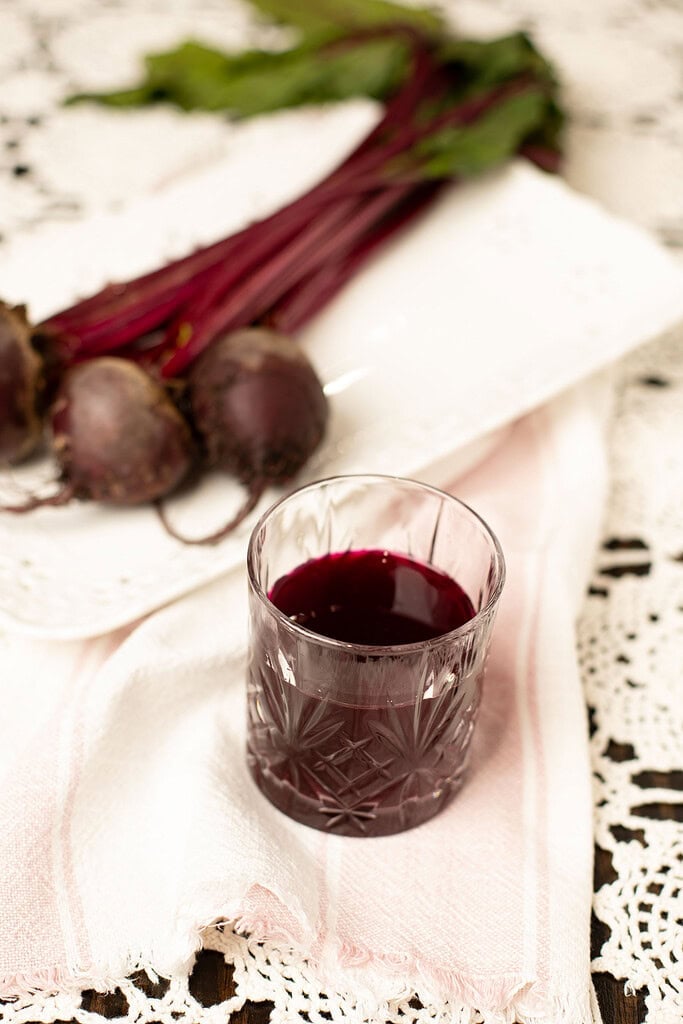
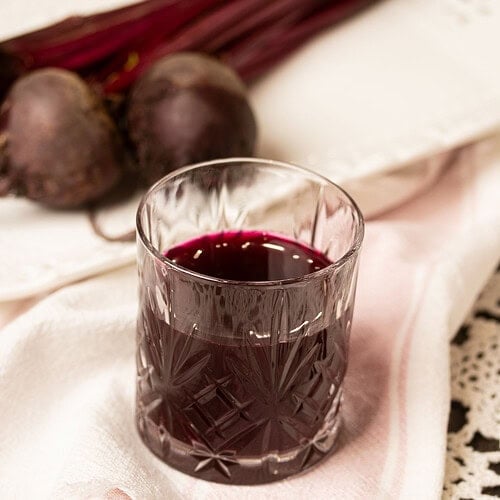
This beet kvass recipe turns raw beets, sea salt, and water into a deep ruby-red fermented drink with an earthy, salty, tangy flavor. It ferments right in a half-gallon mason jar without whey or a separate starter.
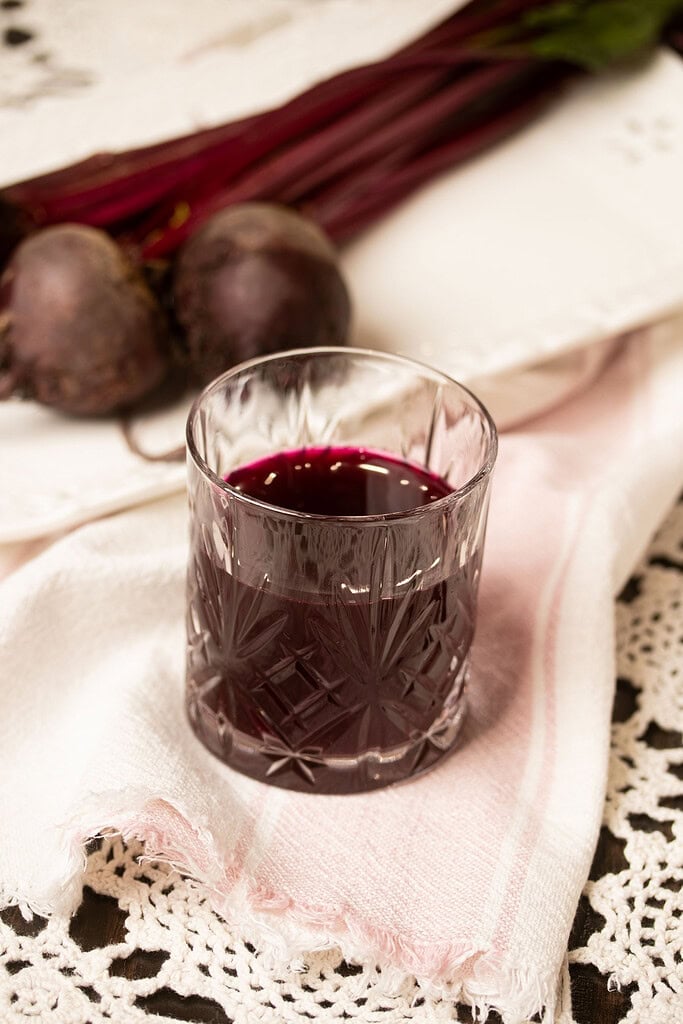
The process is simple and mostly hands-off. Let the beets ferment at room temperature for 3–4 days, then strain the kvass and move it to the refrigerator.
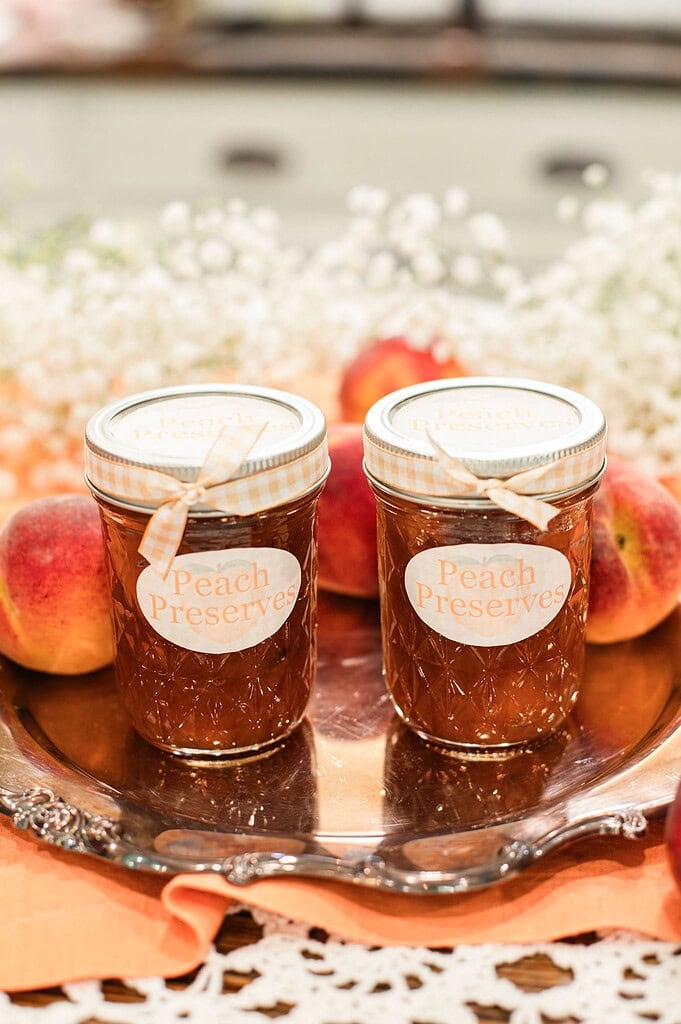
If you enjoy simple ways to preserve seasonal produce at home, you may also like making Peach Preserves Without Pectin. It’s another good recipe to tuck away for preserving season.
Why You’ll Love This Recipe
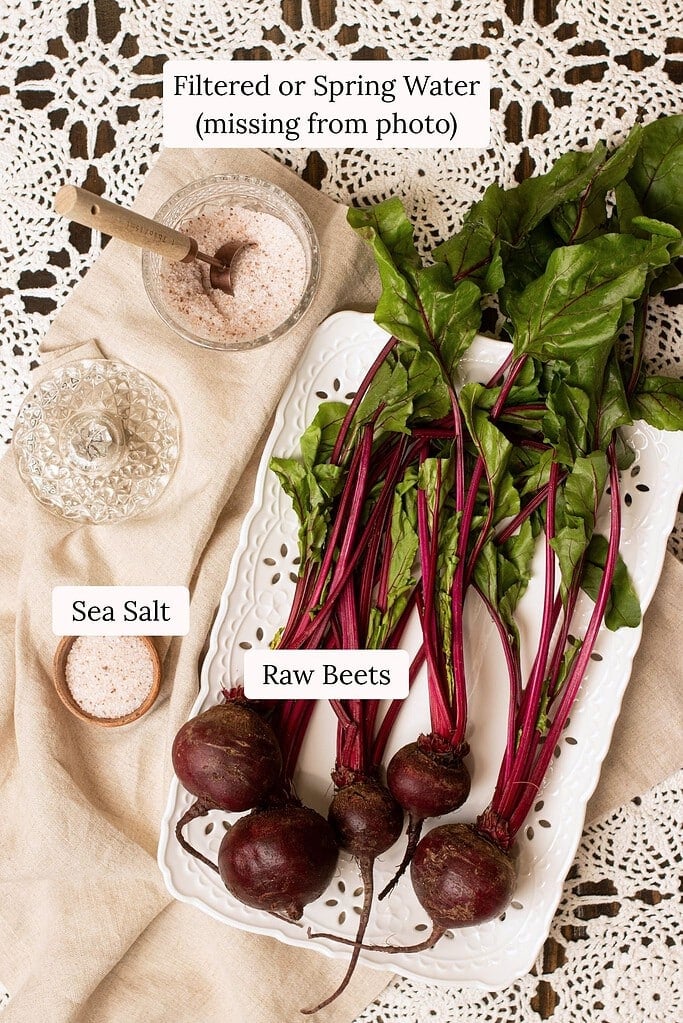
Ingredients To Make This Beet Kvass
Variations & Add-Ins
Emily’s Recipe Tips
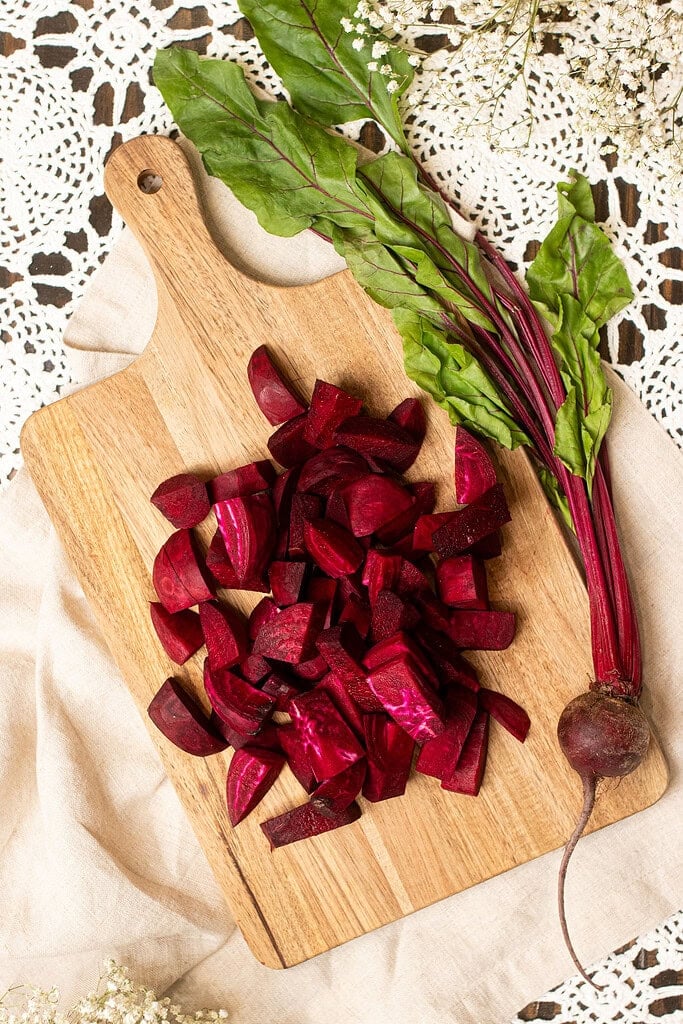
- Cut the beets into small pieces – Chop your beets before adding them to the jar. I like to keep the pieces fairly similar in size, which also makes them easier to strain out later.
- Don’t fill the jar all the way to the top – Leave about 1 inch of headspace after adding the water.
- Keep it out of direct sunlight – Find a spot at room temperature where the jar can sit away from direct sunlight for 3–4 days.
- Take a look at it every day – Check the surface of your kvass while it ferments. For this recipe, I skim off any white surface film that develops.
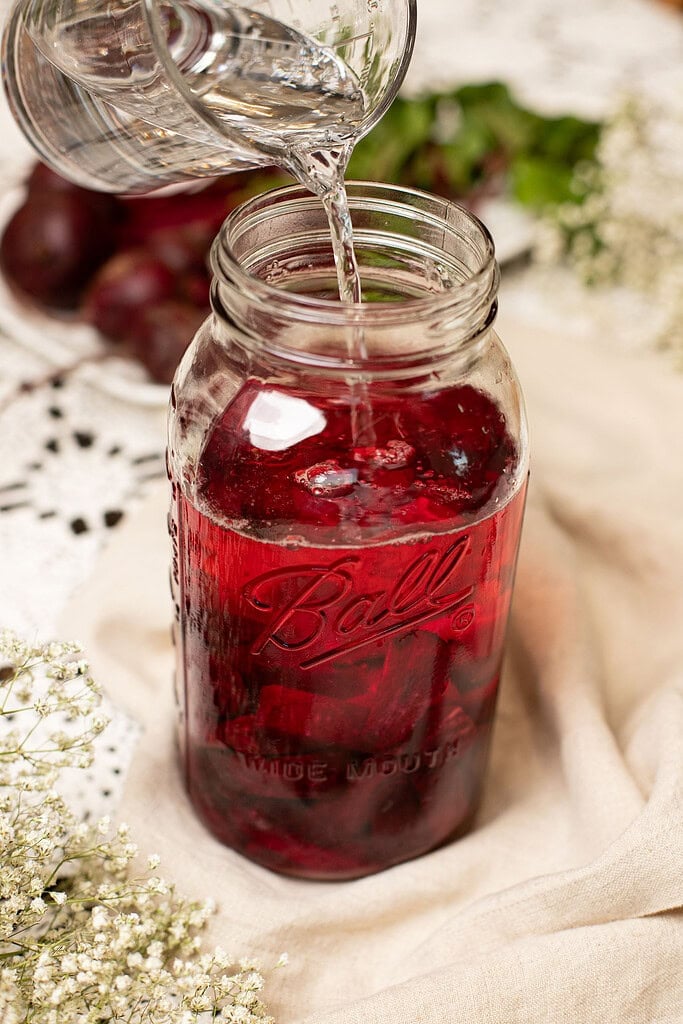
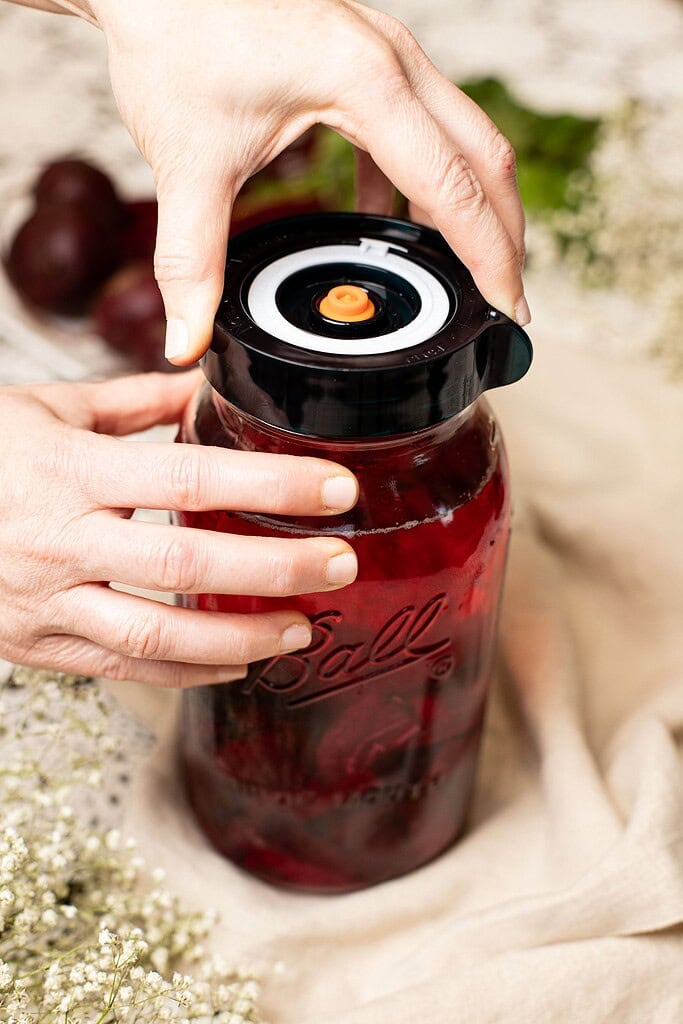
How To Make Homemade Beet Kvass
- Prepare the beets – Peel and chop 4–6 medium raw beets into small pieces. If you’re using organic beets, you can leave the skins on.
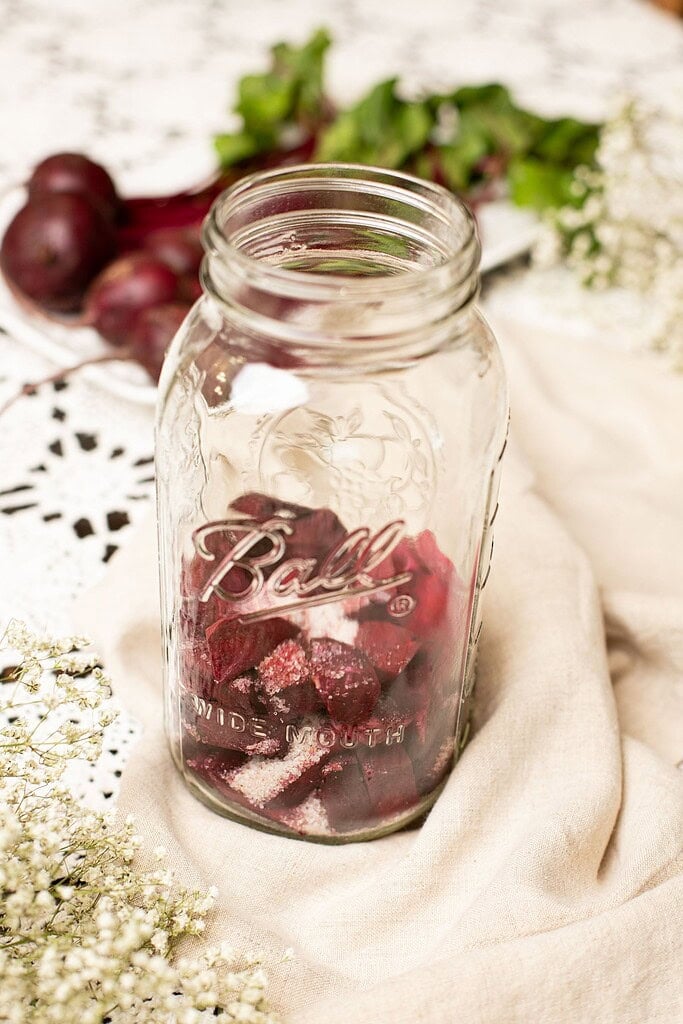
- Fill the jar – Place the chopped beets in a half-gallon mason jar, then add 2 tablespoons of high-quality sea salt.
- Add the water – Pour filtered or spring water over the beets, leaving about 1 inch of space at the top of the jar.
- Cover the jar – Cover it with a fermentation lid or a coffee filter. If you’re using a coffee filter, secure it around the jar with a rubber band.
- Let it ferment – Place the jar at room temperature away from direct sunlight and let the beet kvass ferment for 3–4 days.
- Check it daily – Take a look at the surface each day. Skim off any white surface film that develops.
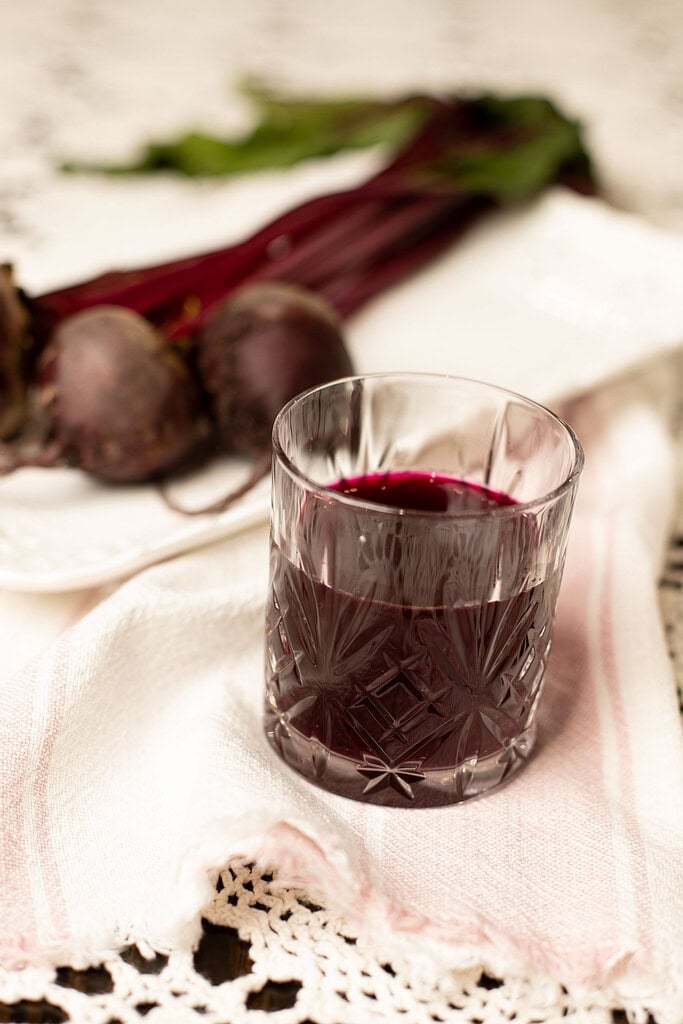
- Strain the kvass – After 3–4 days, strain the liquid from the beets and pour the finished kvass into a clean glass jar.
Storage Suggestions
Ways To Use Beet Kvass
Homemade Beet Kvass FAQs
More Pantry Staples from the Cottage
Join the Cozy Cottage Community Today!
Get from-scratch recipes, seasonal cottage living tips, and cozy cottage living inspiration delivered straight to your inbox.
⭐️ Rate This Recipe
Made this recipe? Leave a star ⭐️ rating below, it means the world to me and helps my recipes get found by more people like you. Tag me on Instagram @themoderndaycottage

If you made this recipe, please leave a comment or question below! I’d love to hear how it turned out and am always happy to help troubleshoot.
Want more from The Cottage? Subscribe here for freshly milled flour, sourdough, and from-scratch recipes, plus slow living inspiration from my cottage straight to your inbox.
You May Also Like

Homemade Beet Kvass
 Prep:10 minutes Total:10 minutes
 Equipment
- Half-gallon mason jar
- Coffee filter or fermenting lid
- Rubber band, if using a coffee filter
- Cutting Board
- Sharp knife
- Measuring spoon
- Fine mesh strainer
- Tightly sealed glass jar or bottle, for storage
Ingredients
- 4 –6 medium raw beets peeled and chopped into small pieces
- 2 tablespoons high-quality sea salt
- Filtered or spring water enough to fill the half-gallon jar while leaving 1 inch of headspace
- Optional Flavor Additions
- Fresh ginger
- Orange
- Lime
- Herbs or spices as desired
Instructions
- Prepare the beets – Peel and chop 4–6 medium raw beets into small pieces. If you're using organic beets, you can leave the skins on.
- Fill the jar – Place the chopped beets in a half-gallon mason jar, then add 2 tablespoons of high-quality sea salt.
- Add the water – Pour filtered or spring water over the beets, leaving about 1 inch of space at the top of the jar.
- Cover the jar – Cover it with a fermentation lid or a coffee filter. If you're using a coffee filter, secure it around the jar with a rubber band.
- Let it ferment – Place the jar at room temperature away from direct sunlight and let the beet kvass ferment for 3–4 days.
- Check it daily – Take a look at the surface each day. Skim off any scum or white surface film that develops.
- Strain the kvass – After 3–4 days, strain the liquid from the beets and pour the finished kvass into a clean glass jar.
Notes

Emily Rider
Home miller since 1999 with fresh-milled flour & sourdough experience. Sharing from-scratch recipes and traditional kitchen skills, rooted in the seasons and inspired by everyday cottage living and seasonal rhythms.