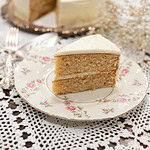
Sourdough Vanilla Cake with Fresh Milled Flour Recipe
This sourdough vanilla cake is soft, moist, and full of rich flavor. Freshly milled flour creates a delicate crumb, while the sourdough starter enhances depth without overpowering sweetness. Each bite is light, buttery, and perfectly balanced, making it ideal for any occasion.
Servings: 1 double layered 9" cake
Calories: 178kcal
Ingredients
- 3 ¾ cups 450g freshly milled soft white wheat flour
- 1 tbsp 14g baking powder (hold if fermenting)
- 1 tsp 6g salt (hold if fermenting)
- 2 cups 400g granulated sugar
- 6 tbsp 85g unsalted butter, softened
- ⅔ cup 150g vegetable oil
- 1 tbsp 13g vanilla extract (hold if fermenting)
- ½ cup 100g sourdough starter
- 6 large 200g egg whites
- 1 cup 240ml whole milk
Instructions
- Mill and sift the flour: Mill soft white wheat berries on the finest setting. Sift with a #60 sieve to remove bran. Weigh 450g of sifted flour.
- Prepare dry ingredients: In a large mixing bowl, whisk together flour, baking powder, and salt (if not fermenting). Set aside.
- Mix wet ingredients: In a stand mixer, cream butter and sugar until pale and fluffy. Add oil, vanilla (if not fermenting), milk, and sourdough starter. Mix until smooth, scraping down the sides.
- Combine the batter: Gradually add dry ingredients to the wet mixture. Stir gently until just combined—don’t overmix.
- Optional ferment: Omit baking powder, salt, and vanilla if fermenting. Cover the batter and rest at room temp 2-4 houurs or refrigeratovernight. Before baking, stir in omitted ingredients.
- Whip the egg whites: In a clean bowl, beat egg whites to stiff peaks. Fold gently into the batter to keep it airy.
- Prepare pans and bake: Preheat to 350°F (175°C). Grease and line two 9” pans. Divide batter, smooth tops, and bake 25–30 minutes or until a cake tester comes out clean. Cool 10 minutes in pans, then transfer to a rack.
- Assemble the cake: Place one layer on a stand, frost, then top with the second layer. Apply a crumb coat, chill 15–30 minutes, then finish frosting.
Notes
• Weigh your flour for consistency – Freshly milled flour is often more absorbent than store-bought, so weighing (450g) ensures accuracy. If using cups, lightly spoon flour in and level—never scoop, as it packs too much flour.
• Always sift your fresh flour – A #60 sieve removes excess bran, giving your cake a lighter, more delicate crumb. Skip this step, and the cake may turn out denser. Save the bran in the freezer for pancakes or muffins.
• Use a bubbly, active starter – For best results, feed your sourdough starter 4–6 hours before baking. A lively starter adds lift and flavor; discard can work, but your crumb may be a little denser.
• Fold gently, don’t overmix – Once the flour is in, stir just until combined. Overmixing builds gluten, which can toughen the cake. If you see dry pockets, fold them in with a spatula instead of mixing further.
• Whip egg whites to stiff peaks – This gives the cake its airy texture. If the peaks fall over, keep whisking. Make sure the bowl is spotless—any grease or yolk will deflate your whites.
• For overnight fermenting – Omit the baking powder, salt, and vanilla extract until the next day. Let the batter rest 2–4 hours at room temp or refrigerate overnight. Add the held ingredients and freshly whipped egg whites just before baking.
• Baking times can vary – Check for doneness around 25 minutes. A toothpick or tester should come out with soft crumbs. If it’s wet, give it a few more minutes and check again.
• Cool completely before frosting – Let the cake sit in the pans for 10 minutes, then move to a wire rack. Frosting too soon will cause slipping and melting.
• Storage tips – Store frosted cake in an airtight container at room temp for up to 3 days. Refrigerate for up to 1 week or freeze unfrosted layers (wrapped well) for up to 3 months.
Nutrition
Serving: 1g | Calories: 178kcal | Carbohydrates: 36g | Protein: 6g | Fat: 1g | Saturated Fat: 0.1g | Polyunsaturated Fat: 0.3g | Monounsaturated Fat: 0.1g | Sodium: 3mg | Potassium: 107mg | Fiber: 2g | Sugar: 1g | Calcium: 10mg | Iron: 1mg