

This sourdough fruitcake recipe is the holiday loaf that is made in our cottage kitchen every November on “Stir it Up Sunday”. Soaked dried fruit, crystallized ginger, citrus zest, and warm Ceylon cinnamon spices come together with a sourdough discard or active starter sponge that gives the finished loaf a depth of flavor.
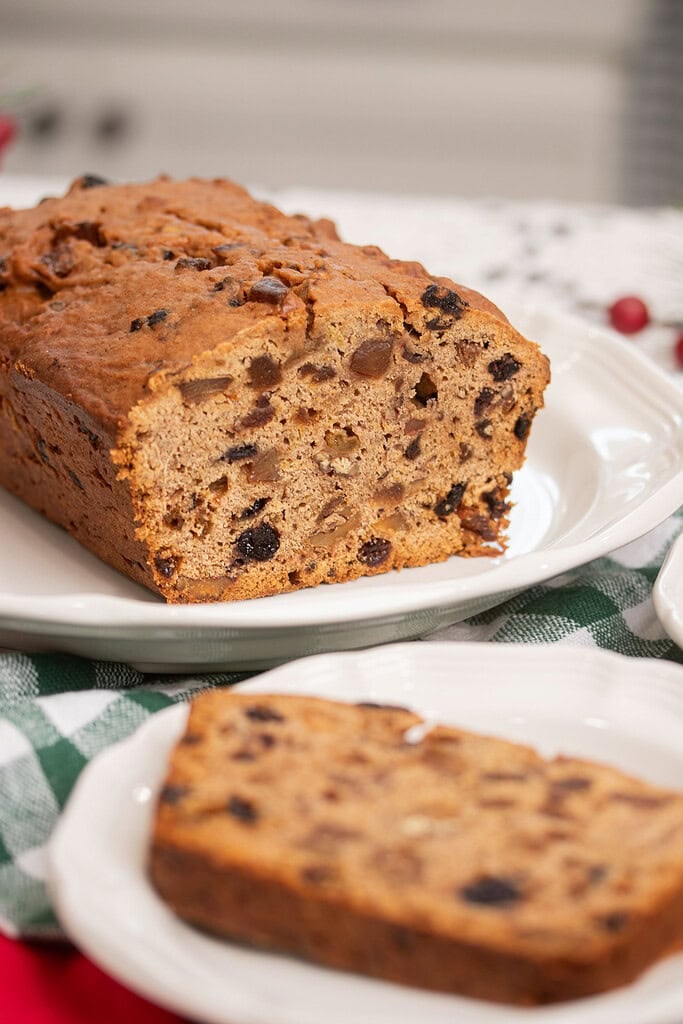
It is can to be made ahead and aged over several weeks, basted lightly with peach brandy or apple cider as it rests, so the flavor genuinely improves the longer you wait.
Sourdough Gingerbread Cookies Recipe and Sourdough Cinnamon Rolls Recipe | Soft and Fluffy, Discard or Starter pair well with this loaf for a full cottage kitchen holiday baking season, and if you are building your starter before the holiday baking, How to Make a Sourdough Starter walks through the full process from day one.
“ The flavour was great! ”
~Scorpio
Why You’ll Love This Recipe
Ingredients
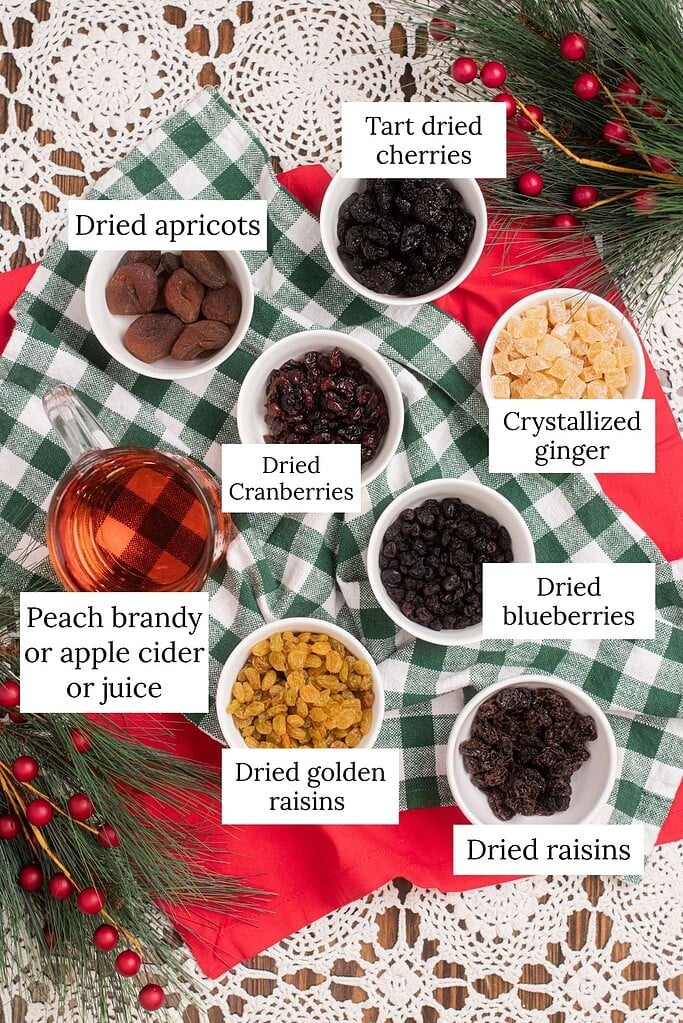
For The Fruit Mixture
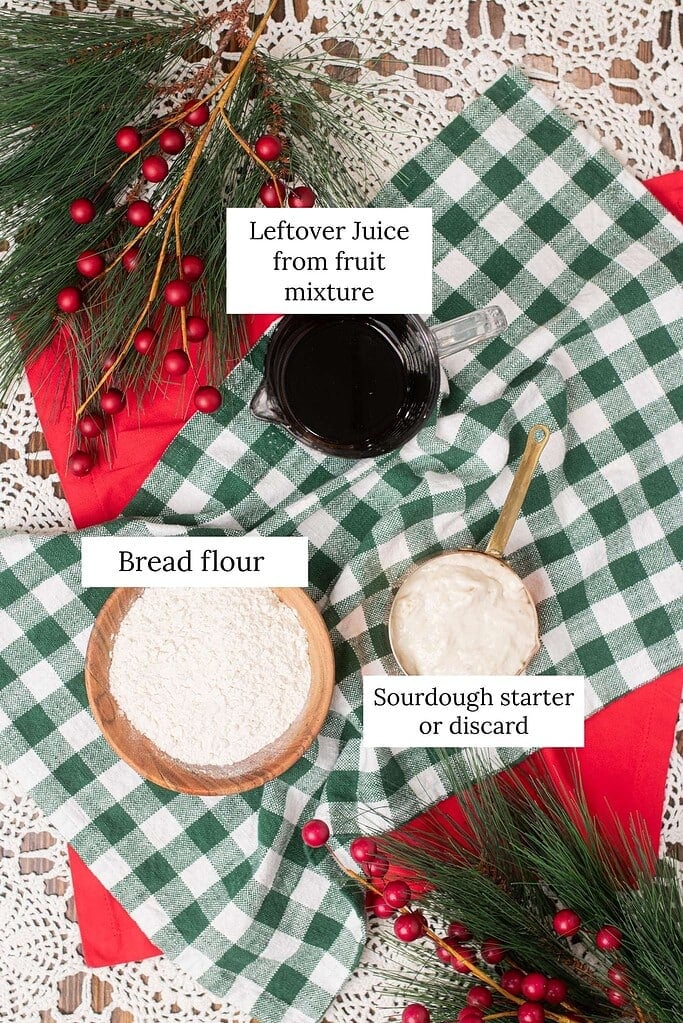
For The Sourdough Sponge
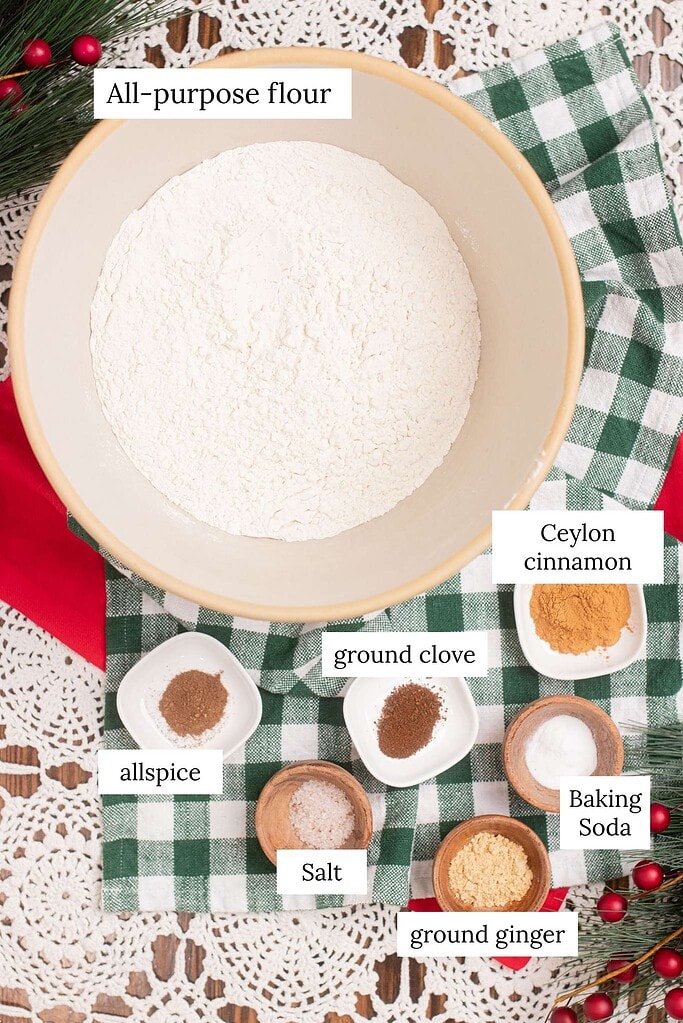
For The Dry Mixture
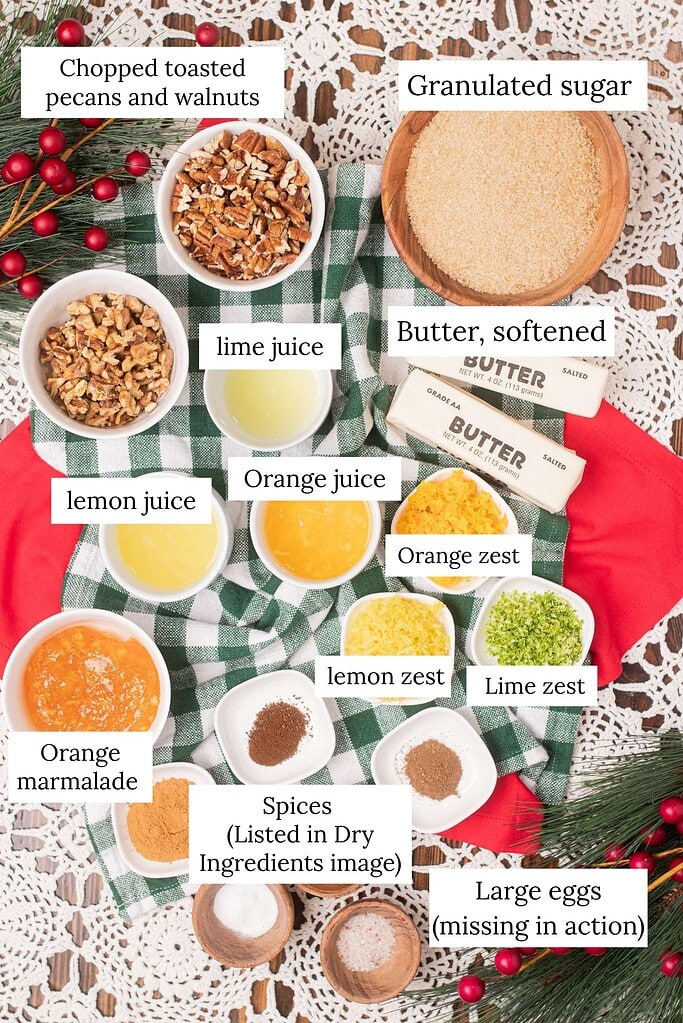
For The Batter
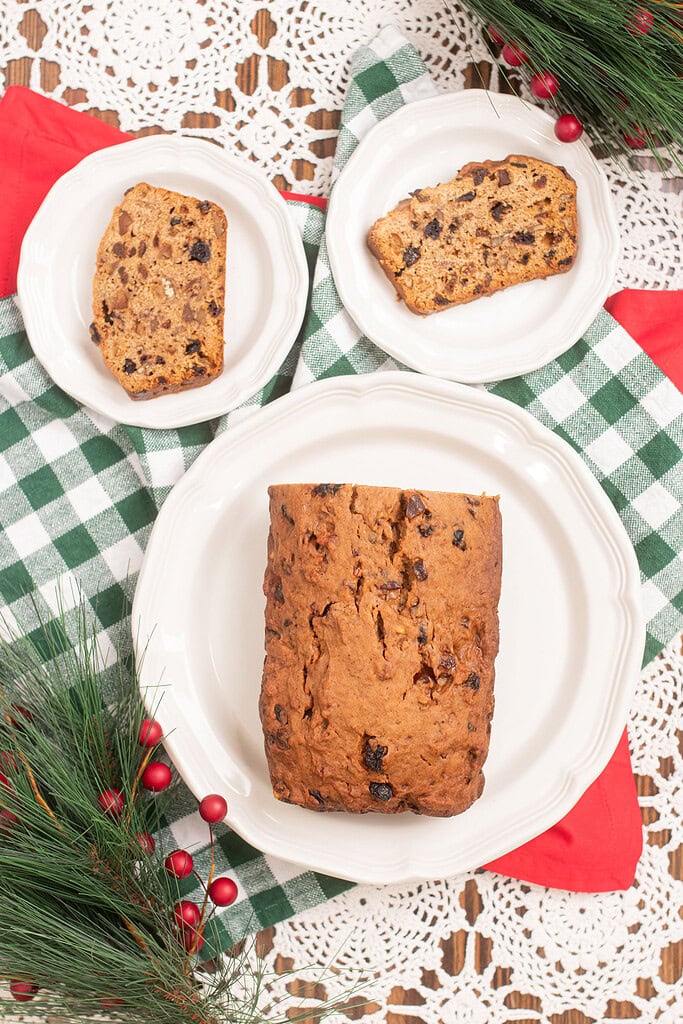
Variations & Add-Ins
Recipe Tips
Soak the fruit for a full 8 to 12 hours – A full overnight soak gives the dried fruit time to plump completely and absorb the brandy or cider evenly. A shorter soak of 4 hours works in a pinch but the fruit will not have the same depth of flavor or moisture in the finished loaf.
Do not replace the fruit-infused liquid with plain water or fresh juice – The overnight fruit soak serves two purposes, it plumps and flavors the dried fruit, and it creates the concentrated soaking liquid needed for the sourdough sponge. This is why the fruit must soak before the sponge is prepared. Fresh liquid would hydrate the sponge, but it would bypass an important flavor-building step and would not produce the same fruitcake.
Develop the sourdough sponge overnight – The sponge needs time to ferment until bubbly and fragrant before it goes into the batter. A properly developed sponge adds a genuine depth of flavor to the finished loaf that a sponge mixed and used immediately cannot replicate.
Grease and line pans generously, then grease again – The sugars in the fruit and batter create significant sticking during the long bake. Grease the pan, line with parchment, then grease the parchment as well. Skipping either layer of grease risks tearing the loaf when you remove it from the pan.
Bake at 275°F (135°C) and do not rush it – The low oven temperature allows the dense, fruit-heavy batter to cook through evenly without the exterior burning before the center sets. A higher temperature produces a dry, overbaked crust with an underdone interior. Check with a toothpick at the 2 hour mark and every 15 minutes after.
Mix just until combined after adding the dry ingredients – Overmixing once the flour is added develops gluten and makes the cake heavy and tight instead of tender. Fold the dry ingredients in gently with a wooden spoon until no dry streaks remain and stop immediately.
Cool completely in the pan before removing – The loaves need to set fully before they are removed from the pan. Cutting or removing them warm risks crumbling. Let them cool for at least 2 hours in the pan before turning out onto a wire rack.
Baste lightly during aging, not heavily – A quarter cup of brandy or cider brushed over each loaf once a week during aging is enough to keep the crumb moist and deepen the flavor. Over-basting makes the loaf wet and the texture unpleasant. Wrap tightly between bastings to prevent drying.
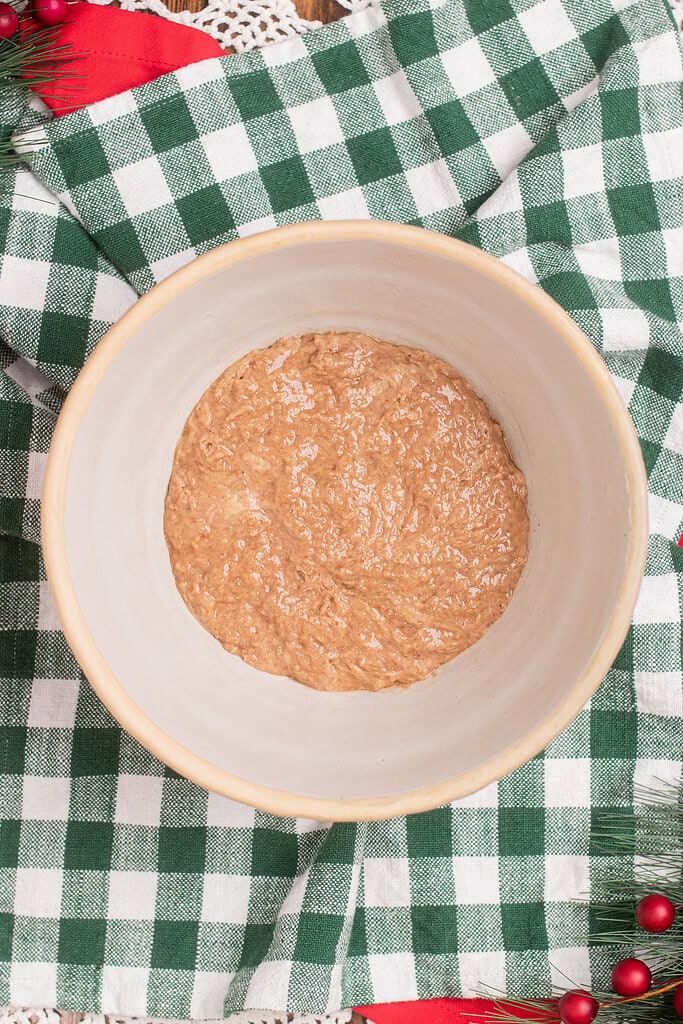
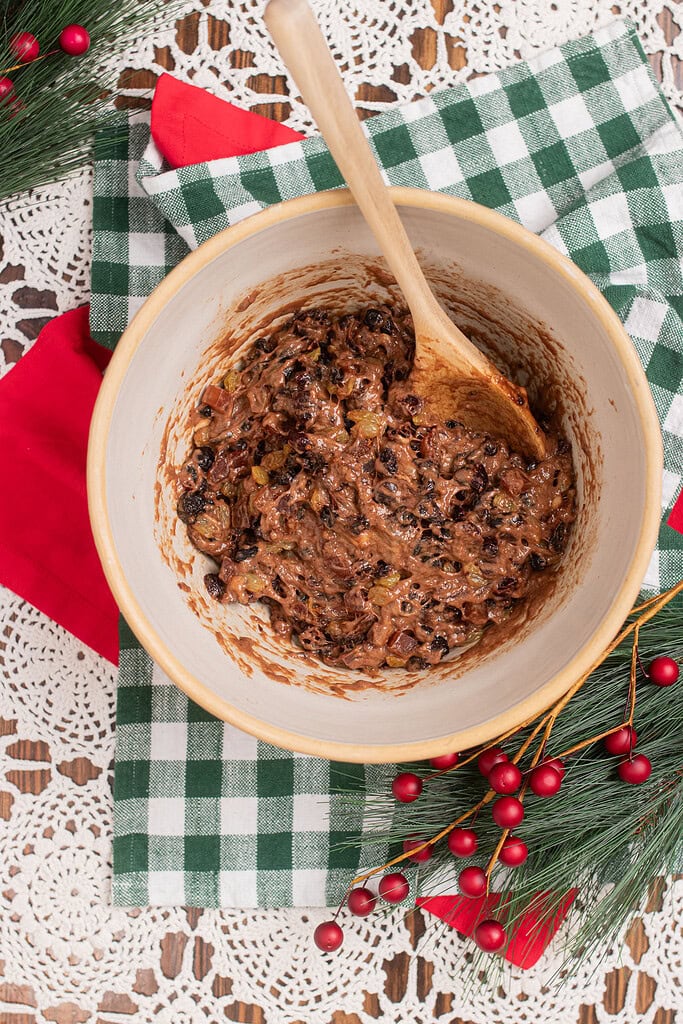
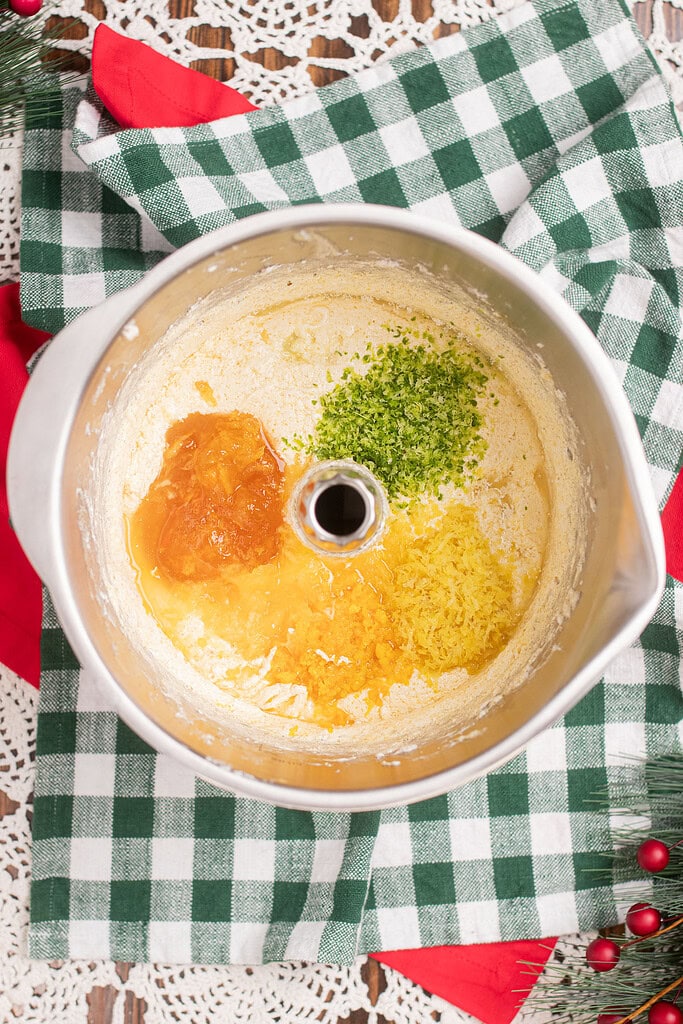
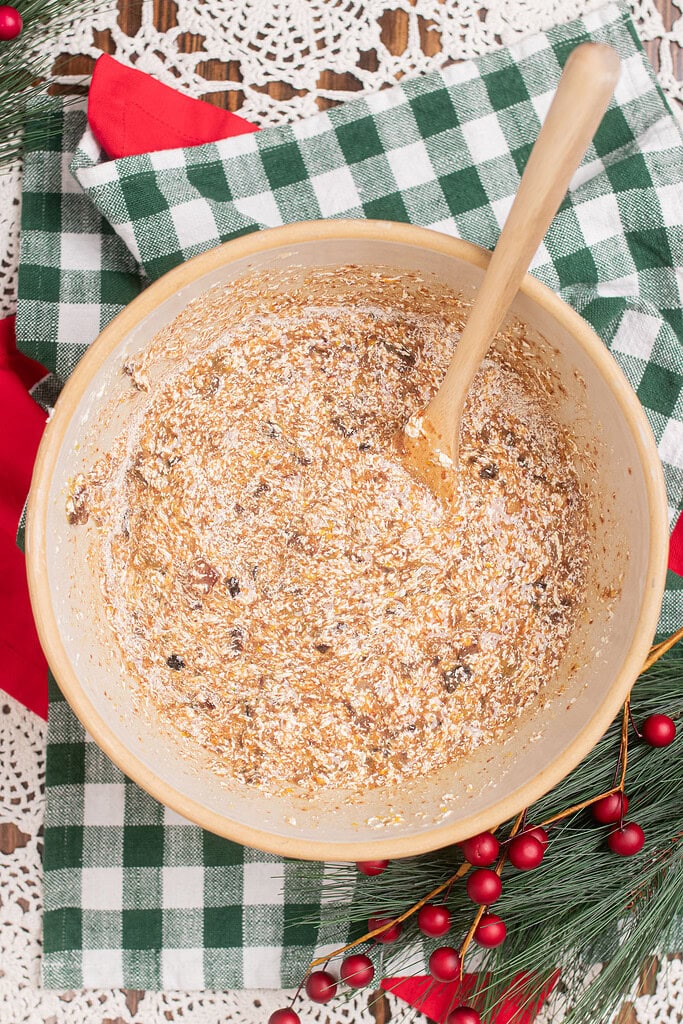
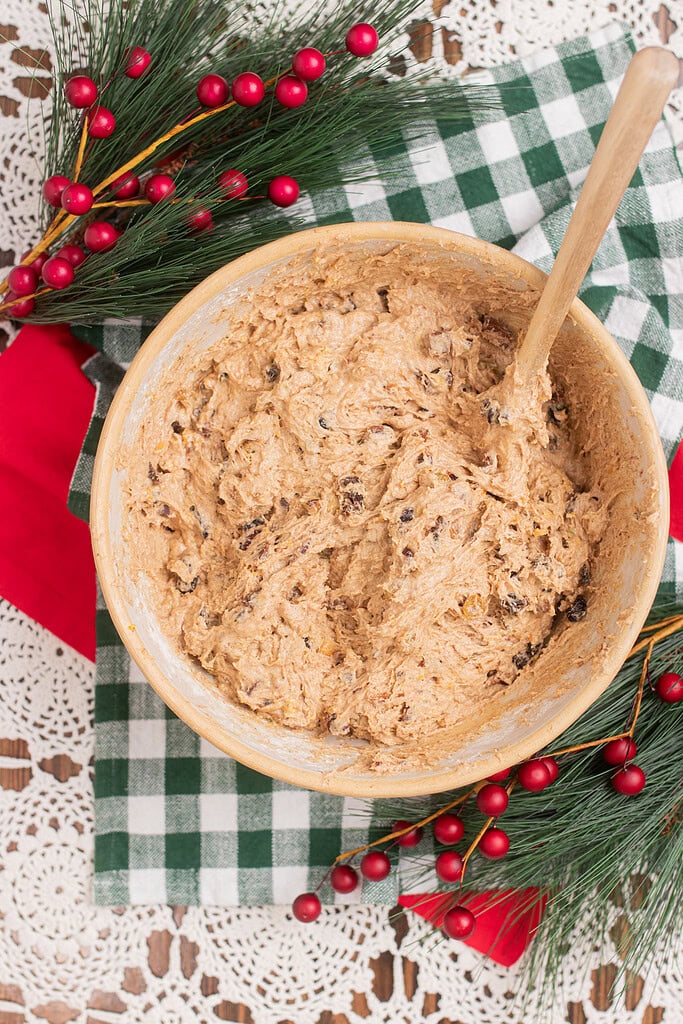
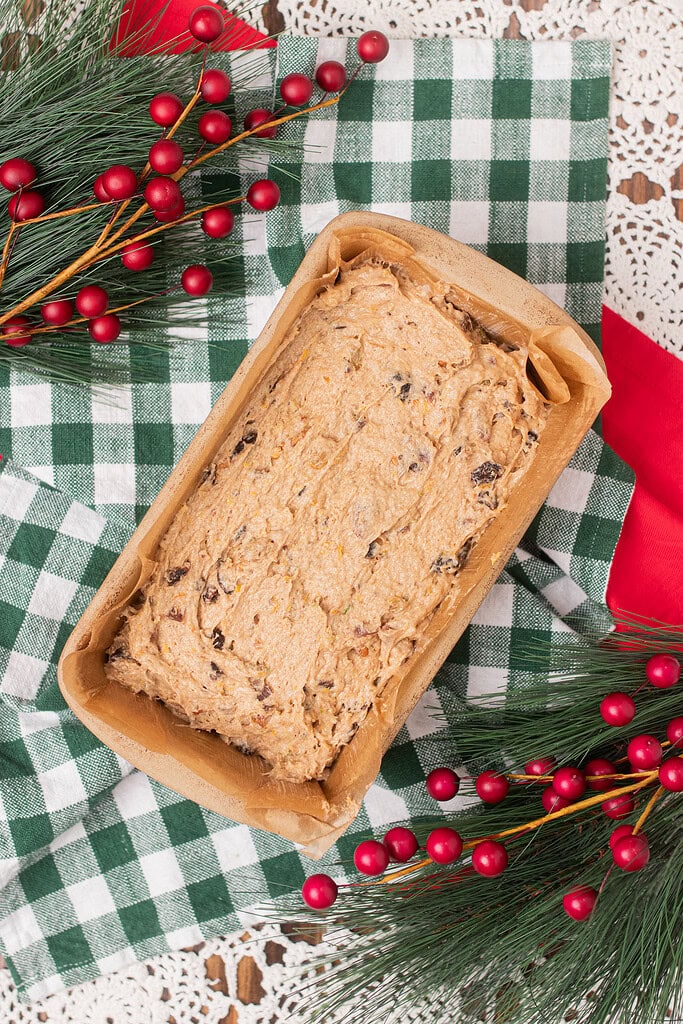
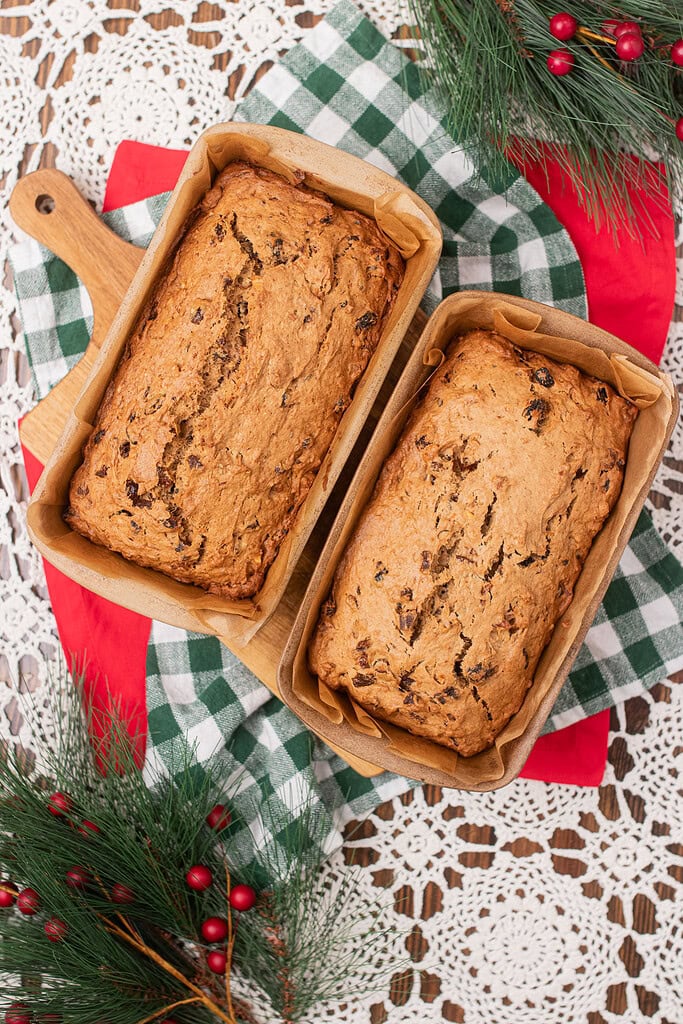
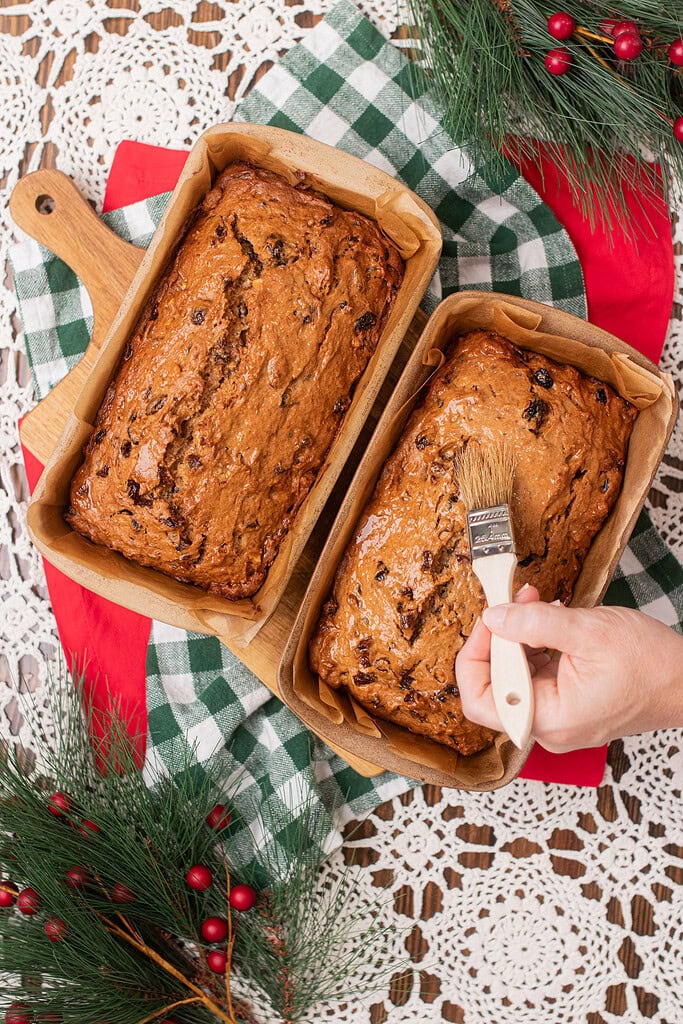
How To Make Sourdough Fruitcake
- Day One – Soak the fruit – Combine all dried fruit and crystallized ginger with the peach brandy, apple cider, or apple juice in a large bowl. Stir well to coat all the fruit, cover tightly, and let soak overnight at room temperature for 8 to 12 hours. The fruit should be plump and most of the liquid absorbed. Reserve ½ cup of the soaking liquid for the sourdough sponge.
- Day Two – Prepare the sourdough sponge – In a medium bowl mix the bread flour, reserved ½ cup soaking liquid, and sourdough starter or discard until no dry flour remains. Cover and let ferment at room temperature overnight until bubbly and fragrant, about 8 to 12 hours.
- Day Three – Preheat and prepare the pans – Preheat your oven to 275°F. Generously grease two 9-inch loaf pans, line with parchment paper, then grease the parchment as well.
- Combine the sponge and fruit – Add the soaked fruit to the developed sourdough sponge and stir together until the fruit is evenly distributed through the sponge. Set aside.
- Build the batter – In a large bowl or stand mixer cream the softened butter and granulated sugar on medium speed until light and fluffy, about 3 to 4 minutes. Add the eggs one at a time, beating well after each addition. Stir in the citrus zest, citrus juice, and orange marmalade until evenly combined.
- Add the sponge and fruit – Add the sponge and fruit mixture to the batter and stir until fully incorporated.
- Add the dry ingredients – In a separate bowl whisk together the all-purpose flour, Ceylon cinnamon, ground clove, allspice, ground ginger, sea salt, and baking soda until evenly combined. Gently fold the dry ingredients into the batter using a wooden spoon or spatula until no dry streaks remain. Do not overmix. Fold in the toasted pecans and walnuts last.
- Fill the pans and bake – Divide the batter evenly between the two prepared loaf pans and smooth the tops. Place on the center rack of the preheated oven at 275°F (135°C) and bake for 2 hours to 2 hours 30 minutes until a toothpick inserted into the center comes out clean. Begin checking at the 2 hour mark.
- Baste and cool – Remove the loaves from the oven and immediately brush the warm tops with 2 tablespoons of peach brandy or apple cider per loaf. Let cool completely in the pans for at least 2 hours before turning out onto a wire rack.
- Serve or age – To serve immediately slice once fully cooled. To age wrap each cooled loaf tightly in parchment paper and then in foil and store in a cool dark place. Unwrap and baste lightly with ¼ cup brandy or apple cider once a week for up to 4 weeks before serving for the deepest flavor.
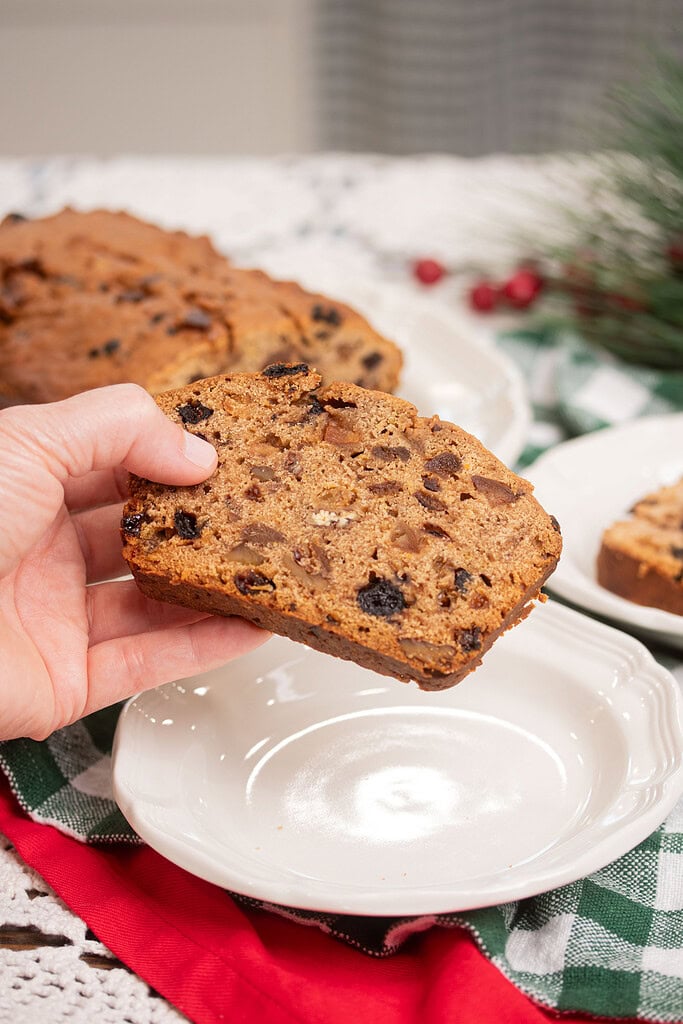
Gifting & Sharing
Freezing and Storage
- Room temperature – Wrap the cooled loaves tightly in parchment then foil and store in a cool dry place for up to one week. Keep them airtight or the crumb will dry out quickly.
- Aging storage – For a deeper more traditional flavor keep the wrapped loaves at room temperature for up to four weeks, basting lightly once a week with ¼ cup peach brandy or apple cider per loaf. Re-wrap tightly between bastings.
- Refrigerator – If your kitchen runs warm store the wrapped loaves in the refrigerator to slow drying during the aging period. Bring to room temperature before slicing for the best texture.
- Freezer – Fruitcake freezes beautifully. Wrap tightly in plastic wrap then foil and freeze for up to three months. Thaw overnight at room temperature still wrapped and baste once with brandy or cider after thawing to refresh the flavor before serving.
Did you know you can convert your favorite recipes to freshly milled flour? Learn how to convert recipes and find more fresh flour guides at The Cottage Mill.
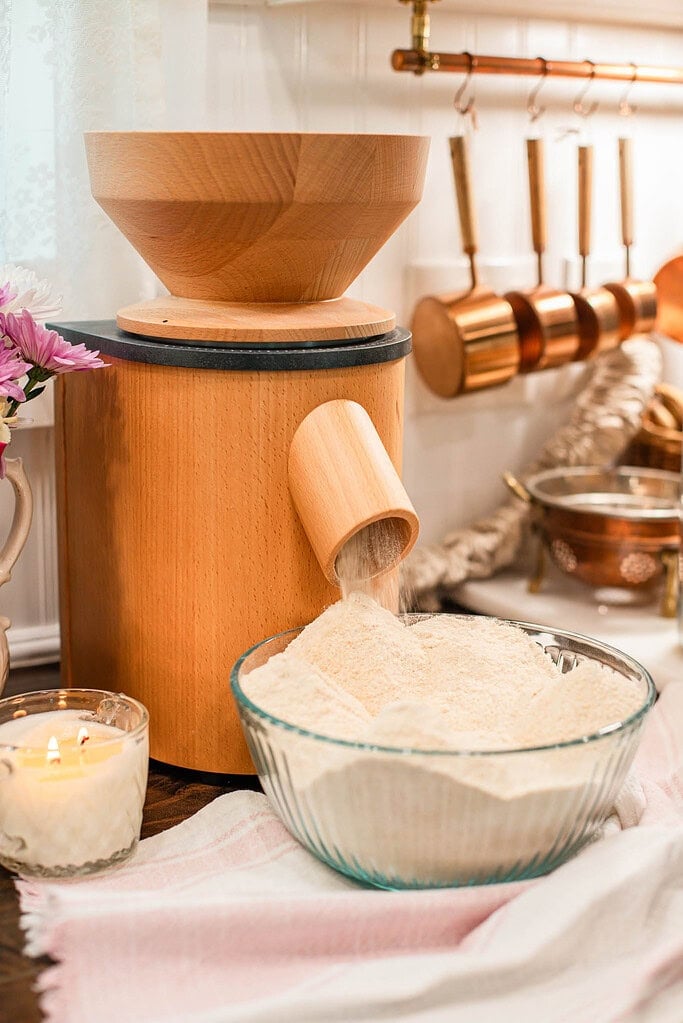
The Cottage Mill | Freshly Milled Flour Guides, Recipes, and More Await!
FAQ
Join The Community
Want More Cozy Recipes & Seasonal Inspiration?
Get cozy, from-scratch recipes, seasonal cottage living tips, and slow living inspiration delivered straight to your inbox.
More Festive Recipes from the Cottage
⭐️ Rate This Recipe
Made this recipe? Leave a star ⭐️ rating below, it means the world to me and helps my recipes get found by more people like you. Tag me on Instagram @themoderndaycottage

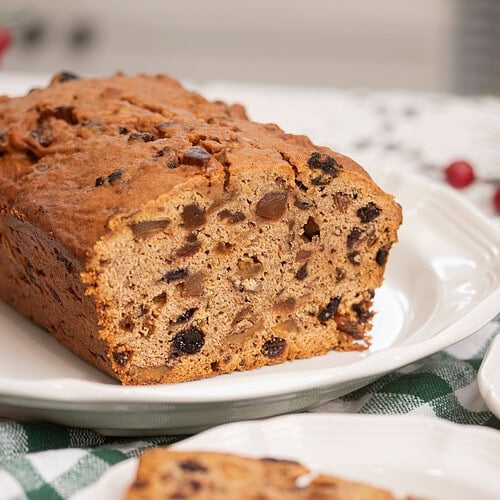
Sourdough Fruitcake
 Prep:40 minutes Cook:2 hours 30 minutes Additional Time:8 hours Total:11 hours 10 minutes
 Equipment
- 2 9-inch loaf pans
- 2 Large mixing bowls
- 1 Electric mixer
- 1 Wooden spoon
- Parchment Paper
- 1 Pastry brush
Ingredients
Fruit Mixture:
- ½ cup dried golden raisins 80 grams
- ½ cup dried cranberries 80 grams
- ½ cup dried blueberries 80 grams
- 1 cup crystallized ginger 140 grams
- ½ cup dried apricots 85 grams
- 1½ cups peach brandy or apple cider or juice reserve ½ cup for the sponge after soaking
- zest and juice of 1 lemon 1 lime, and 1 orange
For the Sourdough Sponge
- 1 cup bread flour 120 grams
- 1 cup sourdough starter or discard about 240 grams
- ½ cup reserved soaking liquid about 112 grams
Dry Mixture:
- 5 cups all-purpose unbleached flour 625 grams
- 2 teaspoons Ceylon cinnamon 4 grams
- 1 teaspoon ground ginger 2 grams
- ½ teaspoon ground allspice 1 gram
- ¼ teaspoon ground clove 1 gram
- 1 teaspoon fine sea salt 6 grams (omit if using salted butter)
- 1 teaspoon baking soda 5 grams
Batter:
- 1 cup butter 227 grams, softened (if using salted butter omit the sea salt)
- 1 cup granulated sugar 200 grams
- 4 large eggs 200 grams, room temperature
- ½ cup orange marmalade 160 grams
- 1 cup chopped toasted pecans 120 grams
- ½ cup chopped toasted walnuts 60 grams
Instructions
- Day One – Soak the fruit – Combine all the dried fruit and crystallized ginger in a large bowl. Pour all 1½ cups of peach brandy, apple cider, or apple juice over the fruit; do not hold back the ½ cup beforehand. Stir well to coat all the fruit, cover tightly, and let soak overnight at room temperature for 8 to 12 hours. The fruit should be plump and most of the liquid absorbed.After soaking, pour off or strain exactly ½ cup (120 ml) of the soaking liquid for the sourdough sponge. During the overnight soak, this liquid becomes concentrated with flavor from the dried fruit and crystallized ginger. It is intentionally used in the sponge instead of plain water or fresh juice, which is why the sponge is prepared after the fruit has soaked. If you have slightly less than ½ cup, add enough of the same brandy, cider, or juice to equal ½ cup. Cover and refrigerate the soaked fruit and any remaining liquid until Day Three.
- Day Two – Prepare the sourdough sponge – In a medium bowl, mix the bread flour, reserved ½ cup of fruit-infused soaking liquid, and sourdough starter or discard until no dry flour remains. Cover and let ferment at room temperature overnight, until bubbly and fragrant, about 8 to 12 hours.
- Day Three – Preheat and prepare the pans – Preheat your oven to 275°F. Generously grease two 9-inch loaf pans, line with parchment paper, then grease the parchment as well.
- Combine the sponge and fruit – Add the soaked fruit to the developed sourdough sponge and stir together until the fruit is evenly distributed through the sponge. Set aside.
- Build the batter – In a large bowl or stand mixer cream the softened butter and granulated sugar on medium speed until light and fluffy, about 3 to 4 minutes. Add the eggs one at a time, beating well after each addition. Stir in the citrus zest, citrus juice, and orange marmalade until evenly combined.
- Add the sponge and fruit – Add the sponge and fruit mixture to the batter and stir until fully incorporated.
- Add the dry ingredients – In a separate bowl whisk together the all-purpose flour, Ceylon cinnamon, ground clove, allspice, ground ginger, sea salt, and baking soda until evenly combined. Gently fold the dry ingredients into the batter using a wooden spoon or spatula until no dry streaks remain. Do not overmix. Fold in the toasted pecans and walnuts last.
- Fill the pans and bake – Divide the batter evenly between the two prepared loaf pans and smooth the tops. Place on the center rack of the preheated oven at 275°F (135°C) bake for 2 hours to 2 hours 30 minutes until a toothpick inserted into the center comes out clean. Begin checking at the 2 hour mark.
- Baste and cool – Remove the loaves from the oven and immediately brush the warm tops with 2 tablespoons of peach brandy or apple cider per loaf. Let cool completely in the pans for at least 2 hours before turning out onto a wire rack.
- Serve or age – To serve immediately slice once fully cooled. To age wrap each cooled loaf tightly in parchment paper and then in foil and store in a cool dark place. Unwrap and baste lightly with ¼ cup brandy or apple cider once a week for up to 4 weeks before serving for the deepest flavor.
Video
Notes
Nutrition

Emily Rider
Home miller since 1999 with fresh-milled flour & sourdough experience. Sharing from-scratch recipes and traditional kitchen skills, rooted in the seasons and inspired by everyday cottage living and seasonal rhythms.
I’d put 5 stars but it’s not letting me select 5. Would you please put a weight against the sour dough discard / starter amount as ‘one cup’ is variable. I also feel that the recipe would be easier and v much quicker if it were just an 1/2 water or juice rather than having to wait to use the 1/2 c fruit juice discard.
I’m going for attempt 2 because I mucked up attempt 1, but the flavour was great.
Hi Scorpio,
Thank you for pointing this out, and I’m so glad you enjoyed the flavor!
You are absolutely right that the sourdough starter or discard needs a weight measurement. I have added one to make the amount more consistent.
The ½ cup used in the sponge is intentionally taken from the liquid after the fruit has soaked overnight. By then, it is no longer simply plain juice or brandy—it has absorbed concentrated flavor from the dried fruit and crystallized ginger. Using fresh water or juice would hydrate the sponge, but it would miss that flavor-building step.
I realized the recipe card explained what to do without clearly explaining why the fruit soak must happen before preparing the sponge. I have now rewritten that section to make the process and timing much clearer. Thank you for helping me identify where readers could get stuck, and I hope your second fruitcake turns out beautifully!
Happy Fruitcake Baking,
Emily
PS: I have updated the recipe card ratings for mobile readers I think that was causing the issue. Hopefully that is fixed now so you can come back and leave a rating:)!
After soaking the dried fruit, will most/all of the liquid be absorbed? Should I decant any extra or mix it into the rest of the dough?
Hi Brianna! 😊
Great question! After soaking the dried fruit, most of the liquid will be absorbed, but you may have a little left over. Yes, go ahead and mix any remaining liquid right into the rest of the ingredients—it adds extra flavor and moisture to the fruitcake. We’ll make a note of this helpful tip in the instructions—thank you for bringing it up!
We hope you absolutely love your fruitcake, and please don’t hesitate to reach out if you have any other questions. Happy baking and enjoy!
Happy Baking,
Ruby Ann & Emily
One last question. In the ingredients it mentions 1 cup of butter but the instructions list 1/2 cup of butter.
Hi Brianna,
Thank you for catching that! The correct amount is 1 cup of salted butter. We’ve updated the instructions to reflect this. Let us know if you have any other questions—happy baking! 😊
Warmly,
Emily
When do you add the Turbinado sugar? I read through the recipe a few times and it does not state when to add it?
Hi Brooklyn! 😊 Thank you for your question. The sugar called for in this recipe is granulated sugar, not turbinado sugar. The recipe instructions in both the blog post and the recipe card clearly state when to add the sugar—it’s mixed in with the wet ingredients during the preparation process.
If you’d like to use turbinado sugar, it can be sprinkled on top before baking for a delightful crunch, but it’s not required for the recipe as written. We’ll make sure this is clear in the post to avoid any confusion.
We really appreciate your feedback! Let us know if you have any other questions. Happy baking! 🍰✨
Warmly,
Emily & Ruby Ann