
These sourdough apple fritters come out of the oil with crispy, golden edges and soft apple pockets throughout, seasoned with apple pie spice in both the dough and the glaze for a warm, spiced flavor that carries through every bite.
The apple pie spice glaze made with powdered sugar, heavy cream, and vanilla sets into a thin, sweet finish over the hot fritters and clings to the crispy edges in a way that makes it hard to stop at one.
If you are looking for more sourdough discard recipes from the cottage, these pair with Sourdough Discard Pop Tarts Recipe, Sourdough Pumpkin Muffins, and Homemade Sourdough Apple Pie with Cinnamon.

Did you know you can convert your favorite recipes to freshly milled flour? Learn how to convert recipes and find more fresh flour guides at The Cottage Mill.
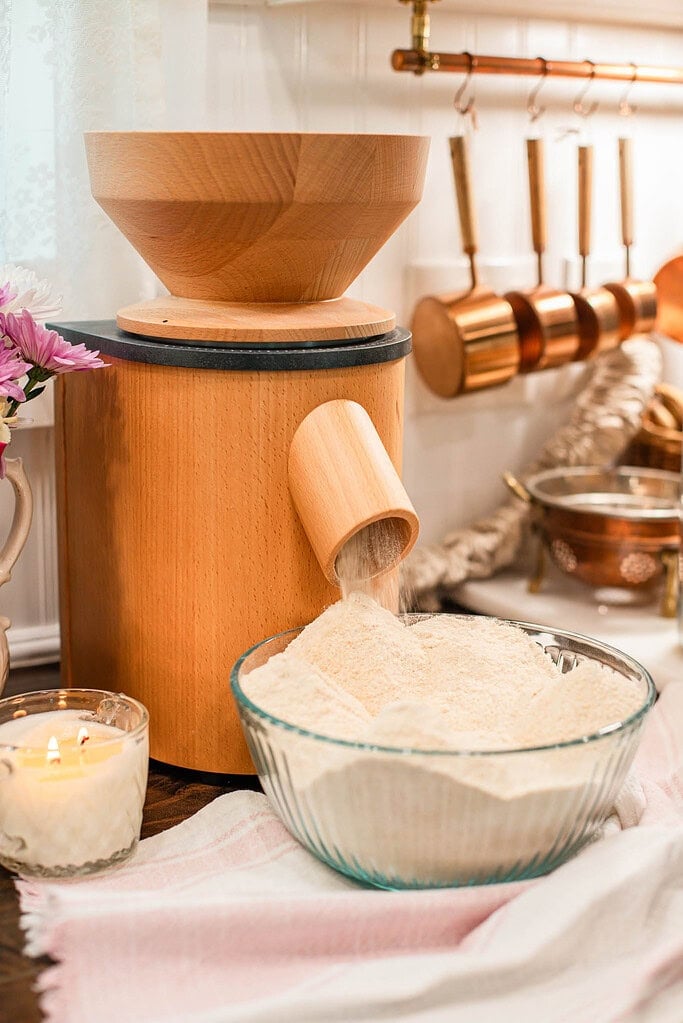
The Cottage Mill | Freshly Milled Flour Guides, Recipes, and More Await!
Why You’ll Love This Recipe

Ingredients
For the Dough
For the Additions After the Bulk Rise
For the Glaze

Variations & Add-Ins
Recipe Tips
Use a thermometer to monitor oil temperature – Heat the oil to exactly 375°F before adding the first fritter and check the temperature between batches. Oil that is too cool produces greasy fritters because the dough absorbs oil before the exterior sets. Oil that is too hot browns the outside before the interior cooks through.
Do not overcrowd the pan – Fry in small batches with enough space between each fritter so the oil temperature stays consistent throughout the cook. Adding too many fritters at once drops the oil temperature and produces uneven browning and a greasier finished texture.
Keep the fritters on the smaller side – Fritters cut to about 2 by 2 inches fry more evenly and cook through to the center without overbrowning the exterior. Larger fritters risk a raw interior even when the outside looks golden and done.
Pat the apples dry before folding them in – Excess moisture from the chopped apples can thin the dough and make it harder for the fritters to hold their shape during frying. A quick pat with a paper towel after chopping removes surface moisture without drying out the apple chunks.
Do not overmix the dough – Mix just until the ingredients come together into a shaggy dough before the rest period. Overmixing develops too much gluten and produces a dense, chewy fritter rather than a tender one with a light interior.
Let the dough complete the bulk rise fully – The bulk rise at room temperature for 4 to 6 hours is what develops the flavor and gives the dough enough structure to hold the apple chunks during frying. Cutting the rise short produces a denser fritter with less flavor throughout.
Drain on paper towels before glazing – Place the fried fritters on a paper towel lined plate for 1 to 2 minutes to absorb excess oil before glazing. Glazing over excess oil prevents the glaze from setting properly and produces a greasy, wet finish on the surface.

Instructions
- Combine the base ingredients – Add the sourdough starter or discard, warm milk or water at 110°F, 2 cups of the all-purpose flour, salt, and apple pie spice seasoning to the bowl of a stand mixer fitted with the whisk attachment. Mix until combined. Alternatively use a Danish whisk and mix by hand in a large bowl.
- Add the remaining flour – Switch to the paddle attachment and mix in the remaining 2 cups of flour until a shaggy, wet dough forms throughout the bowl.
- Rest the dough – Remove the paddle attachment, cover the bowl, and let the dough rest for 30 minutes at room temperature.
- Knead until smooth – Attach the dough hook and knead for 2 to 3 minutes until the dough comes together into one smooth, cohesive mass. If mixing by hand, turn the dough out onto a lightly floured surface and knead for 5 minutes.
- Bulk rise – Lightly oil a medium bowl and transfer the dough into it. Cover tightly and let the dough rise at room temperature for 4 to 6 hours until noticeably puffed and developed.
- Overnight ferment option – After the bulk rise, cover the bowl and transfer it to the refrigerator to ferment overnight. The next day remove the dough from the refrigerator and let it come fully to room temperature before proceeding with the next step.
- Fold in the apples – Toss the finely chopped apples with the cinnamon. Remove the dough from the bowl and stretch it into a rectangle on a lightly floured surface. Scatter the cinnamon apples over the top of the dough, then fold and tuck the dough repeatedly until the apples are distributed throughout. Press any remaining pieces firmly into the dough.
- Shape the fritters – Cut the dough into fritters using a bench scraper, pizza cutter, or knife. Aim for pieces around 2 by 2 inches for the most even fry. Place the shaped fritters on parchment paper and allow them to rise for 1 to 2 hours before frying.
- Heat the oil – Fill a Dutch oven with 2 inches of frying oil and heat to 375°F. Use a thermometer to confirm the temperature before adding the first fritter.
- Fry the fritters – Working in small batches, lower the fritters carefully into the hot oil and fry for 2 to 3 minutes until golden brown and beginning to float. Turn each fritter carefully using a slotted spoon or spider strainer and fry the other side until evenly golden throughout.
- Drain the fritters – Remove the finished fritters from the oil using a spider strainer or slotted spoon and place them on a paper towel lined plate for 1 to 2 minutes to absorb excess oil before glazing.
- Make the glaze – Whisk together the powdered sugar, heavy whipping cream, vanilla extract, and apple pie spice seasoning until smooth. Add more cream one teaspoon at a time if the glaze is too thick to pour.
- Glaze and serve – Pour or drizzle the glaze over the fritters while they are still hot so it sets into the crispy edges. Serve immediately for the crispiest result.

Gifting & Sharing
Freezing & Storage
- Room temperature – Store fully cooled fritters in an airtight container at room temperature for up to 1 day. The glaze will soften slightly as the fritters sit and the crispy edges will lose some of their texture after the first few hours. For the crispiest result serve them the day they are fried.
- Refrigerator – Place cooled fritters in a sealed airtight container and refrigerate for up to 3 days. The texture will soften significantly in the refrigerator but the apple pie spice flavor carries through well after reheating.
- Reheating – Reheat refrigerated fritters in an oven or toaster oven at 350°F for 5 to 8 minutes to restore some of the crispiness to the exterior before serving. Avoid reheating in the microwave as it softens the exterior and makes the fritters dense rather than crisp.
- Freezer – Freeze fully cooled unglazed fritters in a single layer on a parchment lined baking sheet until solid, then transfer to a freezer-safe airtight container for up to 2 months. Glaze after reheating rather than before freezing so the finish stays clean and even on the surface.
- Reheating from frozen – Thaw overnight in the refrigerator and reheat in an oven at 350°F for 8 to 10 minutes until warmed through and the exterior has crisped back up before adding the glaze and serving.
FAQ
Join The Community
Want More Cozy Recipes & Seasonal Inspiration?
Get cozy, from-scratch recipes, seasonal cottage living tips, and slow living inspiration delivered straight to your inbox.
More Fall Recipes from the Cottage


Sourdough Apple Fritters | Discard or Starter
 Prep:20 minutes Cook:20 minutes Additional Time:5 hours Total:5 hours 40 minutes
 Equipment
- 1 Stand mixer with whisk, paddle, and dough hook attachments or large bowl and Danish whisk
- 1 Dutch Oven or deep heavy-bottomed pot
- 1 Thermometer
- 1 Spider strainer or slotted spoon
- 1 Bench scraper
- 1 Parchment lined baking sheet
- 1 Paper towel lined plate
Ingredients
For the Dough
- 1 cup sourdough starter or discard 240 grams
- 1½ cups warm milk or water 110°F, 360 grams
- 4 cups unbleached all-purpose flour 480 grams
- 1 teaspoon salt 6 grams
- 1 tablespoon apple pie spice seasoning 7 grams
For the Additions After the Bulk Rise
- 2 apples finely chopped, about 300 grams
- 1 teaspoon cinnamon 3 grams
For the Glaze
- ¾ cup powdered sugar sifted, 90 grams
- ¼ cup heavy whipping cream 60 grams
- ½ to 1 teaspoon vanilla extract 3 grams
- 1½ teaspoons apple pie spice seasoning 4 grams
Instructions
- Combine the base ingredients – Add the sourdough starter or discard, warm milk or water at 110°F, 2 cups of the all-purpose flour, salt, and apple pie spice seasoning to the bowl of a stand mixer fitted with the whisk attachment. Mix until combined. Alternatively use a Danish whisk and mix by hand in a large bowl.
- Add the remaining flour – Switch to the paddle attachment and mix in the remaining 2 cups of flour until a shaggy, wet dough forms throughout the bowl.
- Rest the dough – Remove the paddle attachment, cover the bowl, and let the dough rest for 30 minutes at room temperature.
- Knead until smooth – Attach the dough hook and knead for 2 to 3 minutes until the dough comes together into one smooth, cohesive mass. If mixing by hand, turn the dough out onto a lightly floured surface and knead for 5 minutes.
- Bulk rise – Lightly oil a medium bowl and transfer the dough into it. Cover tightly and let the dough rise at room temperature for 4 to 6 hours until noticeably puffed and developed.
- Overnight ferment option – After the bulk rise, cover the bowl and transfer it to the refrigerator to ferment overnight. The next day remove the dough from the refrigerator and let it come fully to room temperature before proceeding with the next step.
- Fold in the apples – Toss the finely chopped apples with the cinnamon. Remove the dough from the bowl and stretch it into a rectangle on a lightly floured surface. Scatter the cinnamon apples over the top of the dough, then fold and tuck the dough repeatedly until the apples are distributed throughout. Press any remaining pieces firmly into the dough.
- Shape the fritters – Cut the dough into fritters using a bench scraper, pizza cutter, or knife. Aim for pieces around 2 by 2 inches for the most even fry. Place the shaped fritters on parchment paper and allow them to rise for 1 to 2 hours before frying.
- Heat the oil – Fill a Dutch oven with 2 inches of frying oil and heat to 375°F. Use a thermometer to confirm the temperature before adding the first fritter.
- Fry the fritters – Working in small batches, lower the fritters carefully into the hot oil and fry for 2 to 3 minutes until golden brown and beginning to float. Turn each fritter carefully using a slotted spoon or spider strainer and fry the other side until evenly golden throughout.
- Drain the fritters – Remove the finished fritters from the oil using a spider strainer or slotted spoon and place them on a paper towel lined plate for 1 to 2 minutes to absorb excess oil before glazing.
- Make the glaze – Whisk together the powdered sugar, heavy whipping cream, vanilla extract, and apple pie spice seasoning until smooth. Add more cream one teaspoon at a time if the glaze is too thick to pour.
- Glaze and serve – Pour or drizzle the glaze over the fritters while they are still hot so it sets into the crispy edges. Serve immediately for the crispiest result.
Video
Notes

Emily Rider
Home miller since 1999 with fresh-milled flour & sourdough experience. Sharing from-scratch recipes and traditional kitchen skills, rooted in the seasons and inspired by everyday cottage living and seasonal rhythms.