

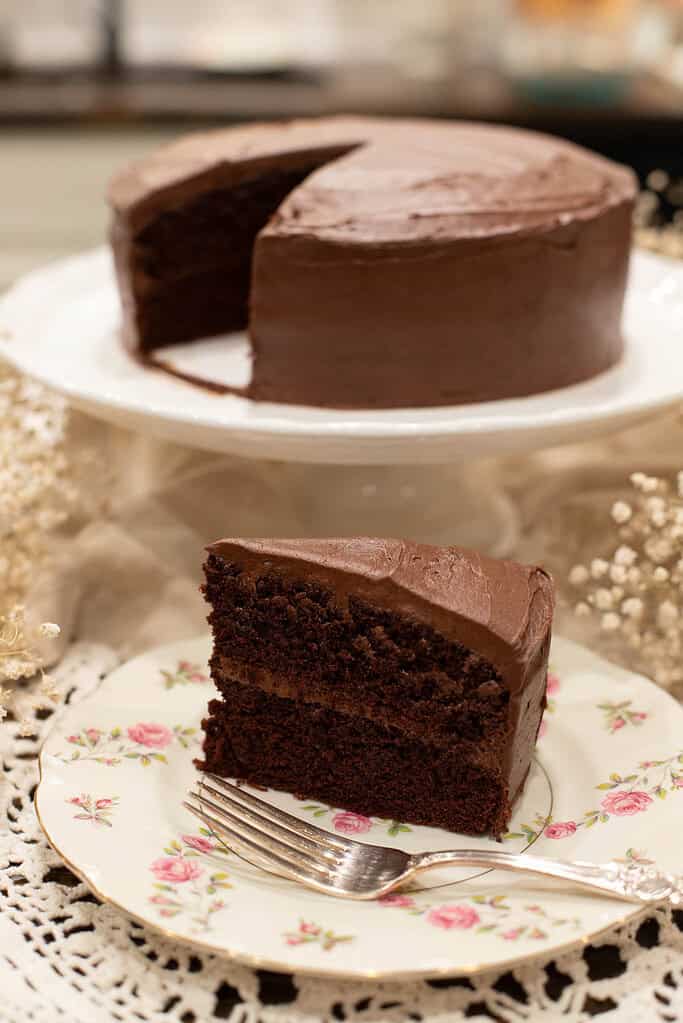
This chocolate sourdough cake made with freshly milled flour delivers a deep, rich chocolate flavor with a tender, soft crumb that comes from freshly milled soft white wheat, Dutch cocoa powder, and sourdough starter or discard worked into every layer of the batter.
The optional overnight ferment deepens the flavor further, and the whipped egg whites keep the texture light and airy despite the density of the freshly milled flour and cocoa throughout.
If you love baking with freshly milled flour, you might also enjoy Sourdough Vanilla Cake with Fresh Milled Flour, Pumpkin Bread with Freshly Milled Flour, and Sourdough Animal Crackers with Freshly Milled Flour.

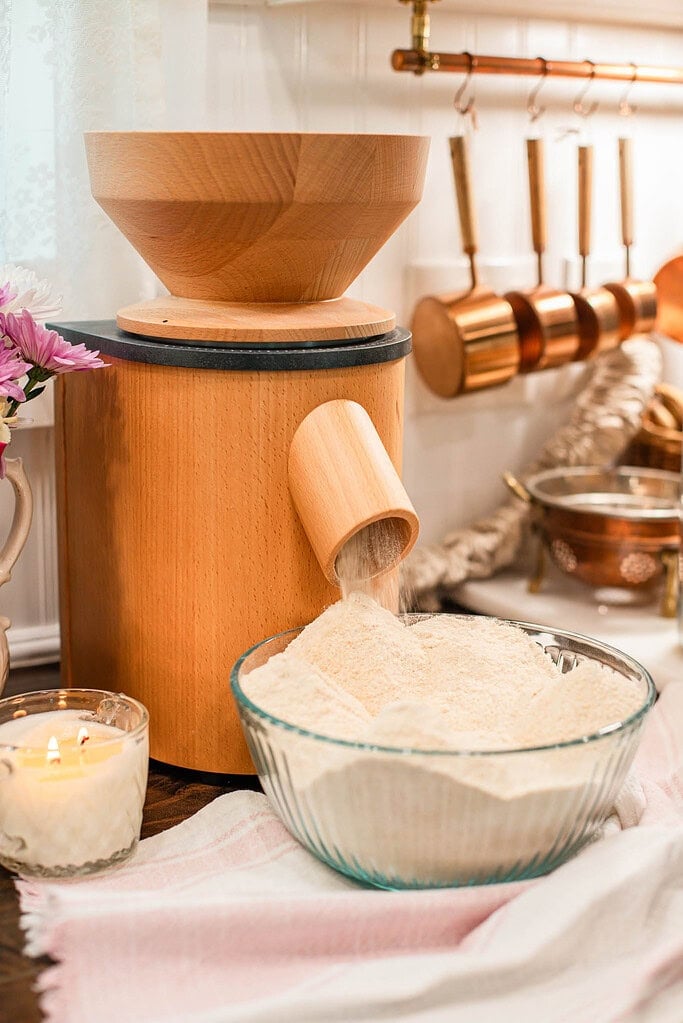
The Cottage Mill | Freshly Milled Flour Guides, Recipes, and More Await!
Why You’ll Love This Recipe
Ingredients
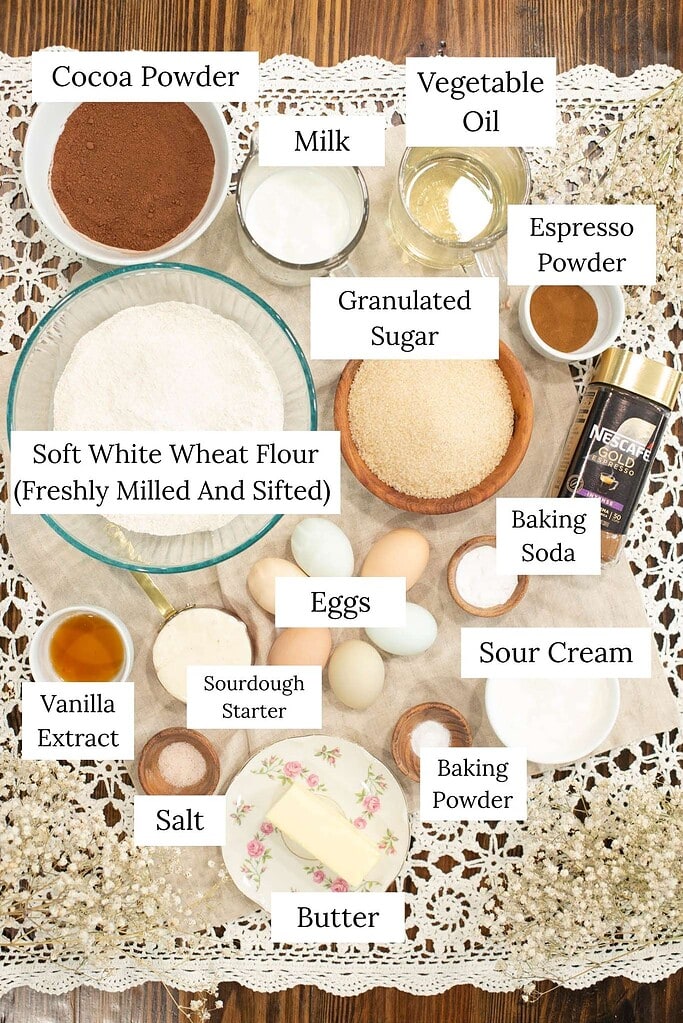
For the Cake
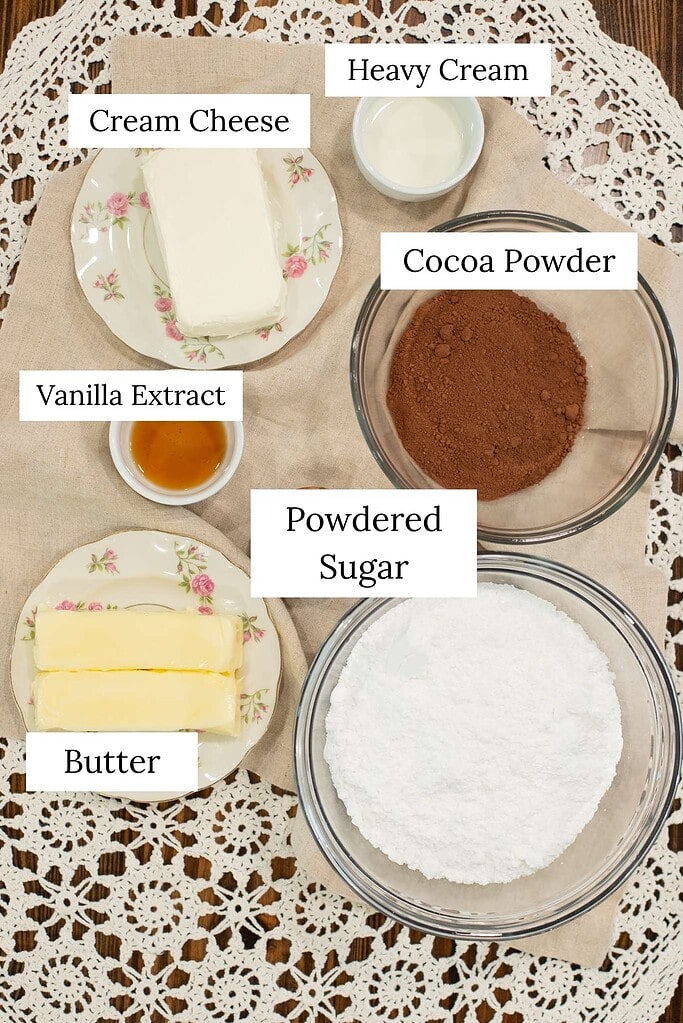
For the Chocolate Buttercream Frosting
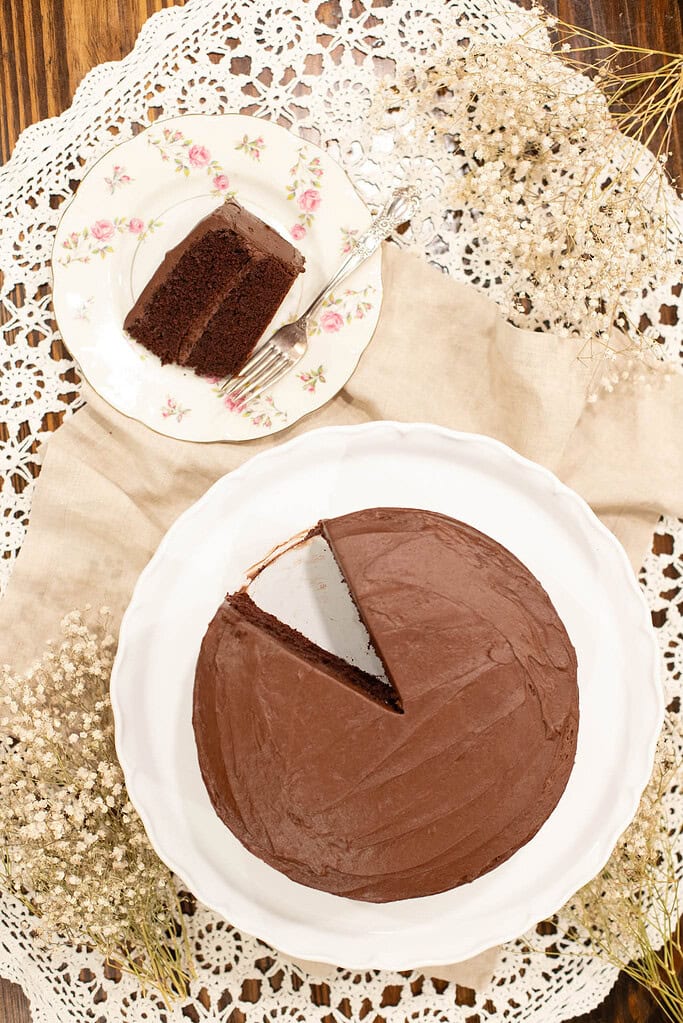
Variations & Add-Ins
Recipe Tips
Mill and sift the flour before measuring – Mill the soft white wheat berries on the finest setting and sift through a number 60 mesh sieve before weighing to 300 grams. Sifting removes the bran and produces a cake-like texture that holds the crumb together without feeling dense or heavy.
Bring all ingredients to room temperature – Cold butter, eggs, sour cream, milk, and sourdough starter do not blend as smoothly and can cause the batter to look curdled before baking. Pull everything out 30 to 60 minutes before starting for the most even, cohesive batter.
Cream the butter and sugar thoroughly – Beat the softened butter for 2 to 3 minutes before adding the sugar, then continue beating until the mixture is pale and noticeably increased in volume. This step builds the air structure that keeps the crumb light despite the weight of the freshly milled flour and cocoa.
Sift the cocoa powder and confectioners sugar – Sift both before adding them to the batter or frosting to prevent lumps and distribute the chocolate flavor evenly throughout. This one step makes a noticeable difference in the smoothness of both the finished crumb and the frosting.
Whip egg whites to stiff peaks in a clean dry bowl – Any trace of fat or moisture in the bowl prevents the egg whites from reaching stiff peaks. Use a metal or glass bowl, lift the beaters to check, and stop when the whites stand tall without collapsing or sliding.
Fold the egg whites in thirds – Add one third of the whipped egg whites to the batter first to loosen it, then fold in the remaining two thirds gently with a rubber spatula. Scoop from the bottom of the bowl and turn the batter over slowly to keep as much air as possible throughout.
Wrap the pans with water-soaked cake strips – Soaked cake strips wrapped around the outside of the pans help the layers bake flat and evenly without doming in the center. This makes stacking and frosting the finished layers much cleaner.
Apply a crumb coat before the final frost – Spread a thin layer of frosting over the fully cooled cake and chill for 10 minutes in the freezer or 30 minutes in the refrigerator before applying the final coat. The crumb coat seals in loose crumbs and gives the finished frosting a smooth, clean surface.


Instructions
- Mill and sift the flour – Mill the soft white wheat berries on the finest setting and sift through a number 60 mesh sieve to remove the bran and achieve a cake-like texture. Weigh the sifted flour to exactly 300 grams, adding more milled flour as needed to reach the full amount. Set the sifted bran aside for another use.
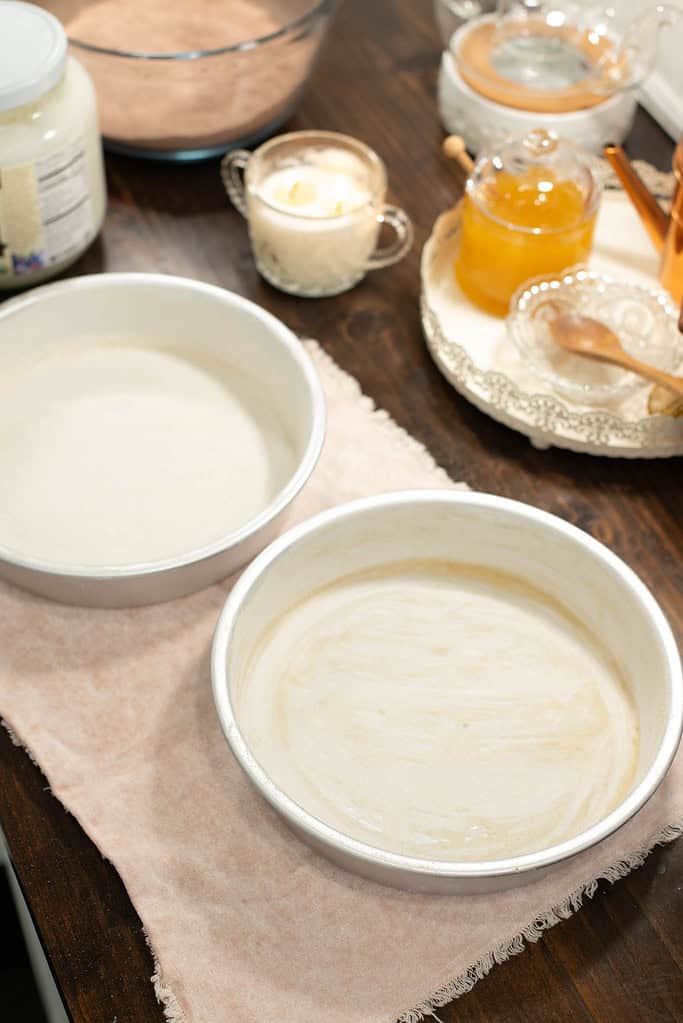
- Preheat the oven and prepare the pans – Preheat the oven to 350°F. Grease and flour two 9-inch round cake pans, or line a muffin tin for cupcakes and place it on a baking sheet to catch any drips. Wrap the outside of the cake pans with water-soaked cake strips if using.
- Whisk the dry ingredients – In a large bowl, whisk together the sifted flour, cocoa powder, baking powder, baking soda, espresso powder, and salt until evenly combined. For an overnight ferment, hold back the baking powder, baking soda, and salt and set them aside to add the next morning.
- Cream the butter – In the bowl of a stand mixer fitted with the paddle attachment, beat the softened butter on medium-high speed for 2 to 3 minutes until light and fluffy.
- Add the sugar and aerate – Add the granulated sugar and continue beating until the mixture is pale, noticeably increased in volume, and almost white in color. This step builds the air structure that keeps the crumb light throughout the finished cake.
- Add the wet ingredients – Add the vegetable oil, sour cream, sourdough discard or active starter, and vanilla extract. Mix on medium speed until smooth and creamy. Stop mixing as soon as everything looks incorporated to avoid overworking the batter.
- Add the milk – Pour in the room temperature milk and stir just until combined. Scrape down the sides of the bowl to make sure everything is evenly incorporated before adding the dry ingredients.
- Fold in the dry ingredients – With the mixer on low, add the dry ingredients in three additions, mixing just until the batter looks smooth and uniform after each addition. Stop mixing as soon as no dry streaks remain.
- Overnight ferment option – At this point, cover the batter tightly and refrigerate overnight. The next morning, stir in the reserved baking powder, baking soda, and salt. Then proceed with whipping the egg whites and folding them into the batter before baking.
- Whip the egg whites – In a clean, dry bowl, whip the room temperature egg whites with a hand mixer until stiff peaks form. The whites should stand tall without collapsing when the beaters are lifted.
- Fold in the egg whites – Add one third of the whipped egg whites to the batter to loosen it, then gently fold in the remaining two thirds with a rubber spatula. Scoop from the bottom of the bowl and turn the batter over slowly to keep the air throughout.
- Fill the pans and bake – Divide the batter evenly between the two prepared cake pans using a kitchen scale for accuracy. Smooth the tops and bake for 25 to 30 minutes until a toothpick inserted in the center comes out clean.
- Cool the cakes – Let the cakes cool in the pans for 10 minutes, then turn them out onto a wire rack and cool completely before frosting. Do not frost warm cake as the frosting will melt and slide off the surface.
- Make the chocolate buttercream frosting – Beat the softened butter on medium-high speed for 2 to 3 minutes until light and pale. Add the cream cheese one piece at a time, beating well after each addition until smooth. In a separate bowl, sift together the cocoa powder and confectioners sugar. With the mixer on low, slowly add the cocoa and sugar blend to the butter and cream cheese mixture. Add the vanilla extract and heavy cream, then increase the speed to medium and beat for 2 to 3 minutes until the frosting is fluffy, smooth, and easy to spread. Add more cream one teaspoon at a time if needed to reach the right consistency.
- Frost and finish the cake – Place the first cooled layer on a cake stand or serving plate and spread a generous layer of frosting evenly over the top. Place the second layer on top and apply a thin crumb coat over the entire cake. Chill for 10 minutes in the freezer or 30 minutes in the refrigerator. Apply the final layer of frosting over the top and sides until smooth and even. Slice and serve.
Gifting & Sharing
Storage Suggestions
- Refrigerator – Store the frosted cake in an airtight container or cake carrier in the refrigerator for up to 5 days. Because this cake uses a cream cheese-based frosting, refrigerating after frosting is necessary to keep the frosting stable and the crumb fresh.
- Room temperature before serving – Remove slices from the refrigerator and let them sit at room temperature for 15 to 20 minutes before serving. Chilled cake firms up significantly and the flavor and texture are noticeably better once the crumb has had time to soften back to room temperature.
- Freeze unfrosted layers – Wrap each fully cooled unfrosted layer tightly in plastic wrap, then a layer of aluminum foil, and freeze for up to 3 months. Thaw overnight in the refrigerator before frosting and assembling.
- Freeze frosted slices – Wrap individual frosted slices in parchment paper and place in a freezer-safe bag or container. Freeze for up to 2 months and thaw overnight in the refrigerator before serving.
- Store frosting separately – If making the frosting ahead of time, store it in an airtight container in the refrigerator for up to 5 days. Let it soften at room temperature for 20 to 30 minutes and give it a quick whip to restore the texture before spreading or piping.
FAQ
Join The Community
Want More Cozy Recipes & Seasonal Inspiration?
Get cozy, from-scratch recipes, seasonal cottage living tips, and slow living inspiration delivered straight to your inbox.
More FMF Dessert Recipes from the Cottage


Chocolate Sourdough Cake Made With Freshly Milled Flour
 Prep:25 minutes Cook:25 minutes Additional Time:45 minutes Total:1 hour 35 minutes
 Equipment
- 1 Grain Mill
- 1 Number 60 mesh sieve
- 1 Stand mixer with paddle attachment
- 1 Hand mixer
- 2 Nine inch round cake pans
- 1 Rubber Spatula
- 1 Kitchen scale
- 1 Wire Cooling Rack
- 1 Offset spatula
Ingredients
For the Cake
- 2½ cups soft white wheat flour freshly milled and sifted, 300 grams
- ¾ cup Dutch-process cocoa powder sifted, 75 grams
- 1 tablespoon espresso powder optional, 14 grams
- 1 tablespoon baking powder 14 grams
- ½ teaspoon baking soda 3 grams
- 1 teaspoon salt 6 grams
- 1¾ cups granulated sugar 350 grams
- ½ cup sour cream room temperature, 120 grams
- 6 large egg whites room temperature, 200 grams
- ¾ cup whole milk room temperature, 180 grams
- ⅔ cup vegetable oil or sunflower oil 150 grams
- 6 tablespoons salted butter softened, 85 grams
- ¼ cup sourdough discard or active sourdough starter 50 grams
- 1 tablespoon vanilla extract 13 grams
For the Chocolate Buttercream Frosting
- 1 cup salted butter softened to room temperature, 226 grams
- 8 ounces full-fat cream cheese softened, 226 grams
- ¾ cup Dutch-process cocoa powder sifted, 63 grams
- 4 cups confectioners sugar sifted, 480 grams
- 3 tablespoons heavy cream or milk at room temperature, 45 grams
- 1 tablespoon pure vanilla extract
Instructions
- Mill and sift the flour – Mill the soft white wheat berries on the finest setting and sift through a number 60 mesh sieve to remove the bran and achieve a cake-like texture. Weigh the sifted flour to exactly 300 grams, adding more milled flour as needed to reach the full amount. Set the sifted bran aside for another use.
- Preheat the oven and prepare the pans – Preheat the oven to 350°F. Grease and flour two 9-inch round cake pans, or line a muffin tin for cupcakes and place it on a baking sheet to catch any drips. Wrap the outside of the cake pans with water-soaked cake strips if using.
- Whisk the dry ingredients – In a large bowl, whisk together the sifted flour, cocoa powder, baking powder, baking soda, espresso powder, and salt until evenly combined. For an overnight ferment, hold back the baking powder, baking soda, and salt and set them aside to add the next morning.
- Cream the butter – In the bowl of a stand mixer fitted with the paddle attachment, beat the softened butter on medium-high speed for 2 to 3 minutes until light and fluffy.
- Add the sugar and aerate – Add the granulated sugar and continue beating until the mixture is pale, noticeably increased in volume, and almost white in color. This step builds the air structure that keeps the crumb light throughout the finished cake.
- Add the wet ingredients – Add the vegetable oil, sour cream, sourdough discard or active starter, and vanilla extract. Mix on medium speed until smooth and creamy. Stop mixing as soon as everything looks incorporated to avoid overworking the batter.
- Add the milk – Pour in the room temperature milk and stir just until combined. Scrape down the sides of the bowl to make sure everything is evenly incorporated before adding the dry ingredients.
- Fold in the dry ingredients – With the mixer on low, add the dry ingredients in three additions, mixing just until the batter looks smooth and uniform after each addition. Stop mixing as soon as no dry streaks remain.
- Overnight ferment option – At this point, cover the batter tightly and refrigerate overnight. The next morning, stir in the reserved baking powder, baking soda, and salt. Then proceed with whipping the egg whites and folding them into the batter before baking.
- Whip the egg whites – In a clean, dry bowl, whip the room temperature egg whites with a hand mixer until stiff peaks form. The whites should stand tall without collapsing when the beaters are lifted.
- Fold in the egg whites – Add one third of the whipped egg whites to the batter to loosen it, then gently fold in the remaining two thirds with a rubber spatula. Scoop from the bottom of the bowl and turn the batter over slowly to keep the air throughout.
- Fill the pans and bake – Divide the batter evenly between the two prepared cake pans using a kitchen scale for accuracy. Smooth the tops and bake for 25 to 30 minutes until a toothpick inserted in the center comes out clean.
- Cool the cakes – Let the cakes cool in the pans for 10 minutes, then turn them out onto a wire rack and cool completely before frosting. Do not frost warm cake as the frosting will melt and slide off the surface.
- Make the chocolate buttercream frosting – Beat the softened butter on medium-high speed for 2 to 3 minutes until light and pale. Add the cream cheese one piece at a time, beating well after each addition until smooth. In a separate bowl, sift together the cocoa powder and confectioners sugar. With the mixer on low, slowly add the cocoa and sugar blend to the butter and cream cheese mixture. Add the vanilla extract and heavy cream, then increase the speed to medium and beat for 2 to 3 minutes until the frosting is fluffy, smooth, and easy to spread. Add more cream one teaspoon at a time if needed to reach the right consistency.
- Frost and finish the cake – Place the first cooled layer on a cake stand or serving plate and spread a generous layer of frosting evenly over the top. Place the second layer on top and apply a thin crumb coat over the entire cake. Chill for 10 minutes in the freezer or 30 minutes in the refrigerator. Apply the final layer of frosting over the top and sides until smooth and even. Slice and serve.
Notes
Nutrition

Emily Rider
Home miller since 1999 with fresh-milled flour & sourdough experience. Sharing from-scratch recipes and traditional kitchen skills, rooted in the seasons and inspired by everyday cottage living and seasonal rhythms.

I am new to fresh milled flour, but have been baking for 50 years. I really love all the info on this website about successfully using FMF.
This is more labor intensive than an every day sheet cake, but absolutely worth the effort.
I followed the directions closely, and a fantastic cake was the result. I had to bake mine for 36 minutes, but otherwise, everything was perfect.
The icing is out of this world, and the cake is so moist and flavorful. Our dinner guests ranged from 1-82, and it was a huge hit.
Thanks a million for a great recipe and website.
Lisa, thank you so much for taking the time to leave such a thoughtful comment! It means so much to hear this, especially knowing you’ve been baking for 50 years and are newer to baking with fresh milled flour. I’m so glad the directions were helpful and that the cake turned out beautifully for you. And hearing that it was a hit with everyone from age 1 to 82 absolutely made my day! Thank you also for mentioning your 36-minute bake time. That’s so helpful for other bakers since ovens can vary. I hope you continue enjoying your fresh milled flour baking, and thank you again for being here and sharing your experience!
Warmly,
Emily