

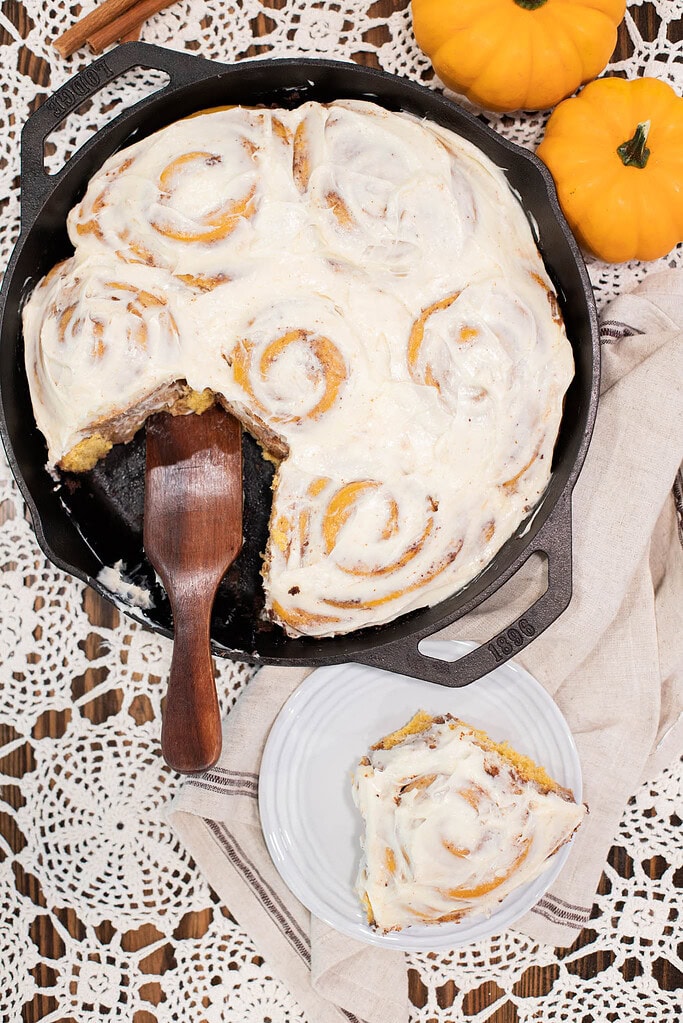
These sourdough pumpkin cinnamon rolls fill a soft, enriched dough with warm cinnamon sugar and a pumpkin spice cream, then bake up golden and pillowy with a tangy cream cheese frosting that settles into every swirl.
The dough comes together the evening before and cold-proofs overnight, making the morning bake straightforward with no rushing.
For more fall baking from the cottage kitchen, explore Sourdough Cinnamon Rolls Recipe, Sourdough Pumpkin Muffins, and Pumpkin Bread with Freshly Milled Flour.

“I made the pumpkin rolls and they are wonderful! ” ~Pauline S.
Why You’ll Love This Recipe


Ingredients
Variations & Add-Ins
Recipe Tips
Use a peaked starter – The most common reason sourdough cinnamon rolls do not rise is a starter that was not active enough at mixing time. Feed your starter the morning before you plan to mix the dough and use it when it has doubled and looks bubbly across the surface. For a complete guide to feeding and timing, read How to Make a Sourdough Starter.
Warm your milk gently – Milk that is too hot will stress the starter. Aim for 90 to 100 degrees Fahrenheit, warm to the touch but not uncomfortable to hold your wrist against.
Pat the pumpkin puree dry if it seems wet – Canned pumpkin varies in moisture content by brand. If your puree looks very wet, spread it briefly on a paper towel and blot before measuring. Too much moisture in the dough makes it sticky and harder to roll cleanly.
Roll the dough to an even rectangle – An uneven rectangle means some rolls will be thicker than others and will bake unevenly. Take the extra minute to square the corners and roll to a consistent thickness before spreading the filling.
Use unflavored dental floss to cut – Slide a length of unflavored dental floss under the log, cross it over the top, and pull the ends in opposite directions. The floss cuts cleanly through without compressing the rolls the way a knife does. A bench scraper also works well.
Apply frosting while warm but not hot – Straight from the oven, the rolls are too hot and the frosting will run off completely. After ten minutes of resting, the rolls are warm enough to let the frosting melt gently into the swirls without pooling at the bottom of the pan.
Freshly milled flour variation – Replace the bread flour with freshly milled hard white wheat at a one-to-one swap. The dough will absorb moisture differently, so add the flour gradually and stop when the dough feels soft and slightly tacky rather than sticky. For tips on converting any recipe to fresh milled flour, visit Converting Recipes to Freshly Milled Flour.


Instructions
- Mix the dough – In the bowl of a stand mixer or a large mixing bowl, combine the warm milk, active sourdough starter, pumpkin puree, eggs, sugar, pumpkin pie spice, maple syrup, and vanilla extract. Stir until combined. Add the bread flour and salt and mix on low speed until a shaggy dough forms, about two minutes. Increase to medium and knead for eight to ten minutes until the dough is smooth, elastic, and pulls away cleanly from the sides of the bowl. Add the softened butter one tablespoon at a time and continue kneading until fully incorporated and the dough is soft and slightly tacky.
- Bulk ferment – Transfer the dough to a lightly oiled bowl and cover with a damp towel or plastic wrap. Leave at room temperature for eight to ten hours or until the dough has nearly doubled. A warm kitchen shortens this window, a cool kitchen lengthens it. Watch the dough, not the clock.
- Make the pumpkin spice cream – In a small bowl, stir together the softened butter, pumpkin puree, brown sugar, cinnamon, and pumpkin pie spice until smooth. Set aside at room temperature so it spreads easily without tearing the dough.
- Roll the dough – Turn the risen dough out onto a lightly floured surface and press gently to deflate. Roll into a rectangle approximately 12 by 18 inches, squaring the corners as best you can for even rolls.
- Spread the filling – Spread the pumpkin spice cream evenly across the surface of the dough, leaving a half-inch border along the far long edge. The filling should go right to the edges on the other three sides for full swirl coverage in every roll.
- Roll and cut – Starting from the long edge closest to you, roll the dough tightly and evenly into a log. Pinch the seam to seal. Using unflavored dental floss or a bench scraper, cut the log into twelve equal rolls, approximately one and a half inches each.
- Second rise – Place the rolls cut side up in a buttered 10″ cast iron skillet or a 9 by 13 inch baking pan, spacing them evenly. Cover and let the rolls rise again until puffy, about 1–2 hours (*or overnight in the fridge for a slower ferment).
- *If you refrigerated – Remove the rolls from the refrigerator and let them sit covered at room temperature for one to two hours until they look puffy and feel light when you gently press the surface. They will not double but should have noticeably increased in size.
- Bake – Preheat the oven to 375 degrees Fahrenheit. Bake the rolls for 25 to 30 minutes until the tops are deep golden brown, and the centers feel set when pressed lightly. The internal temperature should read 190 to 195 degrees Fahrenheit.
- Make the frosting – While the rolls bake, beat the room temperature cream cheese and softened butter together until smooth and fluffy. Add the powdered sugar, vanilla extract, and a pinch of salt. Beat until the frosting is light and spreadable.
- Frost and serve – Allow the rolls to cool in the pan for ten minutes. Spread the cream cheese frosting generously over the warm rolls and serve immediately.

Freezing and Storage
- Room temperature – Store frosted rolls covered at room temperature for up to two days. The rolls will soften further as they sit, which many people prefer.
- Refrigerator – Refrigerate covered for up to four days. The cream cheese frosting requires refrigeration after the first day if your kitchen runs warm. Bring rolls to room temperature before serving for the best texture.
- Freeze unfrosted rolls – Freeze baked unfrosted rolls individually wrapped in plastic wrap, then stored in a freezer bag, for up to two months. Thaw overnight in the refrigerator and warm in a 300-degree oven for ten minutes before frosting and serving.
- Make-ahead option – The rolls can be shaped, placed in the pan, and refrigerated for up to eighteen hours before baking. Remove from the refrigerator, allow to warm and proof for one to two hours, then bake as directed.
FAQ
Join The Community
Want More Cozy Recipes & Seasonal Inspiration?
Get cozy, from-scratch recipes, seasonal cottage living tips, and slow living inspiration delivered straight to your inbox.
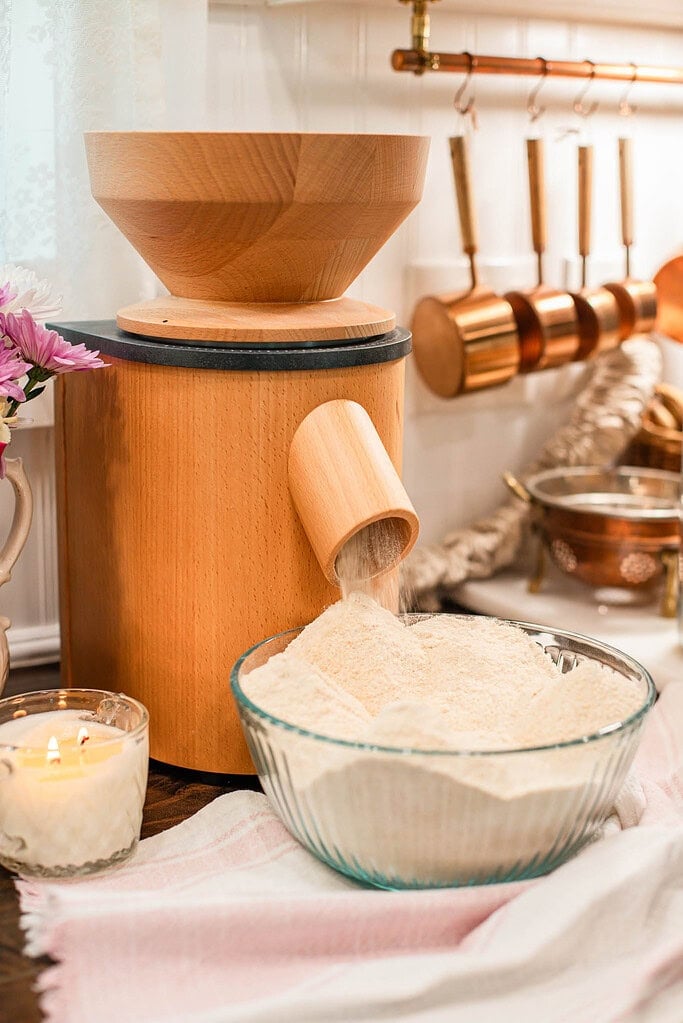
Did you know you can convert your favorite recipes to freshly milled flour? Learn how to convert recipes and find more fresh flour guides at The Cottage Mill.
The Cottage Mill | Freshly Milled Flour Guides, Recipes, and More Await!
More Fall Recipes from the Cottage
⭐️ Rate This Recipe
Made this recipe? Leave a star ⭐️ rating below, it means the world to me and helps my recipes get found by more people like you. Tag me on Instagram @themoderndaycottage


Sourdough Pumpkin Cinnamon Rolls with Cream Cheese Frosting
 Prep:30 minutes Cook:25 minutes Optional Overnight Ferment:8 hours Total:8 hours 55 minutes
 Equipment
- 1 Stand mixer with dough hook or paddle attachment
- 1 Mixing bowls
- 1 12" Cast iron skillet or a 9 by 13 inch baking pan
- 1 Plastic wrap or aluminum foil
- 1 Bench scraper or unflavored dental floss
Ingredients
Dough
- 5 ⅓ cups Bread Flour 640 grams
- 1 cup Sourdough Starter 250 grams
- ¾ cup Warm Milk 190 grams
- 2 large Eggs
- ⅓ cup Salted Butter *or use unsalted butter 76 grams, melted at 110°F
- ½ cup Granulated Sugar 100 grams
- 1 tsp Salt 6 grams
- 1 tsp Vanilla Extract 4 grams
- ½ cup Pumpkin Puree 120 grams
- 2 Tbsp Maple Syrup or Honey 40 grams
Filling
- ½ cup Granulated Sugar 100 grams, for filling
- ½ cup Brown Sugar 100 grams, for filling
- ½ cup Salted Butter 115 grams, softened
- 2 Tbsp Pumpkin Pie Spice Seasoning 30–45 grams
THE SECRECT SAUCE to Pour over before Cooking
- ½ cup Heavy Whipping Cream 120 grams, for secret sauce
- 2 tsp Pumpkin Spice Seasoning 8–9 grams, for secret sauce
Cream Cheese Frosting
- 8 oz Cream Cheese 226 grams, softened
- 2 Tbsp Salted Butter 28 grams, cold
- ½ cup + 2 Tbsp Powdered Sugar 100 grams
- 1 tsp Vanilla Extract 4 grams
- Pinch of Salt
Instructions
- Mix the dough – In the bowl of a stand mixer or a large mixing bowl, combine the warm milk, active sourdough starter, pumpkin puree, eggs, sugar, pumpkin pie spice, and vanilla extract. Stir until combined. Add the bread flour and salt and mix on low speed until a shaggy dough forms, about two minutes. Increase to medium and knead for eight to ten minutes until the dough is smooth, elastic, and pulls away cleanly from the sides of the bowl. Add the softened butter one tablespoon at a time and continue kneading until fully incorporated and the dough is soft and slightly tacky.
- Bulk ferment – Transfer the dough to a lightly oiled bowl and cover with a damp towel or plastic wrap. Leave at room temperature for eight to ten hours or until the dough has nearly doubled. A warm kitchen shortens this window, a cool kitchen lengthens it. Watch the dough, not the clock.
- Make the pumpkin spice cream filling – In a small bowl, stir together the softened butter, pumpkin puree, brown sugar, cinnamon, and pumpkin pie spice until smooth. Set aside at room temperature so it spreads easily without tearing the dough.
- Roll the dough – Turn the risen dough out onto a lightly floured surface and press gently to deflate. Roll into a rectangle approximately 12 by 18 inches, squaring the corners as best you can for even rolls.
- Spread the filling – Spread the pumpkin spice cream evenly across the surface of the dough, leaving a half inch border along the far long edge. The filling should go right to the edges on the other three sides for full swirl coverage in every roll.
- Roll and cut – Starting from the long edge closest to you, roll the dough tightly and evenly into a log. Pinch the seam to seal. Using unflavored dental floss or a bench scraper, cut the log into twelve equal rolls approximately one and a half inches each.
- Second rise – Place the rolls cut side up in a buttered 12" cast iron skillet or a 9 by 13 inch baking pan, spacing them evenly. Cover and let the rolls rise again until puffy, about 1–2 hours (*or overnight in the fridge for a slower ferment).
- *If you refrigerated – Remove the rolls from the refrigerator and let them sit covered at room temperature for one to two hours until they look puffy and feel light when you gently press the surface. They will not double but should have noticeably increased in size.
- Bake – Preheat the oven to 375 degrees Fahrenheit. Bake the rolls for 25 to 30 minutes until the tops are deep golden brown and the centers feel set when pressed lightly. The internal temperature should read 190 to 195 degrees Fahrenheit.
- Make the frosting – While the rolls bake, beat the room temperature cream cheese and softened butter together until smooth and fluffy. Add the powdered sugar, vanilla extract, and a pinch of salt. Beat until the frosting is light and spreadable.
- Frost and serve – Allow the rolls to cool in the pan for ten minutes. Spread the cream cheese frosting generously over the warm rolls and serve immediately.
Video
Notes
Nutrition

Emily Rider
Home miller since 1999 with fresh-milled flour & sourdough experience. Sharing from-scratch recipes and traditional kitchen skills, rooted in the seasons and inspired by everyday cottage living and seasonal rhythms.

Just curious, I made the pumpkin rolls and they are wonderful! And I saw your cinnamon roll recipe and it is way different. Wonder if the results will be the same soft rolls. Thanks
Hi Pauline,
Thank you for trying the pumpkin rolls and for your question! The main difference between the Sourdough Pumpkin Cinnamon Rolls and the regular Sourdough Cinnamon Rolls is in the flavor additions. The pumpkin rolls include pumpkin puree, maple syrup (or honey), and pumpkin pie spice, which give them a warm, spiced flavor and seasonal flair. In contrast, the regular cinnamon rolls focus on classic flavors, with an option to add raisins for sweetness.
Both recipes are designed to be soft and fluffy, so you’ll get that same irresistible texture. The pumpkin rolls are perfect for fall, while the regular ones are a timeless treat!
Let me know if you try the regular version—I’d love to hear what you think! Let me know if you have anymore questions. 😊
Happy baking!
I make this recipe for both the pumpkin and regular cinnamon rolls I just either add the pumpkin or not and they turn out amazing either way. Now I do tweak the recipe a bit to make it my own.
Bronson, thank you so much! I remember your sweet comment on my sourdough cinnamon rolls back in January 2025 after you had tried the pumpkin version, so it makes me so happy to hear that you’re still making them!
There are a few differences between the pumpkin and regular cinnamon roll recipes, but getting that really soft, tender, fluffy texture was something I spent a lot of time perfecting. I’m a bit of a cinnamon roll perfectionist myself, so there was a lot of flour, testing, and tweaking involved before I was finally happy with them. This recipe is years in the making and one we make every fall season. And then the cinnamon version for Christmas morning, without fail, 18 years and counting:).
I really appreciate you continuing to bake along with me here at the cottage and taking the time to come back and share how the recipes turn out. If you try any of my other recipes, I’d absolutely love to hear what you think. And with how long you’ve been baking from the site, I may have to recruit you as a recipe tester one of these days!
Thank you again, Bronson!
Warmly,
Emily