

This post may contain affiliate links. Please read our disclosure policy.
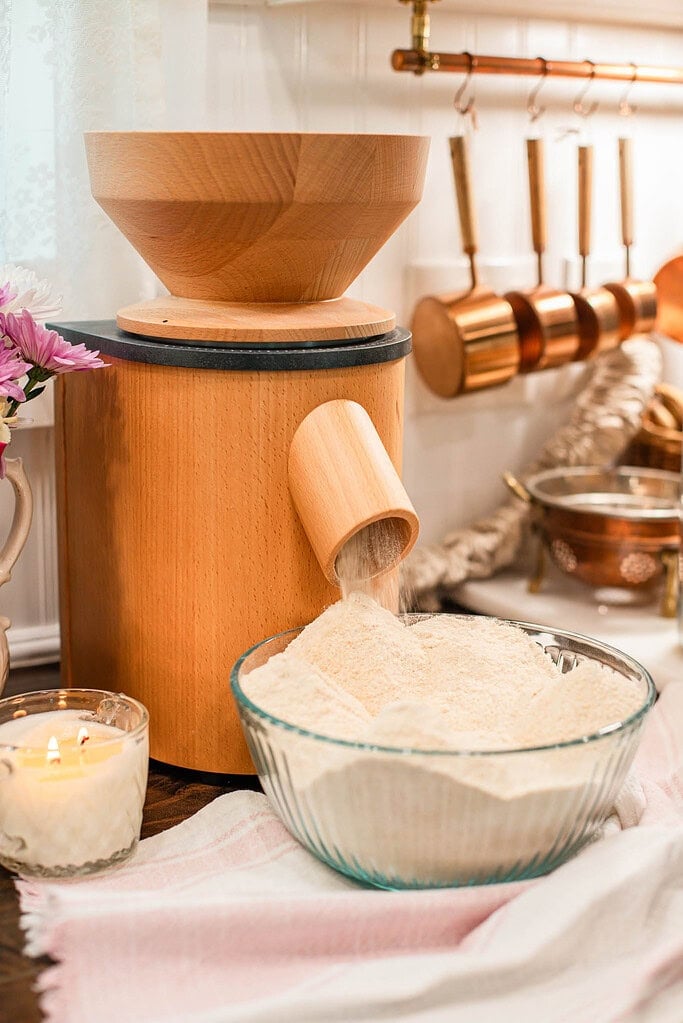
Learning how to mill your own flour at home is much simpler than it may seem at first. With a grain mill and a few wheat berries, you can have warm, freshly milled flour ready for bread, muffins, pancakes, cookies, and so much more in just a few minutes.
Whether you are just curious about milling your first batch of wheat berries or you are ready to add another heritage skill to your from-scratch kitchen, you will find everything you need right here.
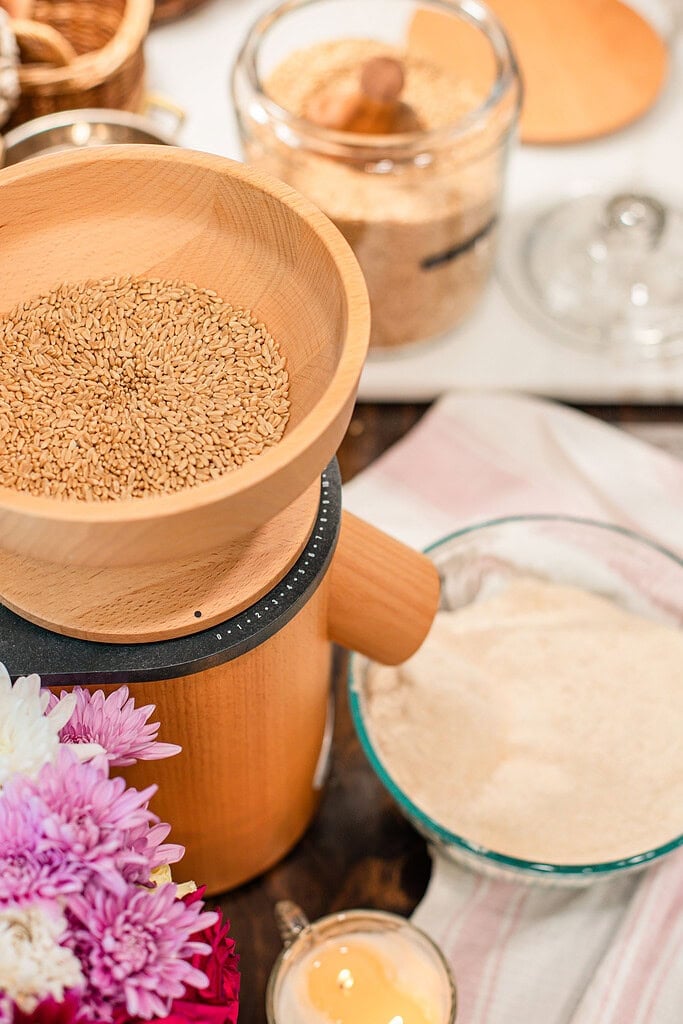
And you do not have to replace every bag of flour in your pantry to enjoy milling your own flour. I still bake with unbleached all-purpose flour and bread flour here at the cottage from time to time to test recipes for the blog and to make some of family their favorite all-purpose flour baked goods.
After more than 25 years of milling, I have come to see it as another useful skill for a from-scratch kitchen, one you can use as much or as little as you like.
I also think there is something pretty special and freeing about learning a heritage skill like milling grain right in our own kitchens. Plus you get to be in full control of the texture and variety of your homemade flour.
What You Need to Mill Flour at Home
A Quick Look at How To Mill Flour At Home
I’ll walk you through the entire milling process step by step below, along with choosing grains, using a grain mill, storing your flour, and what I’ve learned from milling at home over the years.
When you’re ready to learn more, Baking with Freshly Milled Flour, Best Whole Grains to Mill for Baking Bread & More, and Sifting Freshly Milled Flour are all here whenever you need them.
If you’re new to baking with freshly milled flour, The Cottage Mill resource library offers more helpful freshly milled flour guides, tools, wheat sources, recipes, and more to get you started.
Why You’ll Love Milling Flour at Home
Wonderful, wonderful site! So glad I found it before starting my journey with fresh-milled flour. Thank you so much for sharing your knowledge. ~ Mary
This was one of the most helpful and informative sites I’ve found on using freshly milled flour in baking. Thank you, Emily. ~ Tammy
Grain Mills to Mill Your Whole Grains into Flour
Manual, Electric (Stone or Impact) Milling Options
Manual mills (not pictured) – most are affordable, quiet, and portable. They are a good fit if you bake occasionally, enjoy the hands-on rhythm of cranking flour yourself, or want an off-grid option. They are slower, but very satisfying.
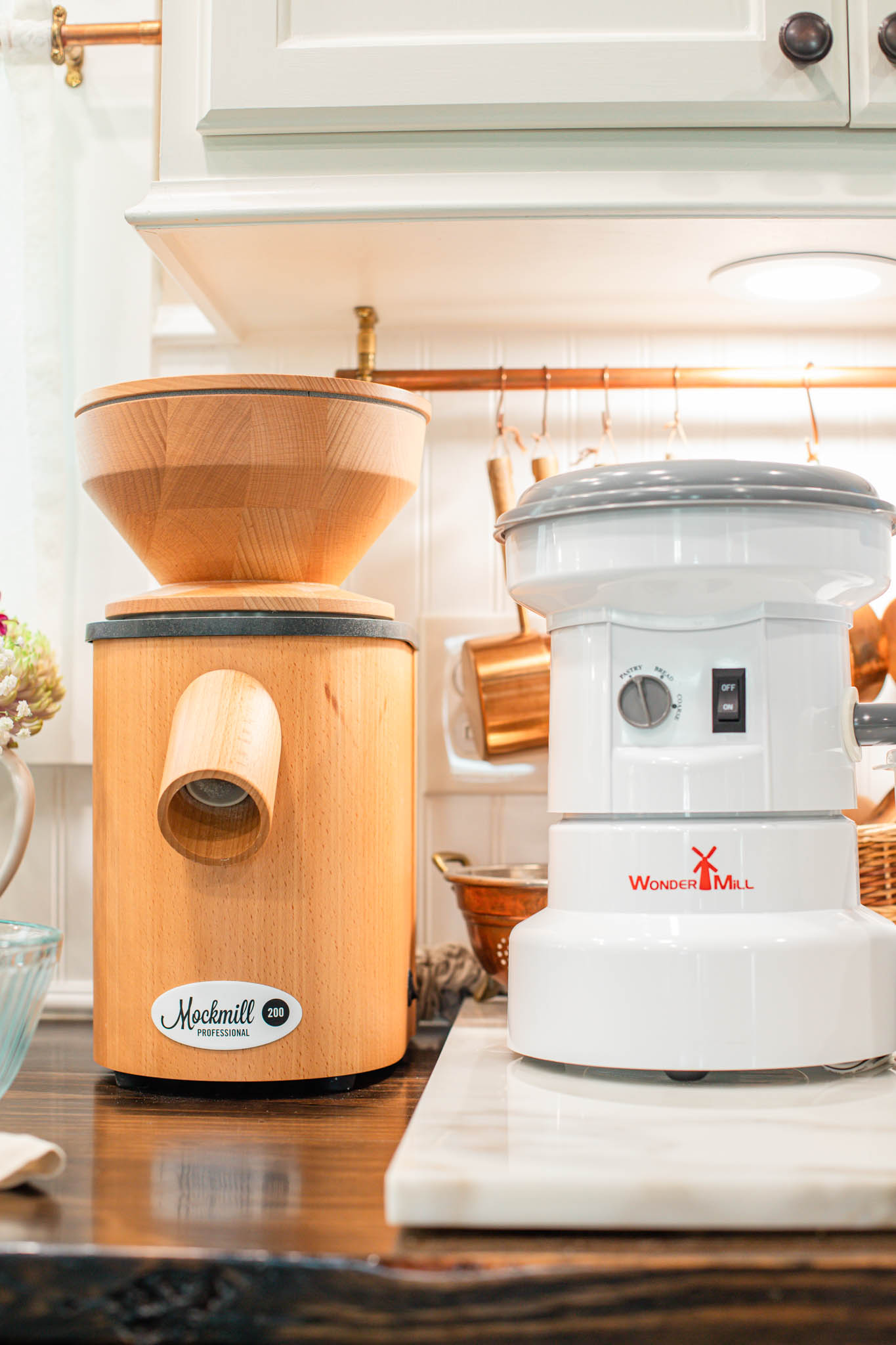
Electric mills (left to right: MockMill Pro 200 series and WonderMill) – are fast, consistent, and easy to use. They are a good fit if you bake regularly or want flour ready within minutes. They do cost more, but many everyday bakers find them worth the investment once milling becomes part of their routine. I personally use both a stone mill and an impact mill. My daughter loves and uses her NutriMill Harvest stone grain mill daily.
KitchenAid Grain Mill Attachment – Already have a KitchenAid stand mixer? A KitchenAid grain mill attachment can be a simple way to get started without buying a separate mill. If you plan to mill regularly, a dedicated electric grain mill is worth the investment if you bake alot.
Some high-powered blenders can handle small batches of wheat berries, too, but always check the manufacturer’s instructions first. For regular milling and more control over the finished flour, I prefer a dedicated electric grain mill.
If you’d like a closer look at different milling tools, I share more here: Tools for Milling Flour at Home | Mills, Mixer, & More.
Use my Nutrimill affiliate link and enter the code “TMDC” at checkout for $20 OFF your order.
Before You Buy – If you can, buy some freshly milled flour from a local miller, or from a friend who mills before investing in a grain mill. Try it first, see if you love the flavor, and then decide if milling at home is something you want to pursue.
Wheat Berries & Whole Grains To Start With
High-Protein, Low-Protein, and Ancient Grains
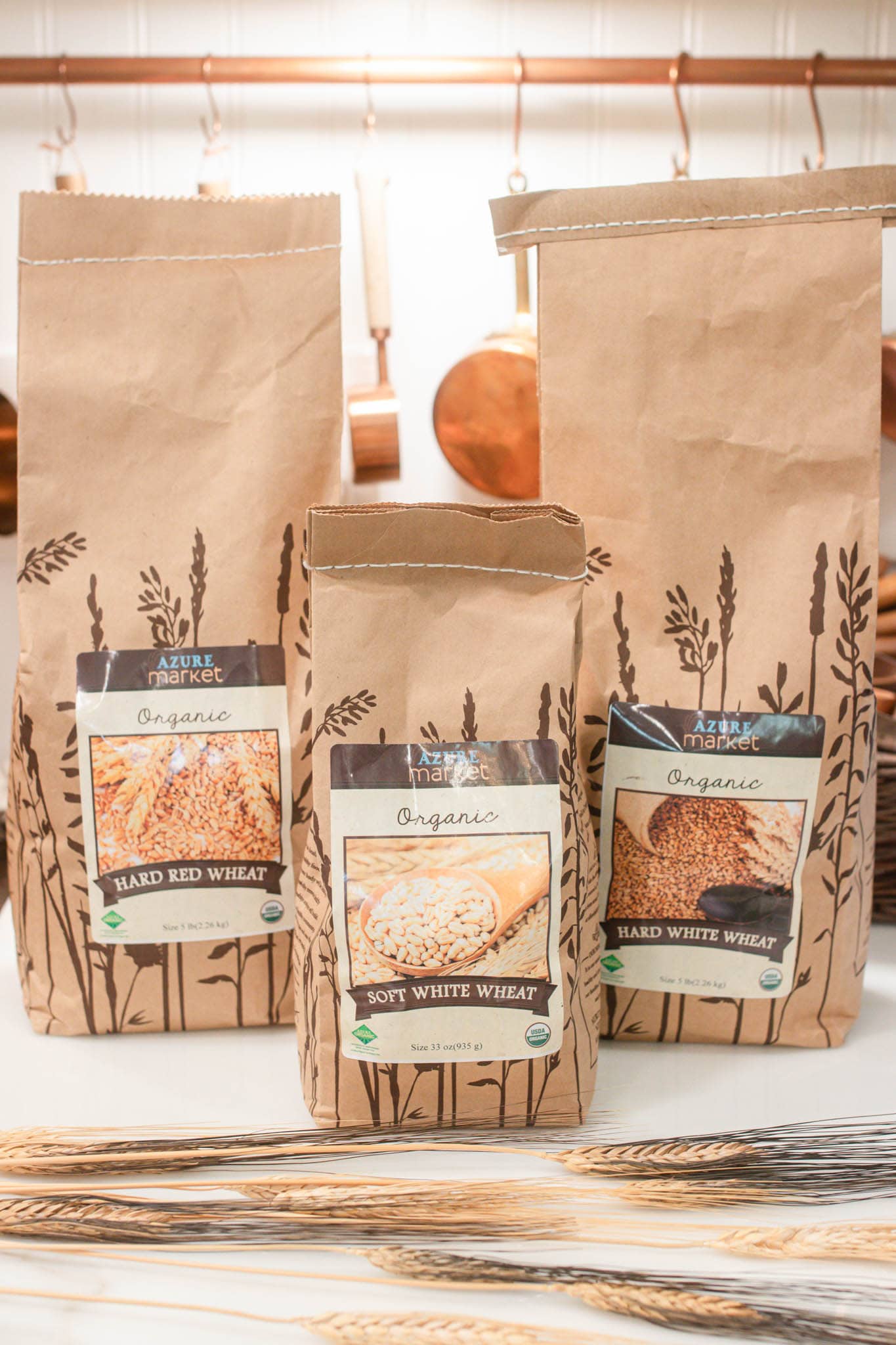
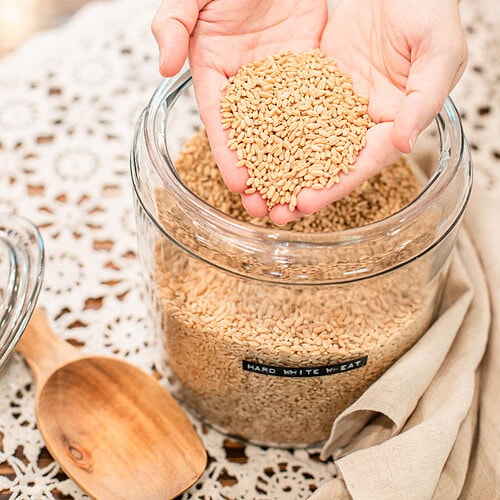
When you are new to milling flour at home, I recommend starting with hard white wheat and soft white wheat. They both have a mild flavor, and together they cover most everyday baking.
Hard white wheat – Mild, easy to work with, and perfect for everyday bread.
Hard red wheat – Fuller flavor, a little heartier, great for rustic loaves.
Soft white wheat – Lower protein, wonderful for cookies, muffins, and pancakes.
Ancient grains – Einkorn, spelt, emmer, Kamut, and rye each bring unique flavors once you are ready to branch out. These grains have a weaker gluten structure, so start by blending in smaller amounts into your tried and true FMF recipes rather than replacing all of the wheat at once. For recipes that do not require rise, like cookies, pancakes, or quick breads, you can use 100%.
To learn more about what wheat berries are needed for specific recipes, read my guide Best Whole Grains to Mill at Home | Beginner’s Guide. For sourcing whole grains and wheat berries, read my guide Best Places to Buy Wheat Berries & Whole Grains.
Use my Azure Standard affiliate link and enter the code “NEW15” at checkout for 15% off your first order over $100, delivered to your drop location of choice.
Use my Guardian Grains affiliate link and enter the code “cottage” at checkout for 15% off your order. Their Rouge de Bordeaux wheat berries are one of my go-to choices for sourdough bread.
Digital Kitchen Scale
A basic digital kitchen scale sets you up for success!
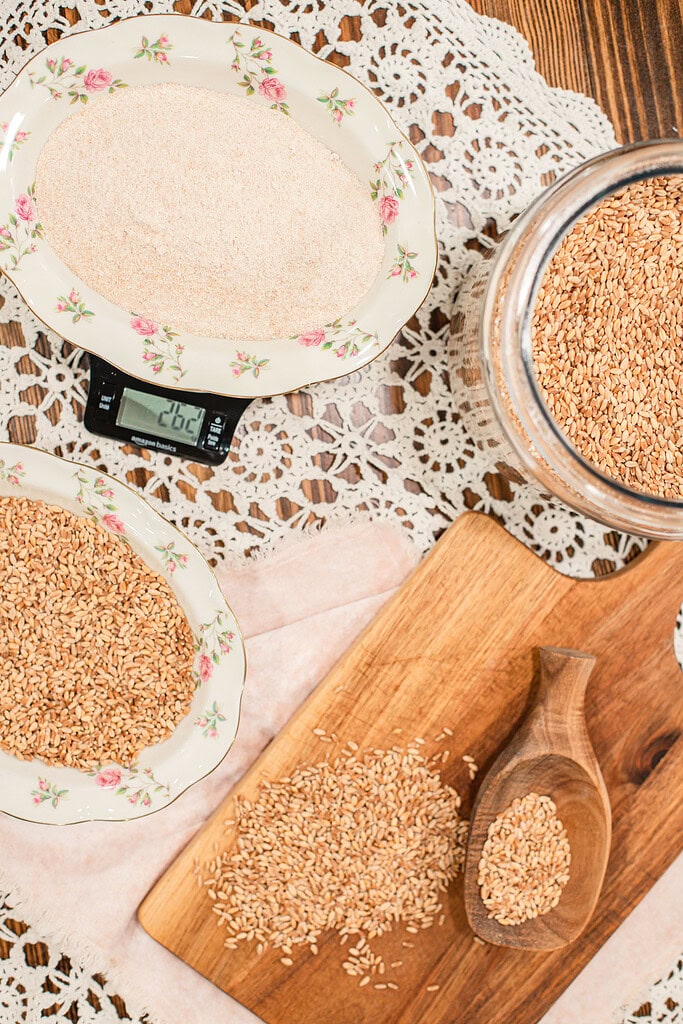
A digital kitchen scale is one of the tools I rely on most when baking with freshly milled flour. My recipes include gram measurements because weighing your flour and wheat berries gives you a much more consistent starting point than measuring by cups.
If a recipe calls for 500 grams of freshly milled flour and you are not sifting, weigh 500 grams of wheat berries before milling. Milling does not change the total weight, aside from a small amount of flour that may remain inside the mill.
I truly believe weighing ingredients is one of the best ways to set yourself up for success when baking with fresh flour.
If you are converting one of your favorite recipes, read my How to Convert Recipes to Freshly Milled Flour guide for the full method.
How To Store Wheat Berries & Flour
How Long Freshly Milled Flour Lasts and More!
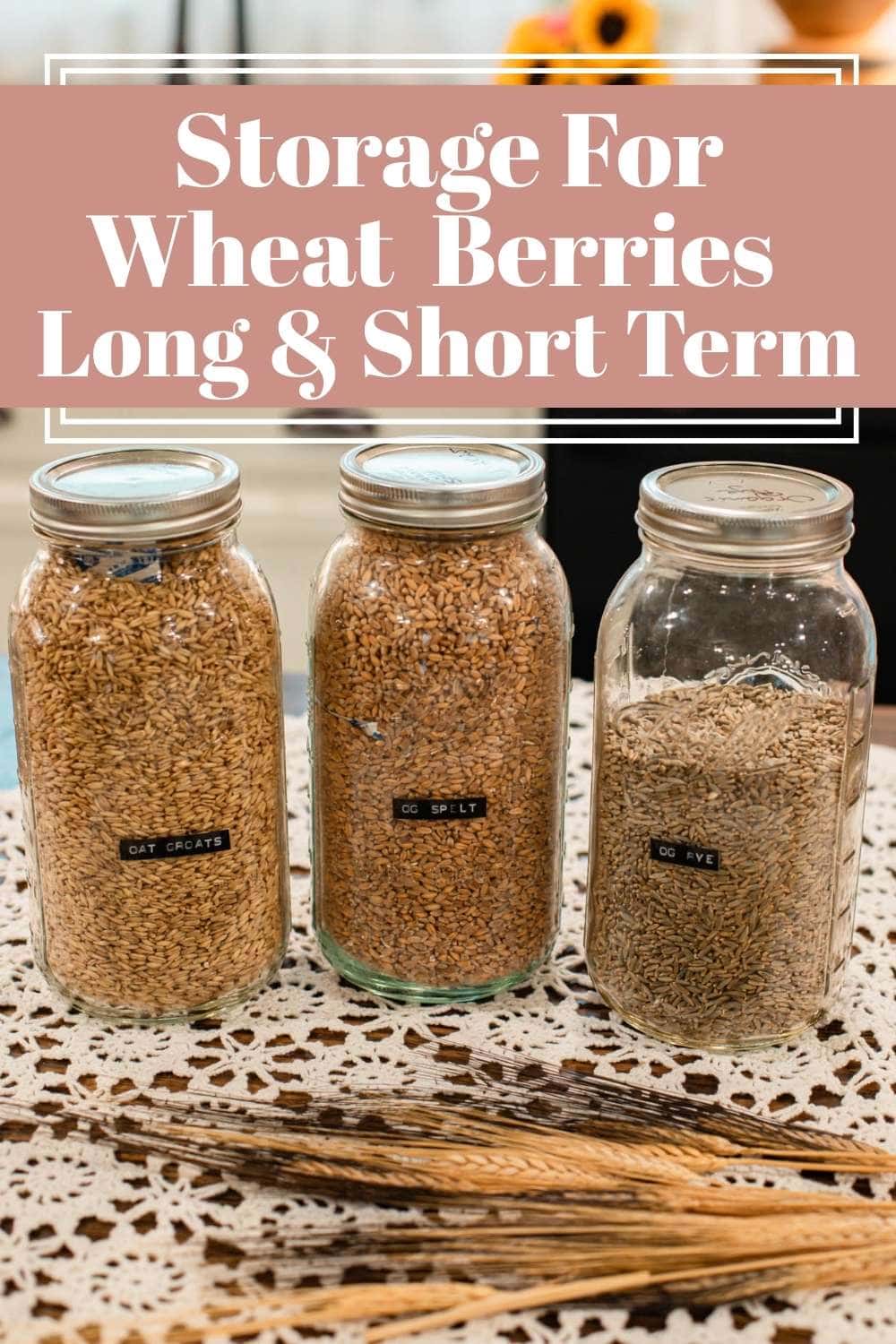
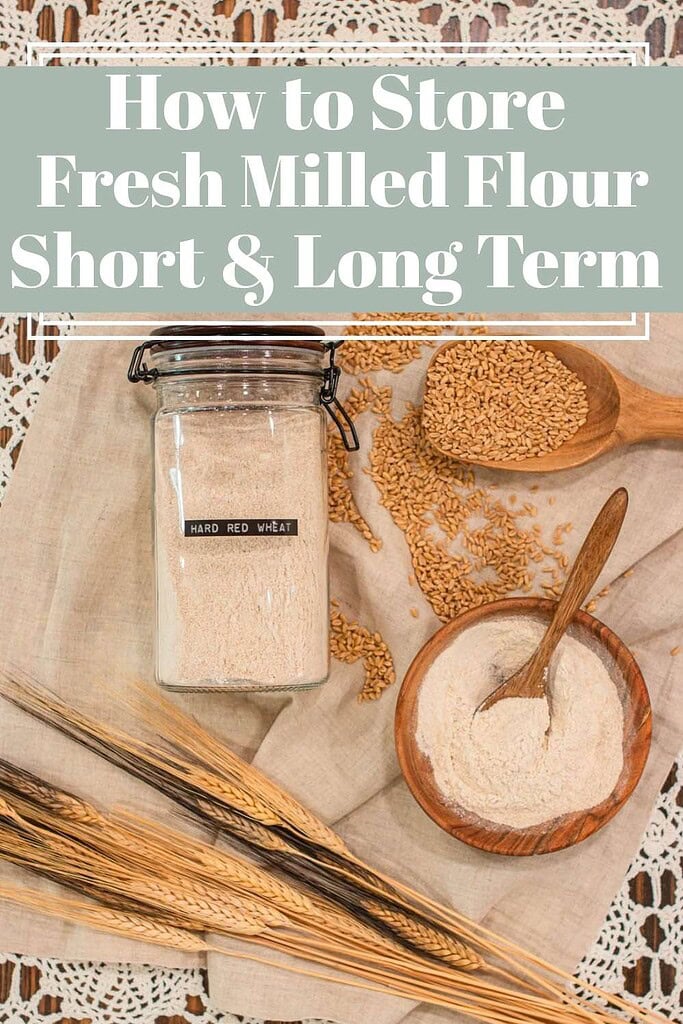
Wheat berries and whole grains should be stored in airtight jars or buckets in a cool, dry place.
For long-term wheat and whole grain storage, I use food-grade plastic buckets with gamma lids and oxygen absorbers, along with some food-grade DE (diatomaceous earth* optional), all kept in a climate-controlled space.
When stored well, whole grains can last for years. Heat and moisture are the biggest risks; too much of either can shorten shelf life or lead to spoilage. For a complete outline, read my guide How to Store Wheat Berries | Long and Short Term.
You can find the items I use by clicking on the pink Amazon Wheat Storage and Azure Standard buttons to the left, and to view my whole grains and milling tools sourcing information found at The Cottage Mill.
I shop at Azure Standard and Amazon for my oxygen absorbers, food-grade buckets, gamma lids, glass jars, mylar bags, and food-grade diatomaceous earth.
How To Store Freshly Milled Flour and for How Long
- Counter – Store in an airtight container for 1–3 days.
- Refrigerator – Store in a moisture-resistant airtight container for 4–7 days.
- Freezer – Store in a freezer-safe airtight container for up to 6 months.
- Before baking – Smell the flour. If it smells stale, musty, or sour, discard it.
- Preferred method – Mill only what you need for the current recipe or the next few days whenever practical. Freshly milled flour is intended to be used as fresh as possible for the best flavor and quality.
For more details on How To Store Wheat Berries, read this guide: How To Store Wheat Berries for Long & Short Term
For more details on How To Store Freshly Milled Flour, read this guide: How to Store Fresh Milled Flour | Short & Long Term
⭐️ Use my Azure Standard affiliate link and enter the code “NEW15” at checkout for 15% off your first order over $100, delivered to your drop location of choice.
Does Freshly Milled Flour Bake Differently?
Yes, freshly milled flour absorbs liquid differently than the flour you may be used to baking with, so giving it time to hydrate can make a big difference.
For batters like pancakes, waffles, muffins, cakes, brownies, and cookies, I recommend letting the batter rest for 10–15 minutes when appropriate. This gives the freshly milled flour time to absorb the liquid before you decide whether the consistency needs adjusting.
For yeast breads and sourdough, a 30–45 minute hydration rest can be helpful when appropriate. This gives the flour time to absorb the liquid and allows the bran to soften before you continue with mixing or fermentation.
You may notice that your recipes made with freshly milled flour brown more quickly or develop a deeper color than you are used to with conventional flour. Keep an eye on your bake as it gets close to the end of the baking time, and use the doneness cues in the recipe rather than relying on color alone. I tent my freshly milled flour recipes if they are getting too brown before the cook time is done.
For drier bakes like scones, biscuits, and pastries, I sometimes sift out some of the bran when I want a lighter texture. My Sifting Freshly Milled Flour | Why, When & How to Do It guide explains when I sift and which mesh sizes I use.
Give yourself a little time to learn how freshly milled flour looks and feels in your baking. The more you use it, the easier it becomes to recognize the consistency you are looking for.
My baking with fresh flour guide walks you through all of this and more, How to Bake with Freshly Milled Flour.
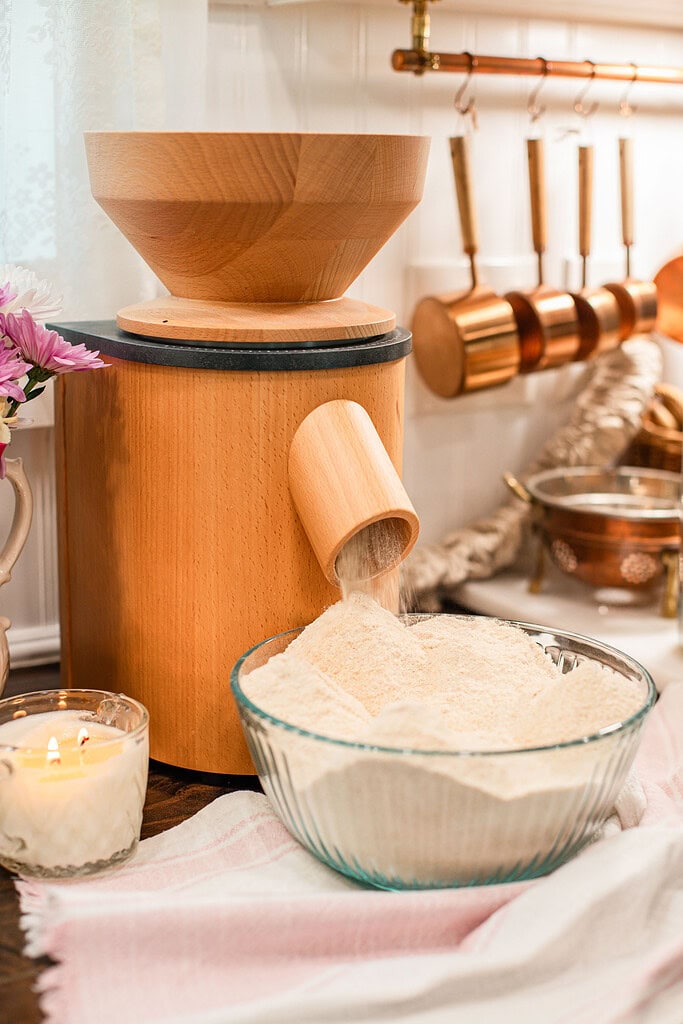
How To Mill Flour at Home Step by Step
- Weigh your wheat berries – A digital kitchen scale is the most accurate way to measure your grain. If your recipe calls for 500 grams of freshly milled flour and you are not sifting, start with 500 grams of wheat berries.
- Check your grain – Quickly look through the wheat berries for stones, chaff, or other debris before milling. The grain should also be clean and completely dry before going into your mill.
- Set up your grain mill – Position your bowl or flour container beneath the flour chute and make sure any canisters, filters, or other parts are properly in place. Every mill works a little differently, so follow the manufacturer’s instructions for your particular model.
- Choose your grind – For most of my everyday baking, I mill wheat berries into a fine flour. Adjust the setting according to your mill and what you plan to bake. Always follow the manufacturer’s instructions when adjusting your mill.
- Mill the wheat berries – Follow the manufacturer’s instructions for starting your grain mill and adding grain to the hopper. My mills require me to turn them on before adding the wheat berries, but your model may work differently. Let the mill run until all of the grain has passed through and the freshly milled flour has collected in your bowl or container.
- Check your flour – For most everyday baking, the flour should feel fine and soft, with small pieces of bran visible throughout. As you use your mill, you will become familiar with the texture you prefer for different recipes.
- You do not have to sift freshly milled flour, but I sometimes sift out some of the bran when I want a lighter texture for certain breads, cakes, or pastries. Read my Sifting Freshly Milled Flour | Why, When & How to Do It guide for the mesh sizes I use and when I sift.
- Use or store your flour – I prefer to bake with freshly milled flour the same day I mill it. If you have extra, store it in an airtight container at room temperature for 1–3 days, in a moisture-resistant airtight container in the refrigerator for 4–7 days, or in a freezer-safe airtight container for up to 6 months. Read my guide How to Store Fresh Milled Flour | Short & Long Term for more in-depth guidance on storing freshly milled flour.
What Should You Bake First?
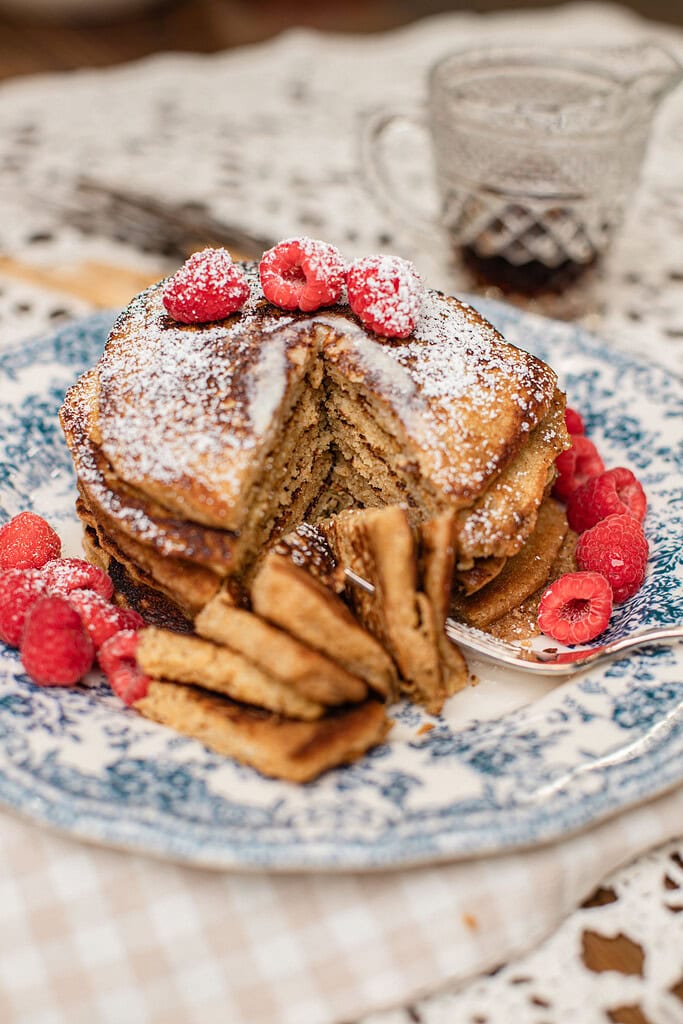
Start with something familiar and forgiving. Pancakes Made with Freshly Milled Flour or Waffles Made with Freshly Milled Flour are great places to begin because you can see how freshly milled flour absorbs liquid and how the batter changes as it rests.
When you are ready to try yeast bread, move on to my Sandwich Bread with Freshly Milled Flour. A simple sandwich loaf is a good next step for learning how freshly milled hard wheat behaves as it hydrates, kneads, rises, and bakes.
There is no rule that says your first freshly milled flour recipe has to be bread. Start with something you already enjoy baking and learn how fresh flour behaves as you go.

Did you know you can convert your favorite recipes to freshly milled flour? Learn how to convert recipes and find more fresh flour guides at The Cottage Mill.
The Cottage Mill | Freshly Milled Flour Guides, Recipes, and More Await!
Troubleshooting
Cottage Living Community
Join the Cozy Cottage Living Community
Sign up for The Modern Day Cottage Community newsletter to receive recipes. how-tos, exclusives, and more from my kitchen to your inbox every week.
FAQ
More Fresh Flour Guides & Recipes from The Cottage
⭐️ Rate This Guide
Was this guide useful? Leave a star ⭐️ rating below, it means the world to me and helps my Freshly Milled Flour Guides get found by more people like you.
How to Mill Flour at Home
Equipment
- Grain Mill
- Digital kitchen scale
- Bowl or flour container
- Airtight storage container, if needed
Fresh Milled Flour Blend
- Wheat berries or another whole grain suitable for your mill
Instructions
- Weigh the wheat berries – Use a digital kitchen scale to weigh the amount of grain your recipe calls for. If your recipe needs 500 grams of freshly milled flour and you are not sifting, start with 500 grams of wheat berries.
- Check the grain – Look through the wheat berries for stones, chaff, or other debris. Make sure the grain is clean and completely dry before milling.
- Set up the grain mill – Place a bowl or flour container beneath the flour chute. Make sure any canisters, filters, or other parts are properly in place according to the manufacturer's instructions.
- Choose the grind – For most everyday baking, mill wheat berries into a fine flour. Adjust the setting according to your grain mill and what you plan to bake.
- Mill the wheat berries – Add the wheat berries to the hopper according to your mill's instructions and let the mill process the grain into flour.
- Check the flour – The freshly milled flour should feel fine and soft, with small pieces of bran visible throughout.
- Sift if needed – Sifting is optional. If you want a lighter flour for certain breads, cakes, or pastries, sift out some of the bran after milling.
- Use or store the flour – For the best flavor and quality, use freshly milled flour as soon as practical. Store extra flour according to the storage guidelines below.
Notes

Emily Rider
Home miller since 1999 with fresh-milled flour & sourdough experience. Sharing from-scratch recipes and traditional kitchen skills, rooted in the seasons and inspired by everyday cottage living and seasonal rhythms.




Wonderful, wonderful site! So glad I found it before starting my journey with fresh milled flour. Thank you so much for sharing your knowledge.
Mary, thank you so much for the wonderful feedback! It truly means the world to hear that. I am so happy to be able to share everything I’ve learned along the way. Be sure to check out The Cottage Mill landing page for more guides to help you on your fresh milled flour journey, and if you ever have any questions, please don’t hesitate to reach out, I’m always here to help! Welcome to the cozy cottage community!