
If you’ve ever wondered about jam vs preserves, the difference isn’t simply whether the fruit is smooth or chunky. Jam generally starts with crushed, mashed, or chopped fruit, while preserves begin with whole fruit or pieces of fruit.
As they cook, both can change quite a bit. Jam can stay chunky, and the fruit in preserves can soften and cook down until the finished spread looks almost like jam. The fruit itself, how it’s prepared, and the recipe all play a part in the final texture.
Once you know what to look for, it’s much easier to understand the difference between jam and preserves and how jelly, marmalade, and fruit butter fit in, too.
Jam vs Preserves: What’s the Difference?
The main difference between jam and preserves starts with how the fruit is prepared.
Jam is generally made with fruit that has been crushed, mashed, or chopped before cooking. As it cooks with sugar, it thickens into a spread that can be smooth, chunky, or somewhere in between.
Preserves begin with whole fruit or pieces of fruit. As they cook with sugar, some fruits hold their shape while softer fruits can break down considerably and create a smoother spread.
So, you can’t always tell jam from preserves just by looking at the size of the fruit pieces. How the fruit starts and how the recipe is prepared matter, too.
What Is Jam?
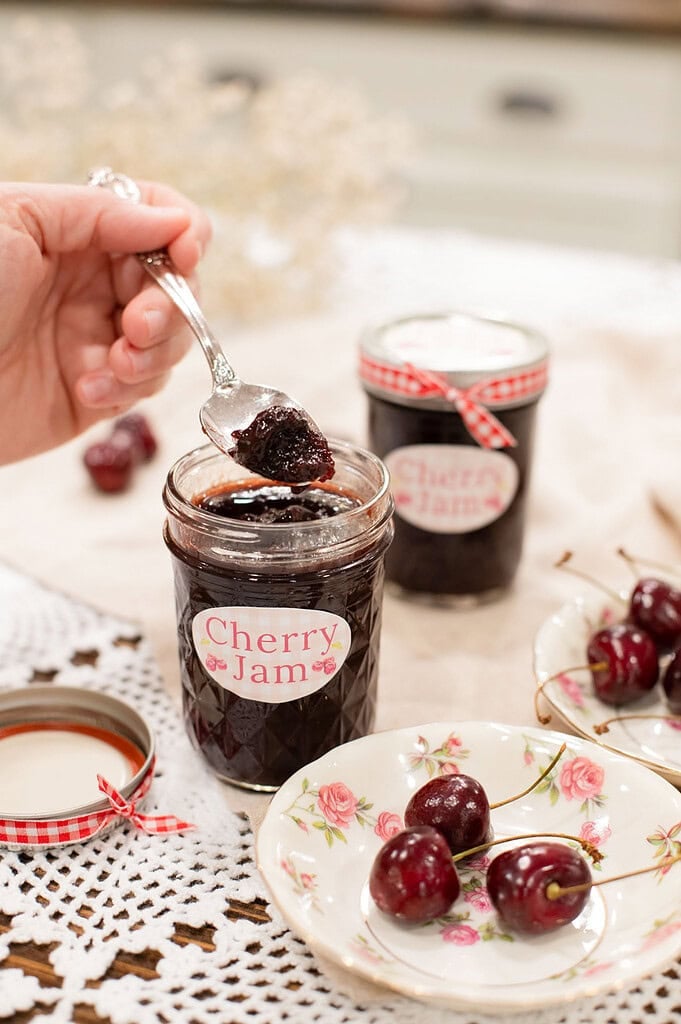
Jam is a fruit spread made with crushed, mashed, or chopped fruit that is cooked with sugar until it thickens.
Its texture can range from smooth to quite chunky depending on the fruit and how it is prepared. Seeds, pulp, skins, or pieces of fruit may still be noticeable in the finished jam.
Jam can be made from many different fruits, and its final consistency depends on the fruit, sugar, acid, natural pectin, added pectin when used, and the particular recipe.
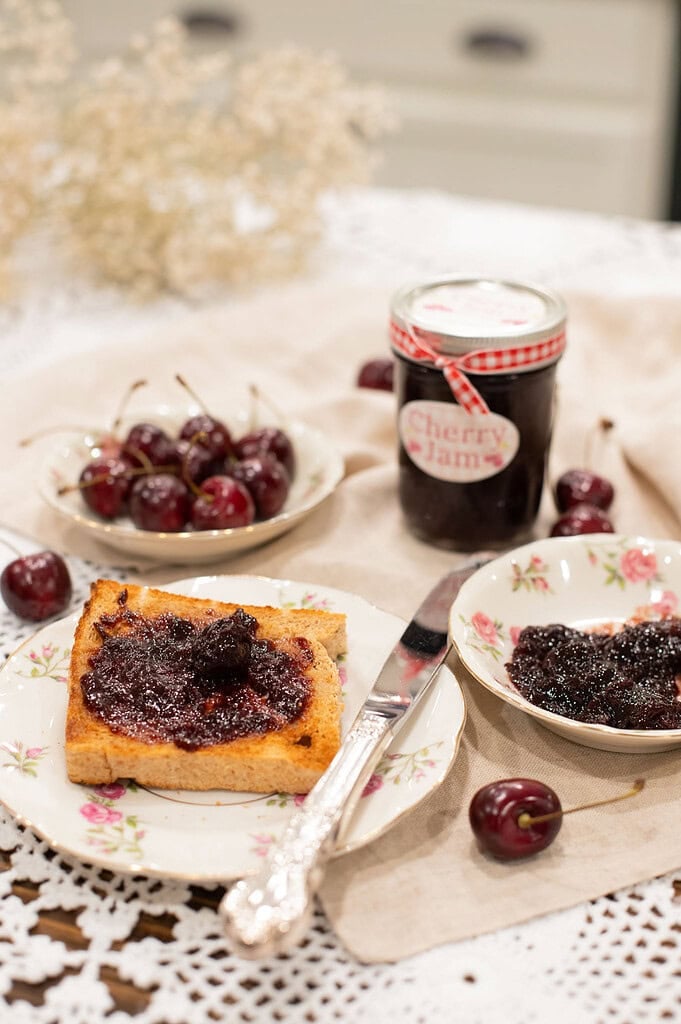
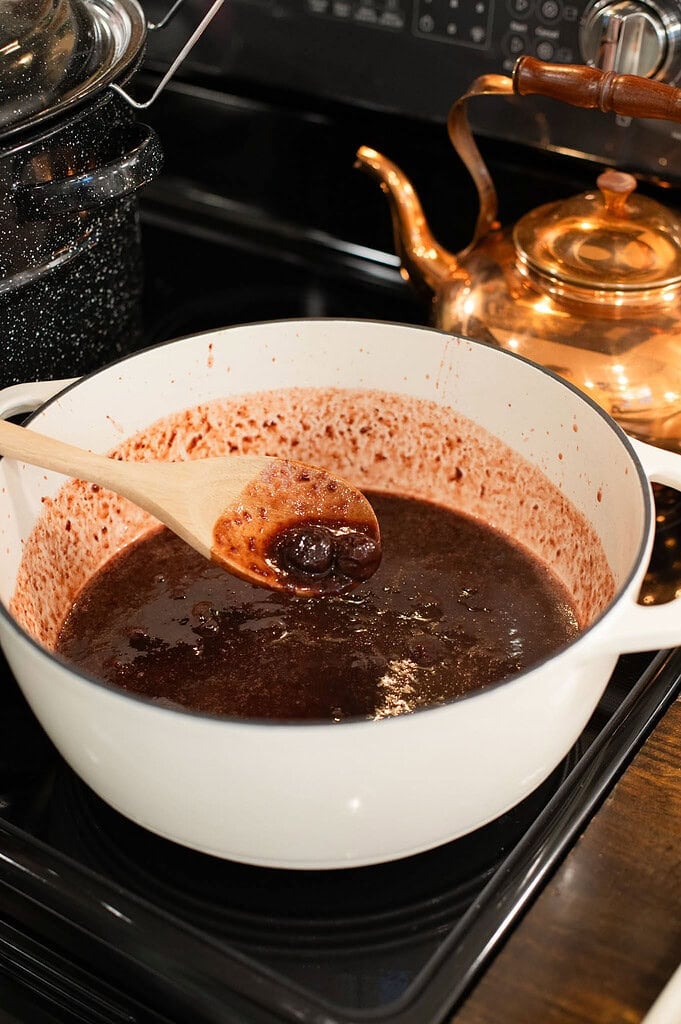
If you’d like to try making one yourself, my Homemade Cherry Jam is made with fresh or frozen cherries and is a simple way to preserve them for later.
How Is Jam Made?
Jam begins by preparing the fruit, usually by crushing, mashing, or chopping it before cooking.
As the fruit cooks with sugar, it softens and thickens into a spread. How much it breaks down depends on the fruit and the recipe, so homemade jam doesn’t have to be completely smooth.
Some jam recipes use added pectin to help them set, while others rely on the pectin naturally found in fruit. Since fruits contain different amounts of natural pectin, the method can vary from one jam to another.
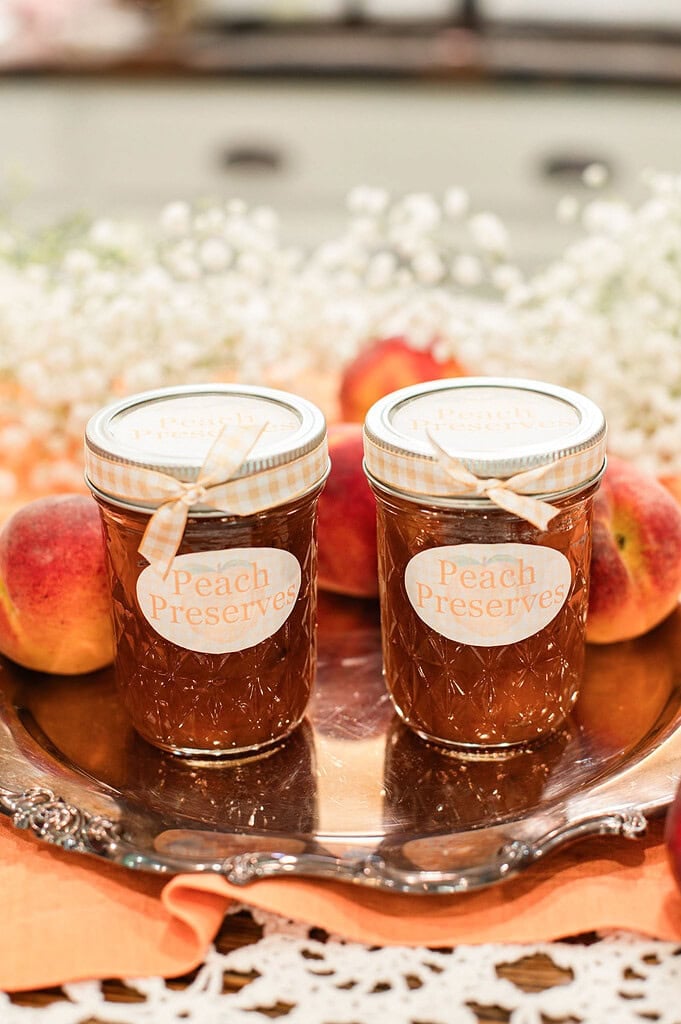
What Are Preserves?
Fruit preserves begin with whole fruit or pieces of fruit rather than fruit that has been crushed or mashed.
But that doesn’t mean those pieces will always stay large or completely intact. Firmer fruits may hold their shape well, while softer fruits can break down considerably as they cook. The finished preserves may be chunky, softer and more spreadable, or even look similar to jam.
That’s why preserves aren’t simply “chunky jam.” How the fruit is prepared before cooking is a better way to understand the difference.
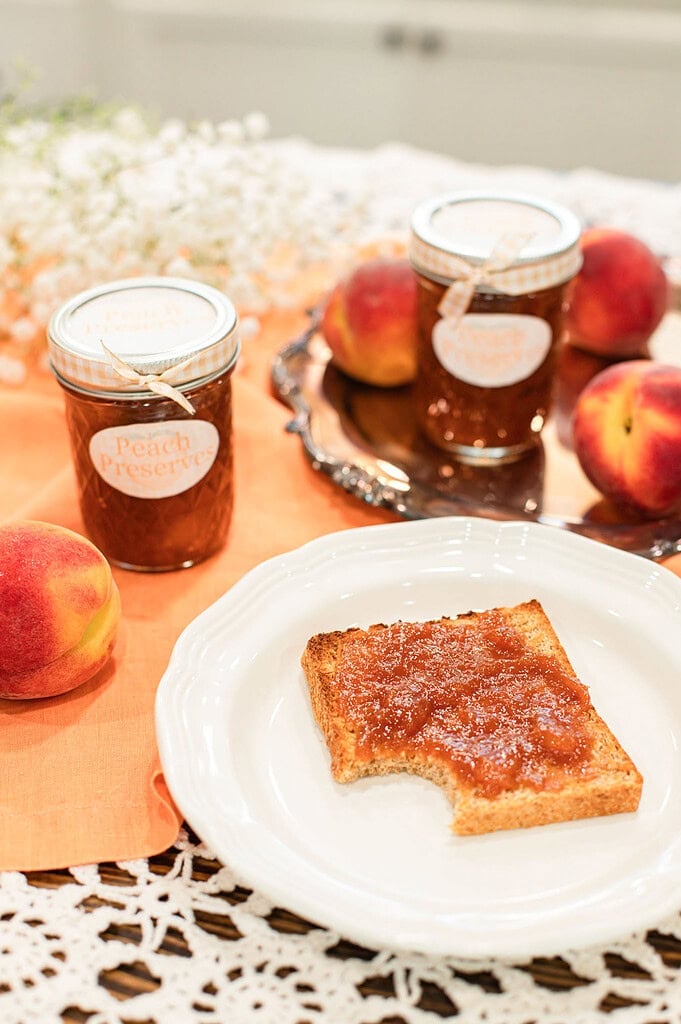
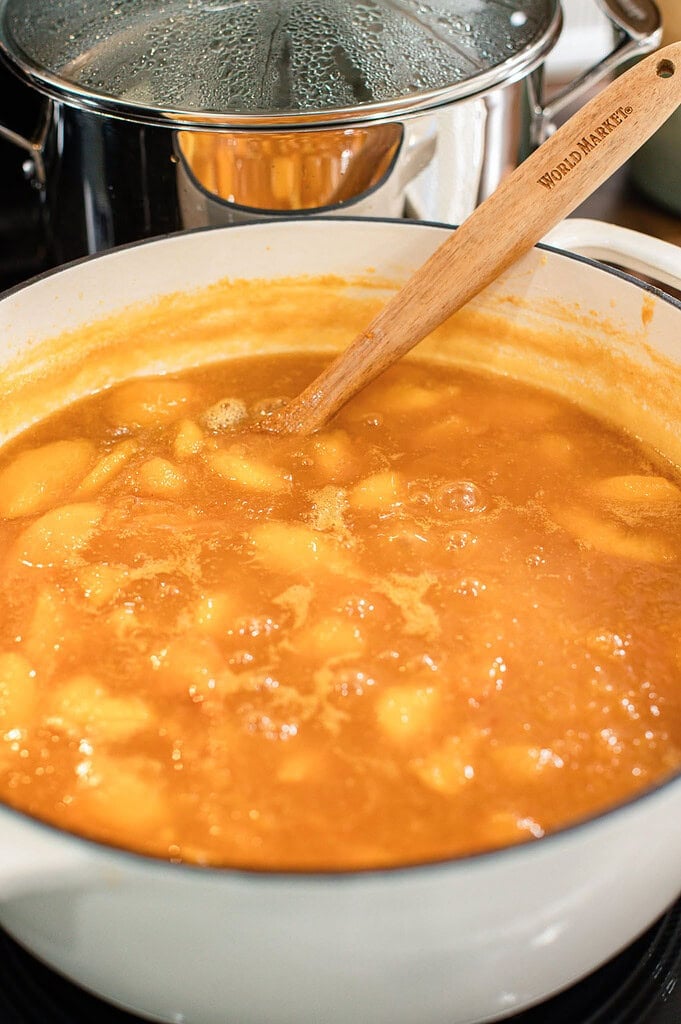
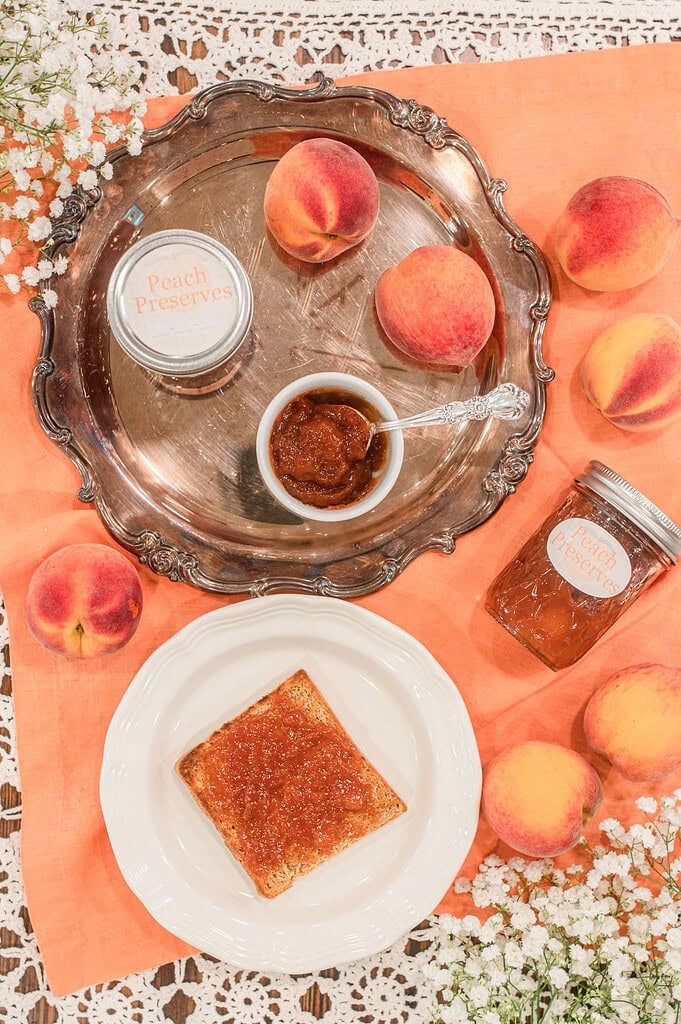
You can see this in my Homemade Peach Preserves, which are made with fresh peaches and no added pectin.
How Are Preserves Made?
Preserves start with whole fruit or pieces rather than fruit that has been deliberately crushed or mashed.
The fruit is cooked with sugar until it reaches the consistency called for in the recipe. Depending on the fruit, some pieces may remain noticeable while others soften and cook down much more.
Traditional preserves can also be made without added pectin. The fruit, sugar, and cooking process work together to create the finished consistency, which is why one type of preserve may look quite different from another.
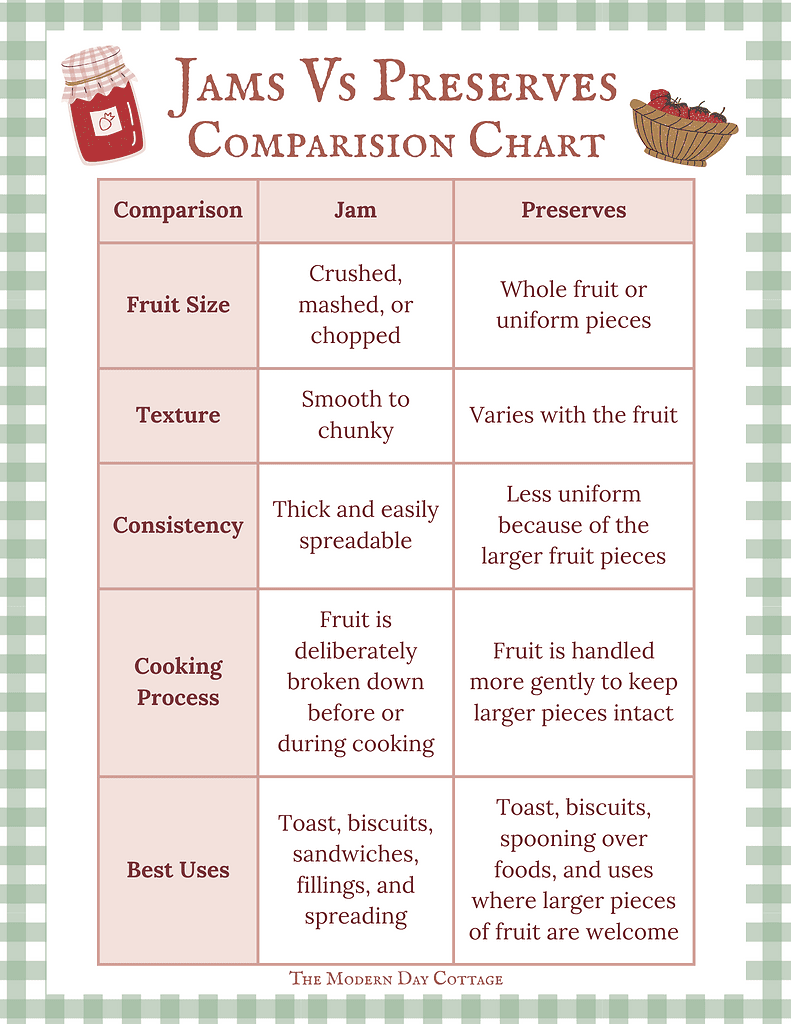
Quick Comparison Chart
Want a quick way to remember the difference between jam and preserves? I made this simple Jam vs. Preserves Comparison Chart that you can save and keep handy in your cottage kitchen.
Take a peek at the chart below, then sign up to have a copy sent straight to your email.
Jam vs Preserves: Texture & Final Outcome
The finished texture of both jam and preserves can vary more than you might expect.
Jam is thick and spreadable but can range from smooth to chunky depending on the fruit and how it was prepared.
Preserves can also range in texture. Some have noticeable pieces of fruit and more syrup, while others cook down into a thick, spreadable consistency that can look similar to jam.
That’s why texture alone isn’t the best way to tell jam versus preserves apart. The fruit and the way it was prepared matter just as much.
Can You Use Jam and Preserves Interchangeably?
Often, yes. Jam and preserves can work in many of the same places, especially on toast, biscuits, or other baked goods.
The biggest thing to consider is the consistency of the particular jar you’re using. Either one may be thick and spreadable, while some preserves may be softer or more syrupy.
For something as simple as spreading either one over a warm biscuit, use whichever you enjoy. When jam or preserves are used as an ingredient in another recipe, it’s best to use the type called for if the consistency could affect the finished result.
Jam vs Jelly vs Preserves
The jam vs jelly vs preserves comparison becomes much easier once you look at how the fruit starts.
Jam is made with crushed, mashed, or chopped fruit.
Preserves begin with whole fruit or pieces of fruit, although those pieces may soften and break down during cooking.
Jelly is made from fruit juice rather than pieces of fruit. The fruit solids are strained away, creating its smooth consistency.
Think of them as three different ways of starting with fruit: prepared fruit for jam, whole fruit or pieces for preserves, and fruit juice for jelly.
Join the Cozy Cottage Community Today!
Get from-scratch recipes, seasonal cottage living tips, and cozy cottage living inspiration delivered straight to your inbox.
What About Marmalade and Fruit Butter?
Jam, jelly, and preserves aren’t the only types of fruit spreads you’ll find in the pantry.
Marmalade is most closely associated with citrus fruits and characteristically contains pieces of citrus peel. That peel is one of the things that makes marmalade noticeably different from a typical jam.
Fruit butter gets its name from its smooth, spreadable consistency rather than because it contains dairy butter. The fruit is cooked down and typically puréed or passed through a food mill to create a smooth, concentrated spread.
Apple butter is probably one of the most familiar examples.
Although all of these spreads begin with fruit, changing how the fruit is prepared and cooked can create very different results.
Which Should You Make: Jam or Preserves?
Choose based on the fruit you have and the kind of recipe you’d like to make.
If you want a thick spread that begins with crushed, mashed, or chopped fruit, jam is a good choice. Just remember that jam doesn’t have to be completely smooth.
If you want to begin with whole fruit or pieces of fruit and cook them with sugar, preserves may be what you’re looking for. Depending on the fruit, those pieces may stay noticeable or soften and cook down until the preserves are much smoother.
There isn’t a better choice between the two. They’re simply different ways to turn fresh fruit into something delicious for the cottage pantry.

If this guide helped answer your questions, I’d love to hear from you in the comments below. If there’s something about jam, preserves, or home preserving you’re still wondering about, leave me a question and I’ll be happy to help.
Want more from The Cottage? Subscribe here for freshly milled flour, sourdough, and from-scratch recipes, plus slow living inspiration from my cottage straight to your inbox.
More Preserving Recipes from the Cottage
FAQ
Was this guide helpful?
If you learned something valuable, I’d be so grateful if you would share it with others. Use the buttons below to share, comment, or connect. I truly enjoy seeing and celebrating your fresh flour journey.