
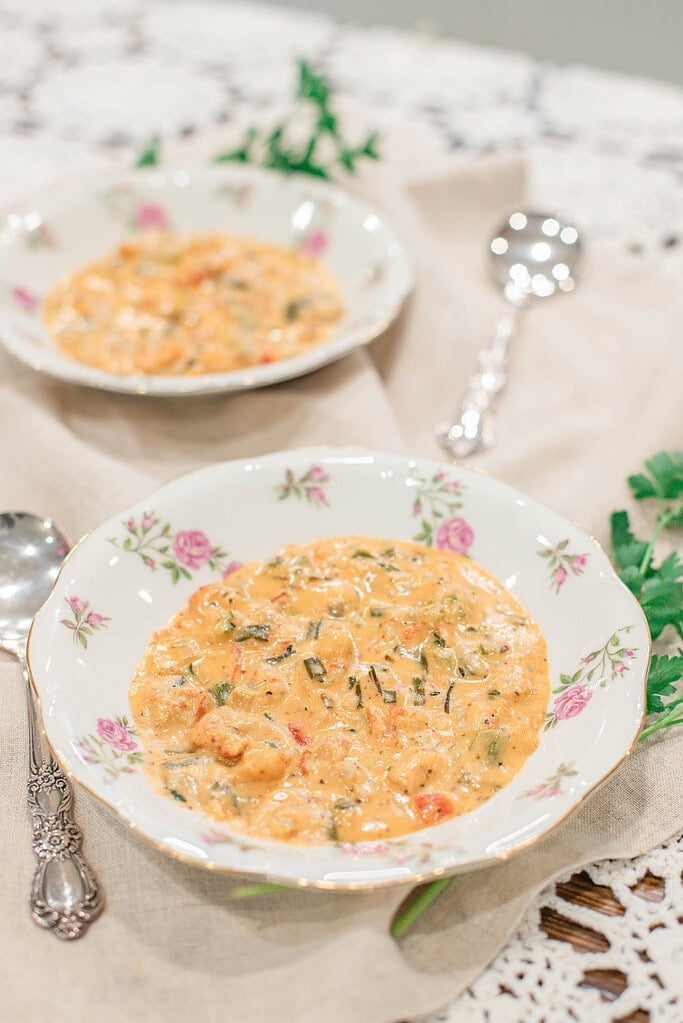
This creamy crawfish and shrimp etouffee builds a smooth Cajun sauce from a blonde roux, seasoned crawfish tails and shrimp, and a blend of Louisiana spices that deepen into a rich, velvety finish with bold Cajun flavor throughout.
The sauce gets its creamy texture from heavy cream added slowly into the roux, and both the shrimp and crawfish go in near the end of cooking so they stay tender rather than rubbery throughout the finished dish.
If you are building a full New Orleans spread, this dish pairs naturally with New Orleans Red Beans and Rice, Sourdough Beignets, and Sourdough King Cake.
Why You’ll Love This Recipe
Ingredients
Variations & Add-Ins
Recipe Tips
Build the blonde roux carefully – Cook the butter and flour together over medium heat for 1 to 2 minutes, stirring constantly, until the raw flour smell cooks off and the color turns a light golden. A properly built roux should have a slightly nutty aroma before any liquid goes in. Pulling it too early leaves a floury taste in the finished sauce.
Stir the roux constantly – Continuous stirring prevents the flour from scorching on the bottom of the pan and keeps the sauce smooth once the cream is added. A wooden spoon or whisk both work well depending on the pan.
Control the heat before adding cream – Lower the heat to medium-low before pouring in the heavy cream. Adding cold cream to a very hot roux can cause the sauce to seize or break before it has a chance to come together smoothly.
Add the cream slowly – Pour the heavy cream in gradually while whisking or stirring constantly. Gradual addition gives the roux time to absorb the liquid evenly and prevents lumps from forming in the finished sauce.
Season the seafood before it goes in – Tossing the shrimp and crawfish with Cajun seasoning before adding them to the sauce ensures the flavor penetrates the seafood rather than sitting only on the surface of the finished dish.
Season in layers – Season the seafood first, then taste and adjust the sauce with additional Cajun seasoning, black pepper, and salt after the cream has been added and the sauce has settled. This prevents over-seasoning at any single stage.
Add the seafood near the end – Shrimp and crawfish need only a short simmer of 8 to 10 minutes on low heat to cook through. Adding them too early or keeping the heat too high produces rubbery shrimp and broken crawfish tails.
Watch the sauce thickness – The sauce should be thick enough to coat a spoon while still flowing easily over rice. If it tightens too much before serving, add a small splash of cream or stock to loosen it back to the right consistency.
Let it rest briefly before serving – A short rest of 5 to 10 minutes after removing from the heat allows the flavors to settle and the sauce to thicken slightly to its final consistency before spooning over rice.


Instructions
- Season the seafood – Toss the shrimp and crawfish tails with 1 to 2 teaspoons of Cajun seasoning and set aside. This short rest allows the seasoning to begin penetrating the seafood before it goes into the sauce.
- Prepare the vegetables – Chop the shallots, garlic, bell peppers, parsley, and green onions and measure out the remaining ingredients. Having everything ready before the roux begins keeps the cooking steady and prevents the flour from scorching while you prepare other components.
- Melt the butter – Add the butter to a large sauté pan or heavy skillet over medium heat. Let it melt completely and begin to bubble without browning before adding the vegetables.
- Soften the shallots and bell pepper – Add the shallots and green bell pepper to the pan and cook for 2 to 3 minutes, stirring often, until softened and translucent.
- Add the garlic and seasoning – Stir in the garlic and remaining Cajun seasoning and cook for about 1 minute until fragrant without browning.
- Build the blonde roux – Sprinkle the flour evenly over the butter and vegetables. Stir constantly over medium heat for 1 to 2 minutes until the raw flour smell cooks off and the mixture turns a light golden color with a slightly nutty aroma.
- Add the cream slowly – Reduce the heat to medium-low and pour in the heavy cream gradually while whisking or stirring constantly to keep the sauce smooth and free of lumps throughout.
- Season the sauce – Stir in the Worcestershire sauce, wine or rum if using, smoked paprika, salt, and black pepper. Let the sauce simmer gently on medium-low heat for about 5 minutes until it begins to thicken and coat the back of a spoon.
- Add the seafood – Add the seasoned shrimp, crawfish tails, parsley, and green onions to the pan. Stir gently to keep the seafood intact and distribute it evenly through the sauce.
- Simmer until just done – Keep the heat low and simmer for 8 to 10 minutes, stirring occasionally, until the shrimp are pink and opaque and the sauce coats a spoon. Do not boil after the seafood goes in as high heat can toughen the shrimp quickly.
- Serve warm – Spoon the etouffee over hot cooked rice and serve with crusty bread or sourdough cornbread on the side for soaking up the sauce.
Storage Suggestions
- Refrigerator – Store leftover etouffee in an airtight container in the refrigerator for up to 3 days. The sauce will thicken slightly as it chills but loosens back to the right consistency when reheated gently over low heat with a small splash of cream or stock.
- Freezer – Let the etouffee cool completely before transferring to a freezer-safe airtight container. Freeze for up to 2 months. Because this recipe contains heavy cream, freeze promptly after cooling and reheat gently to prevent the sauce from separating.
- Reheating from the refrigerator – Warm over low heat on the stovetop, stirring often to keep the sauce smooth. Add a small splash of cream or stock if the sauce has tightened too much during storage and stir until the texture comes back together.
- Reheating from frozen – Thaw overnight in the refrigerator before reheating. Warm slowly over low heat and stir gently throughout to keep the cream sauce from breaking. Avoid high heat at any stage of reheating.
- Make ahead – Etouffee works well for advance preparation and many cooks find the flavor improves after a short rest once the seasoning has had time to settle. Prepare up to one day ahead, store in the refrigerator, and reheat gently before serving.
FAQ
Join The Community
Want More Cozy Recipes & Seasonal Inspiration?
Get cozy, from-scratch recipes, seasonal cottage living tips, and slow living inspiration delivered straight to your inbox.
More New Orleans Recipes from the Cottage

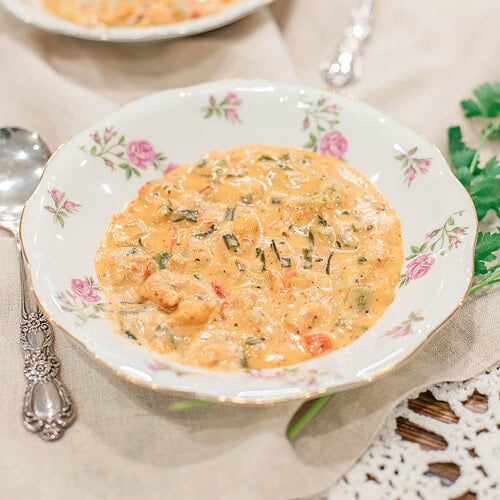
Creamy Crawfish and Shrimp Étouffée Recipe
 Prep:10 minutes Cook:25 minutes Total:35 minutes
 Equipment
- 1 Dutch Oven
- 1 Wooden spoon
- 1 Whisk
Ingredients
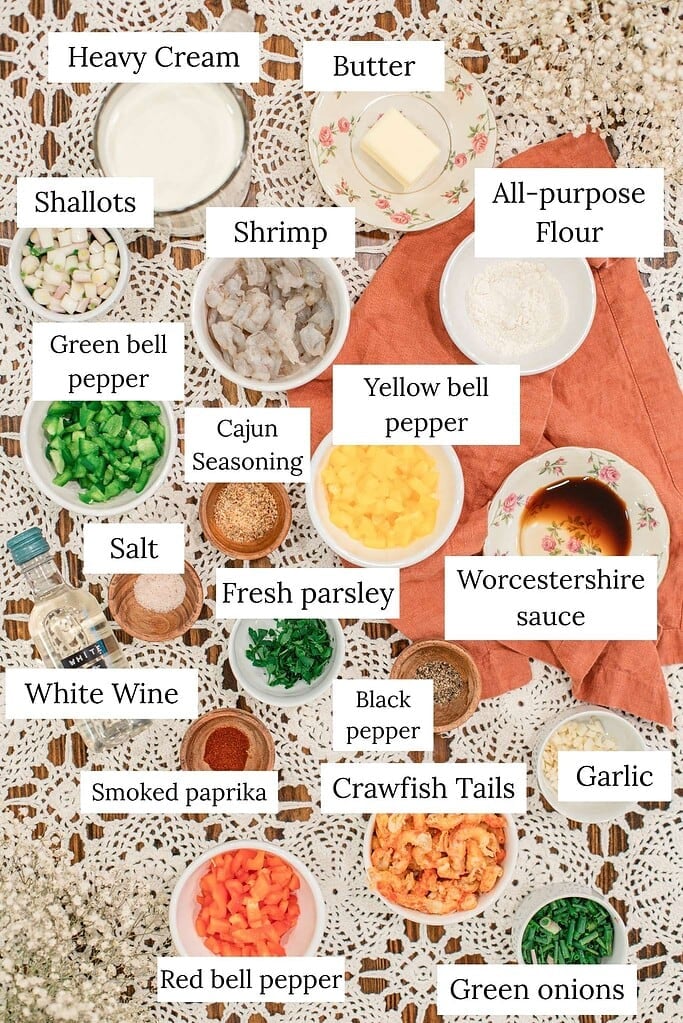
- ½ cup shrimp peeled, deveined, and chopped into bite-sized pieces, 120 grams
- 1 cup crawfish tails about ½ pound, 227 grams
- 1 tablespoon Cajun seasoning plus 1 to 2 teaspoons for seasoning seafood, 8 grams
- 3 tablespoons butter unsalted or salted, 42 grams
- ½ cup shallots finely diced, about 2 small, 75 grams
- 1 cup green bell pepper diced, 150 grams
- 1 tablespoon garlic minced, 10 grams
- 2 tablespoons all-purpose flour 16 grams
- 2 cups heavy cream at room temperature, 480 grams
- ¼ cup dry white wine or light rum optional, 60 grams
- 1 teaspoon Worcestershire sauce 5 grams
- ½ teaspoon smoked paprika 1 gram
- 1 tablespoon fresh parsley finely chopped, 4 grams
- ½ teaspoon salt adjust based on Cajun seasoning used, 3 grams
- ½ teaspoon ground black pepper 1 gram
- 3 green onions thinly sliced, about 15 grams
Instructions
- Season the seafood – Toss the shrimp and crawfish tails with 1 to 2 teaspoons of Cajun seasoning and set aside. This short rest allows the seasoning to begin penetrating the seafood before it goes into the sauce.
- Prepare the vegetables – Chop the shallots, garlic, bell peppers, parsley, and green onions and measure out the remaining ingredients. Having everything ready before the roux begins keeps the cooking steady and prevents the flour from scorching while you prepare other components.
- Melt the butter – Add the butter to a large sauté pan or heavy skillet over medium heat. Let it melt completely and begin to bubble without browning before adding the vegetables.
- Soften the shallots and bell pepper – Add the shallots and green bell pepper to the pan and cook for 2 to 3 minutes, stirring often, until softened and translucent.
- Add the garlic and seasoning – Stir in the garlic and remaining Cajun seasoning and cook for about 1 minute until fragrant without browning.
- Build the blonde roux – Sprinkle the flour evenly over the butter and vegetables. Stir constantly over medium heat for 1 to 2 minutes until the raw flour smell cooks off and the mixture turns a light golden color with a slightly nutty aroma.
- Add the cream slowly – Reduce the heat to medium-low and pour in the heavy cream gradually while whisking or stirring constantly to keep the sauce smooth and free of lumps throughout.
- Season the sauce – Stir in the Worcestershire sauce, wine or rum if using, smoked paprika, salt, and black pepper. Let the sauce simmer gently on medium-low heat for about 5 minutes until it begins to thicken and coat the back of a spoon.
- Add the seafood – Add the seasoned shrimp, crawfish tails, parsley, and green onions to the pan. Stir gently to keep the seafood intact and distribute it evenly through the sauce.
- Simmer until just done – Keep the heat low and simmer for 8 to 10 minutes, stirring occasionally, until the shrimp are pink and opaque and the sauce coats a spoon. Do not boil after the seafood goes in as high heat can toughen the shrimp quickly.
- Serve warm – Spoon the etouffee over hot cooked rice and serve with crusty bread or sourdough cornbread on the side for soaking up the sauce.
Notes
Nutrition

Emily Rider
Home miller since 1999 with fresh-milled flour & sourdough experience. Sharing from-scratch recipes and traditional kitchen skills, rooted in the seasons and inspired by everyday cottage living and seasonal rhythms.