

This sourdough einkorn pasta recipe uses freshly milled whole einkorn flour, one egg, and sourdough discard or starter for a tender, delicate noodle with a naturally sweet whole-grain flavor that comes together in under an hour.

The dough mixes by hand, rests for 30 minutes, and rolls thin with a rolling pin or pasta machine, with optional sifting through a fine mesh sieve for a texture closer to traditional 00 pasta flour.
This pasta layers beautifully into a fully from-scratch Italian dinner alongside Italian Bruschetta Recipe, and if you want to carry that through to dessert, Sourdough Lady Fingers and Homemade Tiramisu are a perfect finish.
Made this with my new pasta maker, and my whole family loves it! Thank you for the wonderful recipe! ~Emily
“ This recipe turned out great! The noodles were soft and flavorful. I used 2 egg yolks and put a cottage cheese Alfredo sauce over it. Thanks for sharing! ”
~Amanda
Why You’ll Love This Recipe

Ingredients

Variations & Add-Ins
Recipe Tips
Work the dough slowly – Gentle, steady kneading builds structure without overtightening einkorn’s delicate gluten. Keep pressure light throughout the full 5 to 10 minutes and let time do most of the work.
Sift for a finer texture – Passing freshly milled flour through a fine mesh sieve removes excess bran and creates a more delicate pasta closer to 00 flour. Measure after sifting so dough hydration stays consistent.
Expect a softer dough – Fresh milled einkorn feels more supple and slightly tacky than modern wheat pasta dough. Resist adding extra flour unless the dough is genuinely sticking to everything.
Let the dough fully rest – A full 30 minute rest allows the freshly milled flour to hydrate completely and the gluten to relax. Skipping this rest is the most common reason einkorn pasta dough cracks during rolling.
Use minimal bench flour – Dust the work surface lightly rather than generously. Excess flour dries the surface and can toughen the finished pasta.
Roll slightly thinner than usual – Whole einkorn performs best when rolled thin. A thinner sheet cooks more evenly and stays tender throughout.
Watch for edge cracking – Cracking almost always signals insufficient rest rather than dryness. Cover and rest another 10 to 15 minutes before continuing rather than adding moisture.
Cook briefly and test early – Fresh milled einkorn softens quickly in boiling water. Start testing at 2 minutes and pull as soon as just tender to preserve the delicate texture.

Instructions
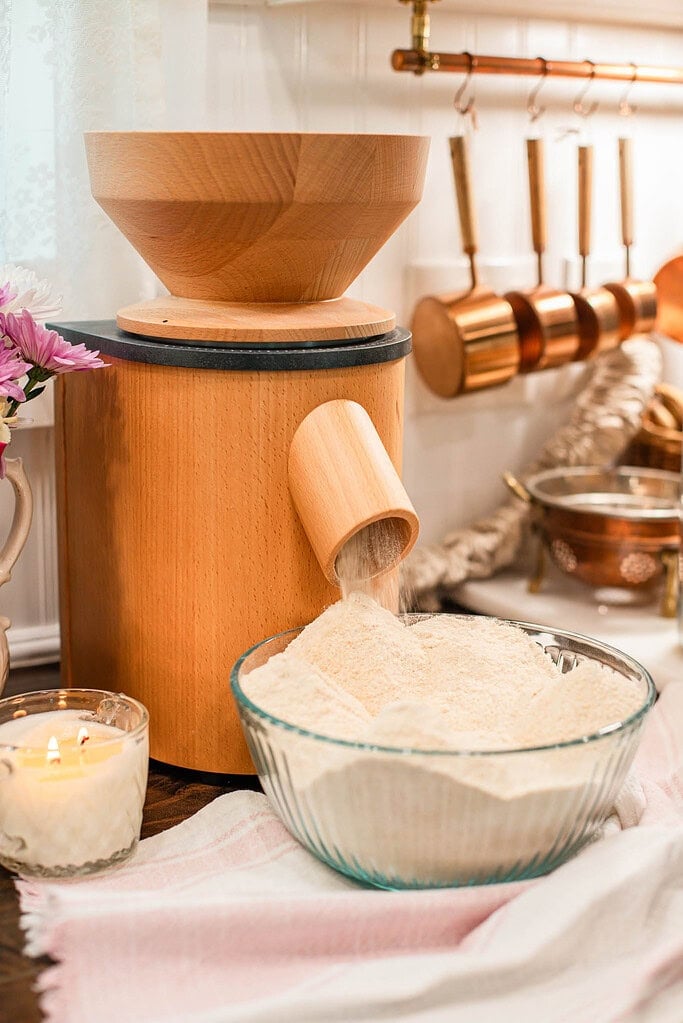
- Mill the einkorn wheat berries – Mill the einkorn berries just before mixing for the best flavor and freshness. If sifting, mill about 2 cups of berries so you have enough after sifting to measure 1 cup (120g) of flour plus extra for dusting. If not sifting, milling about 1½ cups provides the 1 cup (120g) needed plus additional flour for the work surface.
- Sift if desired – For a more delicate texture, pass the freshly milled flour through a fine mesh sieve to remove excess bran and create a finer flour closer to 00 pasta flour. Measure 1 cup (120g) after sifting for the dough. If keeping the flour whole, measure directly after milling.
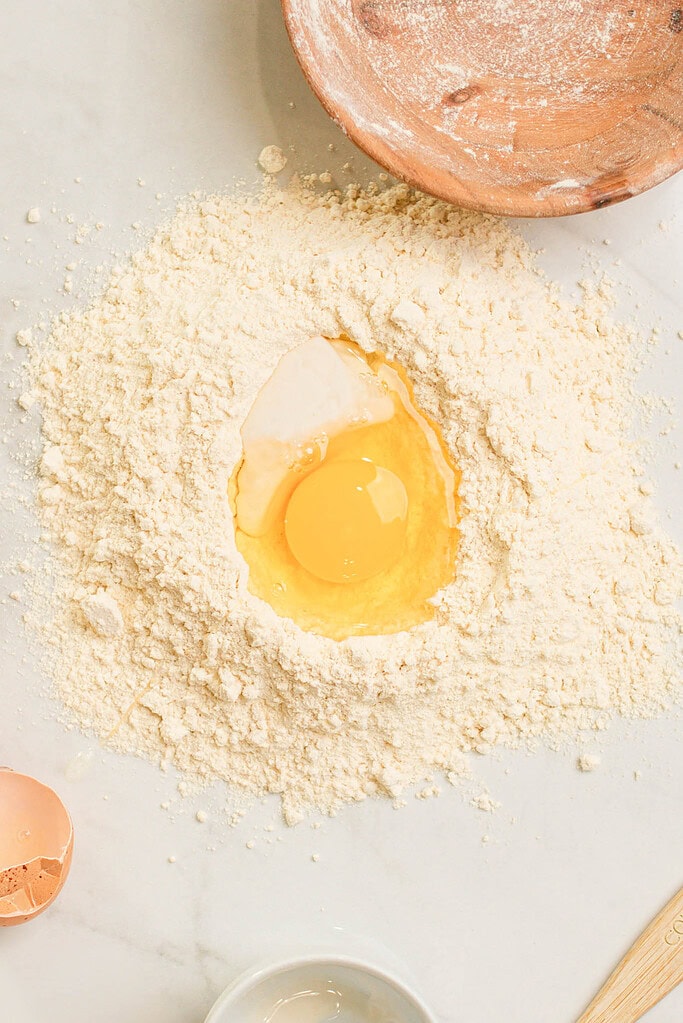
- Mix the dough – Place the measured einkorn flour (120g) on a clean work surface and make a well in the center large enough to hold the egg and sourdough starter without spilling. Add the room temperature egg and sourdough discard or active starter to the well and whisk together gently with a fork before slowly pulling the surrounding flour inward to incorporate.
- Bring it together – Work the mixture with your hands until a soft dough forms, feeling slightly tacky but holding together without crumbling. If the dough feels too dry, add a small splash of water half a teaspoon at a time until it holds.
- Knead gently – Knead for 5 to 10 minutes using light, steady pressure until smooth and cohesive throughout. Keep pressure gentle and consistent as einkorn gluten tightens quickly under aggressive kneading.
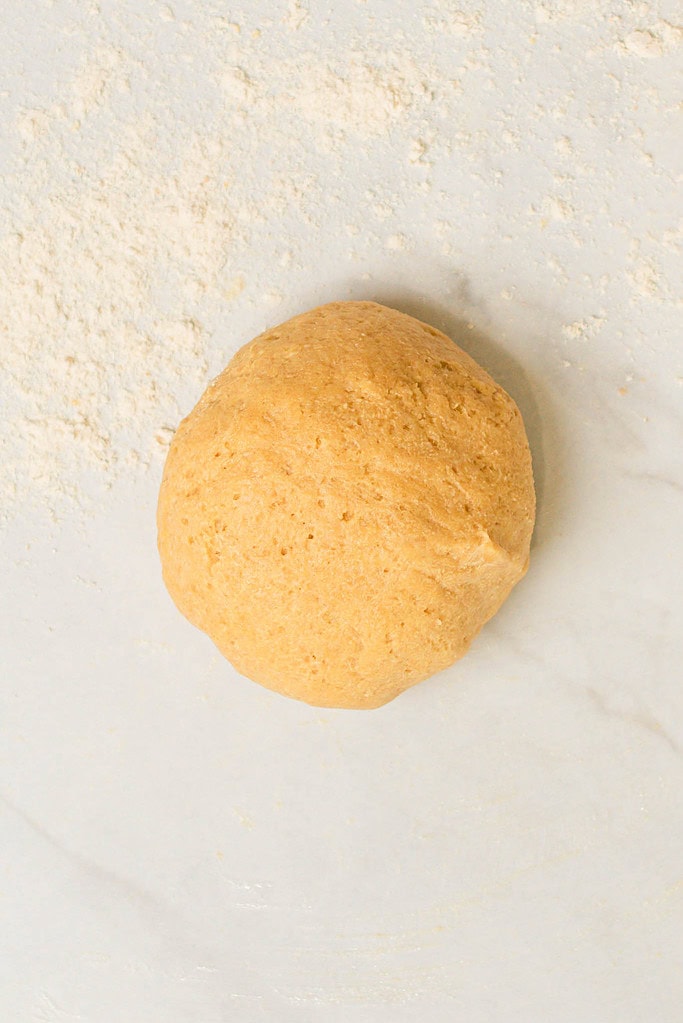
- Rest the dough – Shape into a smooth ball, cover tightly with plastic wrap or an inverted bowl, and rest at room temperature for at least 30 minutes. This allows the freshly milled flour to fully hydrate and the gluten to relax, making rolling significantly easier and preventing edge cracking.
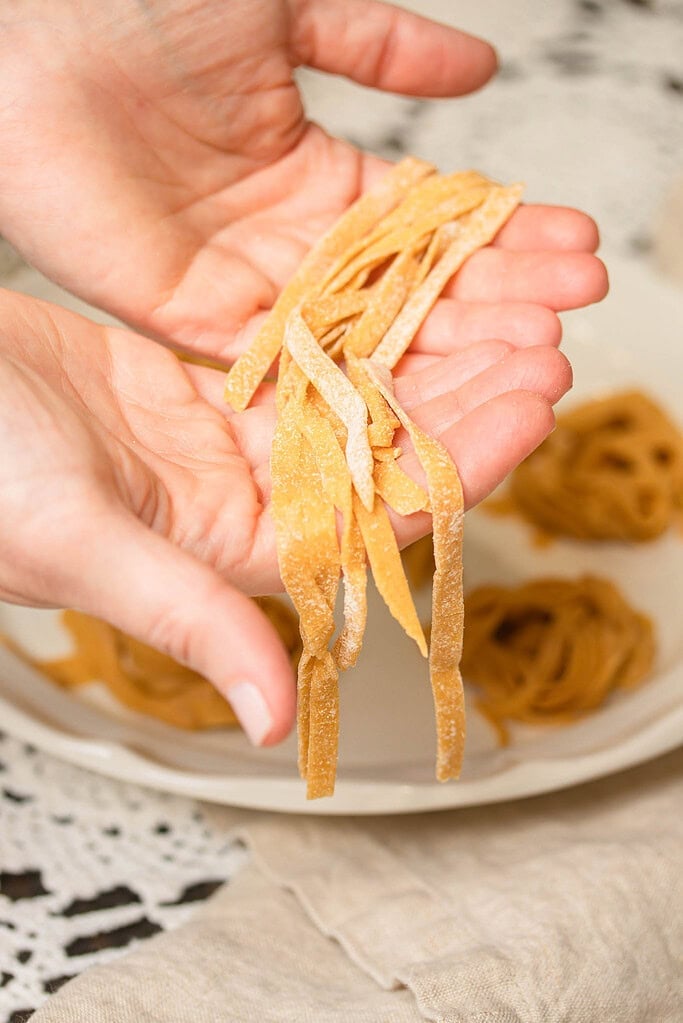
- Roll and shape – Divide the rested dough into two or three portions and roll each portion thin using a rolling pin or pasta machine, dusting lightly with reserved einkorn flour as needed. Cut into noodles, sheets for lasagna, or simple hand-cut shapes depending on what you are making.
- Cook the pasta – Bring a large pot of well-salted water to a full boil and add the fresh einkorn pasta. Cook for 2 to 3 minutes until just tender, testing at the 2 minute mark to prevent overcooking. Drain immediately and serve with your prepared sauce.

Storage Suggestions
- Same-day is best – This einkorn pasta recipe is designed for same-day rolling and cooking and performs best when the dough is milled, mixed, rested, rolled, and cooked within a few hours of each other.
- Refrigerate the uncooked dough – If you need to hold the dough before rolling, wrap tightly in plastic wrap and refrigerate for up to 1 day. Let it come back to room temperature for 20 to 30 minutes before rolling so it relaxes enough to work with without cracking at the edges.
- Store cooked pasta with sauce – Cooked pasta stores best with sauce rather than plain. Transfer to an airtight container and refrigerate for up to 1 day. The sauce helps retain moisture and prevents the delicate einkorn noodles from drying out.
- Reheat gently – Reheat cooked pasta covered at 300 to 325°F with a small splash of water or extra sauce to restore moisture. Heat only until just warmed through as fresh milled einkorn softens quickly under heat
- Freezing not recommended – Einkorn’s delicate gluten structure weakens and fractures once frozen and the cooked pasta becomes overly soft after thawing. Plan to mill, roll, and cook this pasta fresh for the best texture and flavor.
FAQ
Join The Community
Want More Cozy Recipes & Seasonal Inspiration?
Get cozy, from-scratch recipes, seasonal cottage living tips, and slow living inspiration delivered straight to your inbox.
More Recipes from the Cottage
The Cottage Mill | Freshly Milled Flour Guides, Recipes, and More Await!

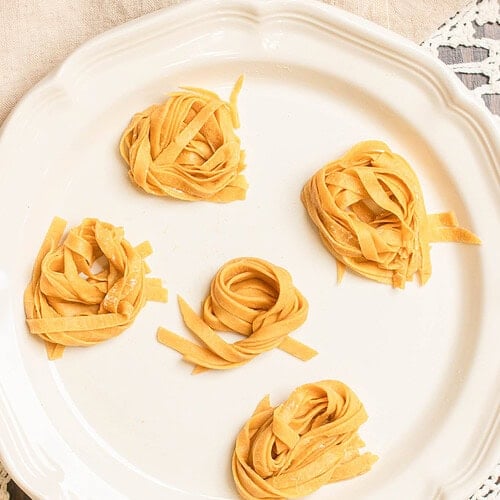
Freshly Milled Sourdough Einkorn Pasta | Discard or Starter
 Prep:25 minutes Cook:3 minutes Additional Time / Resting Time:30 minutes Total:58 minutes
 Equipment
- 1 Grain Mill
- 1 Pasta Machine
- 1 Rolling Pin
- 1 #60 Sieve to sift the flour *optional
- 1 Measuring Cups and Spoons
Ingredients
- 1 cup freshly milled whole einkorn flour sifted if desired measured after sifting 120 grams
- 1 large egg room temperature 50 grams
- 1 tablespoon sourdough starter or discard 15 grams
Instructions
- Mill the einkorn wheat berries – Mill the einkorn berries just before mixing for the best flavor and freshness. If sifting, mill about 2 cups of berries so you have enough after sifting to measure 1 cup (120g) of flour plus extra for dusting. If not sifting, milling about 1½ cups provides the 1 cup (120g) needed plus additional flour for the work surface.
- Sift if desired – For a more delicate texture, pass the freshly milled flour through a fine mesh sieve to remove excess bran and create a finer flour closer to 00 pasta flour. Measure 1 cup (120g) of flour after sifting for the dough. If keeping the flour whole, measure directly after milling.
- Mix the dough – Place the measured einkorn flour (120g) on a clean work surface and make a well in the center large enough to hold the egg and sourdough starter without spilling. Add the room temperature egg and sourdough discard or active starter to the well and whisk together gently with a fork before slowly pulling the surrounding flour inward to incorporate.
- Bring it together – Work the mixture with your hands until a soft dough forms, feeling slightly tacky but holding together without crumbling. If the dough feels too dry, add a small splash of water half a teaspoon at a time until it holds.
- Knead gently – Knead for 5 to 10 minutes using light, steady pressure until smooth and cohesive throughout. Keep pressure gentle and consistent as einkorn gluten tightens quickly under aggressive kneading.
- Rest the dough – Shape into a smooth ball, cover tightly with plastic wrap or an inverted bowl, and rest at room temperature for at least 30 minutes. This allows the freshly milled flour to fully hydrate and the gluten to relax, making rolling significantly easier and preventing edge cracking.
- Roll and shape – Divide the rested dough into two or three portions and roll each portion thin using a rolling pin or pasta machine, dusting lightly with reserved einkorn flour as needed. Cut into noodles, sheets for lasagna, or simple hand-cut shapes depending on what you are making.
- Cook the pasta – Bring a large pot of well-salted water to a full boil and add the fresh einkorn pasta. Cook for 2 to 3 minutes until just tender, testing at the 2 minute mark to prevent overcooking. Drain immediately and serve with your prepared sauce.
Notes

Emily Rider
Home miller since 1999 with fresh-milled flour & sourdough experience. Sharing from-scratch recipes and traditional kitchen skills, rooted in the seasons and inspired by everyday cottage living and seasonal rhythms.



This recipe turned out great! The noodles were soft and flavorful. I used 2 egg yolks and put a cottage cheese Alfredo sauce over it. Thanks for sharing!
Hi Amanda!
I’m so happy to hear they turned out so well for you! Cottage cheese with Alfredo sounds absolutely delicious. I may have to try that myself next time:). Thank you so much for taking the time to come back and share your experience. I truly appreciate it, and I hope you enjoy many more homemade pasta nights!
Warmly,
Emily
Made this with my new pasta maker and my whole family loves it! Thank you for the wonderful recipe!
Emily, Thank you so much for taking the time to leave a review, it truly means more than you know. I love a good pasta maker moment, and hearing that your whole family enjoyed this makes my heart happy. Thank you for trying the recipe and for sharing your results and honest feedback.
Warmly,
Emily
Have you tried this with whole grain einkorn?
Bobbie, yes, we use einkorn berries and grind them up. This recipe is for whole grain einkorn. I hope that helps answer your question. We love using einkorn wheat berries in our recipes. The cookies are so buttery with this grain. Have a blessed day!!
Thanks for all the details! Love using ancient grains. Wondering if one could make this recipe without eggs? Would you need a substitute or just omit them all together?
You’re welcome! I’m glad you found the details helpful. Yes, you can make the recipe without eggs. Here are some options you can use instead of an egg while making pasta.
1 egg = 3 tablespoons aquafaba
1 egg = 1 tablespoon of ground flax seeds + 3 tablespoons of water
1 egg= ¼ cup apple purée
1 egg= ¼ cup yogurt
1 egg 3 tbsp. Just Egg