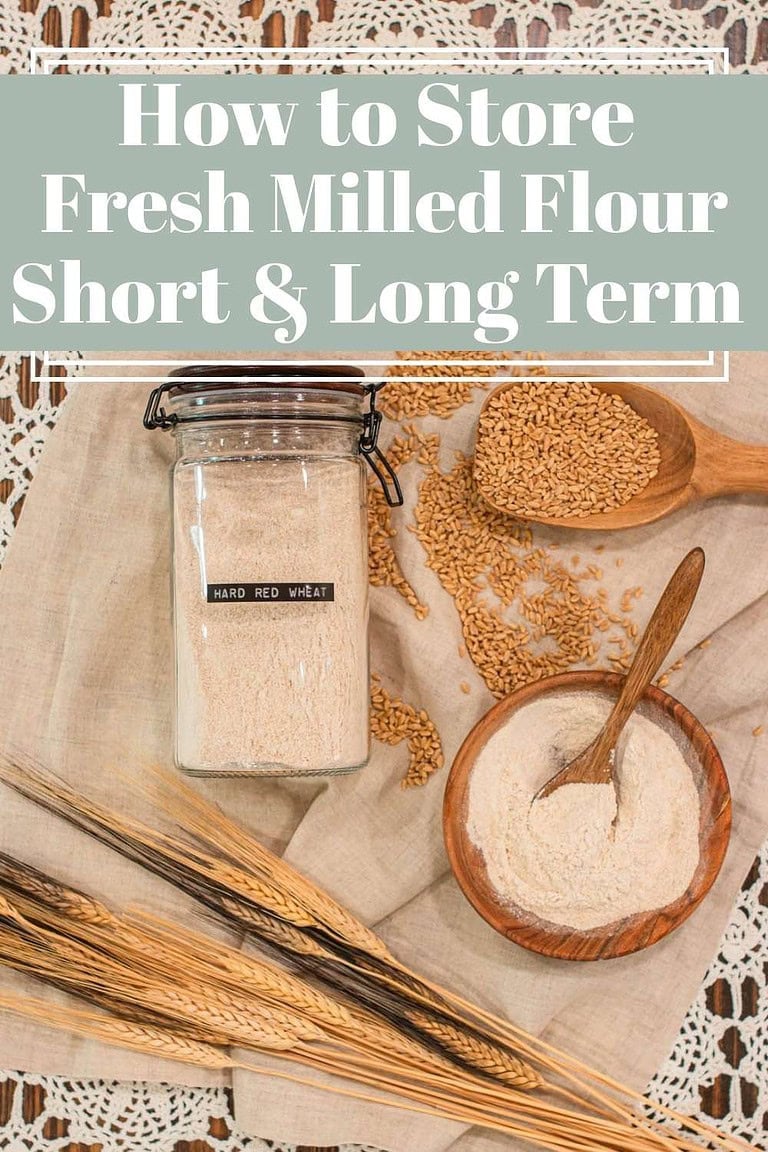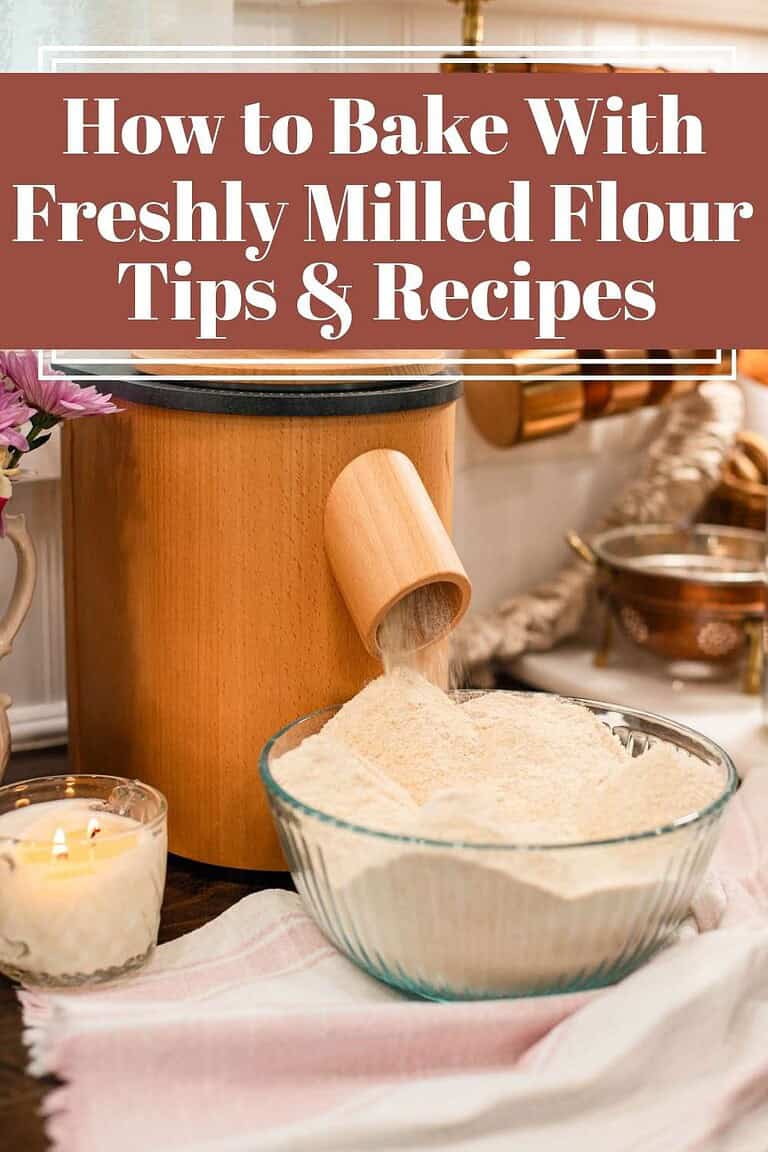

What is fresh milled flour? It is flour that has been milled by using a grain mill to grind whole wheat and whole grains into fresh flour you can use for your baking needs. Freshly milled flour opens a new world of taste and texture possibilities in your baked goods, cereals, and so much more. This guide covers exactly what fresh flour is and how to use it.
I’ve been milling in my own kitchen since 1999, and what I learned prior to that from my Grandmother Nub in my youth in her tiny homestead kitchen. I am sharing everything that was taught to me and that I have learned in my own kitchen over the years to help you mill and bake whole grains with confidence and success.
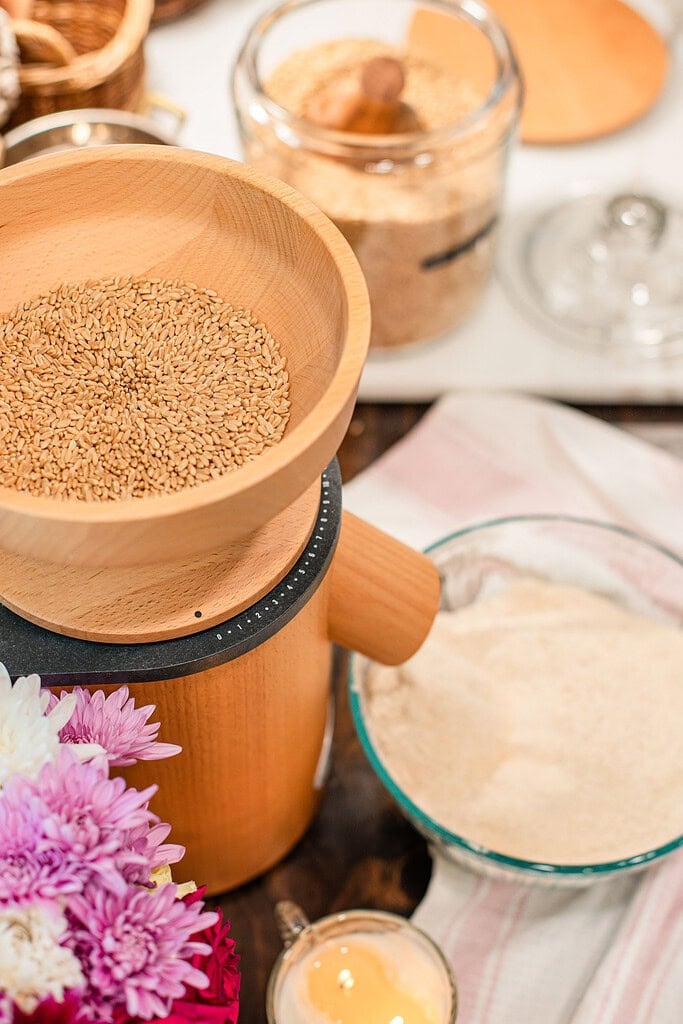
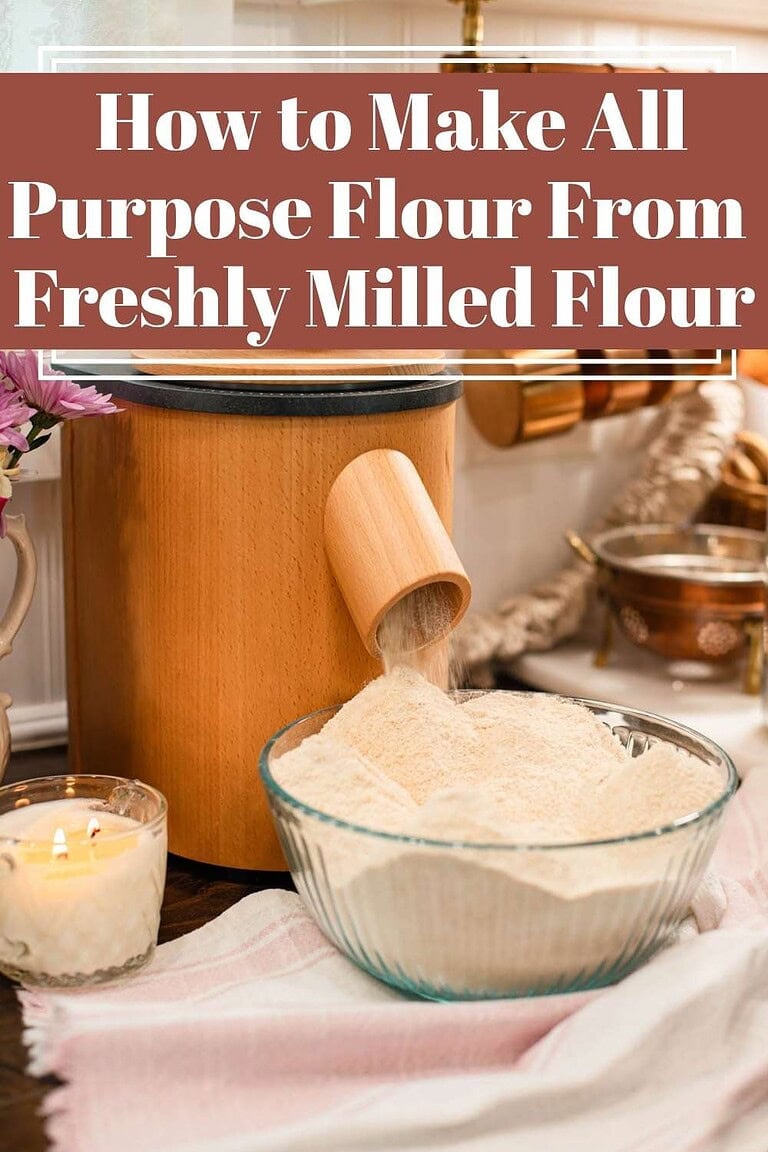
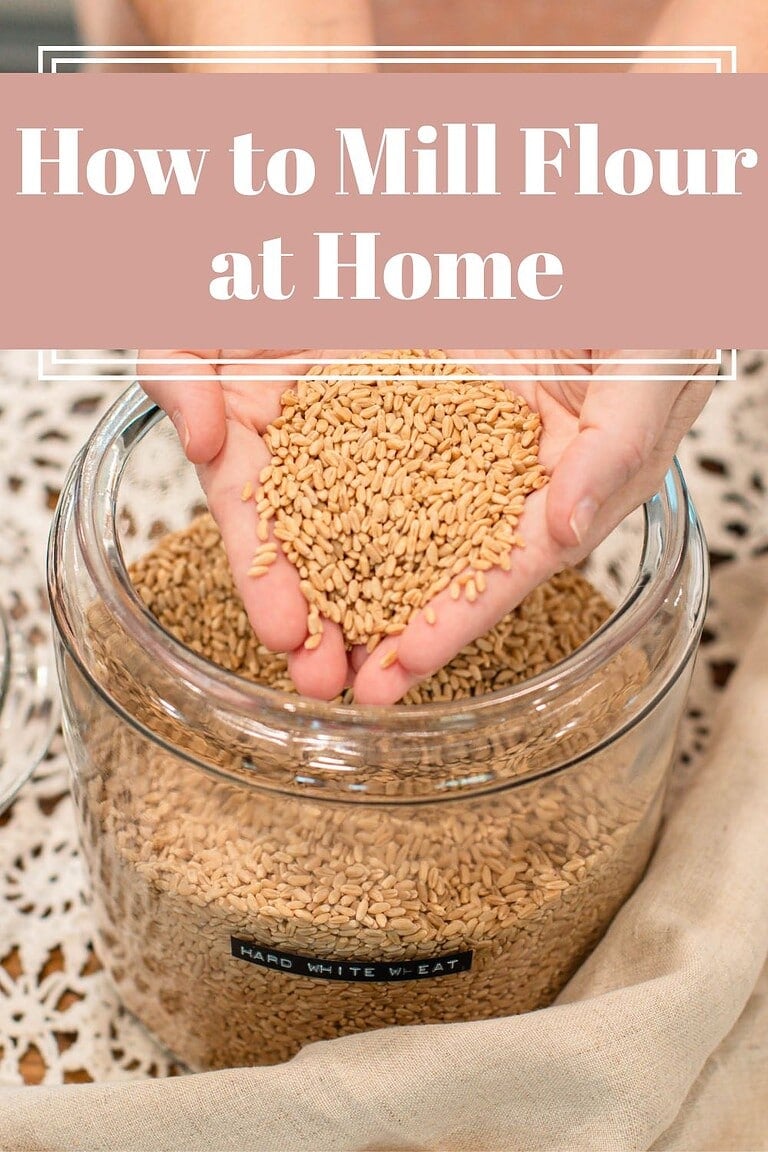
Ready to start milling right away? How to Mill Flour at Home walks through every step of the process, and Tools for Milling Flour at Home covers everything needed to get set up. If you have more questions or need fresh flour recipes, you can find them and more at The Cottage Mill, where I share a complete FMF resource library here at The Modern Day Cottage.
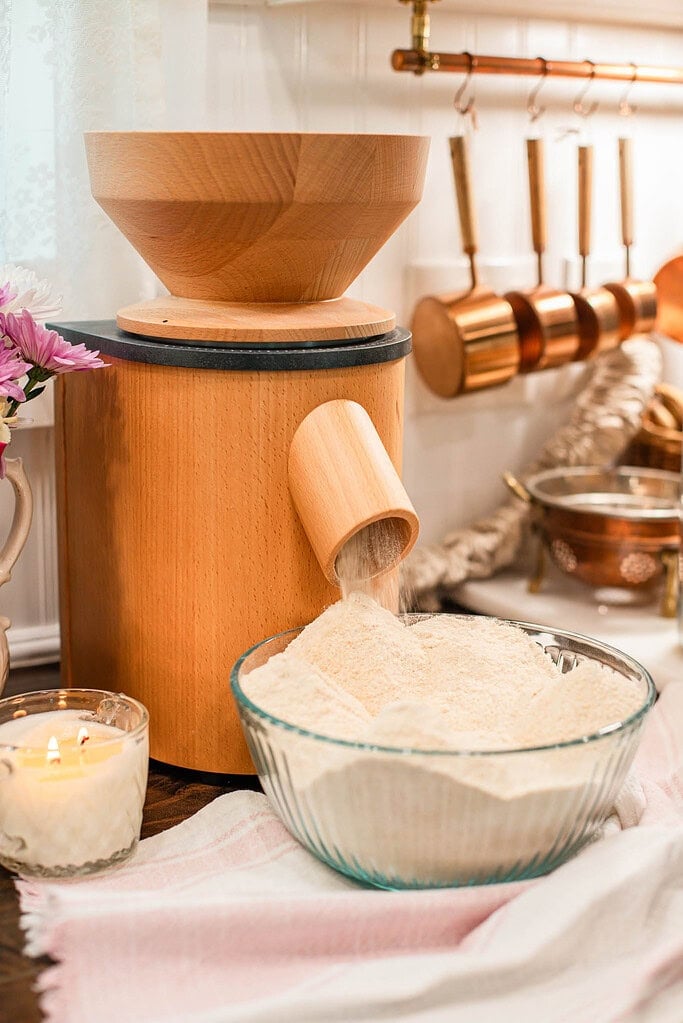
The Cottage Mill | Freshly Milled Flour Guides, Recipes, and More Await!
Wonderful, wonderful site! So glad I found it before starting my journey with fresh-milled flour. Thank you so much for sharing your knowledge. ~Mary
What You’ll Learn in This Guide
What Is Fresh Milled Flour?
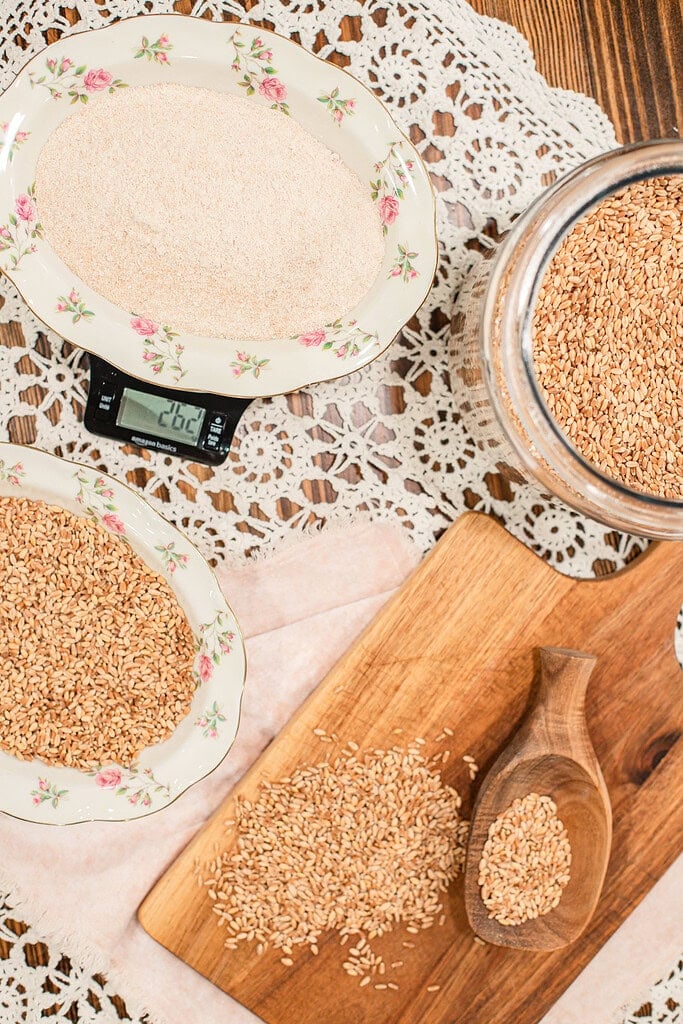
Fresh milled flour is flour that is freshly milled by using a grain mill to grind whole wheat and whole grains into flour. The whole grain goes into the mill and comes out as fresh flour, ready to bake with. The bran, the germ, and the endosperm all stay intact from berry to bowl, nothing is removed, and nothing is added.
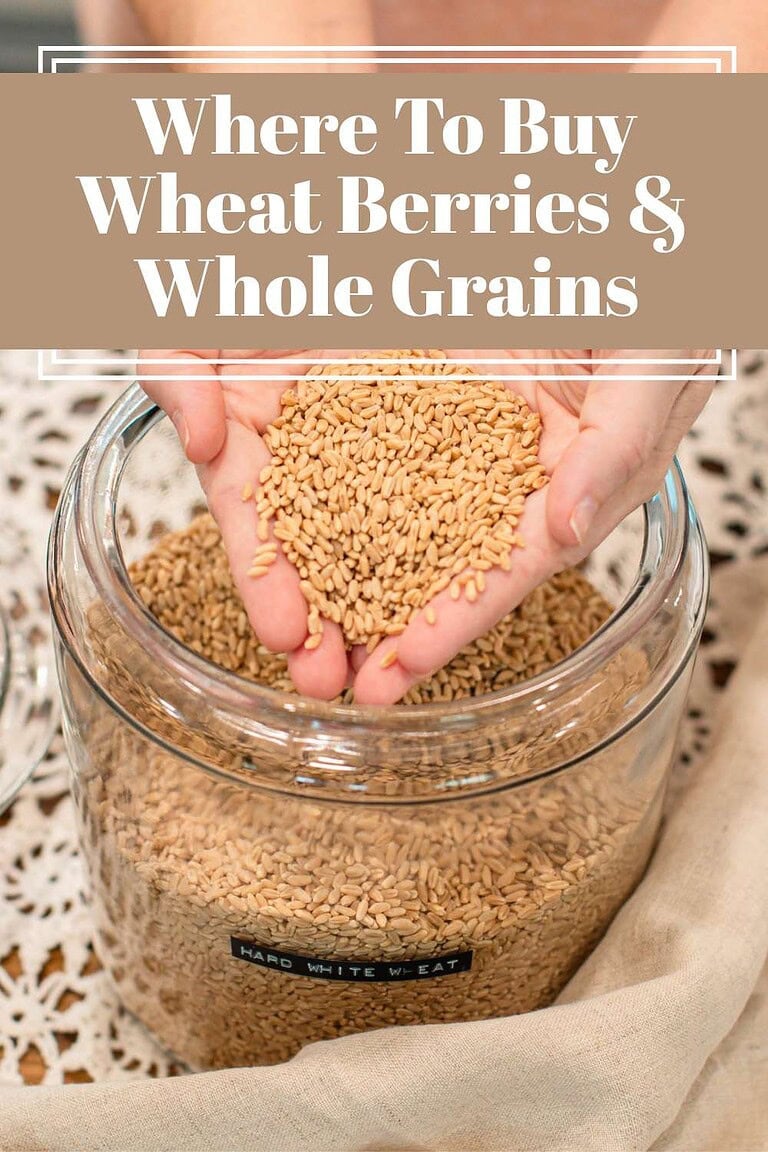
Many different grains can be milled at home, such as hard white wheat, hard red wheat, soft white wheat, spelt, einkorn, rye, and more. Each one produces a flour with its own flavor, texture, and baking character.
For a complete guide to choosing the right grain for every bake type, Best Whole Grains to Mill covers grains best used per baked good in detail.
What Freshly Milled Flour Is Actually Made Of
A wheat berry has three parts, and each one changes how your flour behaves in your baked goods:
- The bran – roughly 14 to 16 percent of the kernel. Contains fiber, B vitamins including thiamine, riboflavin, niacin, and B6, plus iron, magnesium, and zinc. Stays in when you mill at home.
- The germ – roughly 2 to 3 percent of the kernel. Contains vitamin E, folate, healthy fats, and antioxidants. The natural oils are why fresh flour smells alive and why milling close to bake time matters.
- The endosperm – roughly 83 percent of the kernel. Almost entirely starch and protein. This is what refined white flour is made from.
Commercial refining removes some of the vitamins and minerals in the whole kernel. Enriched flour adds back some of those. Freshly milled whole grain flour retains over 40 micronutrients in their natural form.
One important distinction: when we sift freshly milled flour, we are not refining it. Sifting removes some, but not all of the bran, to adjust the texture or make fermentation more visible. The germ, endosperm, and some bran are still whole and intact. Sifting at home and commercial refining are two entirely different things.
For guidance on storing fresh milled flour after milling, How to Store Freshly Milled Flour covers everything.
How Is Fresh Milled Flour Different From Store Bought All-Purpose Flour?
Store-bought all-purpose flour and fresh milled flour are two different products made from different portions of the grain. Commercial all-purpose flour is milled primarily from the endosperm. Freshly milled whole grain flour contains the bran, germ, and endosperm together. Store-bought flour and freshly milled flour behave differently in recipes.
In the bowl, fresh milled flour absorbs liquid more slowly and ferments a little faster because of the active enzymes in the bran and germ. But it can also ferment more slowly if the gluten structure isn’t built up enough, also the bran cuts through the gluten structures, causing what to the eye seems like a slow ferment at times. In terms of flavor, it has a warm, nutty, whole-grain depth that varies by grain variety.
For the complete breakdown of every baking adjustment, including hydration, fermentation timing, and troubleshooting, How to Bake with Freshly Milled Flour is the place to start baking with fresh flour.
What Does Fresh Milled Flour Look and Taste Like?
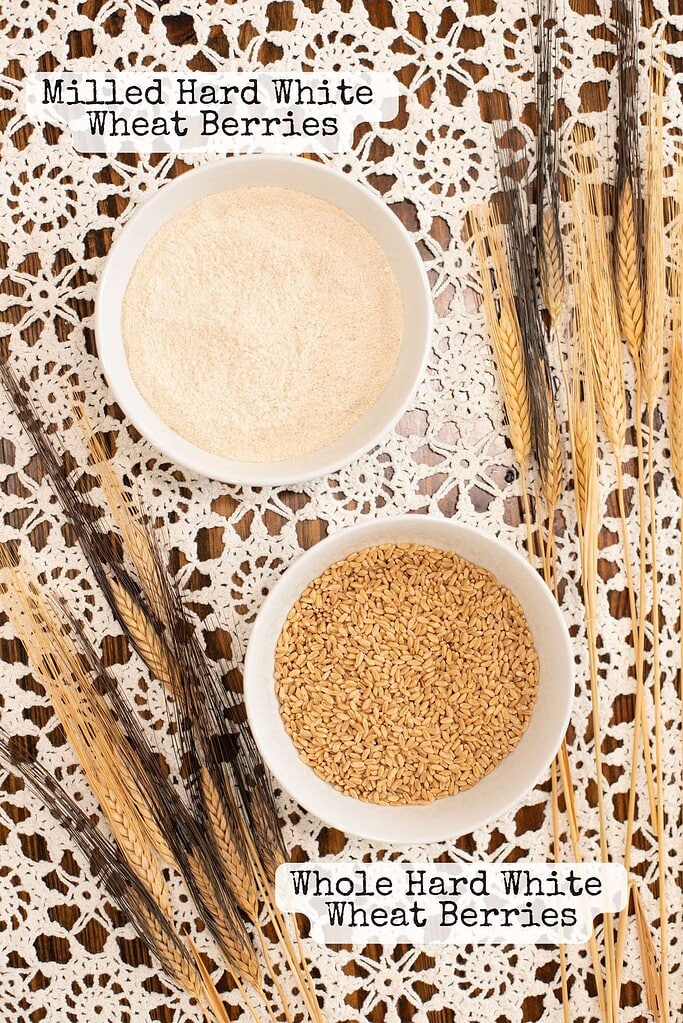
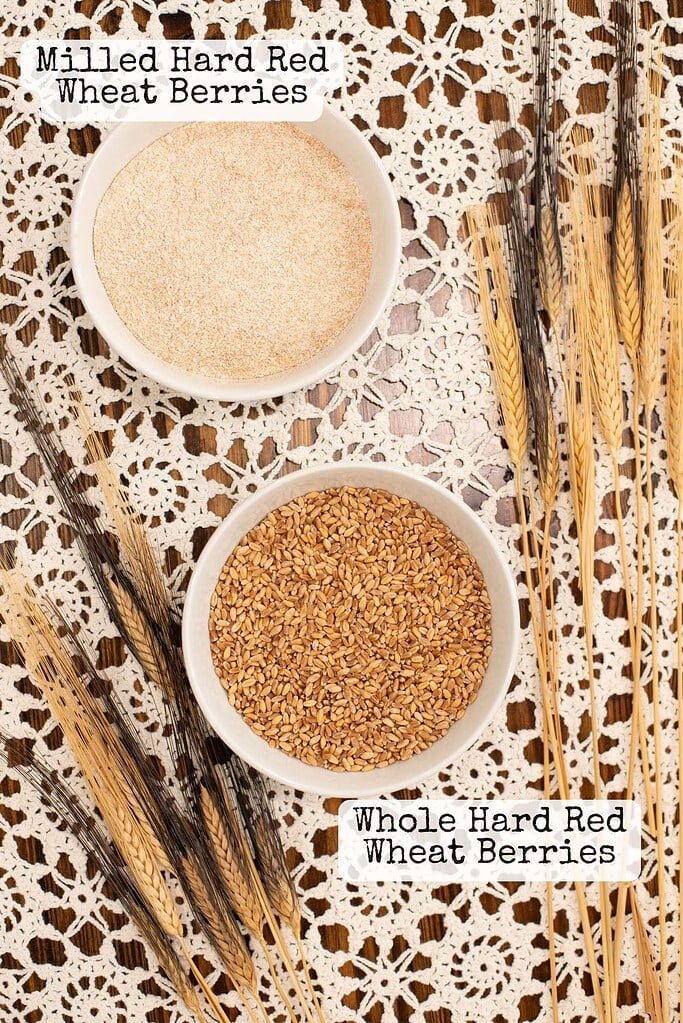
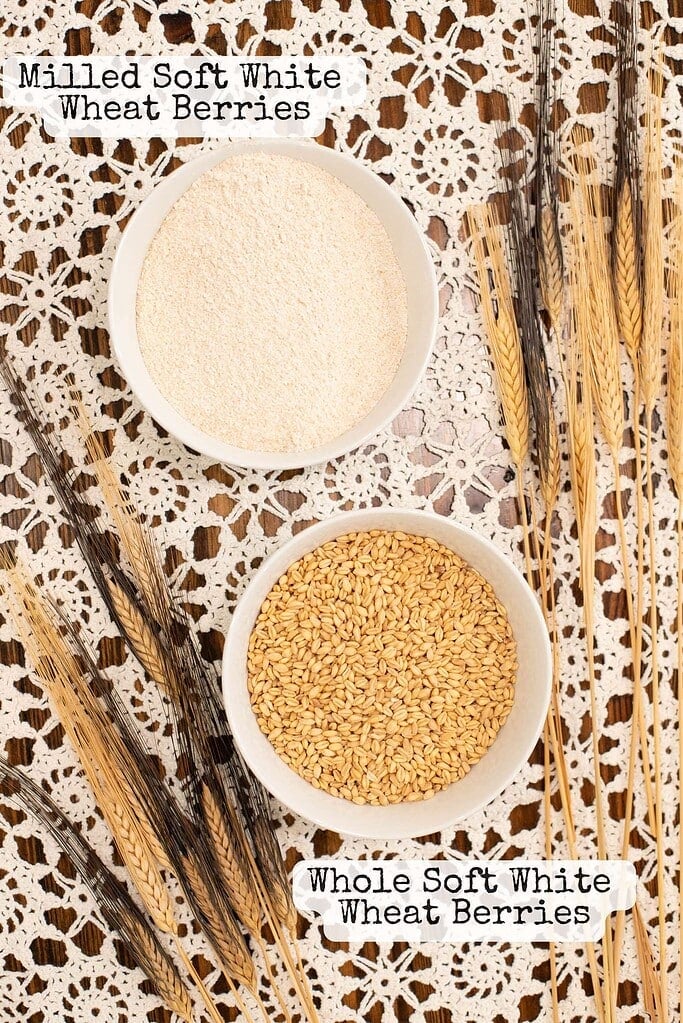
Color – fresh milled hard white wheat flour is a warm cream color with visible bran flecks. Hard red wheat mills to a deeper tan. Soft white wheat is the palest of the three, nearly ivory with a finer texture. Heritage grains vary in shades of browns and creams.
Aroma – fresh milled flour smells earthy, warm, nutty, and faintly sweet right out of the mill. That aroma comes from the natural oils in the germ.
Taste – hard white wheat is mild and slightly sweet. Hard red wheat is deeper and earthier. Soft white wheat is delicate and almost sweet. Heritage grains vary by taste depending on the region it’s grown in and the variety. For guidance on which grain works best for each bake, Best Whole Grains to Mill is a complete resource.
Tips
Start with hard white wheat and soft white wheat – Hard white wheat is mild and approachable, making it the perfect grain for breads and sourdough. Soft white wheat is delicate and pale, ideal for pastries, cookies, pancakes, and flatbreads – together they cover almost every bake in the kitchen.
Rest the dough before adding more liquid – Fresh milled flour absorbs liquid more slowly than commercial all-purpose flour, so give it a short rest before deciding it needs more.
Watch the dough, not the clock – Fermentation timing is different with fresh milled flour, especially for sourdough. Let the dough guide you rather than a set timer.
Check for doneness a few minutes early – Fresh milled flour browns faster than commercial all-purpose flour, so start checking before the original recipe says to.
Mill fresh and bake soon – Fresh milled flour is at its best within 2 to 3 days at room temperature, so mill what you need and bake while it is fresh. For longer storage, keep it in the refrigerator for 4 to 7 days or freeze for up to 6 months in a freezer-safe airtight container.
Start with a forgiving recipe – Banana bread is one of the most forgiving fresh milled flour bakes you can make, and a wonderful place to start before moving on to bread and sourdough.
How Does Fresh Milled Flour Bake?
Freshly milled flour bakes beautifully with a few simple adjustments. Here is a quick overview of what to expect.
It absorbs liquid more slowly; dough that feels dry right after mixing will almost always soften on its own during a short rest. Add extra liquid only after that rest if it is still needed.
It ferments a little faster, watch the dough rather than the clock, especially for sourdough and yeasted breads. But with a caveat, if gluten structure is not built up enough, it can seem as if it’s not fermenting at all.
It browns a little faster, start checking doneness a few minutes before the original recipe suggests.
For the complete baking guide, including hydration ratios, fermentation timing, grain selection by bake type, and beginner troubleshooting, How to Bake with Freshly Milled Flour covers everything needed to bake with confidence.
What to Make with Fresh Milled Flour?
Freshly milled flour works across every category of baking. Here are some wonderful places to start:
- Banana bread – one of the most forgiving fresh milled flour bakes and a wonderful place to begin.
- Pancakes – fluffy, from-scratch, and endlessly satisfying.
- Chocolate chip cookies – soft white wheat makes a tender, chewy cookie with whole grain depth.
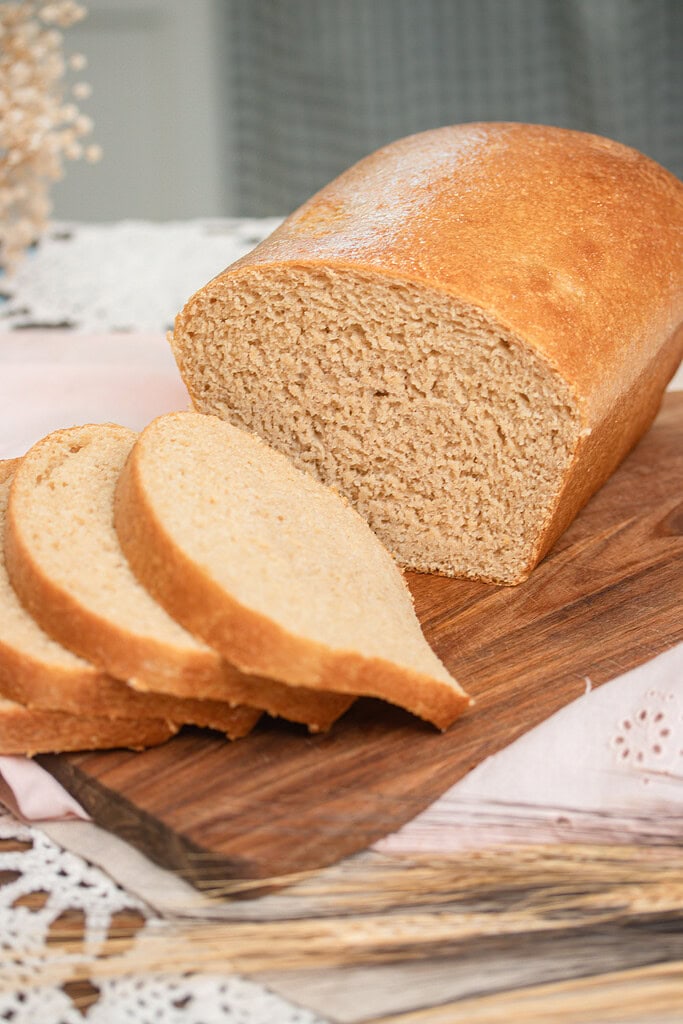
- Fresh Milled Sourdough Sandwich Bread – hard white wheat is the most approachable grain to start with. But I also love using hard red wheat for sourdough; it has a stronger gluten structure to build a tall rise, but a stronger, nutty flavor. How to Make a Freshly Milled Flour Sourdough Starter and How to Bake Sourdough with Freshly Milled Flour are great starting points for sourdough using fresh flour.
- More Freshly Milled Flour recipes, bread, muffins, pizza dough, biscuits, tortillas, and more are waiting in the Fresh Milled Flour Recipes collection.
Troubleshooting
Cottage Living Newsletter
Join the Cozy Cottage Community Today!
Get, from-scratch recipes, seasonal cottage living tips, and cozy cottage living inspiration delivered straight to your inbox.
The Cottage Mill | Freshly Milled Flour Guides, Recipes, and More Await!
FAQ
More Fresh Flour Guides from The Cottage
Was this guide helpful?
Please share this post with others if you found this guide helpful.

Emily Rider
Home miller since 1999 with fresh-milled flour & sourdough experience. Sharing from-scratch recipes and traditional kitchen skills, rooted in the seasons and inspired by everyday cottage living and seasonal rhythms.