

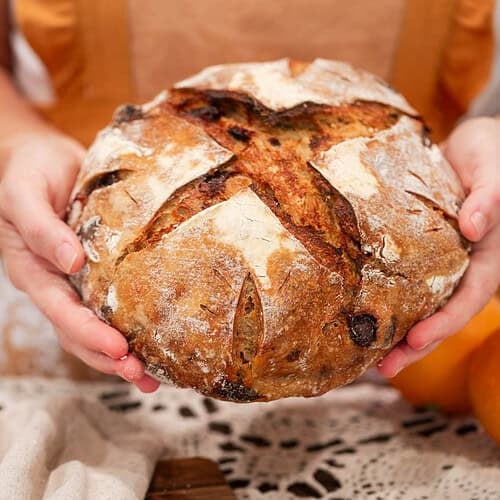
This sourdough cranberry orange bread is one of my favorite winter loaves. Use discard or starter, both work great for this easy recipe.
The dough uses fresh-squeezed orange juice, orange zest, and dried cranberries. The cranberries soften just enough to add little pops of sweet cranberry flavor.
It’s an easy no-knead, stretch-and-fold recipe that turns out delicious and festive every time.
This post may contain affiliate links. Please read our disclosure policy for details.
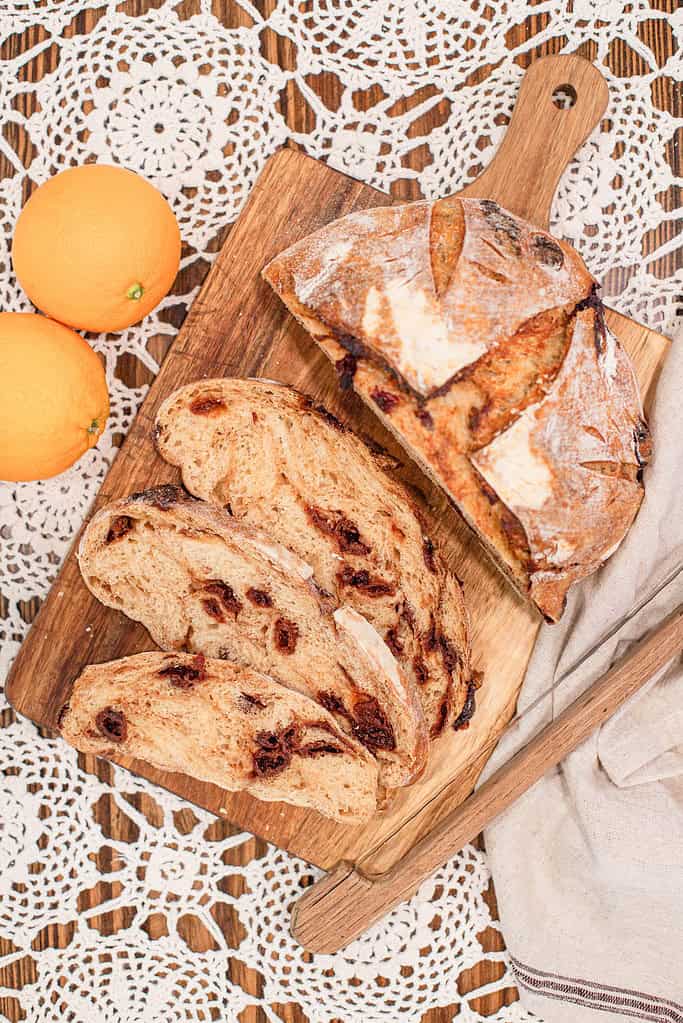
The fragrance of orange and cranberries mingling with sourdough baking always feels like something out of Little Women, cozy, familiar, and full of pure holiday nostalgia. I deeply feel Marmee would greatly approve of this recipe!
In our cottage, this bread shows up all through the holiday season. Sometimes it leans toward Thanksgiving, especially when I layer a couple of slices with leftover turkey, a little Sourdough Cornbread Dressing, and a spoonful of Homemade Spiced Cranberry Orange Sauce. It sounds a little different, but once you try it, you might just be on board. I sometimes even slip a slice of mozzarella or provolone cheese in the sandwich.
And other times it leans toward Christmas, when I toast it, the smell is pure holiday magic. I mean, who doesn’t love the smell and taste of cranberry and orange mingled together in a sourdough bread!
It’s also incredible with a light smear of Nutella. Pair it with a mug of Homemade Apple Cider Recipe In A Dutch Oven or a cozy Cozy Homemade Gingerbread Latte. It’s also lovely with this Easy Pumpkin Spice Latte Recipe or Homemade Spiced Chai Latte Mix when the air turns crisp.
I feel like there is almost nothing better than fresh, homemade bread – and your sourdough cranberry orange bread is absolutely delicious. ~ Youtube Comment
Why You’ll Love This Recipe
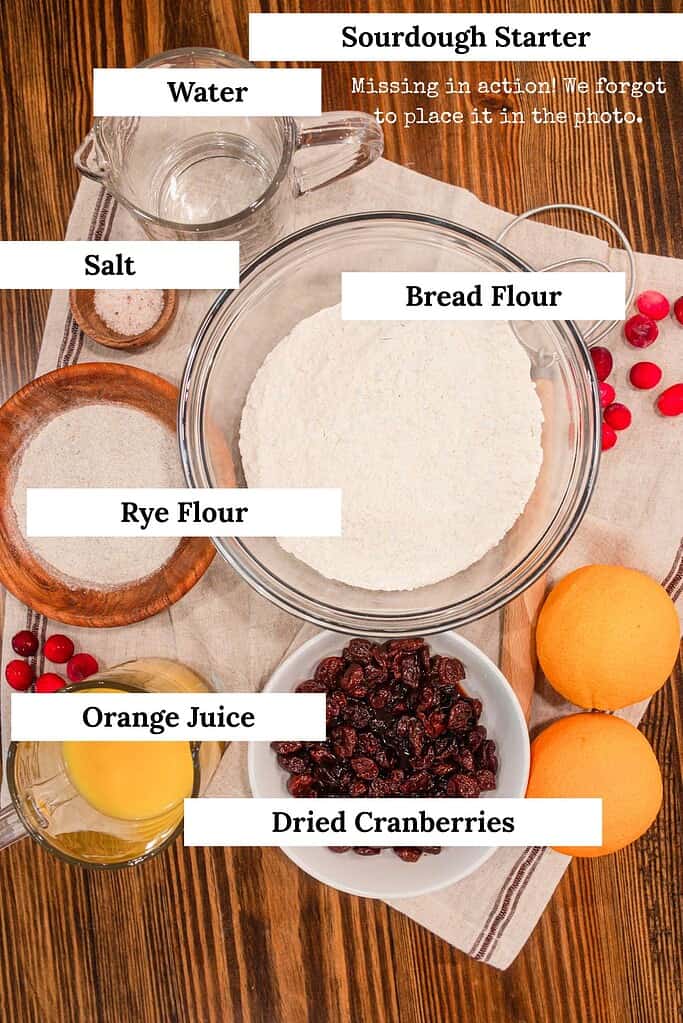
Ingredients
Variations & Add-Ins
Recipe Tips
Soak First: Always soak the dried cranberries in orange juice before adding them to the dough. It helps them plump up and stay soft all through the loaf.
Zest Carefully: Use only the bright orange peel, not the white pith beneath it. The zest adds warmth and fragrance to this sourdough cranberry orange bread recipe.
The Flour Matters: Bread flour gives the loaf its shape and soft crumb. You can blend in a little whole wheat for flavor, but too much can make the bread dense.
Starter or Discard: You can use starter for same day or use your discard for a cold over night fermentation in the refrigerator for next-day baking.
Stretch and Fold Method: Gentle stretch-and-folds every 45 minutes strengthen the dough without kneading. You’ll feel it become smoother and more elastic with each turn.
Steam Matters: The moisture in the dough often creates enough steam for a crisp crust, but adding an ice cube or two to the hot Dutch oven helps deepen the color and lift.
Watch the Boule: Ovens can vary, so keep an eye on the crust near the end. It’s ready when golden brown and hollow-sounding when tapped on the bottom.
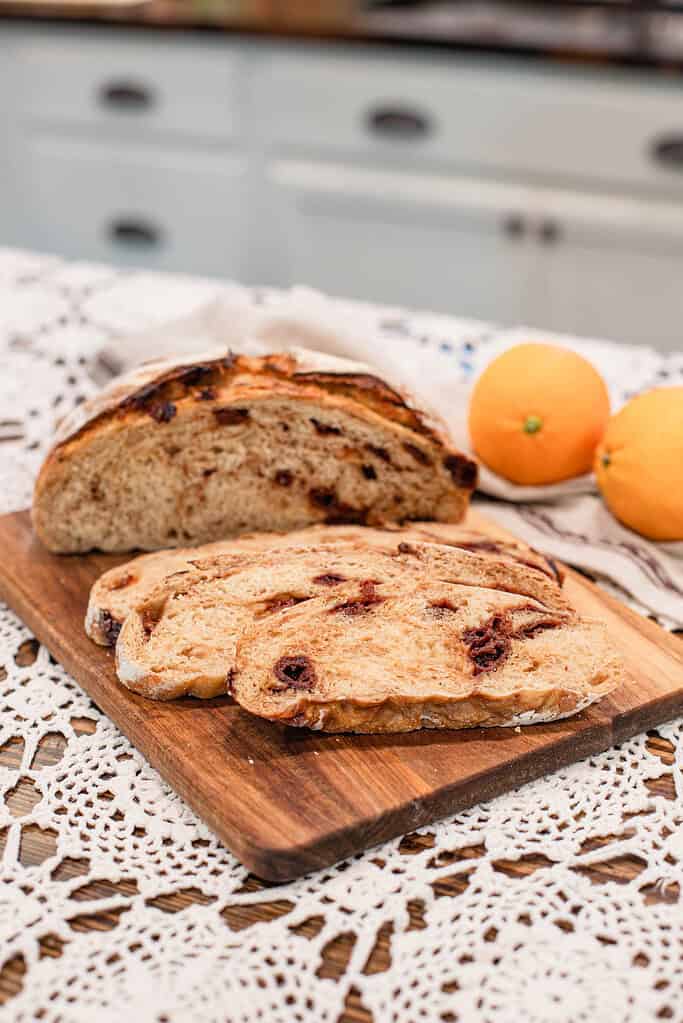
Cool Completely: Let the loaf cool on a rack for at least an hour before slicing. This rest keeps the crumb tender and lets the boule cook fully.
Storing the Loaf: Wrap the cooled bread in parchment or tuck it into a linen bag. It keeps well on the counter for two to three days and slices beautifully for toasting the next morning.
How To Make Sourdough Cranberry Orange Bread Recipe
- Soak the Cranberries: The day before baking, soak dried cranberries in 50 g of fresh orange juice for a few hours or overnight.
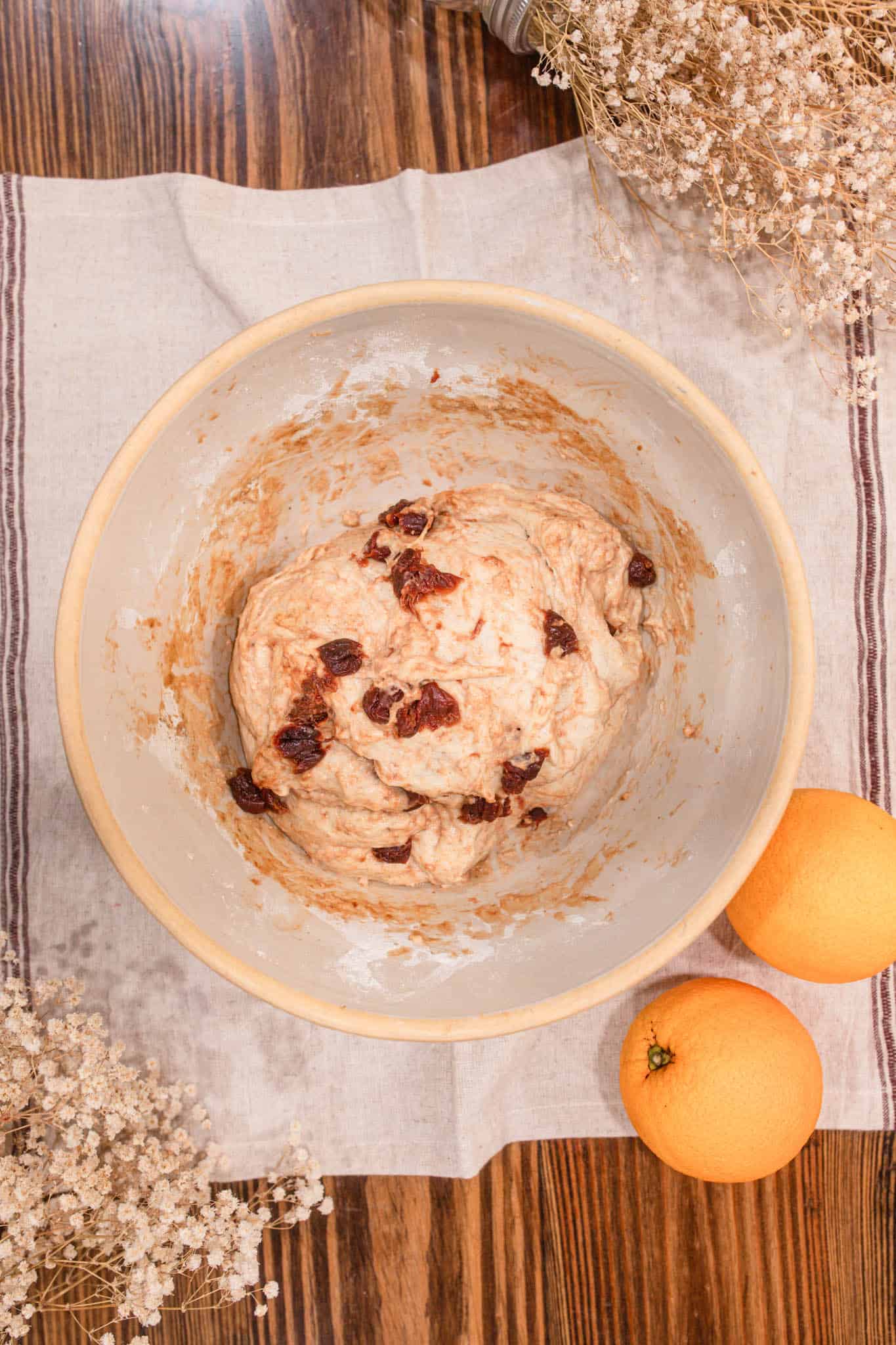
- Mix the Dough: In a large bowl, combine your active sourdough starter or discard with bread flour, rye flour, 245 g of orange juice, and water. Mix until a shaggy dough forms. Cover and let rest 30 minutes (autolyse).
- Add Flavor: Sprinkle in salt, orange zest, and the soaked cranberries. Do your first stretch and fold to incorporate everything evenly.
- Rest and Shape: Over the next 2–3 hours, complete three more stretch-and-folds, spaced 45 minutes apart. Shape into a tight ball and place in a floured banneton or loaf pan. Cover and proof 4–5 hours, or refrigerate overnight.
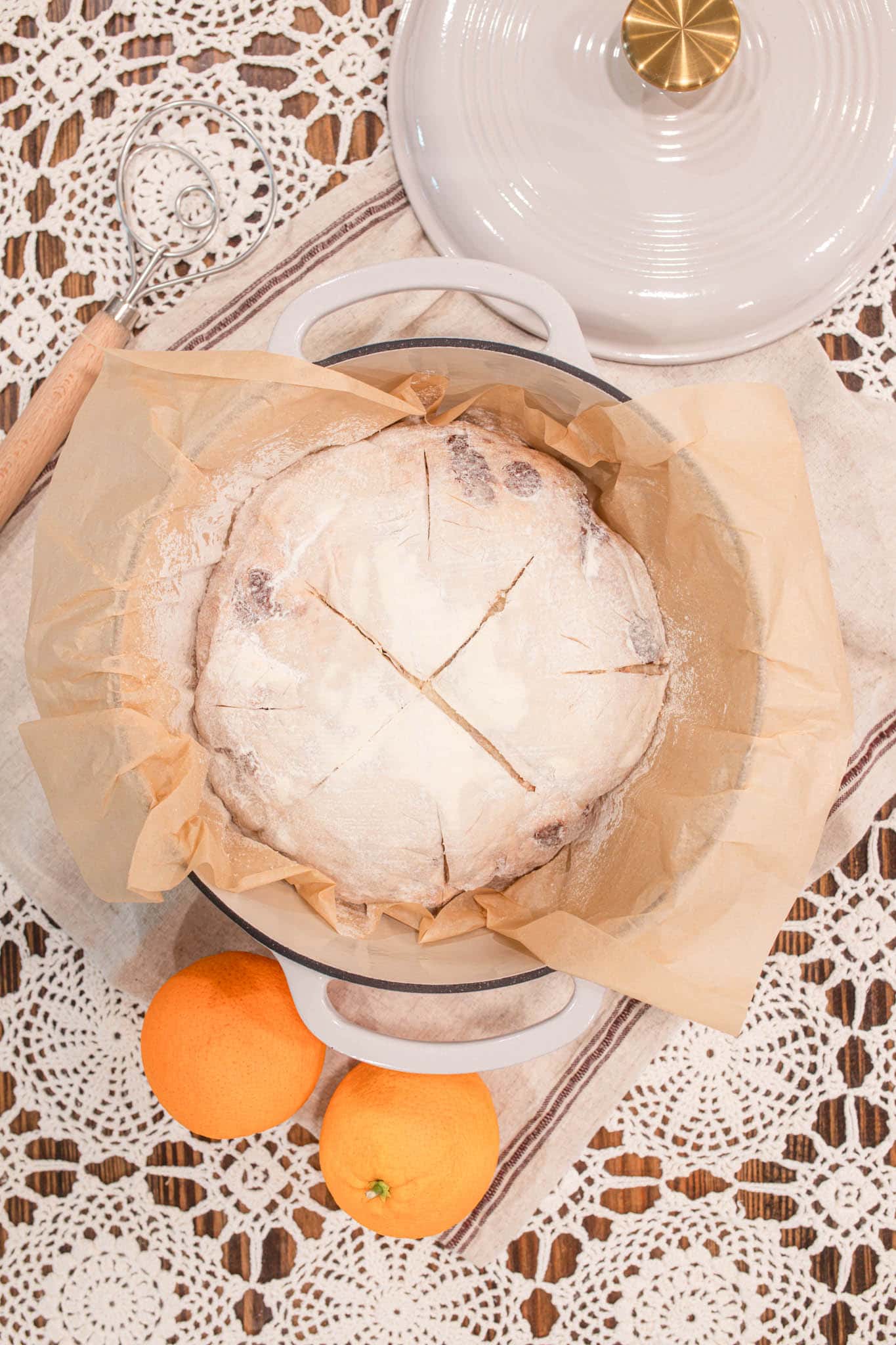
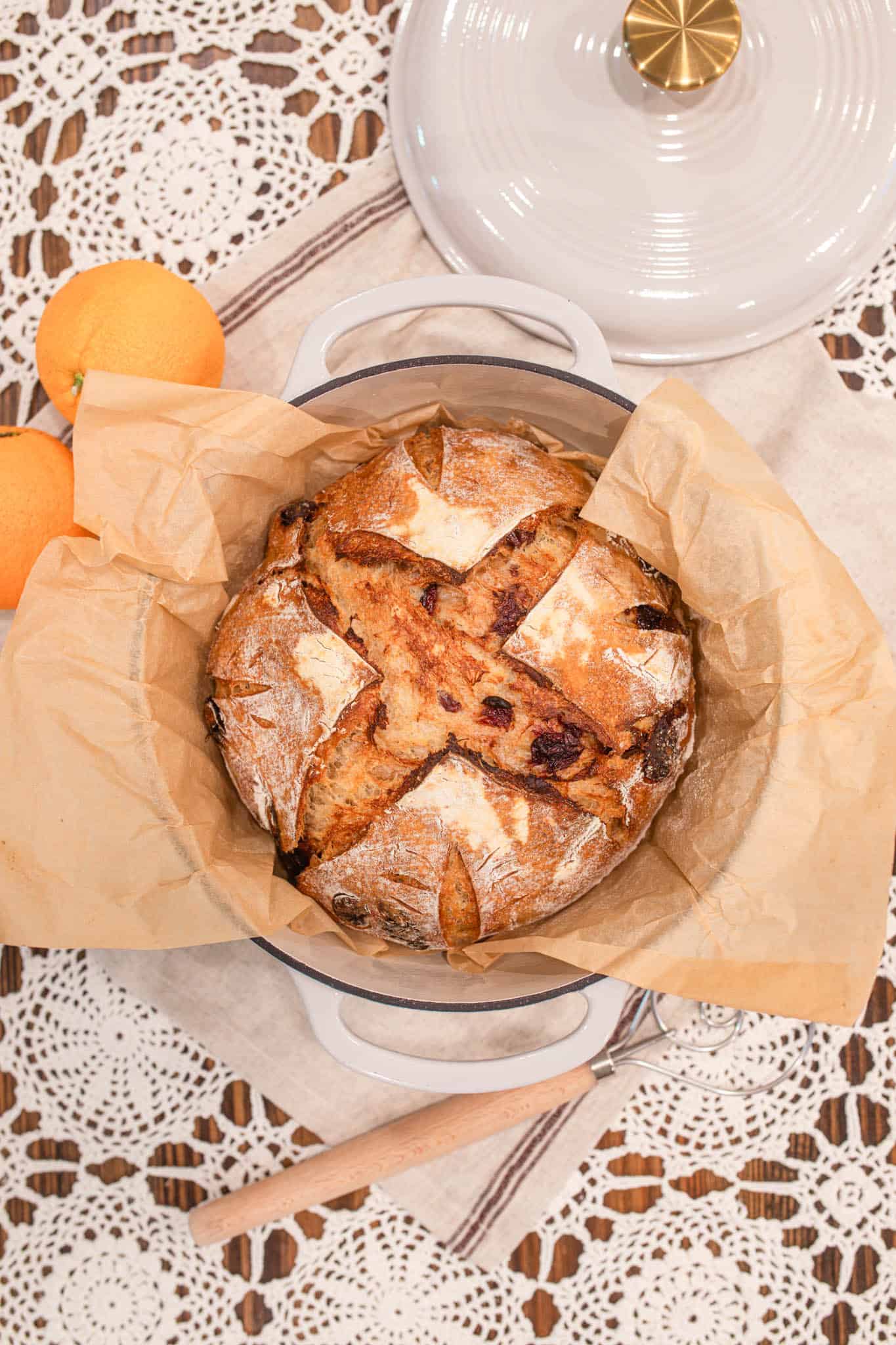
- Bake the Bread: Preheat the oven to 450°F with a Dutch oven inside. Turn the dough onto parchment, score with a sharp knife, and transfer to the pot. Add 2 ice cubes for steam, bake covered 30 minutes, then uncover and bake another 15 minutes until golden.
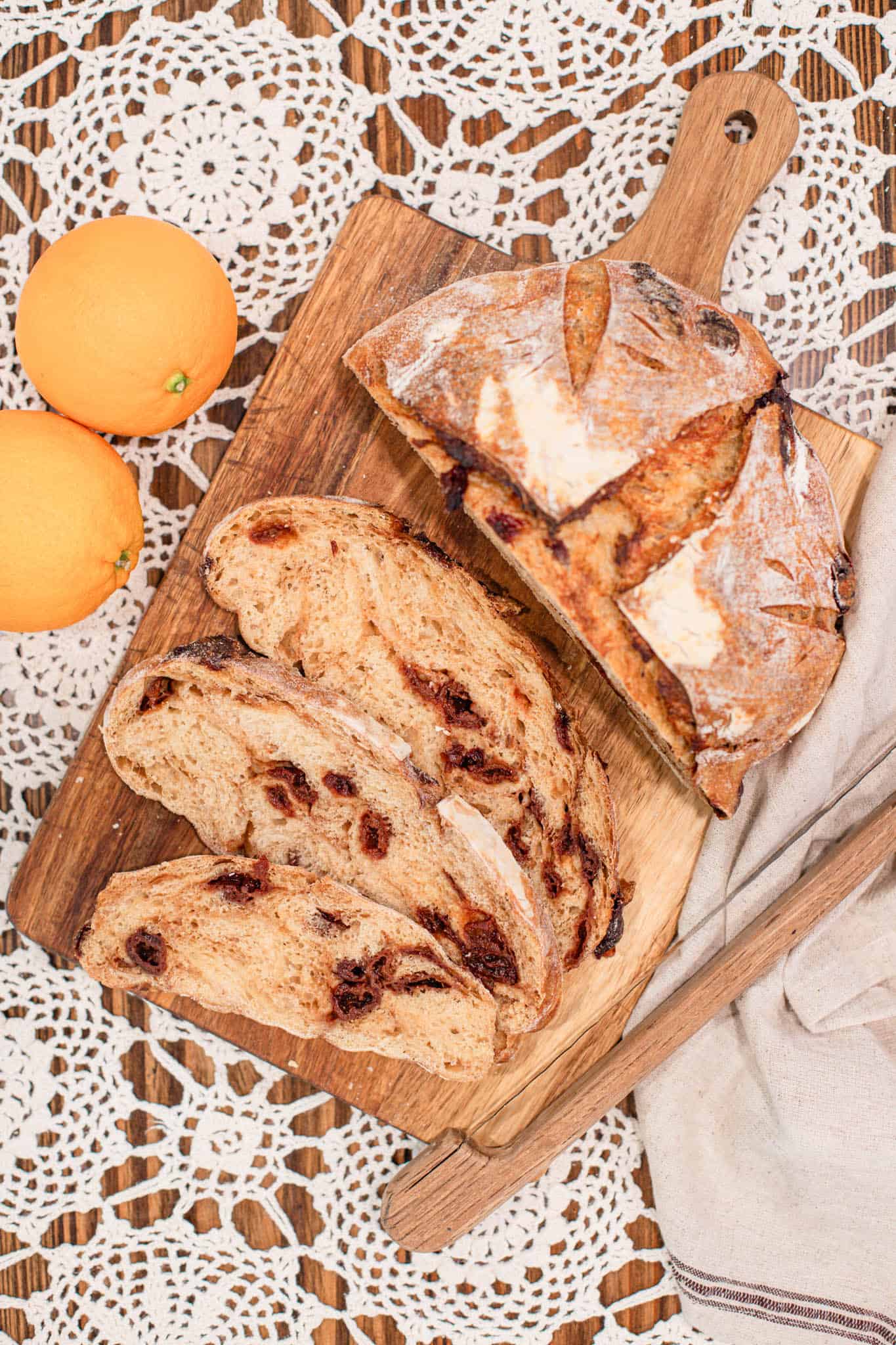
- Cool and Enjoy: Transfer to a wire rack and cool at least 1 hour before slicing. Serve with butter, soft cheese, or use for post-holiday sandwiches.
Freezing & Storage
How To Gift Cranberry Orange Bread
FAQ’s
Join The Community
Want More Cozy Recipes & Seasonal Inspiration?
Get cozy, from-scratch recipes, seasonal cottage living tips, and slow living inspiration delivered straight to your inbox.
From Grain to Table
Step into The Cottage Mill: Freshly Milled Flour Guides, Recipes, and More Await!
Another favorite from my kitchen to yours, where the seasons guide the table and every meal is an act of love — may this recipe become a favorite in your kitchen too.
With gratitude & love,
Emily
More Cozy Recipes from The Cottage
Sourdough Cranberry Orange Bread Recipe
Equipment
- Large mixing bowl
- Dutch oven with lid
- Banneton basket
Ingredients
- 1 cup dried cranberries 120 g
- ½ cup orange juice 50 g for soaking cranberries
- ½ cup active sourdough starter 100 g
- 1¼ cups orange juice 245 g
- ½ cup water 105 g
- 2 tsp sea salt 10 g
- ⅓ cup rye flour 50 g
- 3½ cups bread flour 450 g
- Zest of 1 orange
Instructions
- Soak the cranberries: Pour orange juice over the dried cranberries in a small bowl and stir to coat. Let them rest for at least 30 minutes, or overnight if you have time, until they’re soft and plump.
- Mix the dough: In a large bowl, stir together your active sourdough starter or discard, bread flour, rye flour, orange juice, and water. It’ll look a bit rough — that’s fine. Cover with a damp towel and rest 30 minutes to let the flour absorb moisture.
- Add flavor: Sprinkle in salt, orange zest, and the soaked cranberries (drain any extra juice). Gently fold the dough a few times to mix everything in evenly. No need to knead — just fold and rest again.
- Build strength: Over the next few hours, give the dough a gentle fold now and then — three or four times total. Each turn helps the dough smooth out and strengthen. After the last fold, shape it into a round ball, cover, and let it rise until puffy.
- Prep for baking: When ready to bake, preheat your oven to 450°F (232°C) and place your Dutch oven inside to heat up. Shape your dough and place it on parchment paper for easy transfer.
- Bake: Lower the dough into the hot Dutch oven, cover with the lid, and bake for 30 minutes. Remove the lid and bake another 15 minutes, until the crust is deep golden and the loaf sounds hollow when tapped.
- Cool and enjoy: Transfer to a wire rack and cool for at least an hour before slicing. The crumb will set, making your slices soft and tender. Serve warm with butter, a drizzle of honey, or a spoonful of your Homemade Spiced Cranberry Orange Sauce.
Notes
Nutrition
Did you make this recipe?
If you gave it a try and loved it, I’d be so grateful if you came back to leave a 5 “⭐️” rating. Use the buttons below to share, comment, or connect—I truly enjoy seeing and celebrating your beautiful bakes.

Emily Rider
Cottage lifestyle blogger and home miller with 25+ years of sourdough and fresh-milled flour experience.
Sharing cozy homemade recipes that help you bake with confidence, celebrate each season, and savor the beauty of everyday cottage living.




can you make this without rye flour?
Hi Kaye,
You can absolutely swap the rye for more bread flour. You don’t have to use it in this recipe:). I just want to share the whys I include it to help you in your sourdough journey down the road. My grandmother taught me this little skill on her homestead when I was young: when a sourdough loaf has sweeter, fruit-forward add-ins and an acidic liquid like orange juice, a small amount of rye helps the dough ferment the way it should. Those add-ins can slow things way down, and the rye gives the dough the steady boost it needs to rise well and stay soft.
You can most defiantly make and bake it without the rye, it just may not rise as much and take longer to ferment. But you might enjoy trying it both ways to see which version you prefer. I’d love to hear how your loaf turns out and which one you end up liking best.
Thank you for baking this recipe. I hope you enjoy it and that it becomes a favorite in your kitchen as well.
Happy Holidays, warmest wishes,
Emily