
This post may contain affiliate links. Please read our disclosure policy.
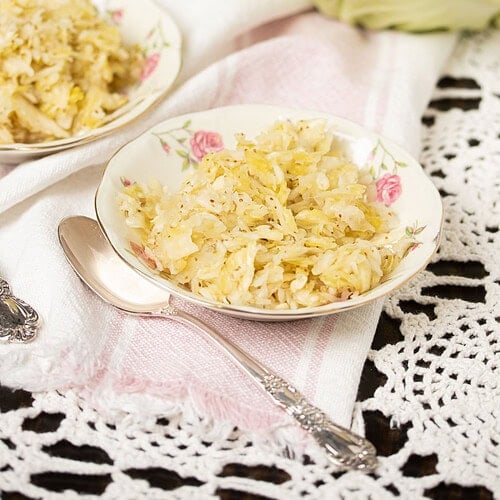
Learning how to make Homemade Sauerkraut in a Mason Jar at home is surprisingly simple with fresh cabbage, sea salt, and a little time. As you massage the cabbage with salt, it begins to soften and release its natural juices, creating the brine that allows the cabbage to ferment.
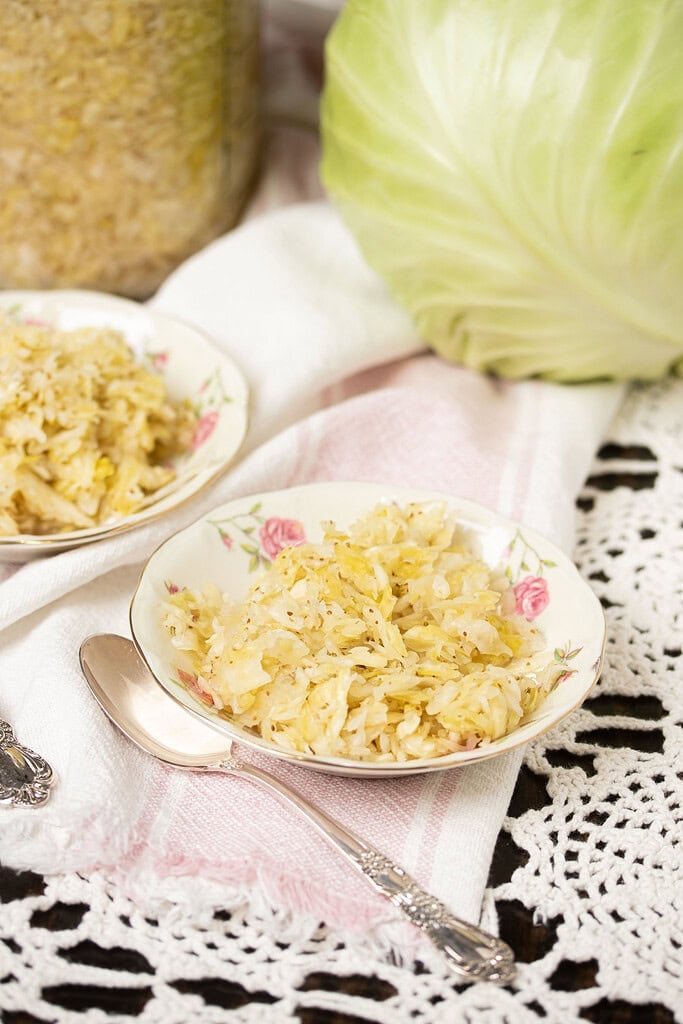
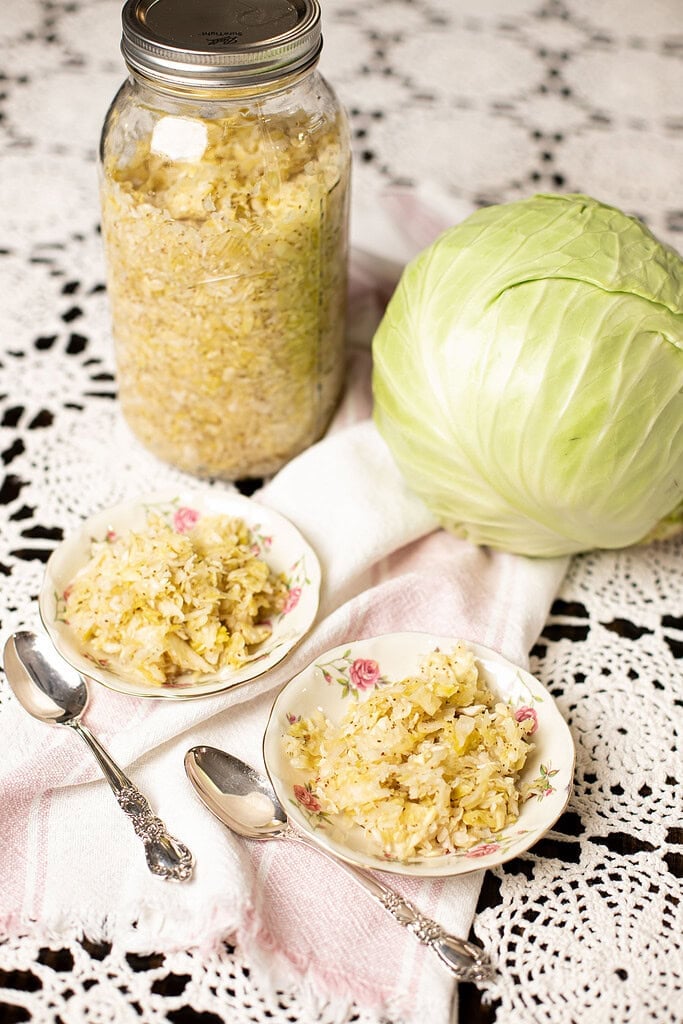
This homemade sauerkraut ferments right in a half-gallon mason jar, making it an approachable way to try traditional fermentation without a crock. Keeping the cabbage tucked beneath the brine is the key as it slowly develops that classic tangy flavor.
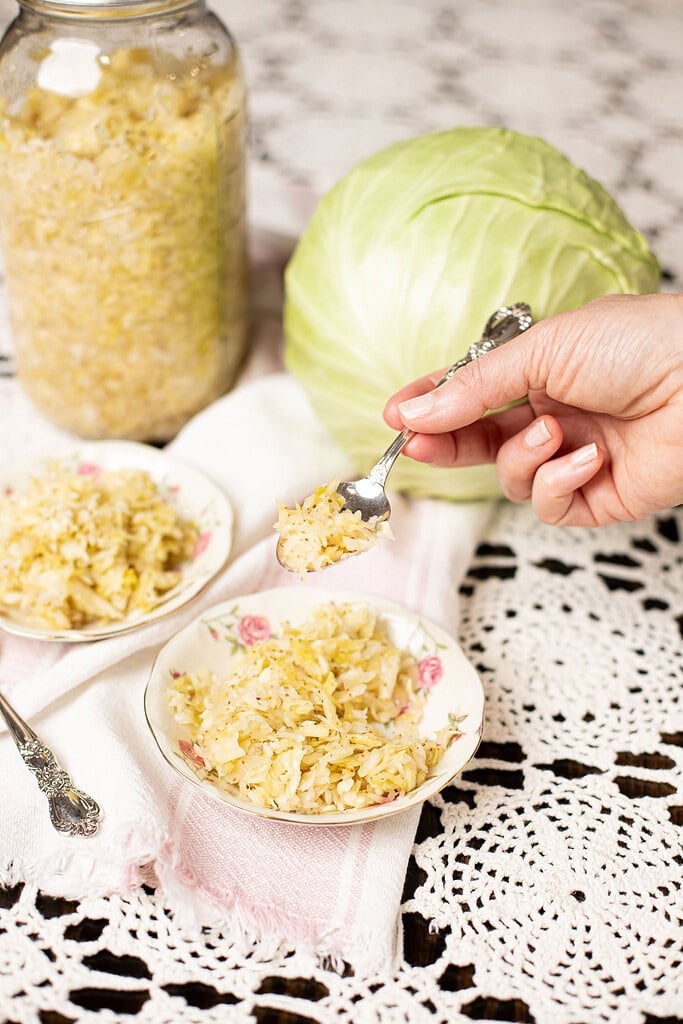
Start tasting your sauerkraut after 5–7 days and let your own taste be your guide. Once it has the tangy, slightly sour flavor you enjoy, move the jar to the refrigerator to slow the fermentation.
Why You’ll Love This Recipe
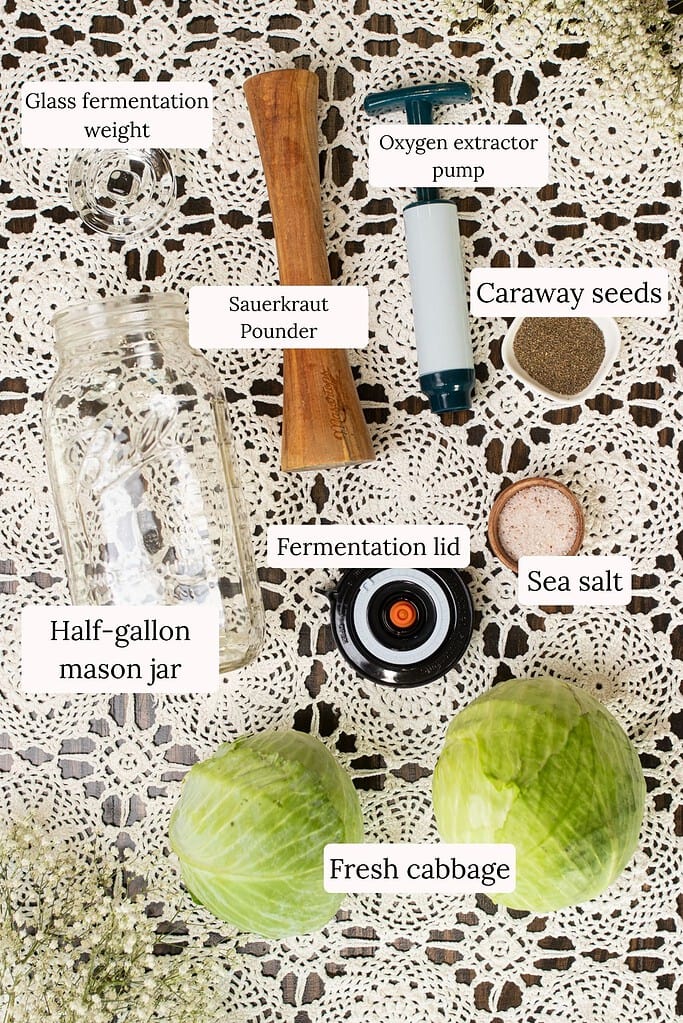
Ingredients & Supplies To Make This Homemade Sauerkraut in a Mason Jar
Variations & Add-Ins
Emily’s Recipe Tips
- Slice it thinly – Cut the cabbage into thin, fairly even pieces so it is easier to massage and pack firmly into the mason jar.
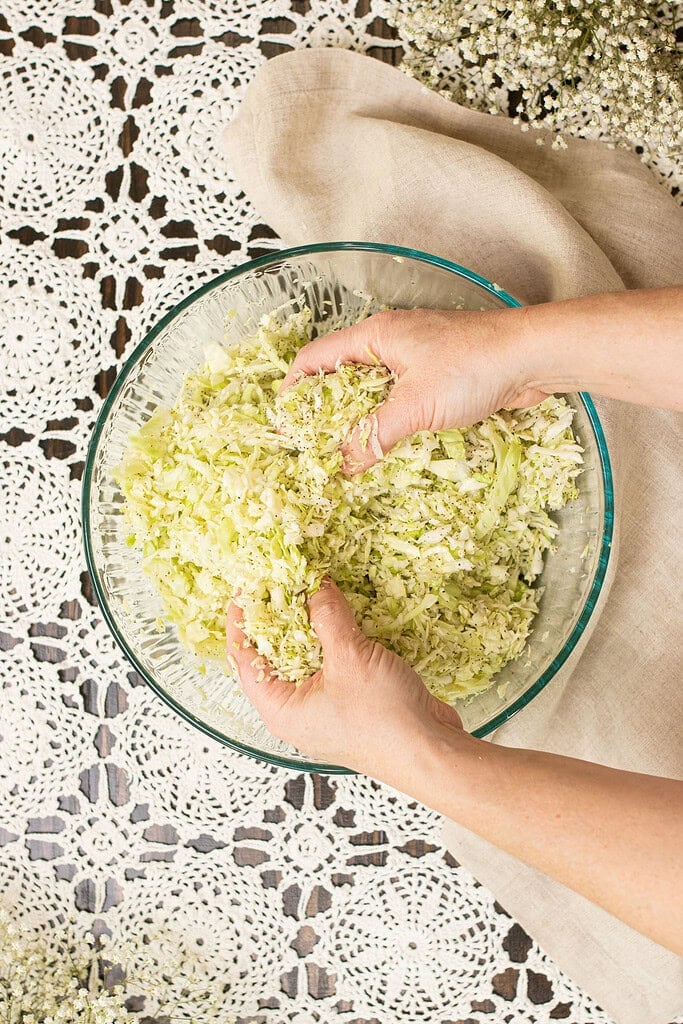
- Look for the brine – Massage the cabbage and sea salt with clean hands for about 10 minutes. As you work it, the cabbage should soften and begin releasing its natural juices.
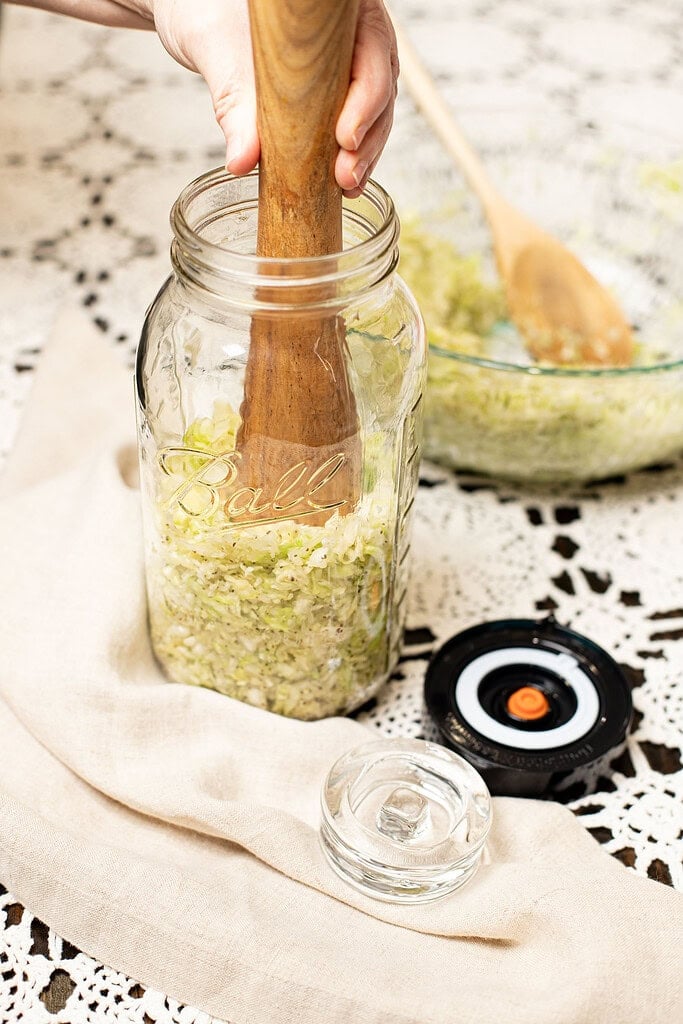
- Use the pounder as you fill the jar – Add the cabbage a little at a time and press it firmly with the sauerkraut pounder. This compacts the cabbage and helps bring the naturally released brine up around it.
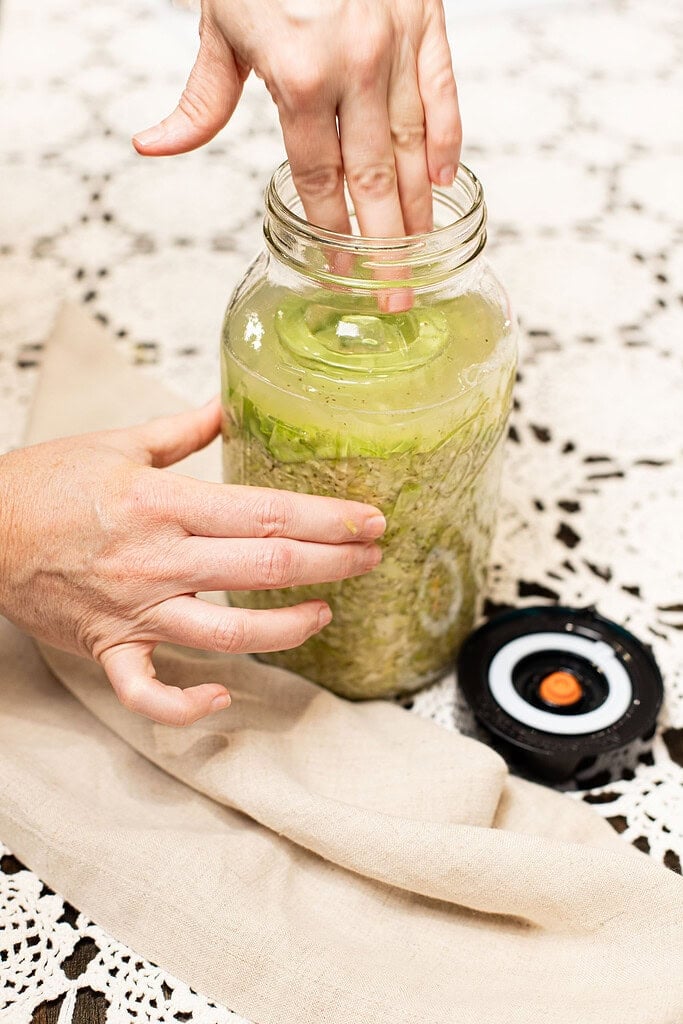
- Keep it submerged – Place a reserved cabbage leaf over the shredded cabbage and use a glass fermentation weight to keep everything beneath the brine. Check the jar daily to make sure the cabbage remains submerged.
- Taste instead of watching the clock – Begin tasting after 5–7 days. If you want a stronger, tangier flavor, let it ferment for a few more days before tasting again.
How To Make Homemade Sauerkraut in a Mason Jar
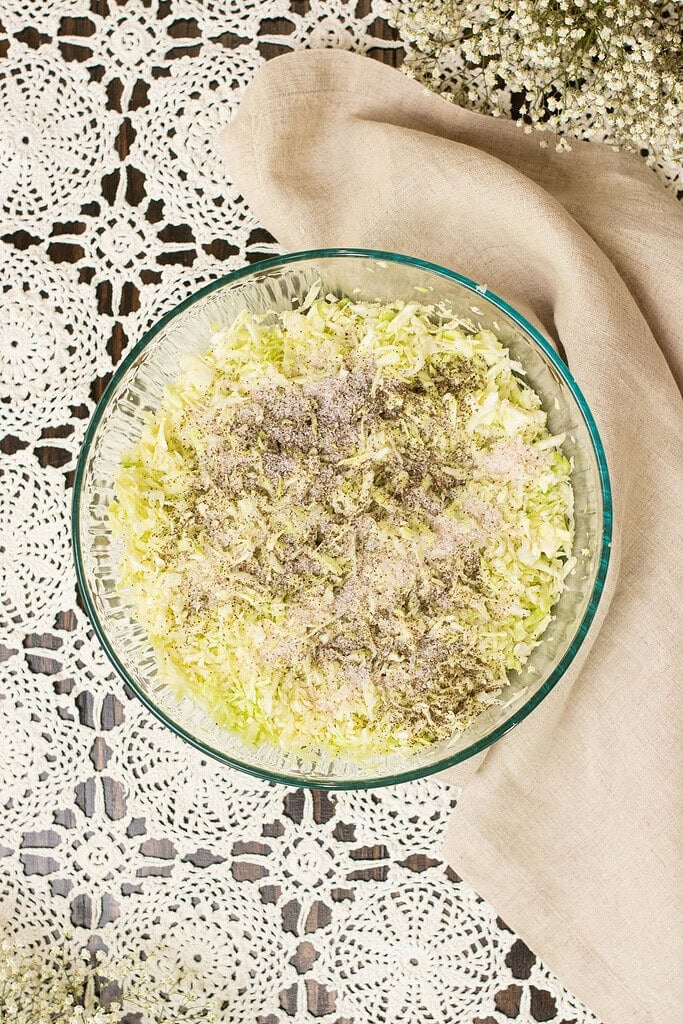
- Prepare the cabbage – Remove the outer leaves from 1 medium head of cabbage and set them aside. Thinly slice the remaining cabbage and place it in a large mixing bowl.
- Add the sea salt – Sprinkle 2 tablespoons of sea salt over the shredded cabbage. Massage the cabbage and salt together with clean hands for about 10 minutes. As you work, the cabbage should soften and begin releasing its natural juices to create the brine.
- Add the caraway seeds – If using, add 1 tablespoon of caraway seeds and mix until they are evenly distributed throughout the cabbage.
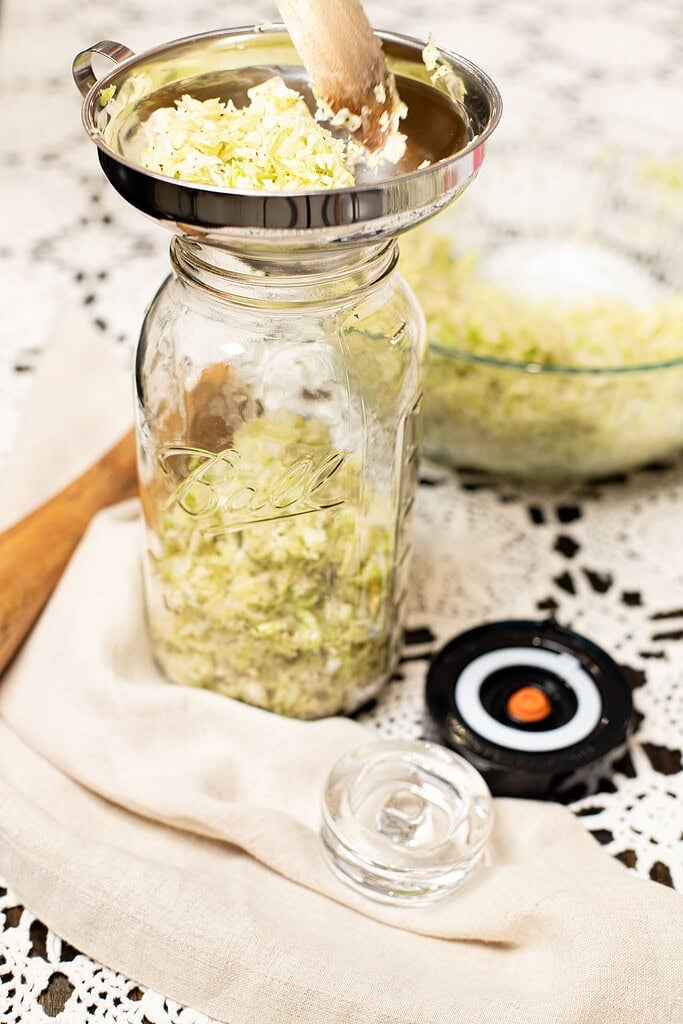
- Pack the mason jar – Transfer the cabbage to a clean half-gallon mason jar a little at a time. Use your sauerkraut pounder to firmly press the cabbage down as you fill the jar. Pour any brine remaining in the mixing bowl into the jar.
- Keep the cabbage submerged – Place one of the reserved cabbage leaves over the shredded cabbage, then set the glass fermentation weight on top. Press everything down so the cabbage remains beneath the brine.
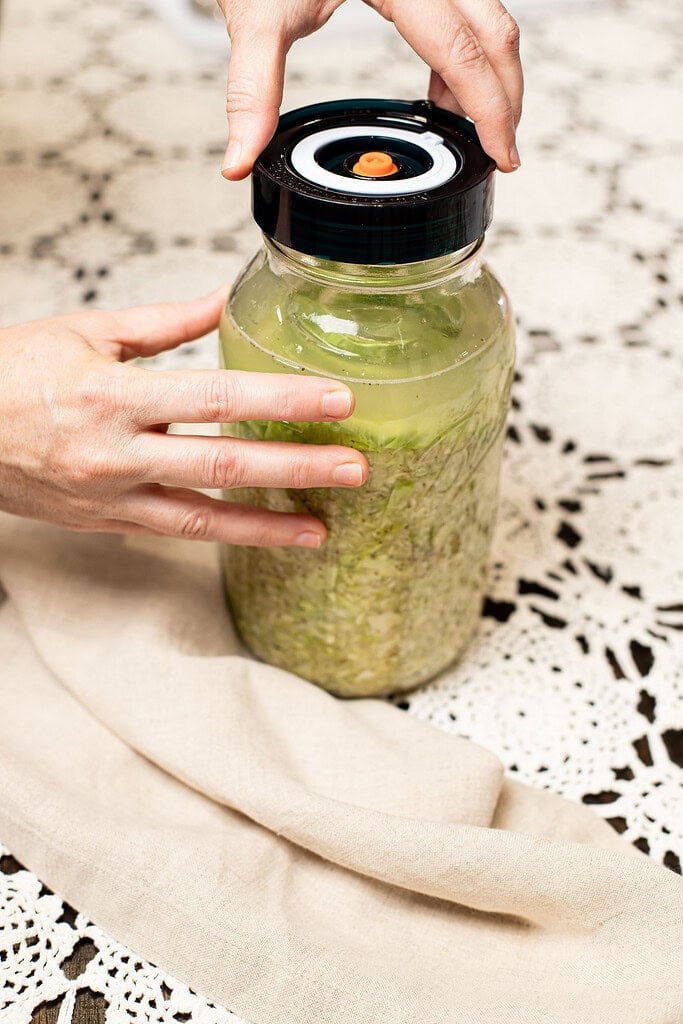
- Add the fermentation lid – Secure the fermentation lid onto the mason jar. Attach the oxygen extractor pump to the valve and use it according to the directions for your particular fermentation lid to remove air from the jar.
- Ferment the sauerkraut – Place the jar in a cool, dark place and allow it to ferment for 5–7 days. Check the jar daily to make sure the cabbage remains submerged beneath the brine.
- Taste for doneness – Begin tasting the sauerkraut after 5–7 days. When it has the tangy, slightly sour flavor you enjoy, it is ready. If you prefer a stronger flavor, let it ferment for a few more days and taste it again.
- Refrigerate the sauerkraut – Once you are happy with the flavor, remove the fermentation setup, cover the jar, and transfer it to the refrigerator. Refrigeration slows the fermentation process.
Storage Suggestions
What To Do With Homemade Sauerkraut
Homemade Saurkraut in a Mason Jar FAQs
More Fermentation & Preserving Recipes from the Cottage
Did you know you can convert your favorite recipes to freshly milled flour? Learn how to convert recipes and find more fresh flour guides at The Cottage Mill.
The Cottage Mill | Freshly Milled Flour Guides, Recipes, and More Await!
Join the Cozy Cottage Community Today!
Get from-scratch recipes, seasonal cottage living tips, and cozy cottage living inspiration delivered straight to your inbox.
⭐️ Rate This Recipe
Made this recipe? Leave a star ⭐️ rating below, it means the world to me and helps my recipes get found by more people like you. Tag me on Instagram @themoderndaycottage

If you made this recipe, please leave a comment or question below! I’d love to hear how it turned out and am always happy to help troubleshoot.
Want more from The Cottage? Subscribe here for freshly milled flour, sourdough, and from-scratch recipes, plus slow living inspiration from my cottage straight to your inbox.

Homemade Sauerkraut
 Prep:20 minutes Total:20 minutes
 Equipment
- Half-gallon mason jar
- Large mixing bowl
- Sharp knife or food processor
- Cutting Board
- Glass fermentation weight
- Fermentation lid or regular mason jar lid
- Measuring spoons
- Sauerkraut Pounder
Ingredients
- 1 medium head fresh cabbage
- 2 tablespoons sea salt
- 1 tablespoon caraway seeds optional
Instructions
- Prepare the cabbage – Remove the outer leaves from 1 medium head of cabbage and set them aside. Thinly slice the remaining cabbage and place it in a large mixing bowl.
- Add the sea salt – Sprinkle 2 tablespoons of sea salt over the shredded cabbage. Massage the cabbage and salt together with clean hands for about 10 minutes. As you work, the cabbage should soften and begin releasing its natural juices to create the brine.
- Add the caraway seeds – If using, add 1 tablespoon of caraway seeds and mix until they are evenly distributed throughout the cabbage.
- Pack the mason jar – Transfer the cabbage to a clean half-gallon mason jar a little at a time. Use your sauerkraut pounder to firmly press the cabbage down as you fill the jar. Pour any brine remaining in the mixing bowl into the jar.
- Keep the cabbage submerged – Place one of the reserved cabbage leaves over the shredded cabbage, then set the glass fermentation weight on top. Press everything down so the cabbage remains beneath the brine.
- Add the fermentation lid – Secure the fermentation lid onto the mason jar. Attach the oxygen extractor pump to the valve and use it according to the directions for your particular fermentation lid to remove air from the jar.
- Ferment the sauerkraut – Place the jar in a cool, dark place and allow it to ferment for 5–7 days. Check the jar daily to make sure the cabbage remains submerged beneath the brine.
- Taste for doneness – Begin tasting the sauerkraut after 5–7 days. When it has the tangy, slightly sour flavor you enjoy, it is ready. If you prefer a stronger flavor, let it ferment for a few more days and taste it again.
- Refrigerate the sauerkraut – Once you are happy with the flavor, remove the fermentation setup, cover the jar, and transfer it to the refrigerator. Refrigeration slows the fermentation process.
Notes

Emily Rider
Home miller since 1999 with fresh-milled flour & sourdough experience. Sharing from-scratch recipes and traditional kitchen skills, rooted in the seasons and inspired by everyday cottage living and seasonal rhythms.