Dutch Oven Apple Cider

This homemade apple cider recipe starts with freshly juiced apple juice or your favorite pre-made cider simmered low and slow with whole spices, orange slices, and a touch of brown sugar until the kitchen fills with the kind of warmth that only comes from something made completely from scratch.

No complicated pressing, no special equipment – just real apple juice, whole spices, and a slow simmer that turns a simple pot into the coziest fall drink you will make all season.

Pour it warm alongside Sourdough Apple Fritters or Sourdough Apple Cider Donuts for a full cottage kitchen fall afternoon, and keep a mug warm on the stove while you go about your day.
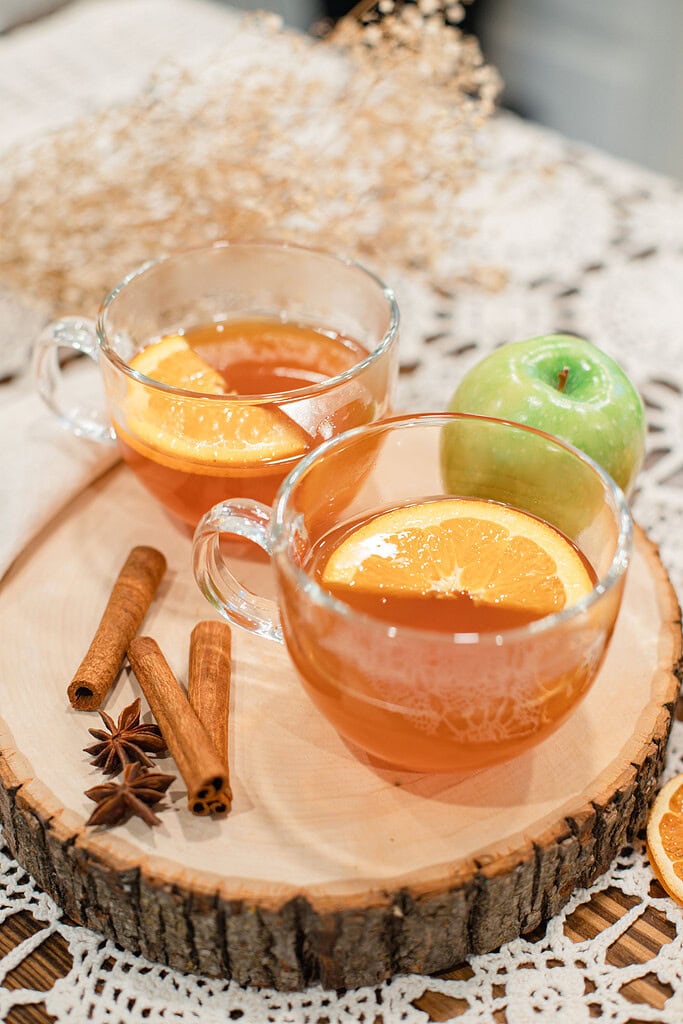
wo glass mugs of hot Dutch oven apple cider garnished with orange slices on a wood slice board, with cinnamon sticks, star anise, and a green apple beside them on a lace doily

Why You’ll Love This Recipe

  • Made from real apple juice and whole spices – This is not a spiced store-bought cider straight from the jug. Whole spices and orange simmer into fresh apple juice and every drop of flavor blooms from the real fruit of that slow heat.
  • The house smells like fall from the moment it starts – Whole cinnamon sticks, cloves, allspice, and star anise blooming in a Dutch oven with orange slices is one of the best scents a cottage kitchen can produce.
  • Simple process, real results – Add, simmer, strain. No equipment, no press, no complicated steps. The Dutch oven does all the work.
  • Endlessly adaptable – Maple syrup instead of brown sugar, a handful of cranberries stirred in before serving, a splash of rum in the mug, or a few slices of fresh ginger – the base takes any variation beautifully.
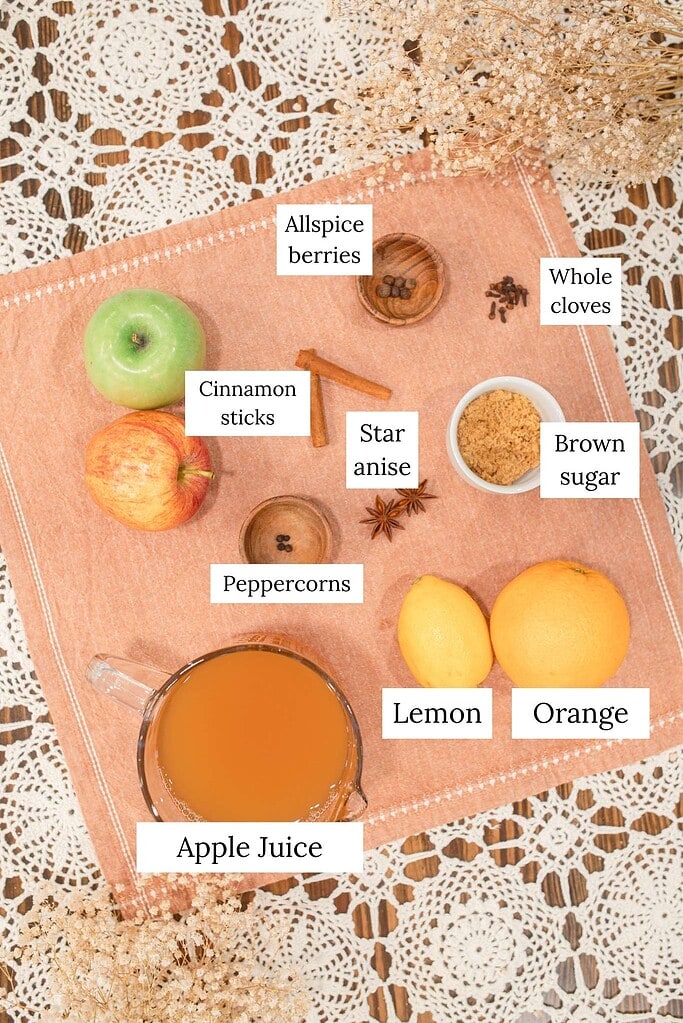
Labeled overhead ingredient flat lay for Dutch oven apple cider showing apple juice in a glass pitcher, green and red apples, allspice berries, whole cloves, cinnamon sticks, star anise, peppercorns, brown sugar, lemon, and orange arranged on a peach linen with crochet lace and dried baby's breath.

Ingredients

  • Apple juice or apple cider – Use 1½ quarts of freshly juiced apple juice for the most vibrant flavor, or reach for a good pre-bought apple juice or unfiltered apple cider. Either works beautifully here. The spice blend does the rest.
  • Orange – Half an orange sliced into rounds with the peel on. The peel contributes a subtle bitterness and citrus oils that round out the spice blend and lift the whole cider without dominating it.
  • Cinnamon sticks – The backbone of the spice blend. Use whole cinnamon sticks rather than ground – ground cinnamon clouds the cider and leaves a gritty texture that no amount of straining fully removes.
  • Whole cloves – Adds a deep, warm intensity. Start with 6 and go up to 12 for a bolder spice. They are the most assertive ingredient in the pot and you can adjust entirely to your taste.
  • Allspice berries – Contributes a warm, slightly peppery note that ties the cinnamon and cloves together. Use whole berries, not ground.
  • Peppercorns – A small amount adds a subtle warmth you notice in the finish without being able to identify as pepper. Do not skip them.
  • Star anise – Optional but worth including. Star anise adds a faint, sweet anise note that gives the cider a subtle complexity that most people cannot name but always notice.
  • Brown sugar – Two tablespoons sweetens the cider gently without masking the apple flavor. Taste near the end and add more if your juice is particularly tart. Maple syrup is a beautiful substitute for a deeper, woodsy sweetness.
  • Lemon juice – Two teaspoons of freshly squeezed lemon juice brightens the finished cider and balances the sweetness of the juice and sugar. Add it after simmering, not during.
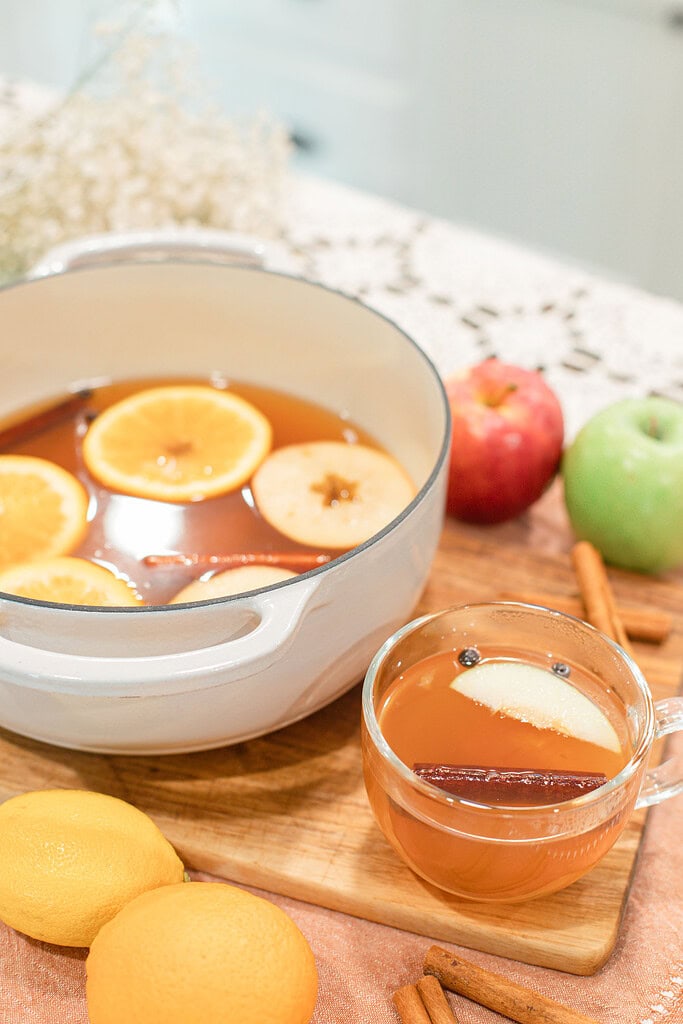
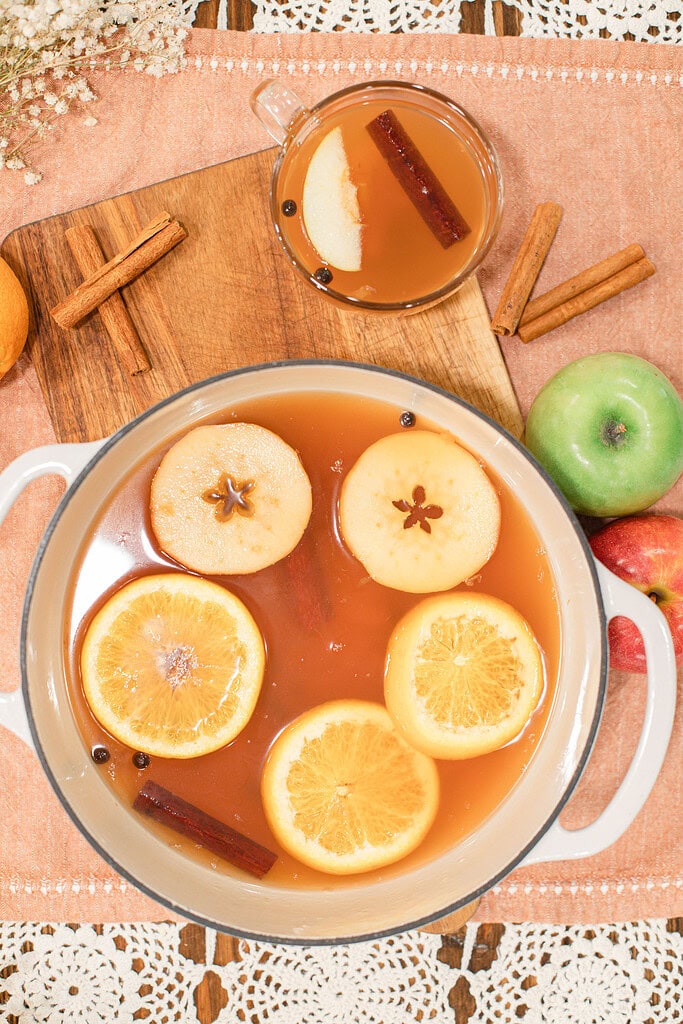
White Dutch oven filled with hot apple cider, orange slices, and a cinnamon stick beside a glass mug of cider garnished with an apple slice, surrounded by lemons, red and green apples, and cinnamon sticks on a wood cutting board

Variations & Add-Ins

  • Mulled apple cider – To lean further into the mulled direction, add 2 to 3 additional cinnamon sticks, a few extra cloves, and a strip of fresh orange peel. Serve spiked with a splash of dark rum, brandy, or bourbon per mug for a grown-up version that is the definition of a cozy fall evening. Read Gingerbread Hot Chocolate for another cozy cottage kitchen winter drink worth keeping on rotation.
  • Cranberry orange cider – Add a generous handful of fresh cranberries to the pot with the orange. They add a beautiful deep red color and a tart brightness that makes the cider feel festive and seasonal from the first sip.
  • Maple harvest cider – Replace the brown sugar entirely with 2 to 3 tablespoons of pure maple syrup stirred in near the end of simmering. The maple adds a warm, woodsy sweetness that pairs beautifully with the whole spices.
  • Apple ginger cider – Add 3 to 4 thin slices of fresh ginger to the pot with the spices. It adds a clean, slightly spicy warmth that makes the cider feel crisp and invigorating alongside the cinnamon and clove.
  • Caramel apple cider – Drizzle a tablespoon of caramel sauce into each mug before ladling in the hot cider and stir gently. It is indulgent, dessert-adjacent, and perfect for a fall gathering where you want something a little more special.

Recipe Tips

Use freshly juiced apple juice when you can – Freshly juiced apple gives you the brightest, most vibrant base. A good unfiltered pre-bought apple juice or cider is a wonderful shortcut that works beautifully and still produces a genuinely homemade result from the spice simmer.

Do not rush the simmer – A full 1½ to 2 hours at a gentle heat allows the spices to bloom properly and the finished cider to develop the rich, rounded flavor that makes this worth making from scratch. A fast boil gives you a thinner, harsher result.

Adjust the cloves to taste – Cloves are the most assertive ingredient in the pot. Start with 6 for a balanced spice blend. Go up to 12 if you love a bold, deeply spiced cider. Pull them early if you prefer something more delicate.

Sweeten at the end – Always taste after the simmer before adding any additional sugar or maple syrup. The natural sweetness of your apple juice will vary and the cider may not need anything extra at all.

Strain gently – Set a fine mesh sieve over a large bowl and pour the mixture through in batches. Press the orange slices gently with the back of a spoon to extract every last drop of citrus flavor without pushing pulp through into the finished cider.
Instructions

  1. Prepare the orange – Slice half an orange into rounds and add to the Dutch oven.
  2. Add the spices – Drop in the cinnamon sticks, whole cloves, allspice berries, peppercorns, star anise, and brown sugar. Stir gently to distribute.
  3. Pour in the apple juice – Add 1½ quarts of fresh or pre-bought apple juice or cider. Stir gently to combine.
  4. Bring to a gentle boil – Set the Dutch oven over medium heat and bring the mixture to a gentle boil, stirring once or twice. Once boiling, reduce the heat to low.
  5. Simmer low and slow – Let the cider simmer uncovered on low heat for 1½ to 2 hours. The spices will bloom, the orange will soften, and the liquid will deepen in color and fragrance. Stir occasionally.
  6. Strain the cider – Set a fine mesh sieve or a cheesecloth-lined colander over a large bowl. Pour the mixture through in batches, pressing the orange slices gently with the back of a spoon. Discard the solids.
  7. Finish and serve – Stir in the fresh lemon juice. Taste and adjust sweetness with additional brown sugar or maple syrup if needed. Return the strained cider to the Dutch oven and warm gently over low heat before serving. Ladle into mugs and garnish with a fresh cinnamon stick or an orange slice.
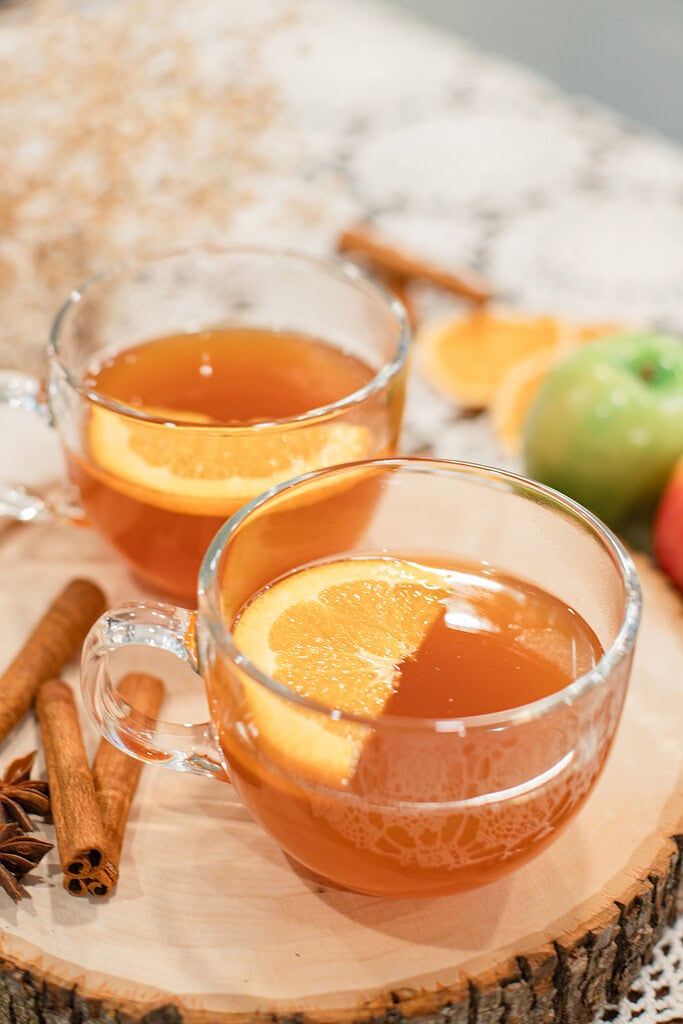
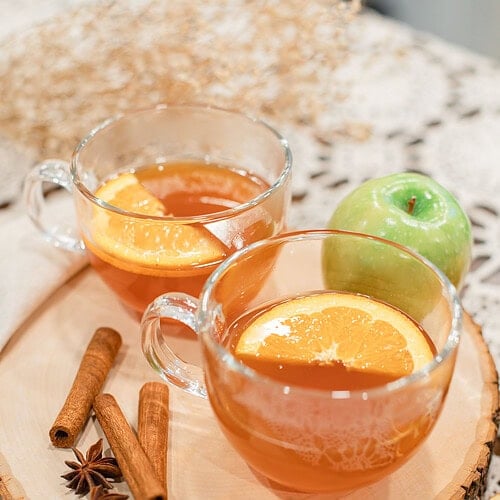
Two glass mugs of hot Dutch oven apple cider garnished with orange slices on a wood slice board, with cinnamon sticks, star anise, and red and green apples in the soft background

Freezing and Storage

  • Refrigerator – Let the cider cool completely, then pour into glass jars or an airtight container. Store in the refrigerator for up to 5 days. The flavor deepens slightly as it chills and the cider tastes even better on day two.
  • Freezer – Ladle cooled cider into freezer-safe containers or mason jars, leaving at least an inch of headspace for expansion. Freeze for up to 3 months. Thaw overnight in the refrigerator and reheat gently on the stovetop before serving.
  • Reheating – Warm gently in a saucepan over low heat, stirring occasionally. Do not boil – a gentle warm-through is all it needs. Add a fresh cinnamon stick to the pot while it reheats to freshen the spice aroma.

FAQ

Regular apple cider is pressed or juiced apples – it may be unfiltered and slightly cloudy but has no added spices. Mulled apple cider is cider that has been gently heated with whole spices like cinnamon, cloves, and star anise, and sometimes citrus, until the flavors infuse. This recipe does exactly that – fresh or pre-bought apple juice simmers with whole spices until the cider is deeply fragrant and layered.

Freshly juiced apple juice produces the most vibrant, full-flavored result. A good unfiltered pre-bought apple juice or an unfiltered apple cider from the refrigerator section works beautifully as well. Avoid shelf-stable filtered apple juice if you can – it produces a thinner, less complex base.

Up to 5 days stored in an airtight glass jar or container. The flavor actually improves after the first day as the spices continue to develop in the finished cider. Always smell before reheating after several days – fresh homemade cider without preservatives will tell you clearly when it has turned.

Yes. Let it cool completely, then ladle into freezer-safe containers or mason jars leaving at least an inch of headspace for expansion. Freeze for up to 3 months. Thaw overnight in the refrigerator and reheat gently on the stovetop. The flavor holds well through freezing.

This Dutch oven method needs nothing beyond what you already have. Apple juice simmers with whole spices and orange slices until deeply fragrant, then gets strained through a fine mesh sieve. No press, no juicer, no special tools – just a Dutch oven, a wooden spoon, and a sieve.

Join The Community


Want More Cozy Recipes & Seasonal Inspiration?

Get cozy, from-scratch recipes, seasonal cottage living tips, and slow living inspiration delivered straight to your inbox.

More Drink Recipes from the Cottage

⭐️ Rate This Recipe

Made this recipe? Leave a star ⭐️ rating below, it means the world to me and helps my recipes get found by more people like you.

wo glass mugs of hot Dutch oven apple cider garnished with orange slices on a wood slice board, with cinnamon sticks, star anise, and a green apple beside them on a lace doily
No ratings yet

Homemade Apple Cider Recipe In A Dutch Oven

Author: Emily Rider
This homemade apple cider recipe simmers fresh apple juice low and slow in a Dutch oven with whole spices, orange, and brown sugar until the kitchen fills with the warmth of fall. No press, no complicated steps – just real apple juice and whole spices strained into the coziest mug of the season.
Prep:5 minutes
Cook:2 hours
Total:2 hours 5 minutes
Course: Drinks
Cuisine: American
Servings: 2 cups

Equipment

  • 1 large Dutch oven 6-quart or larger
  • 1  Wooden spoon
  • 1 fine mesh sieve or cheesecloth-lined colander
  • 1 Large bowl
  • 1 Ladle

Ingredients

  • quarts apple juice or apple cider fresh-juiced or pre-bought unfiltered
  • ½ orange sliced into rounds, unpeeled
  • 2 cinnamon sticks
  • 6 to 12 whole cloves
  • 6 allspice berries
  • 4 peppercorns
  • 2 star anise optional
  • 2 tablespoons brown sugar plus more to taste
  • 2 teaspoons fresh lemon juice

Instructions

  1. Prepare the orange – Slice half an orange into rounds and add to the Dutch oven.
  2. Add the spices – Add the cinnamon sticks, cloves, allspice berries, peppercorns, star anise, and brown sugar. Stir gently to combine.
  3. Add the apple juice – Pour in 1½ quarts of apple juice or cider.
  4. Bring to a gentle boil – Heat over medium heat until the mixture reaches a gentle boil, then reduce heat to low.
  5. Simmer – Simmer uncovered on low heat for 1½ to 2 hours, stirring occasionally.
  6. Strain – Pour the mixture through a fine mesh sieve set over a large bowl. Press the orange slices gently with the back of a spoon. Discard the solids.
  7. Finish – Stir in the lemon juice. Taste and adjust sweetness with additional brown sugar or maple syrup as needed.
  8. Serve – Return to the Dutch oven and warm gently over low heat. Ladle into mugs and garnish with a cinnamon stick or orange slice.

Video

Notes

Adjust the cloves to taste – Start with 6 for a balanced spice blend. Go up to 12 for a bolder, more assertive cider.
Do not rush the simmer – A full 1½ to 2 hours at low heat develops the rich, rounded spice flavor. A fast boil gives a thinner result.
Pull the cloves early for a lighter spice – Remove them after the first hour if you prefer a more delicate flavor profile.
Sweeten after straining – Always taste before adding sugar. The sweetness of your apple juice will vary and the cider may not need anything extra.

Nutrition

Serving: 1g, Calories: 404kcal, Carbohydrates: 100g, Protein: 1g, Fat: 1g, Saturated Fat: 0.2g, Polyunsaturated Fat: 0.4g, Monounsaturated Fat: 0.2g, Sodium: 34mg, Potassium: 839mg, Fiber: 5g, Sugar: 83g, Vitamin A: 98IU, Vitamin C: 26mg, Calcium: 128mg, Iron: 2mg
Close-up of a woman in a peach blouse smiling and leaning against a kitchen counter, with fresh flour and wheat berries visible beside her.

Emily Rider

Home miller since 1999 with fresh-milled flour & sourdough experience. Sharing from-scratch recipes and traditional kitchen skills, rooted in the seasons and inspired by everyday cottage living and seasonal rhythms.

More From The Cottage...

Leave a Reply

Your email address will not be published. Required fields are marked *

Rate This Recipe


This site uses Akismet to reduce spam. Learn how your comment data is processed.