
These sourdough beignets are soft and airy inside with lightly crisp edges, fried until golden, and dusted with powdered sugar. You can use either an active starter or sourdough discard.
The dough comes together in about 10 minutes, rises for 4 to 6 hours at room temperature, then fries in 1 to 2 minutes per batch. Natural fermentation creates a deeper flavor and lighter texture than traditional yeast versions.
If you love New Orleans-style baking, you might also enjoy King Cake Sourdough Recipe and Authentic New Orleans Red Beans & Rice Recipe.

Why You’ll Love This Recipe

Ingredients

Variations & Add-Ins
Recipe Tips
Feed starter or use discard with baking powder – Active starter provides natural rise, while discard works beautifully with the optional baking powder for extra lift. Both create light, fluffy beignets with the same texture.
Allow proper bulk fermentation – Let the dough double in size during the first rise, usually 4 to 6 hours at room temperature. Under-fermented dough fries up dense instead of light and airy.
Cold ferment for improved structure – Refrigerate the dough overnight after the first rise to deepen flavor and make it easier to roll without springing back.
Maintain steady oil temperature – Keep the oil at exactly 350°F (175°C) using a thermometer. Too hot browns the outside too fast. Too cool makes greasy beignets.
Roll to consistent thickness – Roll the dough to ¼-inch thickness so every piece fries at the same rate and cooks evenly.
Don’t skip the second rise – Let the cut squares rest for 30 to 45 minutes until slightly puffy. This allows proper expansion in hot oil without becoming tough.
Fry in small batches – Adding too many at once drops the oil temperature and prevents proper puffing. Give each beignet room to float freely.
Dust while warm – Powdered sugar sticks best to freshly fried beignets. Dusting after they cool means the sugar slides off.



Instructions
- Mix the wet ingredients – In a large mixing bowl, whisk together the warm milk (110°F/43°C), sourdough starter or discard, egg, melted butter, granulated sugar, and salt until smooth. Mixing the liquids first helps the dough hydrate evenly and prevents dry flour pockets later.
- Add the flour and baking powder – Add the all-purpose flour and stir until a shaggy dough forms. If using sourdough discard, add the baking powder now for extra lift. If using active starter, you can omit the baking powder as the starter provides natural leavening.
- Knead until smooth and elastic – Knead with a stand mixer and dough hook for 6 to 8 minutes, or knead by hand for 8 to 10 minutes, until the dough is soft, stretchy, and passes the windowpane test (a small piece stretches thin without tearing). Proper kneading develops structure so the beignets puff instead of spreading flat in the oil.
- First rise (bulk fermentation) – Transfer the dough to a lightly greased bowl, cover with plastic wrap or a damp towel, and let it rise at room temperature until doubled in size, usually 4 to 6 hours. The dough should feel airy and light when gently pressed. Warmer kitchens rise faster, while cooler kitchens may take the full 6 hours.
- Optional overnight ferment – For deeper sourdough flavor and easier shaping, cover the bowl tightly and refrigerate after the first rise for 8 to 12 hours (or up to 24 hours). When ready to continue, let the dough sit at room temperature for 45 to 60 minutes so it’s easier to roll and the dough relaxes.
- Roll the dough – Lightly oil your work surface (or flour it if you prefer) and roll the dough to about ¼-inch thickness. Rolling evenly ensures every piece fries at the same speed.
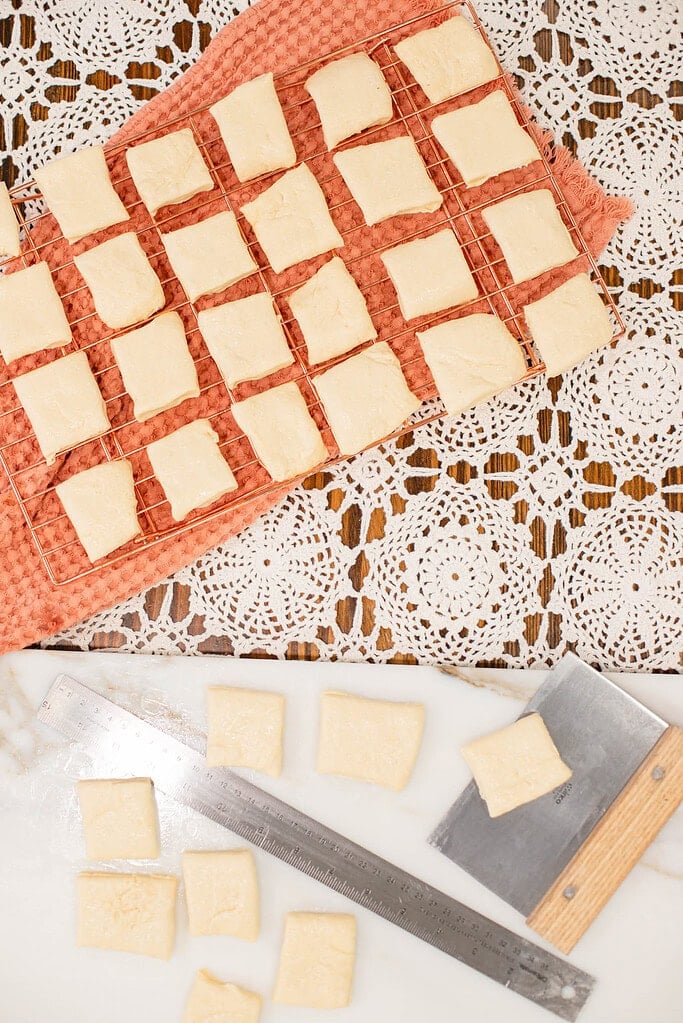
- Cut into squares – Use a pizza cutter or sharp knife to cut the dough into 2×2-inch squares. Keep the size consistent so the beignets puff and cook evenly.
- Second rise – Place the squares on a parchment-lined baking sheet, cover loosely with plastic wrap or a clean towel, and let them rest for 30 to 45 minutes until slightly puffy.
- Heat the oil – Pour 2 to 3 inches of neutral oil into a heavy pot or Dutch oven and heat to 350°F (175°C). Use a thermometer and keep the temperature steady.
- Fry in batches – Fry 3 to 4 squares at a time (don’t overcrowd), flipping once with a slotted spoon or spider, for about 1 to 2 minutes per side until golden brown and puffed. The beignets should float and expand in the oil.
- Dust, and serve – Use a slotted spoon or spider to lift the beignets out of the oil and onto a wire rack set over a sheet pan (or paper towels). While still warm, dust generously with sifted powdered sugar through a fine mesh sieve. Serve immediately while the edges are crisp, and the centers are soft and fluffy.
Storage Suggestions
- Store at room temperature short-term – Keep cooled sourdough beignets in an airtight container at room temperature for up to 1 day. They’ll lose some crispness but stay soft and lightly sweet.
- Reheat in the oven for best texture – Place beignets on a wire rack set over a baking sheet and warm at 350°F (175°C) for 5 to 7 minutes until the edges feel lightly crisp again. Dust with fresh powdered sugar before serving.
- Freeze-fried beignets – Freeze in a single layer on a baking sheet until firm, then transfer to a freezer-safe bag for up to 2 months. Thaw at room temperature for 30 minutes before reheating in the oven.
- Freeze shaped dough for a make-ahead option – After cutting into squares and completing the second rise, freeze on a tray until firm. Fry directly from frozen at 350°F (175°C), adding 2 to 4 minutes to the cook time for thorough cooking.

FAQ
Join The Community
Want More Cozy Recipes & Seasonal Inspiration?
Get cozy, from-scratch recipes, seasonal cottage living tips, and slow living inspiration delivered straight to your inbox.
More Sourdough Discard Recipes from the Cottage


Sourdough Beignets Recipe
 Prep:10 minutes Cook:3 minutes Bulk Rise:6 hours Total:6 hours 13 minutes
 Equipment
- 1 Large mixing bowl
- 1 Stand Mixer with dough hook (or mix by hand)
- 1 Spatula
- 1 Digital or Candy thermometer
- 1 Dutch Oven or Stock Pot
- 1 Spider Ladle
- 1 Rolling Pin
- 1 Pizza Cutter or Bench knife
- 1 Baking sheet
- 1 Wire rack
Ingredients
- 1 cup warm milk 110°F (43°C), 240 grams
- 1 cup sourdough discard or active sourdough starter 240 grams
- 1 large egg 50 grams
- ¼ cup melted unsalted butter 57 grams
- ¼ cup granulated sugar 50 grams
- 1 teaspoon salt 5 grams
- 4¼ cups all-purpose flour 510 grams
- 1½ teaspoons baking powder optional, if using discard, 6 grams
- 2 to 2½ quarts neutral oil for frying sunflower, canola, or peanut oil
- 1 to 2 cups powdered sugar for dusting 120 to 240 grams
Instructions
- Mix the wet ingredients – In a large mixing bowl, whisk together the warm milk (110°F/43°C), sourdough starter or discard, egg, melted butter, granulated sugar, and salt until smooth. Mixing the liquids first helps the dough hydrate evenly and prevents dry flour pockets later.
- Add the flour and baking powder – Add the all-purpose flour and stir until a shaggy dough forms. If using sourdough discard, add the baking powder now for extra lift. If using active starter, you can omit the baking powder as the starter provides natural leavening.
- Knead until smooth and elastic – Knead with a stand mixer and dough hook for 6 to 8 minutes, or knead by hand for 8 to 10 minutes, until the dough is soft, stretchy, and passes the windowpane test (a small piece stretches thin without tearing). Proper kneading develops gluten structure so the beignets puff instead of spreading flat in the oil.
- First rise (bulk fermentation) – Transfer the dough to a lightly greased bowl, cover with plastic wrap or a damp towel, and let it rise at room temperature until doubled in size, usually 4 to 6 hours. The dough should feel airy and light when gently pressed.
- Optional overnight ferment – For deeper sourdough flavor and easier shaping, cover the bowl tightly and refrigerate after the first rise for 8 to 12 hours (or up to 24 hours). When ready to continue, let the dough sit at room temperature for 45 to 60 minutes so it's easier to roll.
- Roll the dough – Lightly oil your work surface (or flour it if you prefer) and roll the dough to about ¼-inch thickness. Rolling evenly ensures every piece fries at the same speed.
- Cut into squares – Use a pizza cutter or sharp knife to cut the dough into 2×2-inch squares. Keep the size consistent so the beignets puff and cook evenly.
- Second rise – Place the squares on a parchment-lined baking sheet, cover loosely with plastic wrap or a clean towel, and let them rest for 30 to 45 minutes until slightly puffy.
- Heat the oil – Pour 2 to 3 inches of neutral oil into a heavy pot or Dutch oven and heat to 350°F (175°C). Use a thermometer and keep the temperature steady.
- Fry in batches – Fry 3 to 4 squares at a time (don't overcrowd), flipping once with a slotted spoon or spider, for about 1 to 3 minutes per side until golden brown and puffed.
- Drain, Dust, and serve – Use a slotted spoon or spider to lift the beignets out of the oil and onto a wire rack set over a sheet pan (or paper towels) to drain excess oil. While still warm, dust generously with sifted powdered sugar through a fine mesh sieve. Serve immediately while the edges are crisp, and the centers are soft and fluffy.
Notes

Emily Rider
Home miller since 1999 with fresh-milled flour & sourdough experience. Sharing from-scratch recipes and traditional kitchen skills, rooted in the seasons and inspired by everyday cottage living and seasonal rhythms.