

Baking with fresh milled flour means adjusting hydration, understanding fermentation, and choosing the right wheat, and this guide covers every adjustment with tips from over 25 years of milling at home.
Once you understand how whole grain flour absorbs liquid and how bran affects fermentation timing, the adjustments become second nature in any recipe.
If you are new to milling your own flour, Mill Your Own Flour at Home walks through the full milling process, Best Whole Grains to Mill covers which wheat to reach for based on what you are baking, and Converting Recipes to Freshly Milled Flour covers the conversion adjustments in detail.
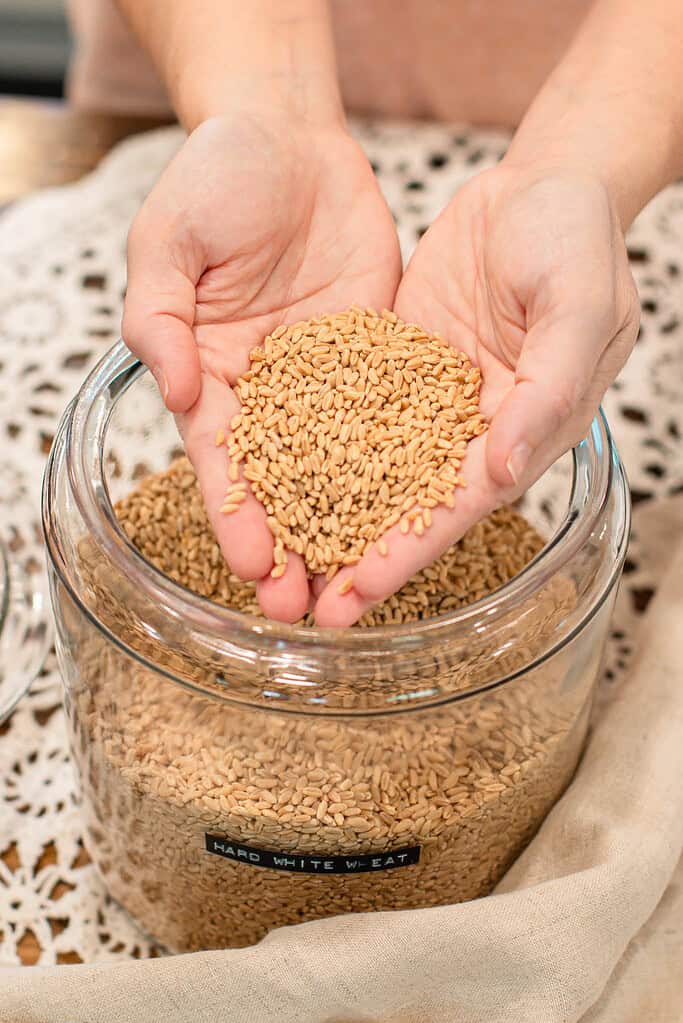
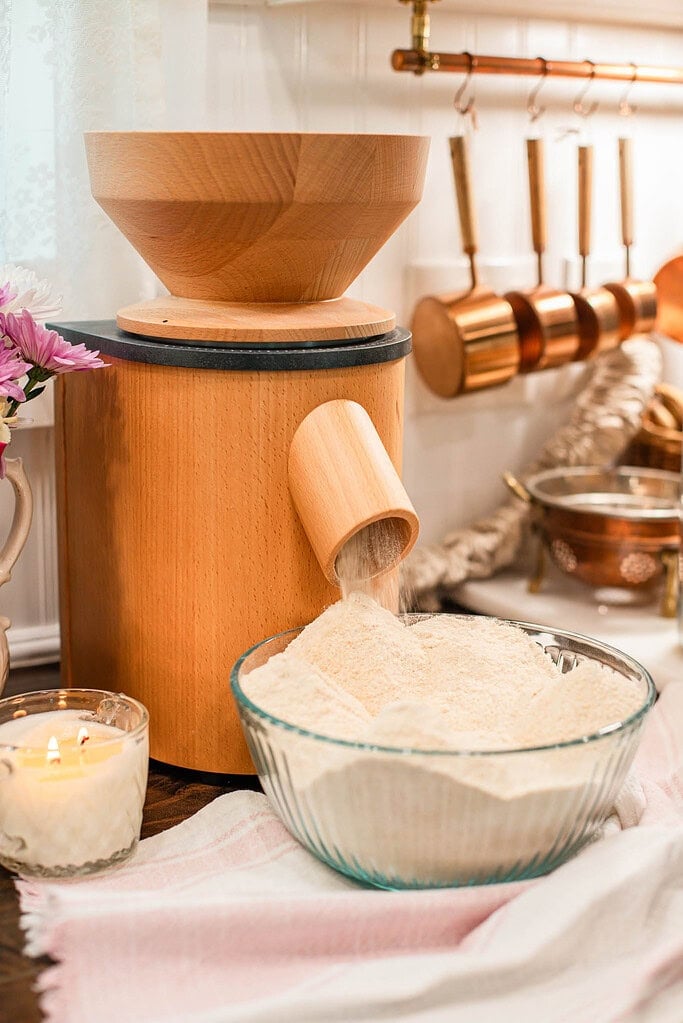
The Cottage Mill | Freshly Milled Flour Guides, Recipes, and More Await!
Wonderful, wonderful site! So glad I found it before starting my journey with fresh-milled flour. Thank you so much for sharing your knowledge. ~Mary
What You’ll Learn in This Guide
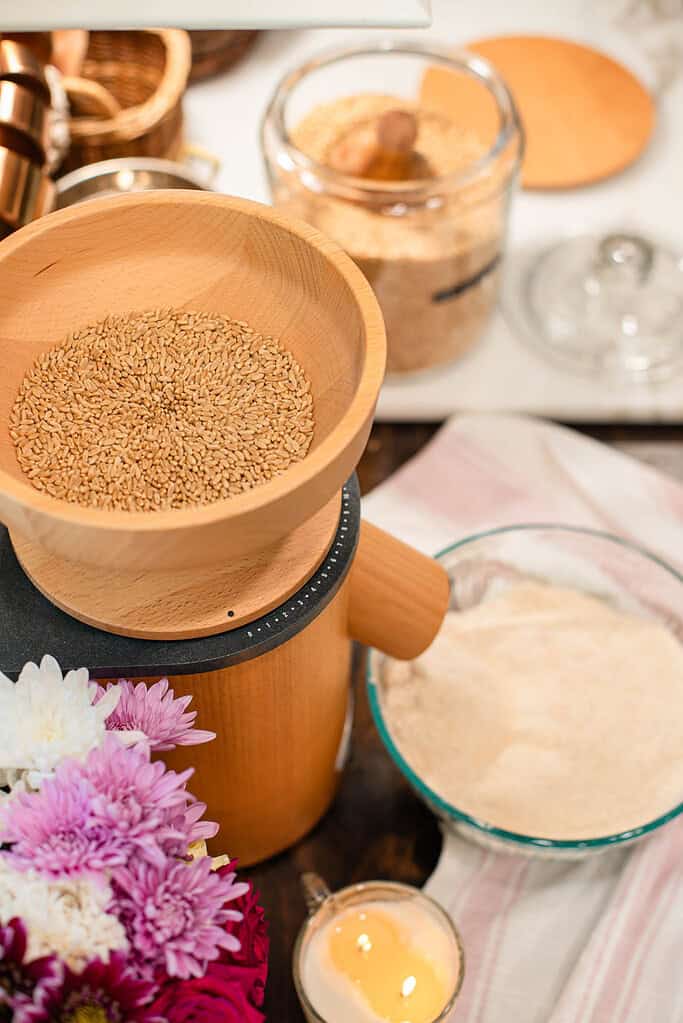
Why Fresh Milled Flour Is Different
Flavor and aroma – fresh milled flour has a warm, nutty flavor and a fuller aroma because the bran, germ, and endosperm are all intact, and the natural oils in the germ are still active at milling time. Even a simple loaf carries more depth when the flour is milled close to baking day.
Texture – the bran and germ remain in the flour, which means doughs feel heartier and bakes can come out denser unless the flour is properly hydrated or lightly sifted. For a complete guide on when and why sifting changes the outcome, read this guide: Sifting Freshly Milled Flour.
Fermentation – fresh milled flour contains active enzymes that speed up fermentation. Proofs often move faster than expected, especially in warm kitchens, and dough left too long will overproof before it shows obvious signs.
Color – the natural oils and sugars in whole grain flour cause baked goods to brown faster than recipes written for other flour types suggest. Begin checking for doneness several minutes before the original bake time ends.
Hydration – whole grain flour absorbs liquid more slowly, which means dough often feels dry or stiff right after mixing, even when enough liquid is present. A 20 to 45 minute rest almost always resolves this without adding anything extra. For full hydration guidance, read this guide: Converting Recipes to Freshly Milled Flour.
How Fresh Milled Flour Behaves
Hydration – fresh milled flour absorbs water more slowly, so dough often feels dry or loose right after mixing. Add the original liquid amount first, rest the dough 20 to 45 minutes, and only add more liquid if it still feels stiff after the rest period.
Gluten development – bran particles in fresh milled flour can interrupt gluten strands, which means dough may need extra stretch and fold cycles, longer kneading time, or an extended rest period to build the structure that bread and sourdough need. Rushing gluten development is the most common reason fresh milled loaves come out dense.
Dough feel – fresh milled flour dough often feels sticky or slack right after mixing and then tightens as the flour hydrates. A 20 to 30 minute autolyse, mixing just the flour and water before adding salt and starter or yeast, allows the bran to soften and the dough to develop structure before any shaping begins.
Elasticity – dough made with fresh milled flour may feel less springy than other doughs when stretched. This is not a sign of weak gluten, it is simply how whole grain flour behaves. Handle it gently and give it time rather than adding more flour or forcing the dough into shape.
Fermentation speed – fresh milled flour ferments faster because the bran and germ carry active enzymes. Watch the dough for visual cues like bubbling, doming, and a soft, jiggly texture rather than following the time in the original recipe.
Adjusting Recipes for Fresh Milled Flour
Start with a partial swap if you are new to fresh milled flour – replacing 25 to 50 percent of the flour in your recipe with fresh milled flour lets you see how hydration and fermentation change without overhauling the entire recipe. Once you are comfortable with how the dough feels and behaves, work toward a full replacement.
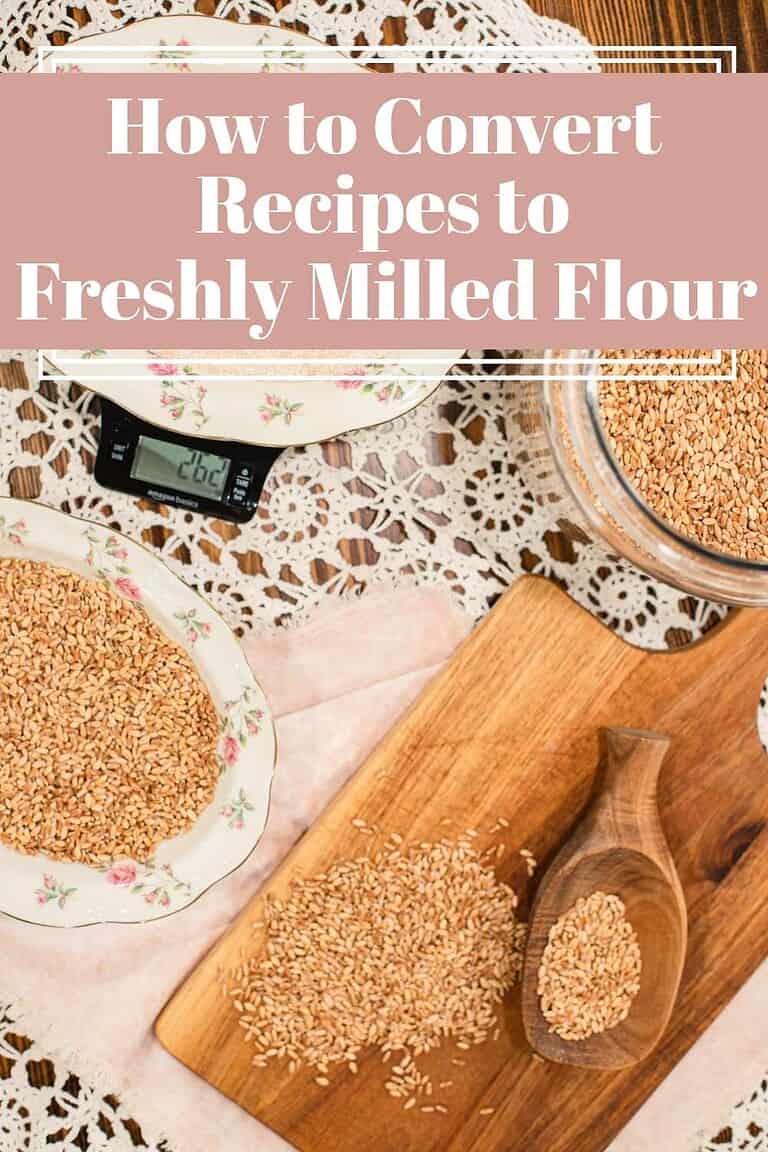
Increase hydration gradually – fresh milled flour typically needs 5 to 10 percent more liquid than other recipes. Start with the original liquid amount, rest the dough 20 to 45 minutes, and add liquid one tablespoon at a time only if the dough still feels dry or stiff after the rest. For full conversion guidance, read this guide: Converting Recipes to Freshly Milled Flour.
Use an autolyse rest before adding salt and leavening – mixing just the flour and water and resting 20 to 30 minutes before adding salt, starter, or yeast gives the bran time to soften and the dough time to develop initial structure. This single step resolves most density and texture issues in fresh milled flour baking.
Shorten fermentation time – fresh milled flour ferments faster. Reduce proofing time by 20 to 30 percent from what the original recipe calls for and watch the dough rather than the clock. A properly proofed fresh milled dough will look domed, feel soft and jiggly, and spring back slowly when gently pressed.
Choose the right wheat for the bake – hard wheat produces the gluten strength that bread, sourdough, and pizza dough need. Soft wheat produces the tender, delicate crumb that cakes, pastries, biscuits, and quick breads need. For detailed guidance on choosing wheat berries, read this guide: Best Whole Grains to Mill.
Sift when the recipe needs a lighter crumb – running fresh milled flour through a #40 or #50 sieve removes a portion of bran and produces a lighter result in cakes, pastries, and lighter breads. For complete sifting instructions, read this guide: Sifting Freshly Milled Flour.
Weigh flour instead of measuring by cups – fresh milled flour is lighter and less compact, so volume measurements vary too much to be reliable. 120 grams per cup is the consistent starting point for any recipe conversion.
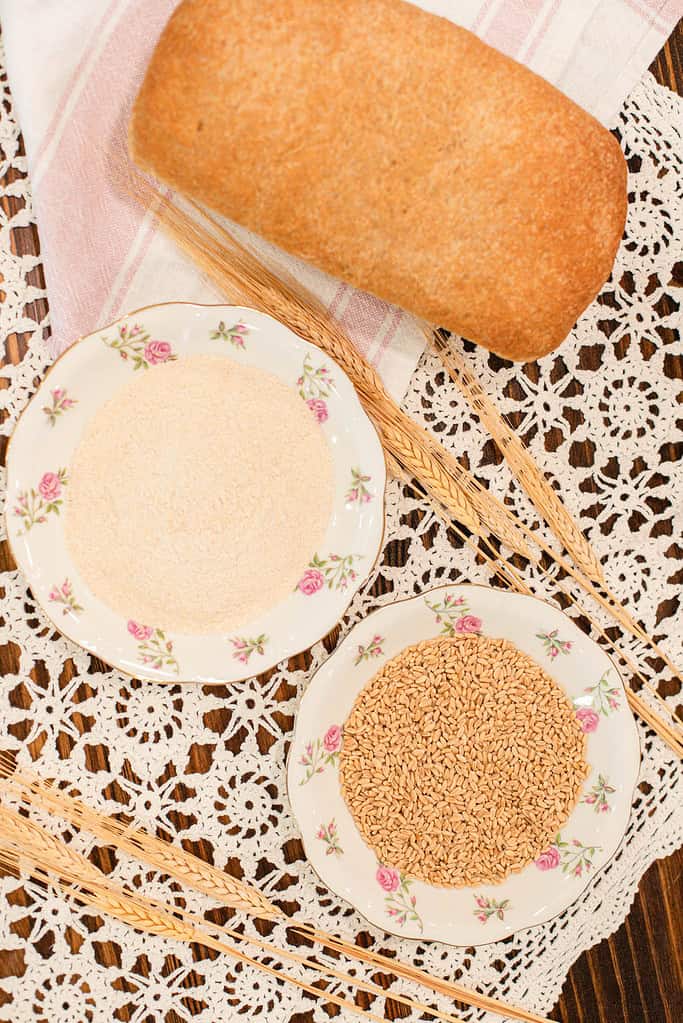
Tips for Baking with Freshly Milled Flour
Beginner Mistakes and How to Avoid Them
Using 100 percent fresh milled flour before understanding hydration – jumping straight to a full fresh milled flour replacement often leads to dense, dry loaves because the hydration and fermentation adjustments are not yet dialed in. Start with 25 to 50 percent fresh milled flour blended with another flour until the dough feels familiar, then work toward a full replacement.
Adding extra liquid too soon – fresh milled flour absorbs liquid slowly, and dough that feels dry right after mixing almost always softens during a 20 to 45 minute rest without adding anything. Adding liquid before the rest period is the most common reason fresh milled doughs end up overhydrated and difficult to shape.
Skipping the autolyse or rest period – bran needs time to soften before gluten can develop properly. Rushing from mixing to kneading without a rest period produces a tight, stiff dough that bakes dense regardless of how long it is kneaded afterward.
Not watching the dough during fermentation – fresh milled flour ferments faster and a dough left to proof by the clock rather than by feel will overproof before it goes in the oven. Watch for a domed top, soft jiggly texture, and slow spring-back when gently pressed rather than following the original recipe timing.
Expecting the same appearance as other flour bakes – fresh milled loaves are often more rustic in shape, deeper in color, and denser in crumb. This is not a failure; it is the character of whole grain flour and the flavor that comes with it.
Ignoring sifting for delicate bakes – bran interrupts gluten development in cakes and pastries in ways that extra hydration alone cannot fix. For layer cakes, biscuits, and pastries, sifting with a #40 or #50 sieve before mixing produces a noticeably more tender result. Read all about sifting here: Sifting Freshly Milled Flour for full guidance.
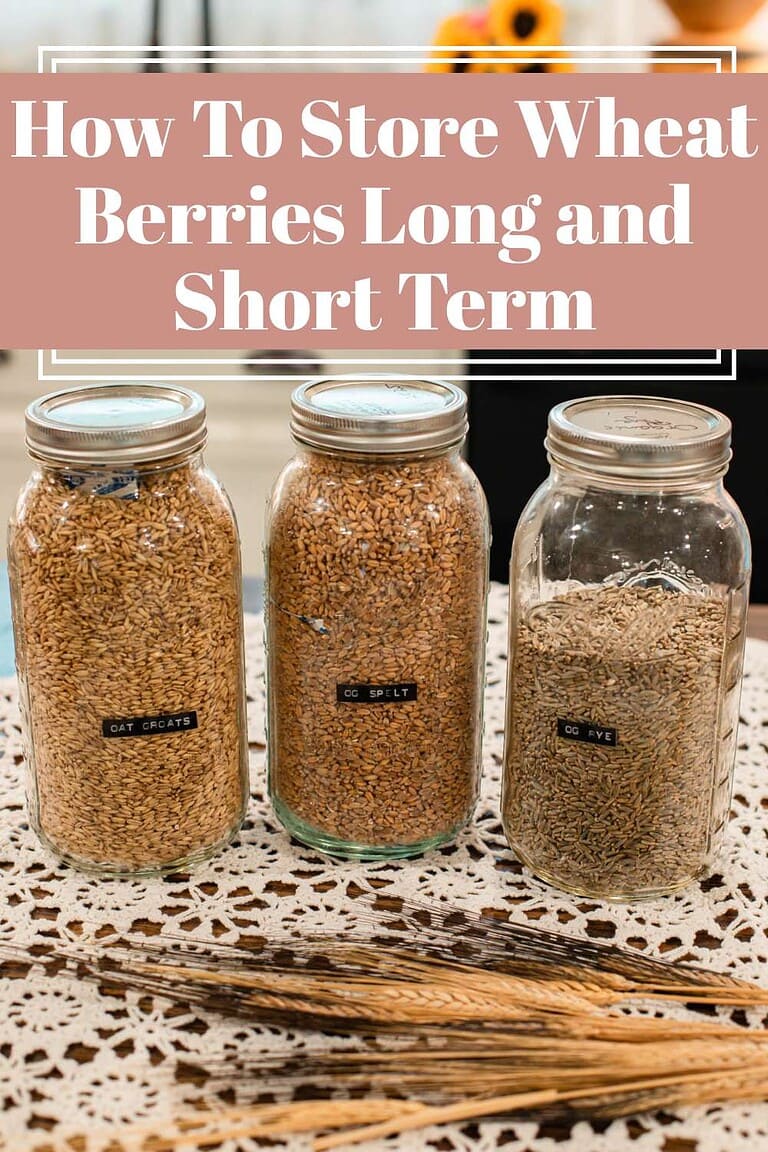
Storing fresh milled flour at room temperature for too long – fresh milled flour contains natural oils from the bran and germ that go rancid faster than shelf-stable flour. For best flavor and baking performance, use within 2 to 3 days at room temperature, refrigerate for 4 to 7 days, or freeze for up to 6 months. Read How to Store Freshly Milled Flour for complete guidance.
What Freshly Milled Flour Is Actually Made Of
A wheat berry has three parts, and each one changes how your flour behaves in your baked goods:
- The bran – roughly 14 to 16 percent of the kernel. Contains fiber, B vitamins including thiamine, riboflavin, niacin, and B6, plus iron, magnesium, and zinc. Stays in when you mill at home.
- The germ – roughly 2 to 3 percent of the kernel. Contains vitamin E, folate, healthy fats, and antioxidants. The natural oils are why fresh flour smells alive and why milling close to bake time matters.
- The endosperm – roughly 83 percent of the kernel. Almost entirely starch and protein. This is what refined white flour is made from.
Commercial refining removes some of the vitamins and minerals in the whole kernel. Enriched flour adds back some of those. Freshly milled whole grain flour retains over 40 micronutrients in their natural form.
One important distinction: when we sift freshly milled flour, we are not refining it. Sifting removes some, but not all of the bran, to adjust the texture or make fermentation more visible. The germ, endosperm, and some bran are still whole and intact. Sifting at home and commercial refining are two entirely different things.
For guidance on storing fresh milled flour after milling, How to Store Freshly Milled Flour covers everything.
A Cottage Milling Note
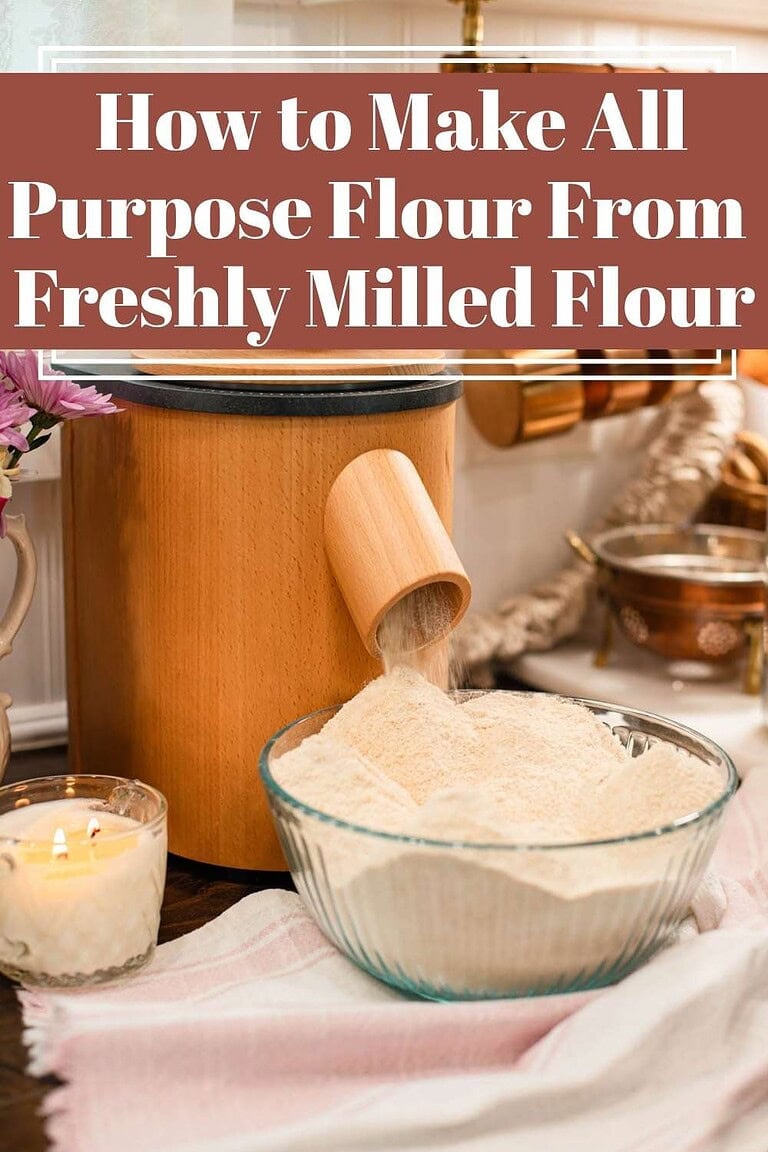
I’ve been milling my own grain since the late 1990s, and I still remember the first time I learned how simple it was to make flour blends from freshly milled flour in my own kitchen. That discovery changed my baking forever.
My Grandmaw Nub always said the best baking starts with the simplest ingredients, and that wisdom rings true every time I reach for freshly milled wheat. This is the same method I use in my own cottage kitchen, and it’s the one I love teaching home millers like you.
Once you start milling and baking with fresh flour, you’ll see just how easy and rewarding it is to create your own fresh flour baked goods at home.
Cottage Living Community
Join the Cozy Cottage Living Community
Sign up for The Modern Day Cottage Community newsletter to receive recipes. how-tos, exclusives, and more from my kitchen to your inbox every week.
The Cottage Mill | Freshly Milled Flour Guides, Recipes, and More Await!
FAQ
More Fresh Flour Guides from The Cottage
Was this guide helpful?
If you learned something valuable, I’d be so grateful if you would share it with others. Use the buttons below to share, comment, or connect. I truly enjoy seeing and celebrating your fresh flour journey.

Emily Rider
Home miller since 1999 with fresh-milled flour & sourdough experience. Sharing from-scratch recipes and traditional kitchen skills, rooted in the seasons and inspired by everyday cottage living and seasonal rhythms.
Do you have a book or booklet? Sourdough newbie and would love to incorporate freshly milled flour, but I’m old, and prefer to have instructions written down. Have already learned loads in just a few minutes this morning. Thanks!
Hello Sally!
Thank you so much for your sweet comment, it truly made my day!
I’m so glad you’ve already been learning from the guides.
I don’t have a printed book or booklet just yet, but I’m putting the finishing touches on a Freshly Milled Flour + Sourdough Beginner’s Guide that will be ready next week or the following week.
I am creating it especially for beginner bakers who want to learn how to use freshly milled flour sourdough with confidence, with easy-to-follow written instructions.
If you’d like a copy, be sure to sign up for my email newsletter! I’ll be sending the guide free to all of my email subscribers as soon as it’s finished, and I think it’ll be a wonderful resource to have printed out in your kitchen.
Thank you again for being part of The Modern Day Cottage community. Please reach out if you have any questions along the way.
Happy sourdough + fresh milled flour baking, Sally!
Warmly,
Emily
This has been one of the best sites, I have come across. Has helped with my frustration in baking and making changes for my family. Was blaming myself, but after reading this about fresh ground flours on this site, I have renewed hope. Thank you for this site and presenting solutions as well as situations that are occuring for ie. my bread recipe, has not been switched out to fresh ground flour and not having the same results such as browning much faster. THANK YOU!
Hi Glenda,
Thank you so much for taking the time to leave such thoughtful feedback. It truly means more to me than you know.
This is exactly why I share my experience with fresh milled flour.
Hearing that this brought you some clarity and even hope truly makes all of this worth it for me:).
Thank you so much for being here and for being part of this community. I’m so grateful for you too.
With love and gratitude,
Emily
Hi I got your email on king cake and clicked on all the “get recipe” but not one ever went to a recipe. I have read the pages before on fmf and they are great but would like the recipe.
Hi Sherry — thank you so much for reading my emails and for taking the time to let me know. I truly appreciate it, and I’m so sorry for the frustration.
Your absolutely correct I did share a King Cake recipe in Wednesday’s email, and the links were working when I tested the email before sending. That said, technology can absolutely have hiccups, and I’m sorry it didn’t work properly on your end. I really appreciate your patience and kindness in reaching out.
To make it easy, I’m sharing the recipe directly here for you:
👉 Sourdough King Cake
If you’re interested in converting the King Cake to freshly milled flour, here are a few quick tips:
• Increase the liquid by about 5–10%
• Always weigh your flour
• Use mostly soft white wheat, with a small amount of hard wheat mixed in
• I recommend using a bread flour blend made from freshly milled flour — this one works especially well for enriched doughs like King Cake:
👉 How to Make Bread Flour Blends from Freshly Milled Flour
The King Cake is one of our absolute favorites here at the cottage, right alongside the beignets and cinnamon rolls — I hope you love it just as much as we do.
Thank you again for being here and for being part of this cottage community. Readers like you truly make it possible for me to keep sharing and creating. Wishing you a wonderful day!
Warmly,
Emily