

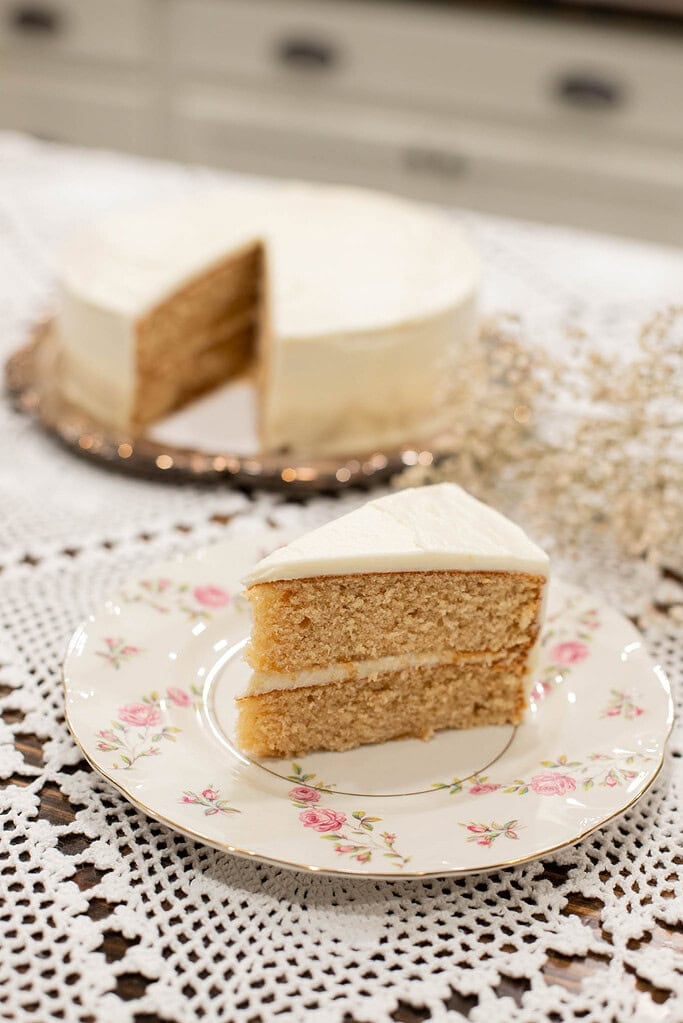
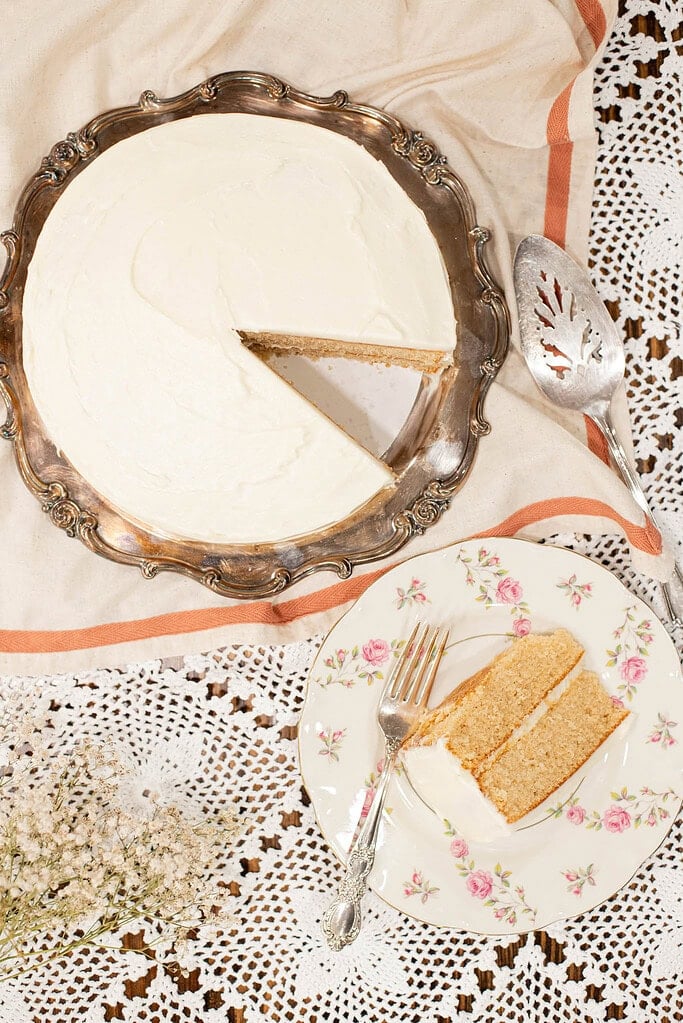
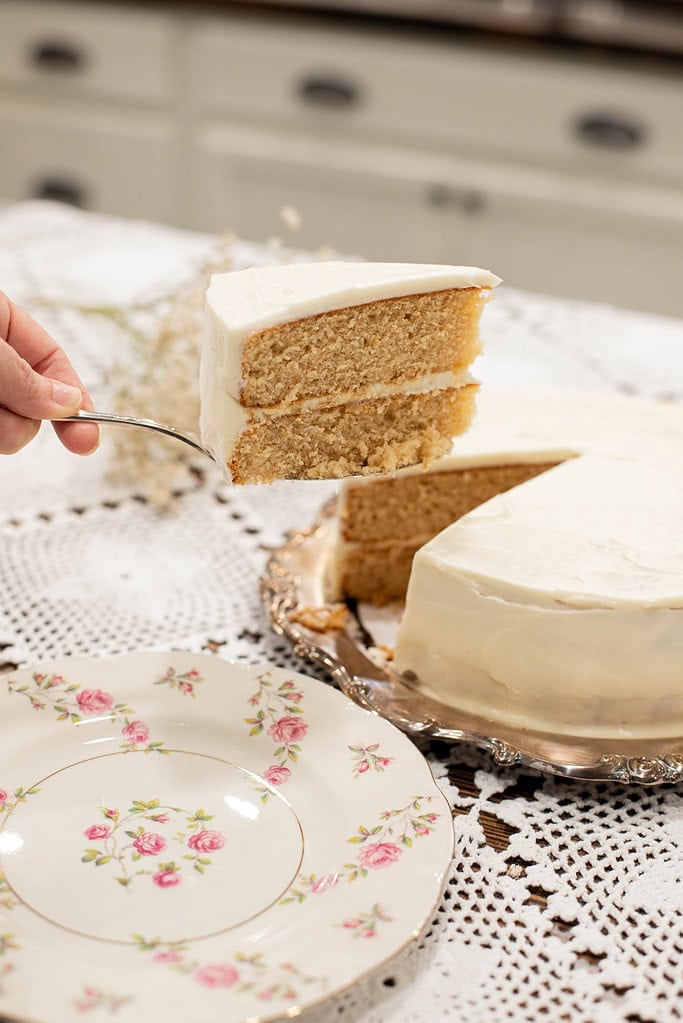
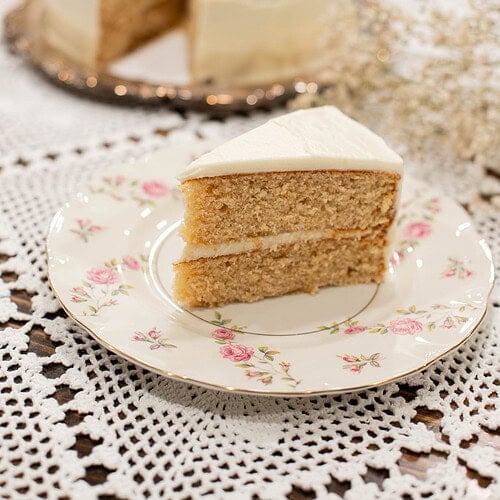
This sourdough vanilla cake with fresh milled flour is soft, tender, and lightly sweet, made with freshly milled soft white wheat, sourdough starter, and whipped egg whites for a delicate crumb and clean classic vanilla flavor.
The batter comes together in about 20 minutes of active prep, bakes in two 9-inch pans at 350°F for 25 to 30 minutes, and layers beautifully under a vanilla cream cheese buttercream frosting.
Pair this with Vanilla Cream Cheese Frosting or Rich and Creamy Chocolate Buttercream Frosting for the topping, and if you bake with freshly milled flour regularly, Chocolate Sourdough Cake with Freshly Milled Flour and Freshly Milled Flour Sourdough Starter to keep on hand for freshly milled flour baking days.
Did you know you can convert your favorite recipes to freshly milled flour? Learn how to convert recipes and find more fresh flour guides at The Cottage Mill.
The Cottage Mill | Freshly Milled Flour Guides, Recipes, and More Await!
This recipe was fantastic! We used soft white grains. We made an 8-inch round and 12 cupcakes. Delicious! ~Andrea
Why You’ll Love This Recipe
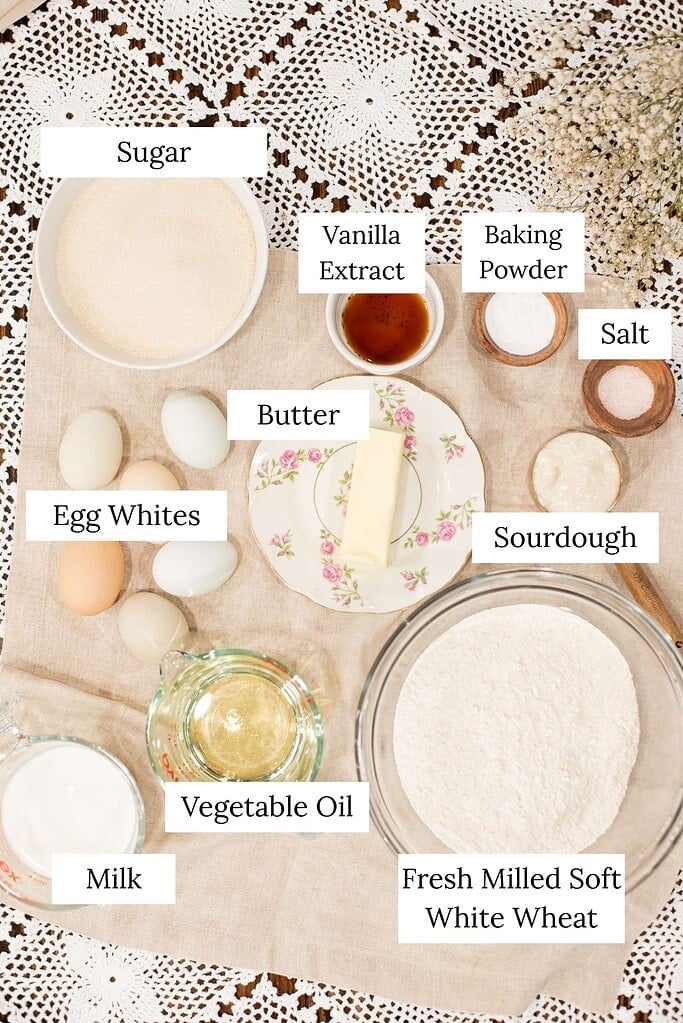
Ingredients
For The Cake Batter
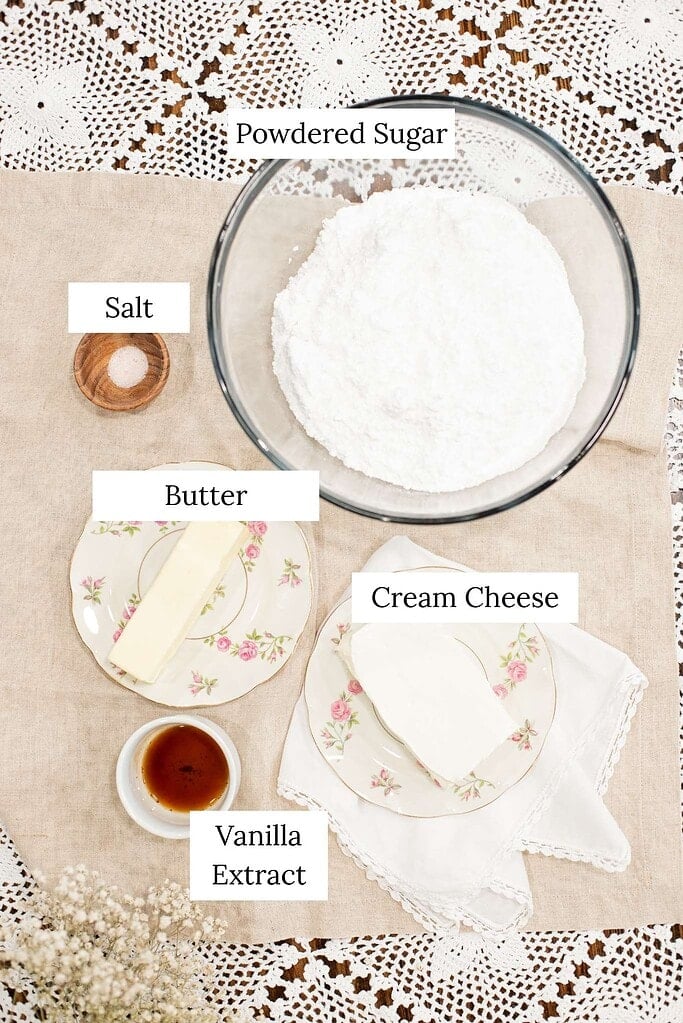
For the Vanilla Cream Cheese Buttercream
Variations & Add-Ins
Recipe Tips
Sift after milling, every time – Run your freshly milled soft white wheat through a #60 sieve before measuring. Sifting removes excess bran and gives the cake a tender, delicate crumb. Set the leftover bran aside in the freezer for pancakes or muffins.
Weigh the flour – Fresh-milled flour settles differently in the cup every time, making volume measurements unreliable. Weigh out 450 grams after sifting for a consistent result batch after batch.
Fold in the egg whites gently – Add the whipped egg whites to the batter in three additions, folding slowly with a rubber spatula until just combined. Rushing this step deflates the whites and flattens the crumb.
Mix the batter on low once the flour goes in – Add the flour mixture in two or three additions and mix only until no dry streaks remain. Overmixing develops too much gluten and results in a dense, tight crumb instead of a tender one.
Hold the leavening when fermenting – If resting the batter for 2 to 4 hours or overnight, leave out the baking powder, salt, and vanilla until just before baking. This keeps the baking powder at full strength when it matters most.
Cool the layers completely before frosting – Set the cake layers on a wire rack for at least 30 minutes after baking. Frosting warm cake causes the buttercream to melt and slide, making a clean finish difficult.
Chill after the crumb coat – Spread a thin layer of frosting over the entire cake to seal in crumbs, then refrigerate for 15 to 30 minutes before applying the final coat. This step gives the cake a smooth, polished finish.
Rest before slicing – Allow the frosted cake to sit at room temperature for 20 to 30 minutes before cutting. The crumb softens and the frosting becomes creamy again, making for cleaner slices and better texture.
Instructions
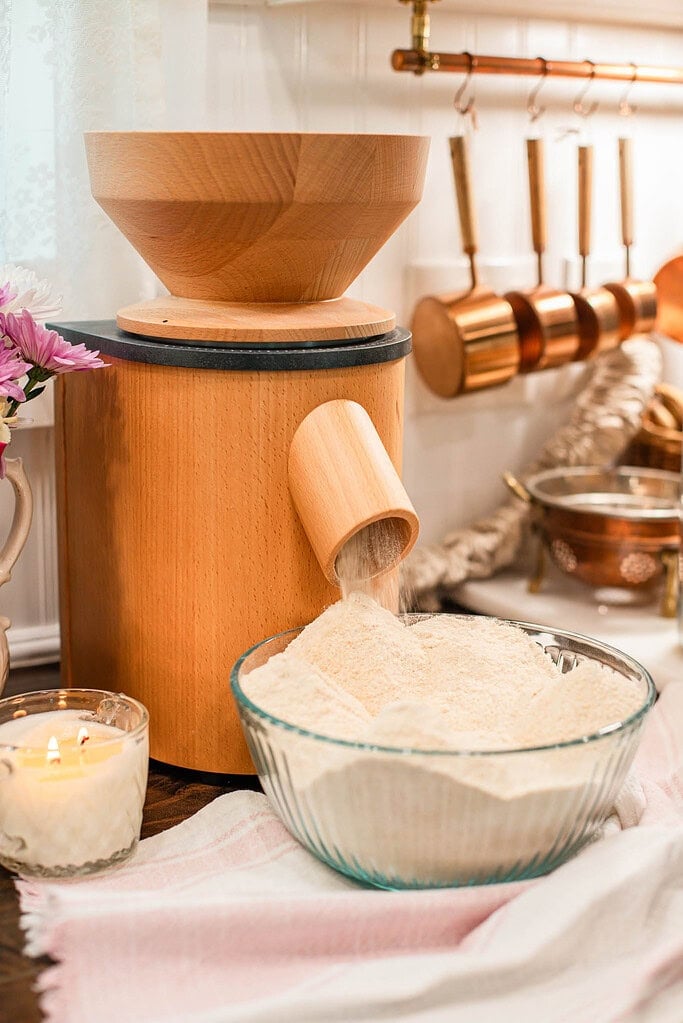
- Mill and sift the flour – Mill soft white wheat berries on the finest setting of your grain mill, then sift through a #60 sieve to remove excess bran. Weigh out 450 grams of sifted flour and set aside. Tuck the leftover bran into the freezer for pancakes or muffins.
- Prepare dry ingredients – In a large mixing bowl, whisk together the sifted flour, baking powder, and salt until well combined. Set this aside. *If fermenting the batter, skip the baking powder, salt, and vanilla extract for now.
- Mix the dry ingredients – Whisk the sifted flour, baking powder, and salt together in a large mixing bowl until combined. If fermenting the batter, skip the baking powder and salt for now and add them just before baking.
- Cream the butter and sugar – In a stand mixer fitted with the paddle attachment, beat the softened butter and granulated sugar on medium speed for 2 to 3 minutes until the mixture is pale, fluffy, and noticeably increased in volume.
- Add the wet ingredients – Add the vegetable oil, vanilla extract (if not fermenting), sourdough starter, and whole milk to the butter mixture. Mix on medium speed until smooth and well combined, scraping down the sides of the bowl as needed.
- Combine the batter – Add the flour mixture in two or three additions, mixing on low speed just until no dry streaks remain. The batter should look smooth and thick. Stop mixing as soon as it comes together.
- Optional ferment – If fermenting, cover the bowl and let the batter rest at room temperature for 2 to 4 hours, or refrigerate overnight. Before baking, bring to room temperature and stir in the baking powder, salt, and vanilla extract.
- Whip and fold the egg whites – In a clean, grease-free bowl, beat the egg whites on high speed until stiff peaks form. Fold gently into the batter in three additions with a rubber spatula, being careful not to deflate them.
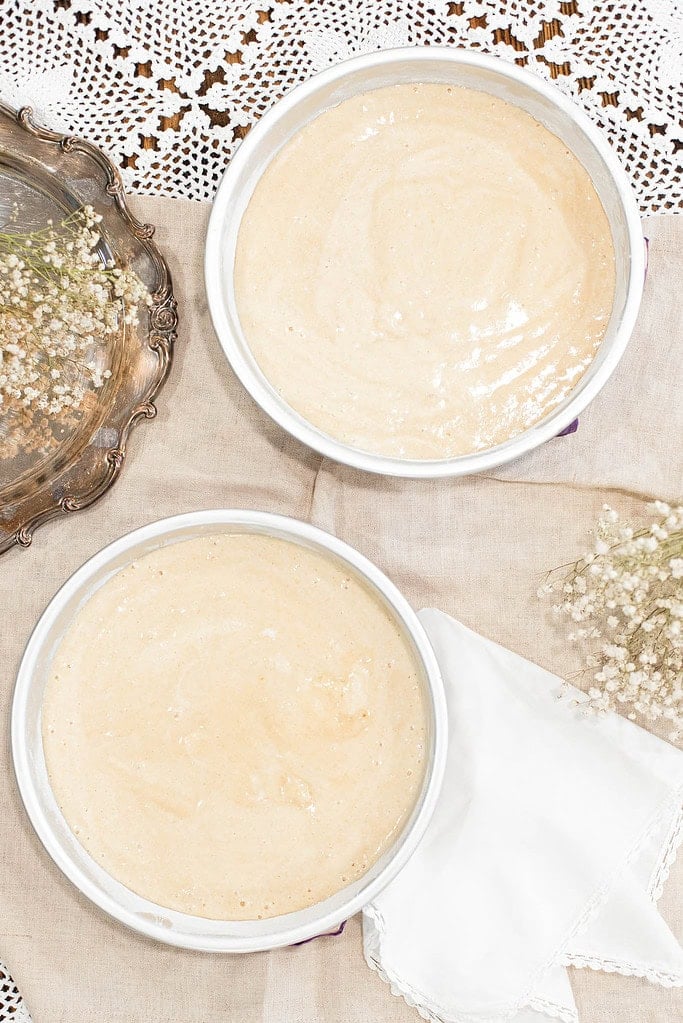
- Divide and bake – Divide the batter evenly between the two prepared pans and smooth the tops with a spatula. Bake for 25 to 30 minutes until a cake tester inserted in the center comes out clean and the tops spring back lightly when pressed.
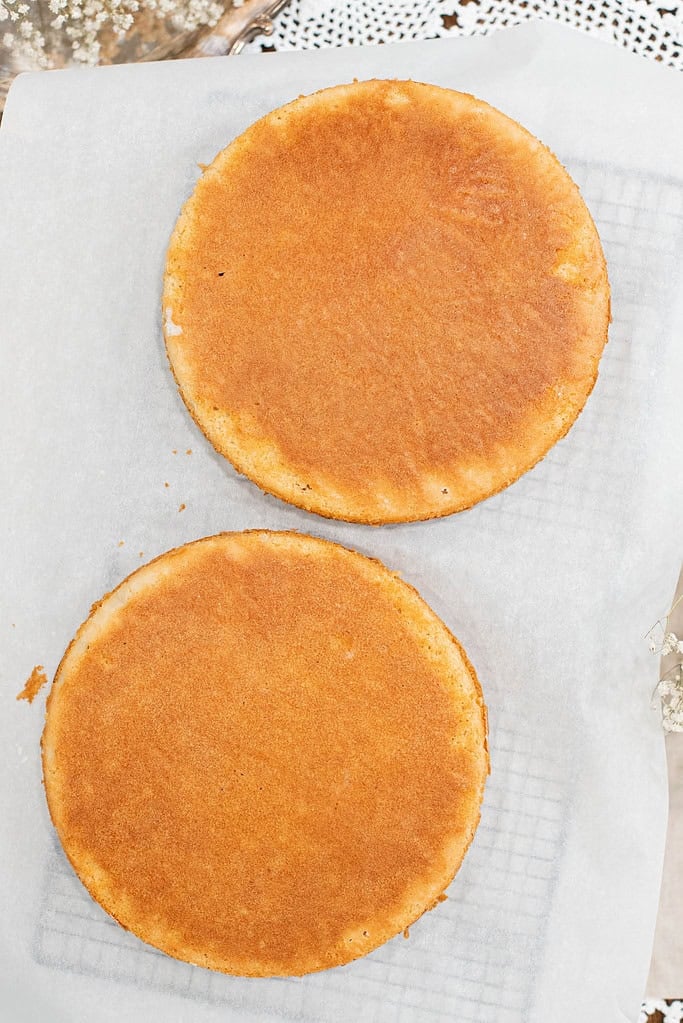
- Cool the layers – Let the cakes cool in the pans for 10 minutes, then turn out onto a wire rack and peel off the parchment. Cool completely for at least 30 minutes before frosting.
- Make the frosting – Beat the softened butter in a stand mixer for 2 to 3 minutes until pale and fluffy. Add the cream cheese in chunks, beating well after each addition until smooth and creamy. Sift in the powdered sugar and mix on low until combined, then increase to medium speed until fluffy. Add the vanilla extract and 2 to 3 tablespoons of heavy cream and beat for another 2 to 3 minutes until light and spreadable. Refrigerate for 30 minutes to firm slightly before frosting the cake.
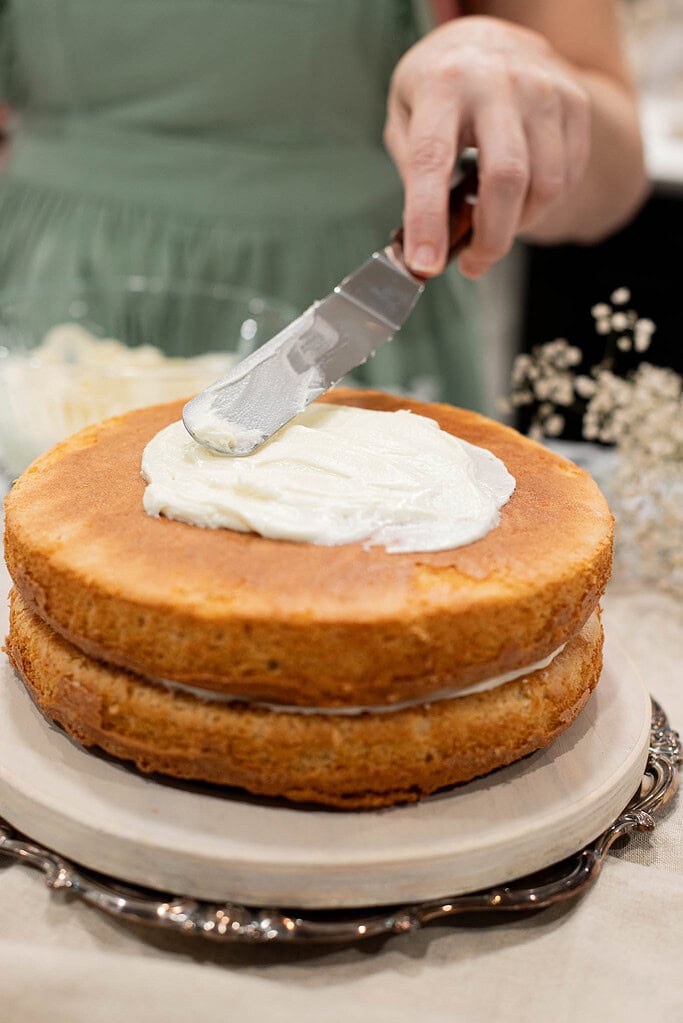
- Level and stack the layers – Use a cake leveler or serrated knife to trim the domed tops off both layers so they sit flat. Place the first layer on your serving plate or cake stand, spread about half an inch of frosting evenly across the top, then place the second layer on top and press gently to secure.
- Crumb coat and chill – Spread a thin layer of frosting over the entire cake to seal in crumbs. It does not need to look perfect at this stage. Refrigerate for 15 to 30 minutes until the frosting is set and firm to the touch.
- Finish and serve – Apply the remaining frosting over the top and sides of the chilled cake, using an offset spatula for smooth, even coverage or soft swirls. Let the finished cake rest at room temperature for 20 to 30 minutes, then slice with a sharp knife, wiping the blade clean between cuts for neat, even pieces.ice with a sharp knife, wiping the blade clean between cuts for neat, even pieces.
Storage Suggestions
- Unfrosted layers at room temperature – Wrap cooled cake layers tightly in plastic wrap and keep at room temperature for up to 1 day if not yet frosted.
- Frosted cake in the refrigerator – Store the finished cake covered in the refrigerator for up to 3 to 4 days. The cream cheese frosting keeps the layers moist and fresh.
- Freeze unfrosted layers – Wrap each cooled layer tightly in plastic wrap, then in foil, and freeze for up to 2 months. Thaw overnight in the refrigerator before frosting and assembling.
- Bring to room temperature before serving – Let the refrigerated cake sit at room temperature for 20 to 30 minutes before slicing. The crumb softens back up, and the frosting becomes creamy again for the best texture and cleanest slices.
FAQ
Join The Community
Want More Cozy Recipes & Seasonal Inspiration?
Get cozy, from-scratch recipes, seasonal cottage living tips, and slow living inspiration delivered straight to your inbox.
More Recipes from the Cottage

Sourdough Vanilla Cake with Fresh Milled Flour
 Prep:20 minutes Cook:30 minutes Additional Time:30 minutes Total:1 hour 20 minutes
 Equipment
- 1 Grain Mill
- 1 #60 sieve
- 1 Stand Mixer
- 2 9" Cake Pans
- 1 Rubber Spatula
- 2 Parchment Cake Liners
- 1 Digital kitchen scale
- 1 Wire Cooling Rack
- 1 Cake leveler or serrated knife
- 1 Offset spatula
Ingredients
For the Cake Batter
- 3¾ cups freshly milled soft white wheat flour sifted, 450 grams
- 1 tablespoon baking powder omit if fermenting, 12 grams
- 1 teaspoon salt omit if fermenting, 6 grams
- 2 cups granulated sugar 400 grams
- 6 tablespoons unsalted butter softened, 85 grams
- ⅔ cup vegetable oil 150 grams
- 1 tablespoon vanilla extract omit if fermenting, 13 grams
- ½ cup sourdough starter or discard 100 grams
- 6 large egg whites 210 grams
- 1 cup whole milk 240 grams
For the Vanilla Cream Cheese Buttercream Frosting
- 1 cup salted butter softened, or unsalted butter plus ¼ teaspoon salt, 226 grams
- 8 ounces full-fat cream cheese softened, 226 grams
- 4 cups powdered sugar sifted, 480 grams
- 1 tablespoon vanilla extract 13 grams
- 2 to 3 tablespoons heavy whipping cream 30 to 45 grams
Instructions
- Preheat and prepare pans – Preheat your oven to 350°F (175°C). Grease two 9-inch cake pans and line the bottoms with parchment paper circles to prevent sticking.
- Mill and sift the flour – Mill soft white wheat berries on the finest setting of your grain mill. Sift the flour through a #60 sieve to remove the bran and weigh out 450 grams of sifted flour. Save the leftover bran in the freezer for pancakes or muffins.
- Prepare dry ingredients – In a large mixing bowl, whisk together the sifted flour, baking powder, and salt until well combined. Set this aside. *If fermenting the batter, skip the baking powder, salt, and vanilla extract for now.
- Cream butter and sugar – In a stand mixer fitted with the paddle attachment, beat the softened butter and granulated sugar on medium speed for 2 to 3 minutes until the mixture is pale, fluffy, and has increased in volume.
- Add remaining wet ingredients – Add the vegetable oil, vanilla extract (if not fermenting), sourdough starter, and whole milk to the butter mixture. Mix on medium speed until smooth and well combined, scraping down the sides of the bowl as needed.
- Combine the batter – Add the flour mixture to the wet ingredients in two or three additions, mixing on low speed just until no dry streaks remain. Do not overmix or the cake will be dense.
- Optional ferment – If fermenting, cover the bowl and let the batter rest at room temperature for 2 to 4 hours, or refrigerate overnight. Before baking, bring to room temperature and stir in the baking powder, salt, and vanilla extract.
- Whip and fold egg whites – In a clean, grease-free bowl, beat the egg whites with a hand mixer on high speed until stiff peaks form. Gently fold the whipped whites into the batter in three additions, being careful not to deflate them.
- Divide and bake – Divide the batter evenly between the prepared pans and smooth the tops with a spatula. Bake for 25 to 30 minutes, or until a cake tester inserted in the center comes out clean and the tops spring back when lightly pressed.
- Cool the layers – Let the cakes cool in the pans for 10 minutes, then carefully turn them out onto a wire rack. Remove the parchment paper and let them cool completely for at least 30 minutes before frosting.
- Make the frosting – While the cakes cool, beat the softened butter in a stand mixer for 2 to 3 minutes until pale and fluffy. Add the cream cheese in chunks, beating well after each addition until smooth. Sift in the powdered sugar and mix on low until combined, then increase speed to medium until fluffy. Add the vanilla extract and 2 to 3 tablespoons of heavy cream, beating for 2 to 3 minutes until light and spreadable. Cover and refrigerate for 30 minutes to firm slightly.
- Prepare your cake setup – Place a small dollop of frosting on a cake turntable, press a cardboard cake round on top to secure it, then add another dollop of frosting in the center to hold the first layer in place.
- Level and stack the layers – Use a cake leveler or serrated knife to trim the domed tops off both cake layers so they sit flat. Place the first leveled layer on the prepared cake round and spread about ½ inch of frosting evenly over the top. Add the second leveled layer and press gently to secure.
- Apply the crumb coat – Spread a thin layer of frosting over the entire cake to seal in crumbs. This doesn't need to look perfect. Refrigerate for 15 to 30 minutes until the frosting is set and firm to the touch.
- Finish frosting – Apply the remaining frosting over the top and sides of the chilled cake, using the turntable to rotate for smooth, even coverage. Use an offset spatula to create smooth sides or soft swirls as desired.
- Slice and serve – Let the finished cake sit at room temperature for 20 to 30 minutes, then slice with a sharp knife, wiping the blade clean between cuts for neat slices. Serve and enjoy.
Notes
Nutrition

Emily Rider
Home miller since 1999 with fresh-milled flour & sourdough experience. Sharing from-scratch recipes and traditional kitchen skills, rooted in the seasons and inspired by everyday cottage living and seasonal rhythms.



Very excited to try this recipe out, wanted to ask if you think I would be able to substitute the vegetable oil for coconut oil, or olive oil? If not then I could just up the butter, it’s being made for a birthday cake so not worried about it staying moist for longer than a day!
Hi Rae! You have three options for replacing the vegetable oil, and each will affect the finished cake a little differently.
Coconut oil, You can substitute it 1:1 for vegetable oil. I would recommend refined coconut oil for a more neutral flavor. Coconut oil contains fatty acids associated with antimicrobial properties, although it’s not established that using it in cake batter will inhibit your sourdough starter. If you’re planning an overnight fermentation, I would be cautious with this substitution since I haven’t tested how it affects fermentation or the final rise. If you’re baking right away, it would be a more reasonable option.
Olive oil, You can also substitute this 1:1, but I personally wouldn’t recommend it for a vanilla cake. Olive oil can have a pronounced flavor that carries through into the finished cake.
Butter, This would be my personal recommendation! You can replace the vegetable oil with melted, cooled butter. Vegetable oil helps keep the cake moist and tender, while butter provides a richer flavor. The trade-off is that the cake may have a slightly firmer, more crumbly texture.
Since you’re making this for a birthday and aren’t concerned about keeping the cake moist for several days, I would choose the butter. It complements the vanilla flavor without changing the overall flavor profile of the cake.
I hope this helps, and I hope your birthday cake turns out beautifully!
Warmly,
Emily
Hi! So looking forward to making this. Do you think I can successfully sub out the vegetable oil with more butter? Also, sub the sugar for coconut sugar or maple syrup/honey?
Hi Danielle! I’m so glad you’re looking forward to making it!
You should be able to substitute melted butter for the vegetable oil. Just keep in mind that oil helps keep the cake especially soft and moist, so using butter may give you a slightly different texture. Around here, this cake never lasts very long anyway, so I don’t think that would be much of an issue!
For the sugar, I haven’t personally tested this recipe with coconut sugar, maple syrup, or honey, so I can’t guarantee the results. Based on my experience testing other recipes, coconut sugar would be the substitution I’d try first since it’s a dry sweetener. I would start with a 1:1 substitution for the granulated sugar.
Maple syrup and honey add additional liquid to the batter, so those would require some adjustment to the other liquids in the recipe. Without testing those ratios myself, I wouldn’t want to give you an exact substitution and risk your cake not turning out.
If you try it with the melted butter and coconut sugar, I’d love to hear how it turns out!
Happy Cake Baking,
Emily
This looks delicious! I only have hard white wheat right now but when I get soft..this is on my to-bake list!
Hi Jennifer! Thank you so much for your kind comment. If hard white wheat is all you have on hand, you can absolutely give it a try, but the cake will have a heartier texture and a darker color than when made with soft white wheat. Soft white wheat produces the most tender, cake-like crumb, which is why I recommend it for this recipe. If you bake it with hard white wheat, I’d love to hear how it turns out for you.
Happy Baking,
Emily
Can this cake be made without sourdough starter?
Hi Geri! That’s such a great question — yes, you can make this cake without the sourdough starter. The starter adds a little depth and tenderness, but it’s not required.
To adjust the recipe, simply skip the ½ cup (100g) sourdough starter and add an extra ¼ cup (about 50g) freshly milled flour and about 3 tablespoons (roughly 50ml) milk in its place. Everything else stays the same.
It’ll still bake up soft, buttery, and full of that lovely vanilla flavor — just a touch lighter than the sourdough version. I’m actually posting a full “Fresh Milled Vanilla Cake (No Starter)” recipe soon, so you’ll have that version handy too.
Thank you for trying my recipes!
Happy Cake Making!!
PS: Please come back and let me know how it turns out.
Can this be made without sifting or would it turn out too tough? I don’t have a sieve and I like the benefit of having the whole grain.
Hi there Maddie! You can make it without sifting, but I want to be honest with you so you know what to expect. When you use fresh-milled flour and leave all the bran in, the bran cuts through the gluten as it bakes. That means the cake will turn out very dense, very hearty, and a bit gritty. Some people enjoy that rustic whole-grain texture — but it won’t be tender, it wont rise near as much or be soft, or fluffy.
The good news is that even sifted fresh-milled flour still keeps a lot of the oils and nutrition you lose in store-bought flour, so you’re not missing out on too much. And you can save the sifted-out bran and use it in muffins, pancakes, waffles, or even sprinkle it into oatmeal.
If you want the cake to come out delicate and soft, I’d sift like my grandmother taught me to do and I do for my tender cakes. But if you love a full whole-grain bake, try it once unsifted and see how it feels to you — then try the sifted version and compare. You may find your favorite in the middle.
Hope that helps, and I’m cheering you on in your fresh-milled flour journey! 🌾
Can I make this cake without the sourdough starter?
Hi Ashlee! That’s such a great question — yes, you can make this cake without the sourdough starter. The starter adds a little depth and tenderness, but it’s not required.
To adjust the recipe, simply skip the ½ cup (100g) sourdough starter and add an extra ¼ cup (about 50g) freshly milled flour and about 3 tablespoons (roughly 50ml) milk in its place. Everything else stays the same.
It’ll still bake up soft, buttery, and full of that lovely vanilla flavor — just a touch lighter than the sourdough version. I’m actually posting a full “Fresh Milled Vanilla Cake (No Starter)” recipe soon, so you’ll have that version handy too.
Thank you for trying my recipes!
Happy Cake Making!!
PS: Please come back and let me know how it turns out.
WOW. I’m my multiple decades of recipe using I don’t think I’ve ever left a rating, but if I’ve already texted all my mill-owning-starter-keeping friends the link and demanded that they they this…I guess I better leave a review. I used this recipe (with one flour change) layered with fresh whip cream and strawberries and frosted with a strawberry buttercream (Sally’s baking addiction). It was the best cake my mom had ever tasted and everyone else loved it. I don’t have soft wheat berries at the moment, so I used about a half hard white and the rest AP hard red. But everything else was the same. Fermented 5 hours in a very warm kitchen. I’ve already decided this is going to be my birthday cake every year now. So happy to find a recipe that is nutritious (hello, fresh milled!), easily digestible (sourdough, baby!) and the flavor and texture are out of this world. Will buy soft white berries just to make this again! Thank you thank you!
Joanna, your words truly made my YEAR—thank you for sharing! I deeply appreciate your time. Your review means more to me than you know. I can’t express how much this review helps my readers and my blog! So thank you, thank you!! Truly your review is a gift!!!
This heirloom cake has been years in the making, so hearing it’s become a favorite for you and your mom means the world to me.❤️ It is my go to for birthday cakes as well.😊
Your strawberries-and-cream twist sounds heavenly! You’ve reminded me that I need to share my strawberry buttercream soon—it’s another heirloom favorite and one of my absolute favorite go-to icings.
Thank you for your sweet compliments, for sharing my recipes with your friends and family, and for taking the time to leave such a thoughtful review. It truly helps others find these recipes, and I’m so grateful for your time and review.
P.S. Please let me know how you like the soft wheat compared to the hard wheat.
This recipe was fantastic! We used soft white grains. We made an 8 inch round and 12 cupcakes. We over filled the cupcake tins and it bakes up with a flat top which crispied like a cookie. So cupcake and cookie in one. Tasted like a vanillas graham cracker and sugar cookie combined. We topped with vanilla ice cream and strawberries. Delicious!
Andrea, your comment absolutely made my day! I’m so thrilled to hear how much you enjoyed the recipe — soft white grains are such a lovely choice for cake and pastries. And that cupcake-cookie combo? Genius! I can just imagine that crispy top with vanilla ice cream and strawberries… swoon-worthy.
This is one of our favorite cakes, too. I’ve been making it for over 25 years — it started as my go-to birthday cake, when I began baking with freshly milled flour. I’m so happy to hear that it turned out beautifully for you, too.
Thank you again for sharing your experience — it means so much!😊
I l don’t see where to add the milk? The batter was dry without it so i just added it after combining wet+dry ingredients. Wonder if that’s correct though. Haven’t baked it yet!
Hi Yarden, thank you so much for your thoughtful note. The milk does get added in Step 3—it’s mixed in right after creaming the butter and sugar, along with the oil, vanilla (if not fermenting), and sourdough starter. It’s written into both the blog post and the recipe card, but I completely understand how it might have been easy to miss.
I really appreciate you taking the time to share your experience. I hope the bake turns out just right. Let me know how it goes—I’d love to hear!
Yarden, how did the cake turn out? Checking to see if you needed any help. Hope it turned out great and you were happy with the results. Let me know if you need any help. Thank you for trying our tried and true recipes. 😊