
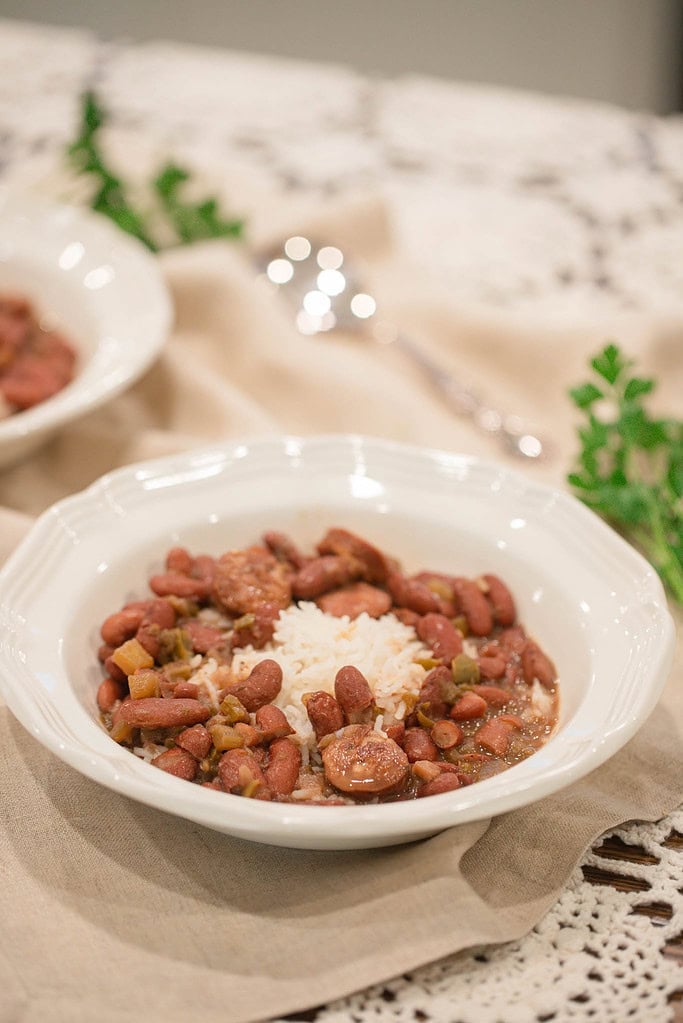
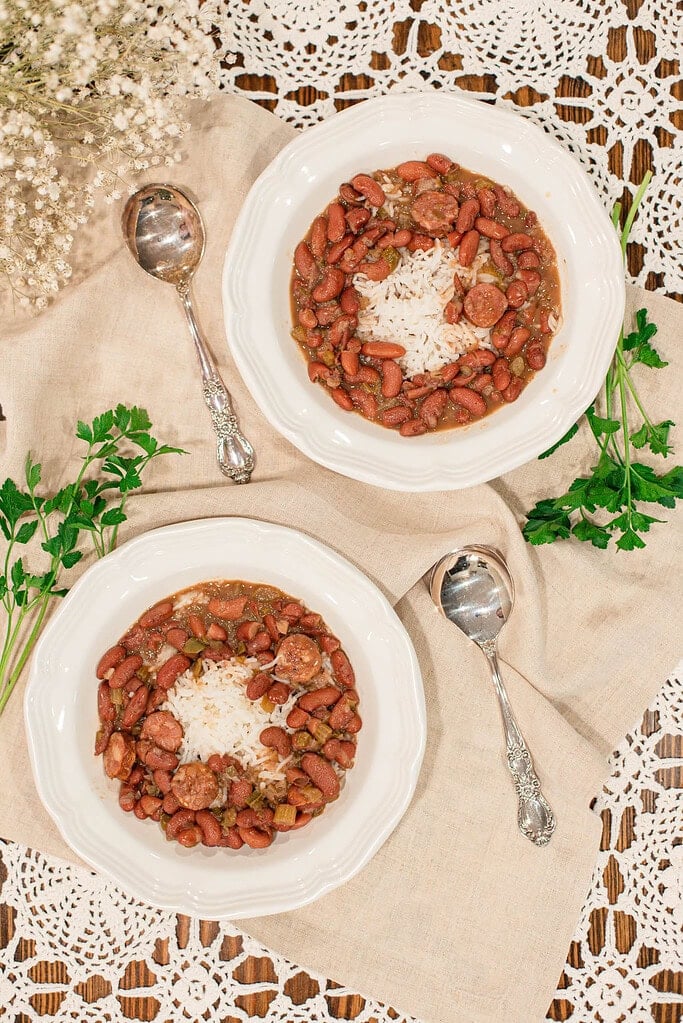
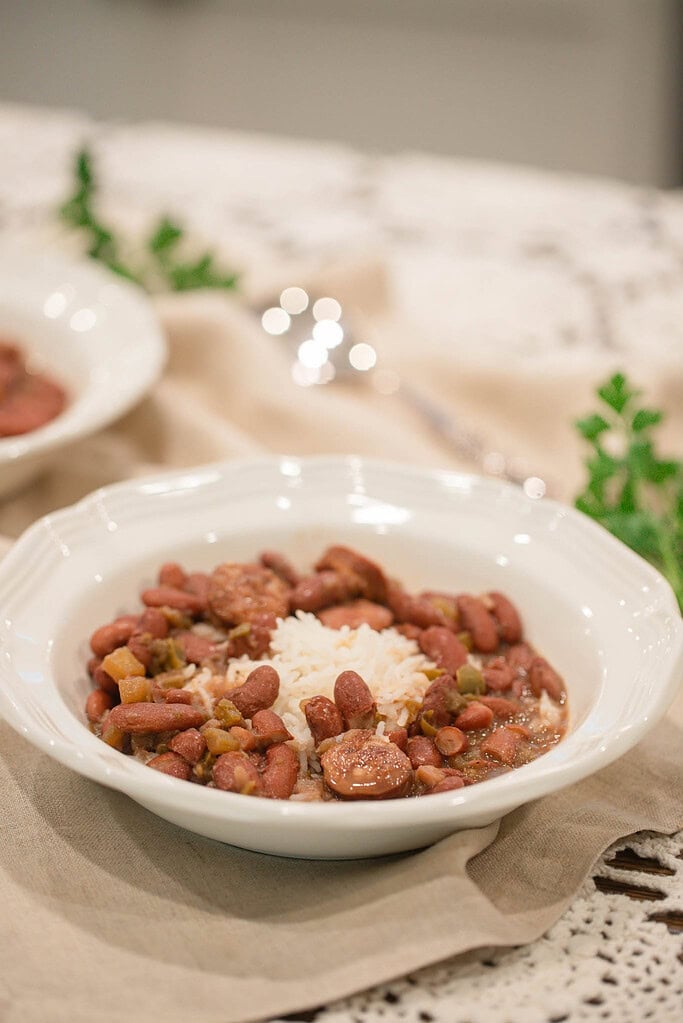
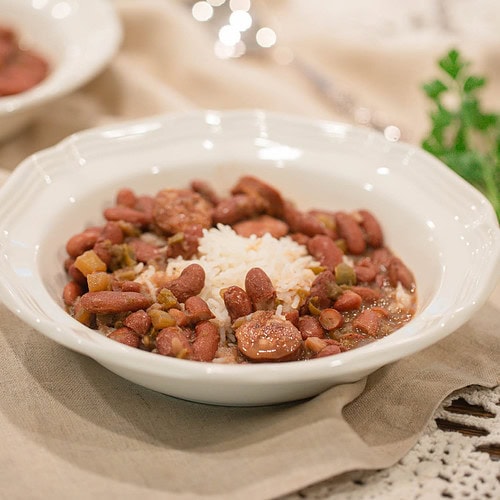
This New Orleans red beans and rice recipe simmers dried red beans with smoked sausage, onion, celery, and green bell pepper, and Creole seasoning low and slow until the beans are tender, creamy, and deeply flavored throughout.
The beans thicken naturally as they cook by mashing a portion against the side of the pot and stirring the starch back in. No cream, no thickener, the same method that has kept this dish on New Orleans tables for generations.
If you are building a full New Orleans spread, this dish pairs naturally with Sourdough King Cake, Sourdough Beignets, and Creamy Crawfish and Shrimp Étouffée Recipe.
Why You’ll Love This Recipe
Ingredients
Variations & Add-Ins
Recipe Tips
Soak the beans overnight – An overnight soak in cold water helps dried red beans soften evenly and cook at a consistent pace throughout the long simmer. It also keeps the skins from splitting and helps the beans hold their shape until the mashing stage.
Use dried beans for authentic texture – Dried beans release natural starch as they cook low and slow, which is what creates the thick, creamy pot that defines New Orleans red beans and rice. Canned beans will not break down the same way and the texture will be noticeably looser.
Build the vegetable base first – Cooking the onion, celery, and bell pepper in oil before adding anything else builds the savory flavor foundation that carries through the entire dish. Rushing or skipping this step produces a flat, thin finished pot.
Bloom the garlic and spices briefly – Garlic and Cajun seasoning need only about one minute in the hot oil to wake up their flavor before the liquid goes in. Cooking them longer at this stage risks bitterness rather than depth.
Simmer low and slow – Gentle, steady heat gives the beans time to soften fully and release their starch naturally. A hard boil cooks the beans unevenly and can cause the skins to split before the centers are tender.
Brown the sausage separately – Cooking the sliced sausage in a hot skillet until the edges are lightly crisped before adding it to the beans deepens the smoky flavor and keeps the texture firm rather than soft and pale.
Mash beans for natural creaminess – Near the end of cooking, press a generous portion of the beans firmly against the side of the pot with a wooden spoon and stir the released starch back into the liquid. This thickens the pot naturally without any cream or thickener.
Add sausage toward the end – Stirring the browned sausage into the beans during the final 30 minutes of cooking prevents it from overcooking while still seasoning the beans and adding smokiness throughout the pot.
Taste and season at the end – The Cajun seasoning, broth, and sausage all contribute salt and spice throughout the cook. Taste the beans before adding any additional salt or cayenne so the final seasoning is balanced rather than overdone.
Let the beans rest before serving – A short rest of 15 to 20 minutes after cooking allows the flavors to settle and the texture to thicken slightly before ladling over the rice.
Instructions
- Soak the beans – Rinse the dried red beans thoroughly and place them in a large bowl with plenty of cold water. Let them soak overnight so they cook evenly and the skins stay intact through the long simmer.
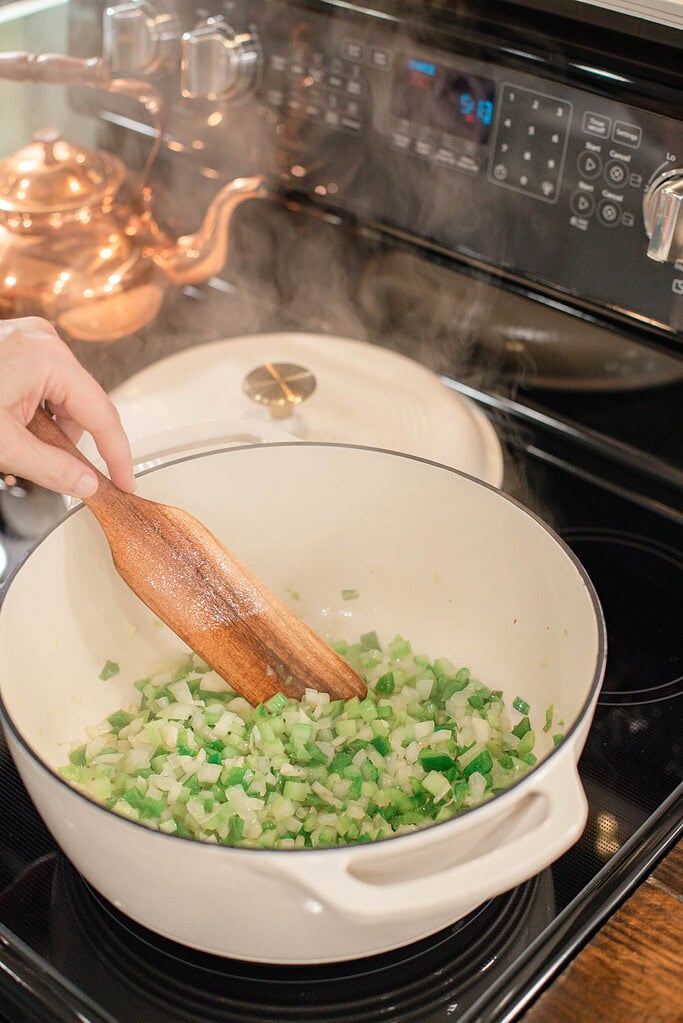
- Sauté the vegetables – Heat olive oil in a large pot over medium heat. Add the onion, green bell pepper, and celery and cook until softened and fragrant, about 3 to 4 minutes, stirring occasionally.
- Bloom the garlic and spices – Stir in the minced garlic, Cajun seasoning, cayenne pepper, dried thyme, and black pepper. Cook for about 1 minute until fragrant, allowing the spices to bloom in the oil without browning.
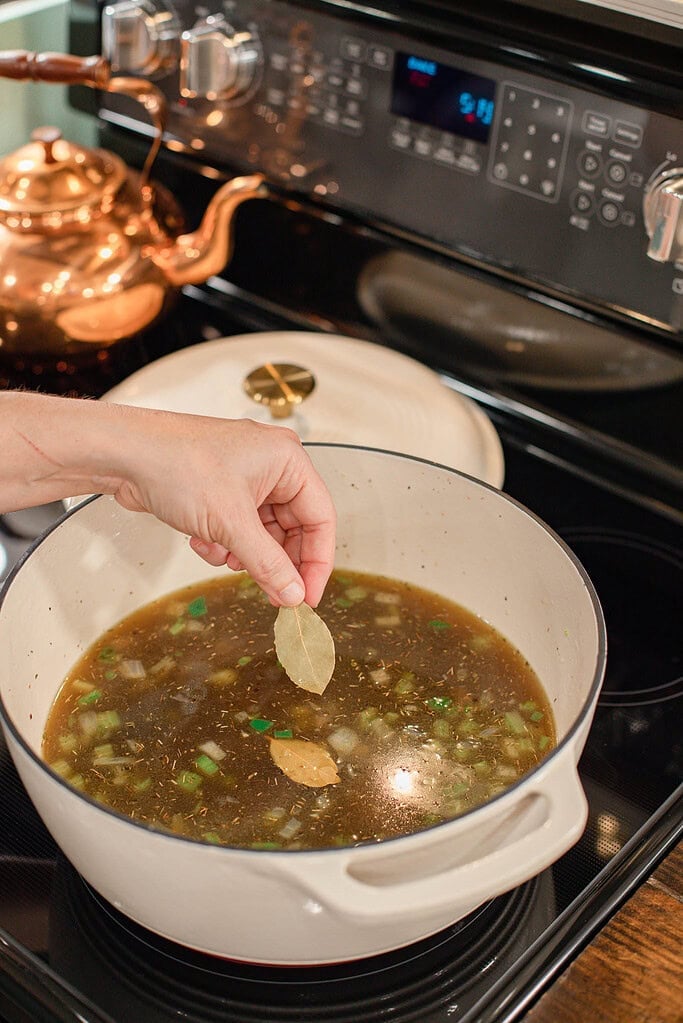
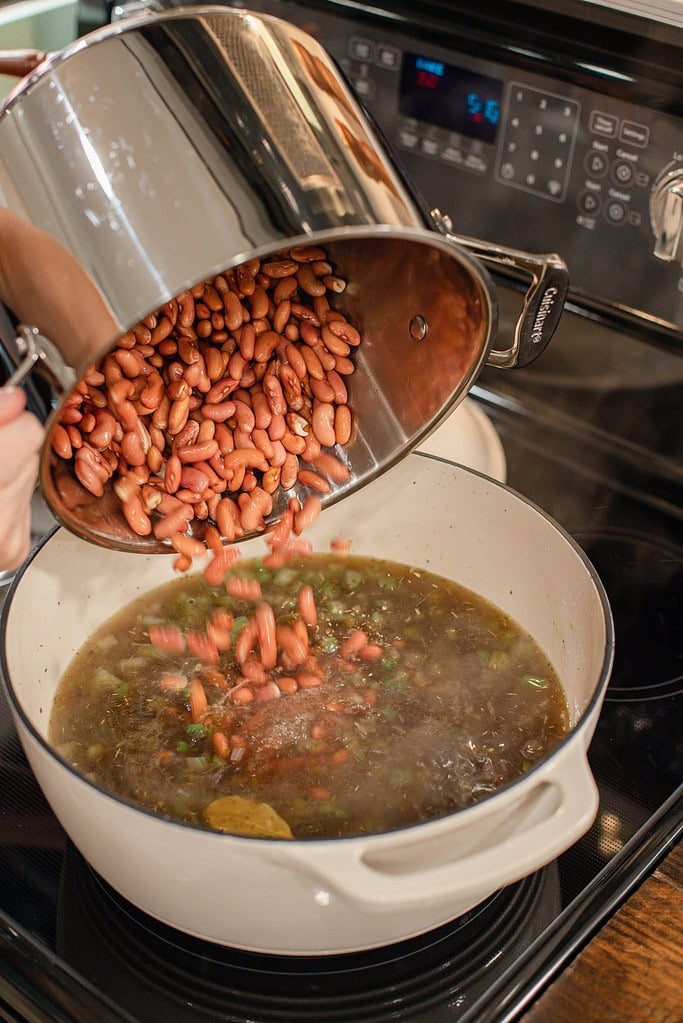
- Add the beans and liquid – Drain the soaked beans and add them to the pot along with the chicken broth, water, and bay leaves. Stir to combine and bring everything to a gentle boil.
- Simmer low and slow – Reduce the heat to low, cover the pot, and let the beans simmer for 2 to 2½ hours, stirring occasionally to prevent sticking. Add a small splash of water or broth if the pot becomes too thick before the beans are fully tender.
- Brown the sausage separately – While the beans simmer, heat a skillet over medium heat and cook the sliced smoked sausage for about 5 minutes until the edges are lightly crisped and browned.
- Add the sausage to the pot – Stir the browned sausage into the beans during the final 30 minutes of cooking so the flavors meld without the meat overcooking.
- Mash for creaminess – Near the end of cooking, press a generous portion of the beans firmly against the side of the pot with a wooden spoon and stir the released starch back into the liquid to thicken the pot naturally.
- Taste and adjust – Remove the bay leaves and taste the beans. Adjust with salt, black pepper, or additional Cajun seasoning as needed until the pot is rich, thick, and well-balanced.
- Cook the rice separately – Bring 4 cups of water to a boil in a separate saucepan. Add the long-grain white rice, stir once, reduce heat to low, cover, and simmer for 20 minutes until all the water is absorbed. Fluff with a fork before serving.
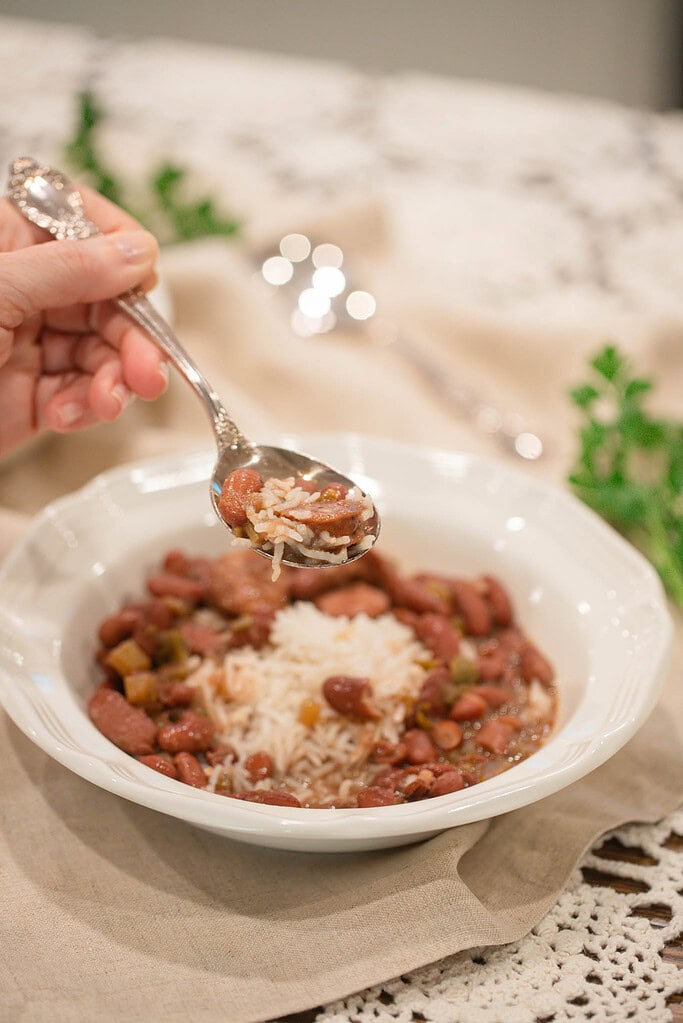
- Serve – Spoon the creamy red beans over a bed of fluffy white rice and garnish with fresh parsley if desired. Serve hot alongside cornbread, collard greens, or a simple green salad.
Storage Suggestions
- Refrigerator – Store the beans and rice in separate airtight containers in the refrigerator for up to 5 days. The beans will thicken slightly as they rest and often taste even better the next day after the seasoning has had more time to settle.
- Freezer – Freeze the beans on their own in a freezer-safe container for up to 3 months. Do not freeze the rice — cook fresh rice when serving for the best texture. Leave a small amount of space at the top of the container as the beans expand slightly during freezing.
- Reheating on the stovetop – Warm the beans gently over low heat, adding a small splash of water or broth to loosen the texture as they heat through. Stir occasionally and taste before serving as the seasoning may need a small adjustment after freezing.
- Reheating in the microwave – Reheat in 60 second intervals, stirring between each one to distribute the heat evenly and prevent the beans from drying out around the edges.
- Store beans and rice separately – Keeping the components apart prevents the rice from absorbing all the liquid from the beans during storage, which preserves both the texture of the rice and the creaminess of the beans for reheating.
FAQ
Join The Community
Want More Cozy Recipes & Seasonal Inspiration?
Get cozy, from-scratch recipes, seasonal cottage living tips, and slow living inspiration delivered straight to your inbox.
More New Orleans Recipes from the Cottage

Authentic New Orleans Red Beans & Rice Recipe
 Prep:20 minutes Cook:3 hours Additional Time:8 hours Total:11 hours 20 minutes
 Equipment
- 1 Dutch Oven
- 1 Wooden spoon
- 1 Strainer for Beans
- 1 Stock Pot *to soak beans overnight
Ingredients
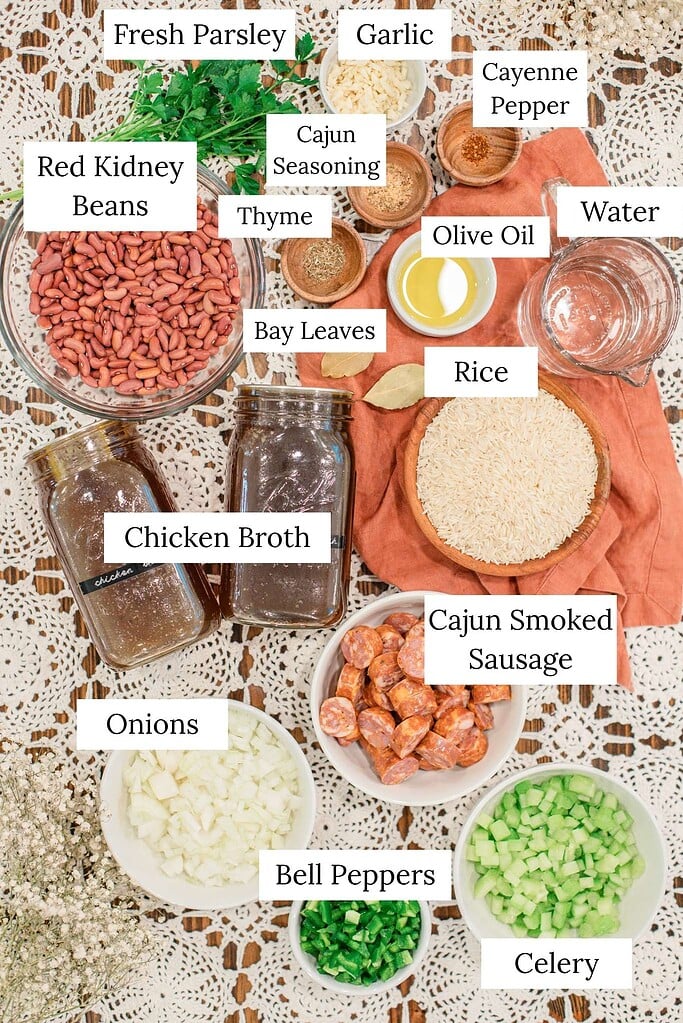
- 1 pound dried red kidney beans rinsed, 454 grams
- 1 green bell pepper diced, 150 grams
- 1 large onion chopped, 200 grams
- 2 stalks celery chopped, 100 grams
- 3 cloves garlic minced, 10 grams
- 1 teaspoon Cajun seasoning 2 grams
- ¼ teaspoon cayenne pepper adjust to taste, 0.5 grams
- ½ teaspoon dried thyme 1 gram
- 2 bay leaves
- 6 cups chicken broth or water for vegetarian, 1.4 liters
- 1 cup water 240 milliliters
- 1 pound smoked sausage or andouille sliced, 454 grams
- 2 cups long-grain white rice 370 grams
- 1 tablespoon olive oil 15 milliliters
- Salt and black pepper to taste
- 2 tablespoons fresh parsley chopped, optional garnish, 6 grams
Instructions
- Soak the beans – Rinse the dried red beans thoroughly and place them in a large bowl with plenty of cold water. Let them soak overnight so they cook evenly and the skins stay intact through the long simmer.
- Sauté the vegetables – Heat olive oil in a large pot over medium heat. Add the onion, green bell pepper, and celery and cook until softened and fragrant, about 3 to 4 minutes, stirring occasionally.
- Bloom the garlic and spices – Stir in the minced garlic, Cajun seasoning, cayenne pepper, dried thyme, and black pepper. Cook for about 1 minute until fragrant, allowing the spices to bloom in the oil without browning.
- Add the beans and liquid – Drain the soaked beans and add them to the pot along with the chicken broth, water, and bay leaves. Stir to combine and bring everything to a gentle boil.
- Simmer low and slow – Reduce the heat to low, cover the pot, and let the beans simmer for 2 to 2½ hours, stirring occasionally to prevent sticking. Add a small splash of water or broth if the pot becomes too thick before the beans are fully tender.
- Brown the sausage separately – While the beans simmer, heat a skillet over medium heat and cook the sliced smoked sausage for about 5 minutes until the edges are lightly crisped and browned.
- Add the sausage to the pot – Stir the browned sausage into the beans during the final 30 minutes of cooking so the flavors meld without the meat overcooking.
- Mash for creaminess – Near the end of cooking, press a generous portion of the beans firmly against the side of the pot with a wooden spoon and stir the released starch back into the liquid to thicken the pot naturally.
- Taste and adjust – Remove the bay leaves and taste the beans. Adjust with salt, black pepper, or additional Cajun seasoning as needed until the pot is rich, thick, and well-balanced.
- Cook the rice separately – Bring 4 cups of water to a boil in a separate saucepan. Add the long-grain white rice, stir once, reduce heat to low, cover, and simmer for 20 minutes until all the water is absorbed. Fluff with a fork before serving.
- Serve – Spoon the creamy red beans over a bed of fluffy white rice and garnish with fresh parsley if desired. Serve hot alongside cornbread, collard greens, or a simple green salad.
Notes
Nutrition

Emily Rider
Home miller since 1999 with fresh-milled flour & sourdough experience. Sharing from-scratch recipes and traditional kitchen skills, rooted in the seasons and inspired by everyday cottage living and seasonal rhythms.