

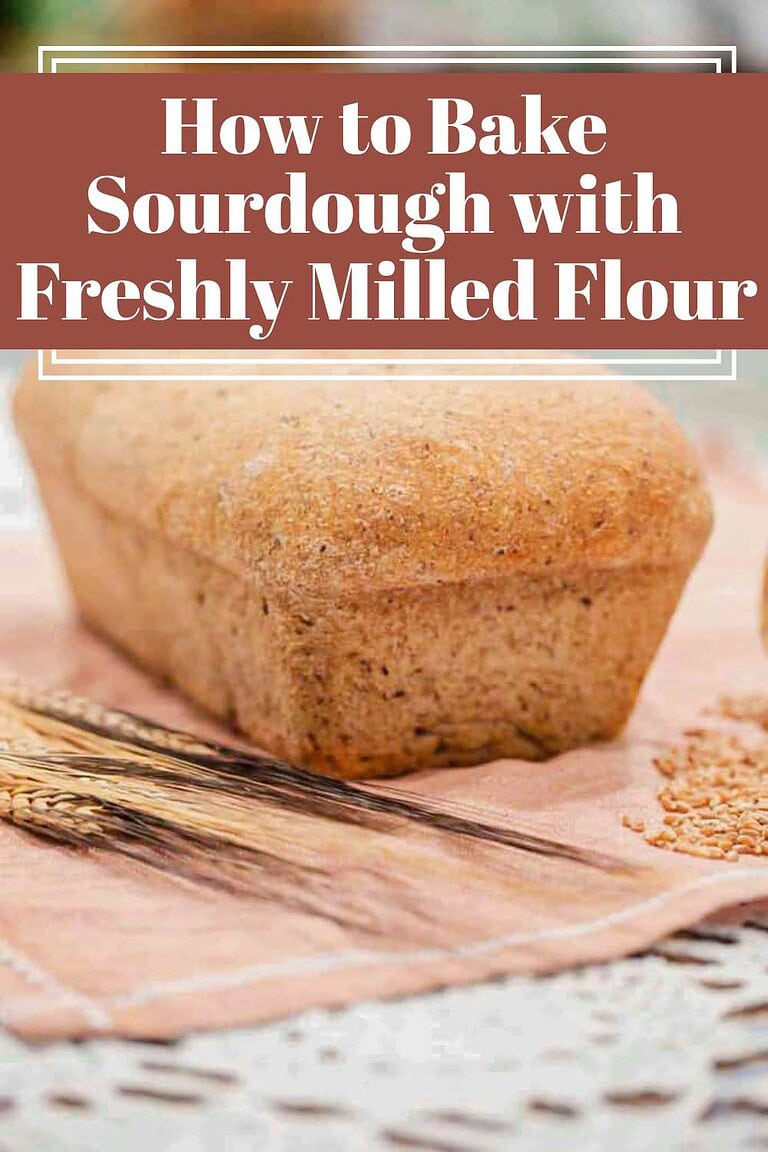
This freshly milled flour sourdough Irish soda bread uses hard red wheat berries, sourdough starter, and buttermilk for a golden, nutty brown bread with a surprisingly tender crumb.
It comes together in one bowl, rests for an hour to let the freshly milled flour fully hydrate, then bakes in a cast-iron skillet or on a parchment-lined baking sheet.
For more fresh-milled flour recipes and guides, explore The Cottage Mill, or try Traditional Irish Soda Bread Recipe and Freshly Milled Flour Sourdough Irish Soda Bread.

Did you know you can convert your favorite recipes to freshly milled flour? Learn how to convert recipes and find more fresh flour guides at The Cottage Mill.
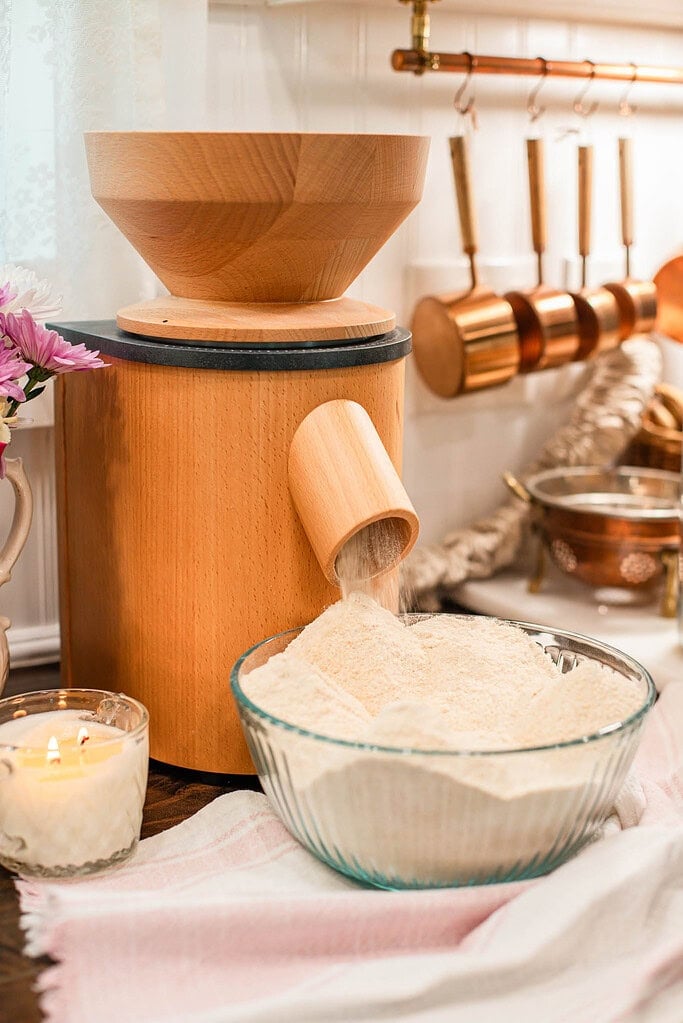
The Cottage Mill | Freshly Milled Flour Guides, Recipes, and More Await!
Why You’ll Love This Recipe

Ingredients

Variations & Add-Ins
Recipe Tips
Weigh your berries before milling – With most home grain mills, 535 grams of hard red wheat berries yields 535 grams of freshly milled flour. If you are unsure about your mill, weigh the flour after milling to confirm before mixing.
Weigh your berries before milling – With most home grain mills, 535 grams of hard red wheat berries yields 535 grams of freshly milled flour ready to use.
Mill on the finest setting – The finest setting produces a finer, more cohesive crumb. A coarser grind creates a rougher texture that can fall apart when sliced.
Do not sift the flour – Sifting removes bran, which changes the weight, absorption rate, and texture of the finished loaf.
Grate frozen or cold butter directly into the flour – Frozen butter grates cleanly and stays cold longest, preventing it from melting into the flour before you work it in.
Use the lobster claw method – Run your thumb across your fingers from pinky to index, rubbing flour into every piece of butter until no bare butter remains.
Stir the wet and dry together and stop – Overmixing develops too much gluten and produces a tough, chewy loaf rather than a tender one.
The one-hour rest is not optional – Freshly milled bran absorbs liquid more slowly than refined flour. The rest allows full hydration and makes the dough noticeably easier to shape.
Score deeply and to the edges – A shallow score closes during baking and prevents the center from cooking through evenly.
Check doneness with temperature and sound – The bread is done when the internal temperature reaches 190°F and the bottom sounds hollow when tapped.


Instructions
- Preheat and prepare the baking surface – Set the oven to 350°F and place a baking stone, baking sheet, or 12-inch cast iron skillet inside to heat along with the oven. A preheated surface gives the bottom crust extra crispness and color.
- Mill the flour – Weigh 535 grams of hard red wheat berries and mill on the finest setting without sifting. The flour goes straight from the mill into the mixing bowl.
- Mix the dry ingredients – Whisk the freshly milled flour, baking powder, baking soda, cream of tartar, and sea salt together in a large mixing bowl until evenly combined. Even distribution means an even rise.
- Grate and coat the butter – Grate the frozen or cold butter on a box grater directly into the flour mixture. Using the lobster claw method, rub the flour into every piece of butter until no bare butter remains and the mixture looks like coarse, uneven crumbs.
- Mix the wet ingredients – Whisk the buttermilk, sourdough starter or discard, egg, and honey together in a separate bowl until fully combined.
- Combine wet and dry – Pour the wet ingredients into the dry and stir with a fork until no dry flour remains. The dough will look shaggy and sticky. Stop stirring the moment it comes together.
- Rest the dough – Cover the bowl with a clean kitchen towel and leave at room temperature for 1 hour. This is where the freshly milled bran fully absorbs the liquid and transforms the dough into something shapeable.
- Shape the loaf – Turn the rested dough out onto a lightly floured surface and gently shape into a round about 6 inches across and 2 inches high. Handle it as little as possible.
- Score and set up for baking – Remove the preheated baking surface from the oven and set the shaped loaf on it. Cut a cross about ¼ inch deep across the top, running the cuts nearly to the edges.
- Bake until golden – Bake for 45 to 55 minutes until the crust is deeply golden brown, the internal temperature reads 190°F, and the bottom sounds hollow when tapped. Tent loosely with foil after 30 minutes if the top darkens too fast.
- Rest and serve – Transfer to a wire cooling rack and rest for at least 1 hour before slicing. Slice with a sharp serrated knife and serve warm with salted butter, alongside Irish stew, or toasted for breakfast.

Gifting & Sharing
Storage Suggestions
- Room temperature – Wrap the fully cooled loaf in a clean tea towel or beeswax wrap and store on the counter for up to 2 days. Avoid plastic wrap the first day, it traps moisture and softens the crust.
- Airtight after day one – Move remaining bread into an airtight container or zip-top bag for up to 3 days total at room temperature.
- Refrigerator – Wrap tightly and store in an airtight container for up to 5 days. Warm slices in a 300°F oven or toaster before serving.
- Freeze in slices – Layer parchment between slices and store in a freezer-safe bag for up to 3 months. Frozen slices go straight into the toaster, no thawing needed.
- Freeze the whole loaf – Wrap tightly in plastic wrap then foil and freeze for up to 3 months. Thaw at room temperature still wrapped, then warm at 300°F for 10 to 12 minutes.
FAQ
Join The Community
Want More Cozy Recipes & Seasonal Inspiration?
Get cozy, from-scratch recipes, seasonal cottage living tips, and slow living inspiration delivered straight to your inbox.
More Recipes from the Cottage


Freshly Milled Flour Sourdough Irish Soda Bread
 Prep:10 minutes Cook:45 minutes Additional Time:1 hour Total:1 hour 55 minutes
 Equipment
- 1 Grain Mill
- 1 Digital kitchen scale
- 1 Cheese grater
- 1 Instant read thermometer
- 1 12-in cast iron pan or a baking sheet
Ingredients
- 3¾ cups hard red wheat berries (freshly milled) unsifted, 535 grams
- 1½ cups buttermilk (full-fat) 355 grams
- ⅓ cup sourdough (starter or discard) 100 grams
- 5 tablespoons salted butter (frozen or cold) 71 grams
- 3 tablespoons honey 39 grams
- 1 large egg (room temperature) 33 grams
- 2 teaspoons baking powder 8 grams
- 1 teaspoon sea salt 6 grams
- 1 teaspoon cream of tartar 3 grams
- ½ teaspoon baking soda 3 grams
Instructions
- Preheat and prepare the baking surface – Set the oven to 350°F and place a baking stone, baking sheet, or 12-inch cast iron skillet inside to heat along with the oven. A preheated surface gives the bottom crust extra crispness and color.
- Mill the flour – Weigh 535 grams of hard red wheat berries and mill on the finest setting without sifting. The flour goes straight from the mill into the mixing bowl.
- Mix the dry ingredients – Whisk the freshly milled flour, baking powder, baking soda, cream of tartar, and sea salt together in a large mixing bowl until evenly combined. Even distribution means an even rise.
- Grate and coat the butter – Grate the frozen or cold butter on a box grater directly into the flour mixture. Using the lobster claw method, rub the flour into every piece of butter until no bare butter remains and the mixture looks like coarse, uneven crumbs.
- Mix the wet ingredients – Whisk the buttermilk, sourdough starter or discard, egg, and honey together in a separate bowl until fully combined.
- Combine wet and dry – Pour the wet ingredients into the dry and stir with a fork until no dry flour remains. The dough will look shaggy and sticky. Stop stirring the moment it comes together.
- Rest the dough – Cover the bowl with a clean kitchen towel and leave at room temperature for 1 hour. This is where the freshly milled bran fully absorbs the liquid and transforms the dough into something shapeable.
- Shape the loaf – Turn the rested dough out onto a lightly floured surface and gently shape into a round about 6 inches across and 2 inches high. Handle it as little as possible.
- Score and set up for baking – Remove the preheated baking surface from the oven and set the shaped loaf on it. Cut a cross about ¼ inch deep across the top, running the cuts nearly to the edges.
- Bake until golden – Bake for 45 to 55 minutes until the crust is deeply golden brown, the internal temperature reads 190°F, and the bottom sounds hollow when tapped. Tent loosely with foil after 30 minutes if the top darkens too fast.
- Rest and serve – Transfer to a wire cooling rack and rest for at least 1 hour before slicing. Slice with a sharp serrated knife and serve warm with salted butter, alongside Irish stew, or toasted for breakfast.
Video
Notes
Nutrition

Emily Rider
Home miller since 1999 with fresh-milled flour & sourdough experience. Sharing from-scratch recipes and traditional kitchen skills, rooted in the seasons and inspired by everyday cottage living and seasonal rhythms.


Can you shore your recipe for the sour dough starter?
We appreciate your interest in learning how to make a sourdough starter! Ruby Ann and I are currently working on a detailed post to guide you through the process. Once completed, we will share the link in the comments section for you to access. Thank you for your interest and your patience!
The long-awaited “Sourdough Starter” guide has been released! Following weeks of testing various techniques, we’re thrilled to present our proven recipe. If you require any additional help with our guide, please don’t hesitate to reach out to us.Here is the link: https://themoderndaycottage.com/cottage-inspired-sourdough-starter-recipe/