
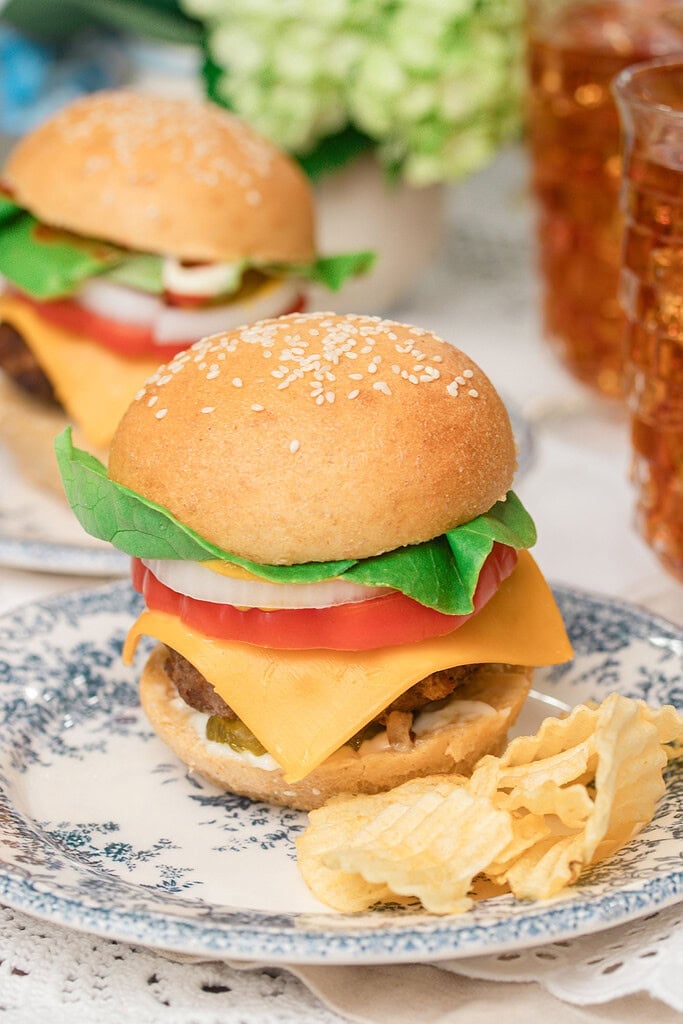
Juicy, thick, and made with fresh breadcrumbs, these homemade hamburger patties stay tender on the inside with beautifully browned edges and rich beef flavor in every bite. Worcestershire sauce, fresh onion, and a simple blend of seasonings enhance the beef without overpowering it, creating burgers that are full of flavor and consistently juicy. I love making them for everything from easy weeknight dinners to backyard cookouts because they’re just as delicious in the air fryer as they are on the grill.
Using torn pieces of fresh bread instead of dry breadcrumbs is one of my favorite ways to make homemade burgers. As the patties cook, the bread helps hold in moisture for a tender texture, while a combination of fresh and dried onions adds layers of savory flavor. If you enjoy baking your own bread, this recipe is a wonderful way to use slices of Sandwich Bread with Fresh Milled Flour for fresh homemade breadcrumbs.
For a complete homemade burger night, serve these patties on Hamburger Buns with Fresh Milled Flour. If you’re new to baking with freshly milled flour, Baking with Freshly Milled Flour is a great place to start and will help you build confidence for homemade breads and buns.
Did you know you can convert your favorite recipes to freshly milled flour? Learn how to convert recipes and find more fresh flour guides at The Cottage Mill.
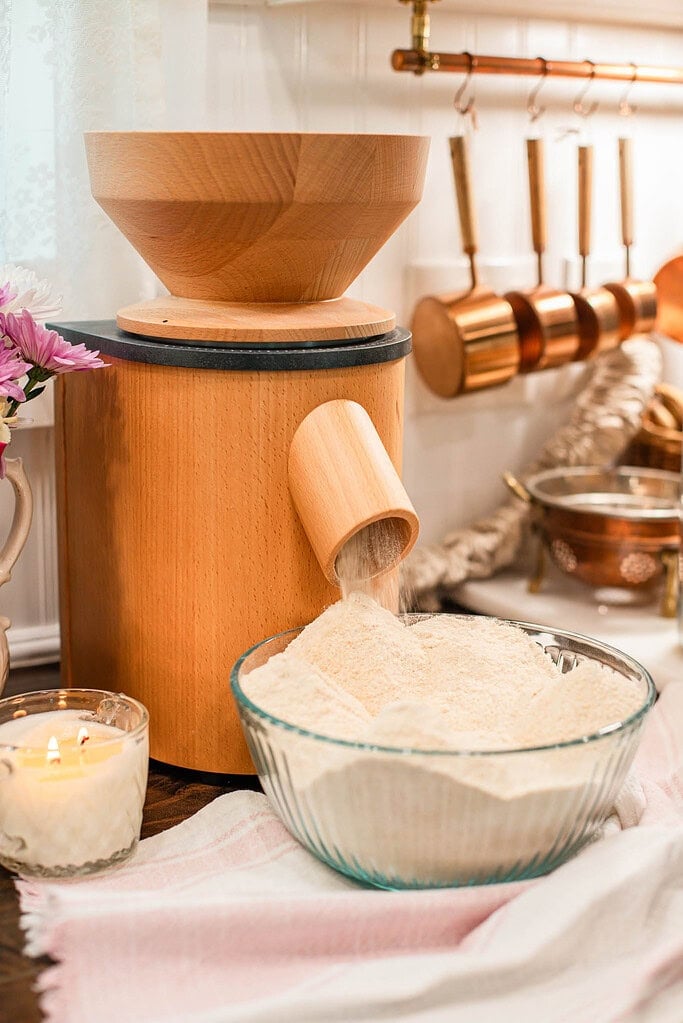
The Cottage Mill | Freshly Milled Flour Guides, Recipes, and More Await!
Why You’ll Love This Recipe
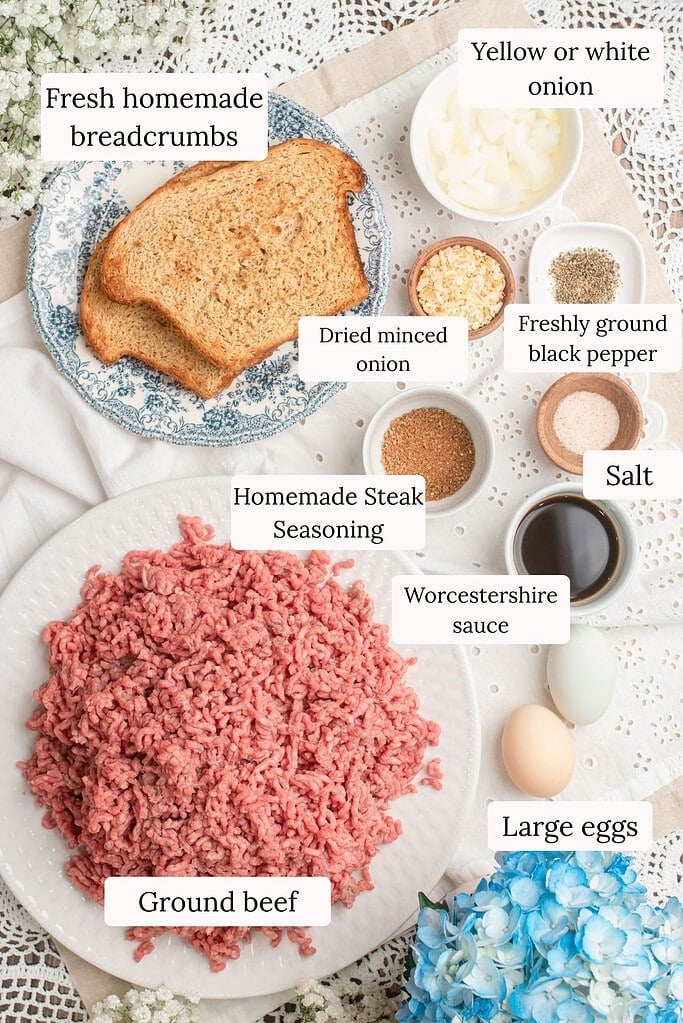
Ingredients
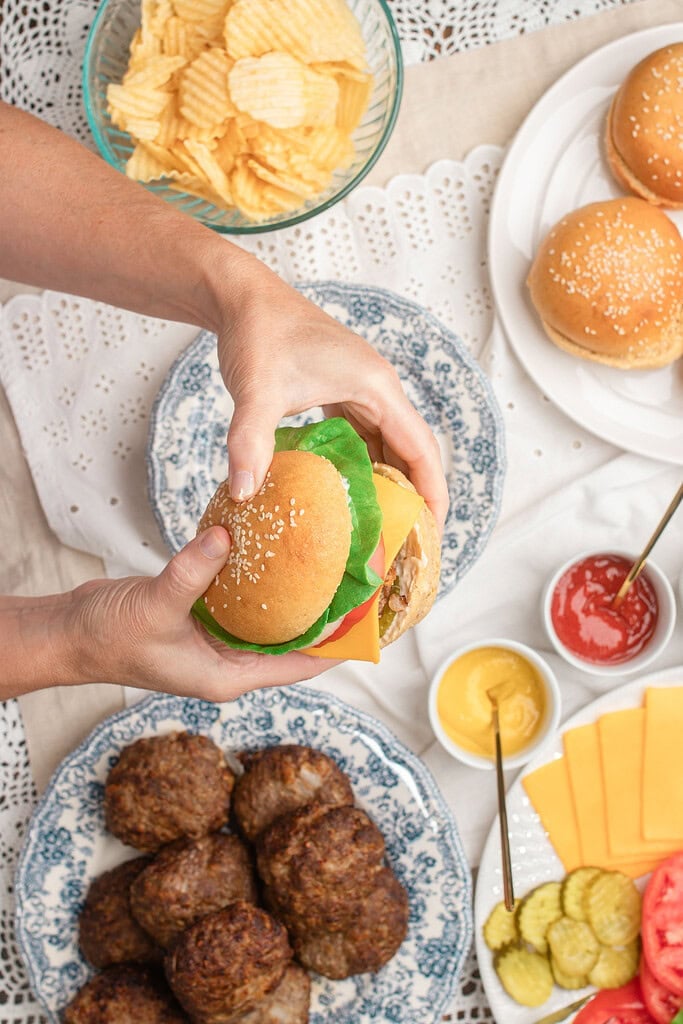
Variations & Add-Ins
Recipe Tips
Use cold ground beef – Keep the ground beef refrigerated until you’re ready to mix the ingredients. Cold beef is easier to handle and helps the fat stay evenly distributed, which contributes to juicy, tender burgers.
Mix gently – Once all the ingredients are in the bowl, mix only until everything is evenly combined. Overworking the meat develops a denser texture and can make the burgers tough after cooking.
Don’t skip the fresh bread – Fresh bread creates soft breadcrumbs as it mixes into the meat, helping the patties stay moist while adding a tender texture. It’s a simple technique that makes a noticeable difference in the finished burgers.
Make a shallow dimple – Press a small indentation into the center of each patty before cooking. As the burgers cook, they naturally contract, and the dimple helps them stay flatter instead of puffing up in the middle.
Flip only once – Whether you’re grilling or using the air fryer, turning the burgers once during cooking allows a flavorful crust to develop while helping the patties cook evenly.
Use a thermometer – The easiest way to know your burgers are done is with an instant-read thermometer. Cook until the center reaches 160°F (71°C) for perfectly cooked ground beef without guessing.
Let the burgers rest – Allow the patties to rest for 3 to 5 minutes after cooking. This gives the juices time to redistribute throughout the meat so they stay in the burger instead of running onto the plate.
Instructions
- Prepare the bread – Tear the bread into small pieces or cut it into small cubes with a knife. Using fresh bread instead of dry breadcrumbs helps create tender, juicy hamburger patties.
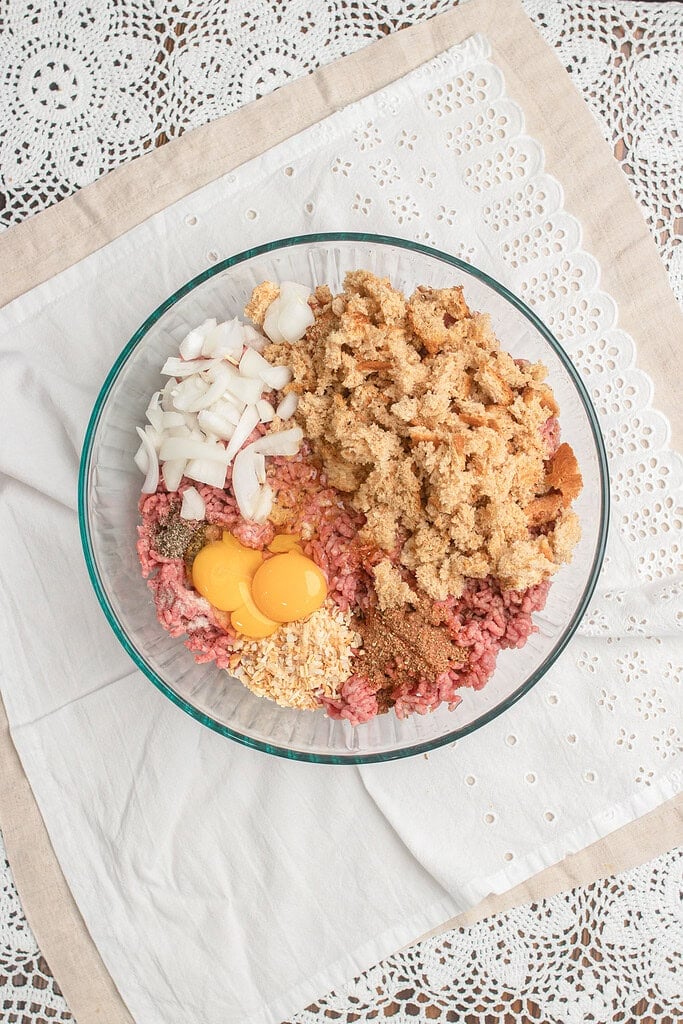
- Combine the ingredients – Place the ground beef into a large mixing bowl or the bowl of a stand mixer. Add the steak seasoning, chopped onion, Worcestershire sauce, egg, torn bread, dried minced onion, black pepper, and salt.
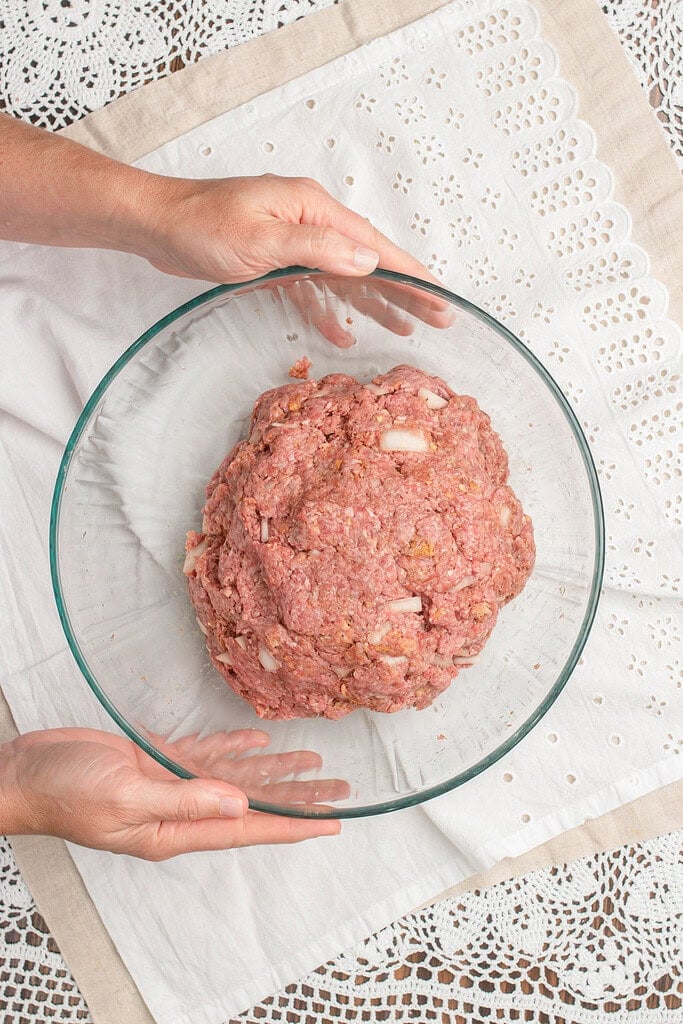
- Mix the meat – Gently mix just until the ingredients are evenly incorporated. The mixture should look well combined, but avoid overmixing to keep the burgers tender.
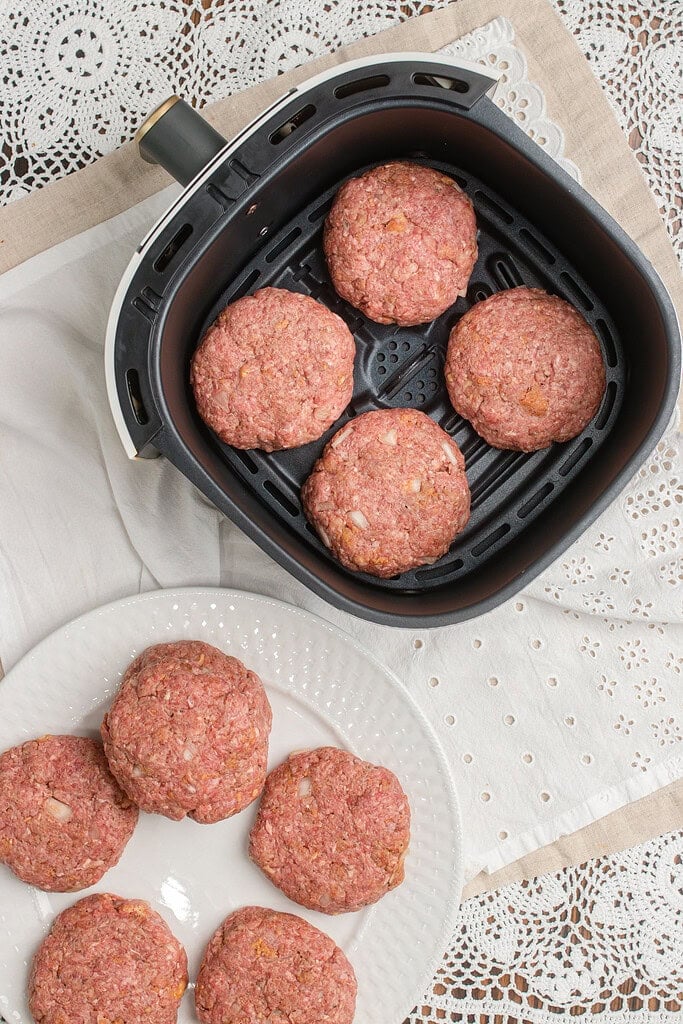
- Shape the patties – Divide the mixture into 12 equal portions, about ¼ pound each, or your preferred size. Gently flatten each patty and press a shallow indentation into the center to help prevent shrinking while cooking.
- Prepare for cooking – Arrange the patties on a platter or in a 9×13-inch casserole dish with a lid. Cover and refrigerate if you aren’t cooking them immediately.
- Cook the burgers – Preheat the air fryer to 375 to 400°F. Arrange the patties in a single layer and cook for 10 to 12 minutes, flipping halfway through, until the internal temperature reaches 160°F (71°C). Cook in batches if needed. If grilling, cook over medium-high heat, turning once, until the burgers reach the same internal temperature.
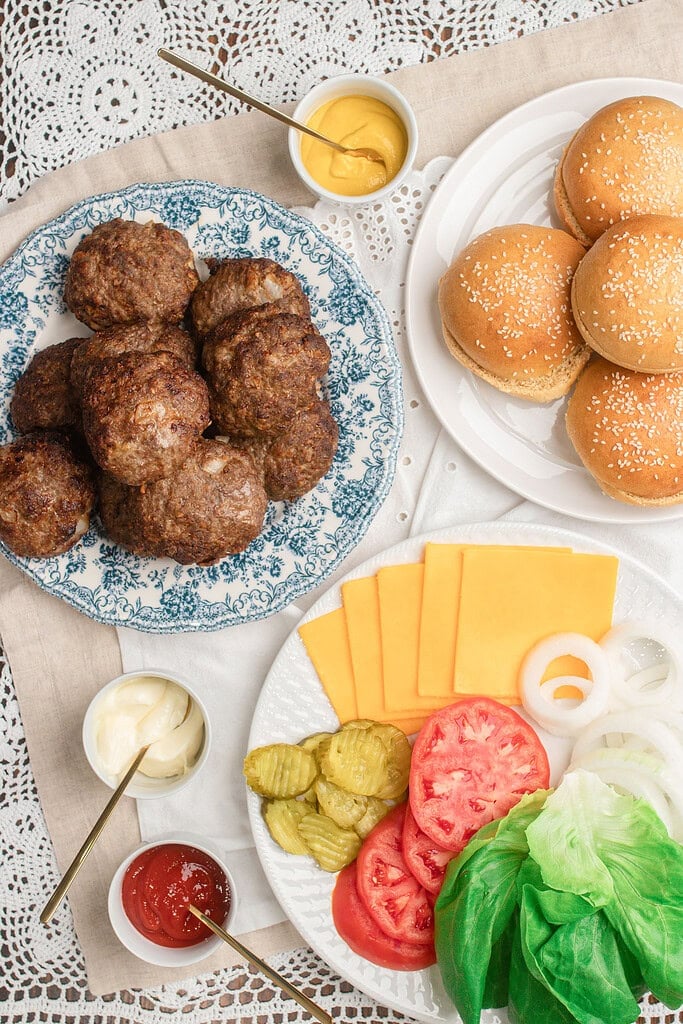
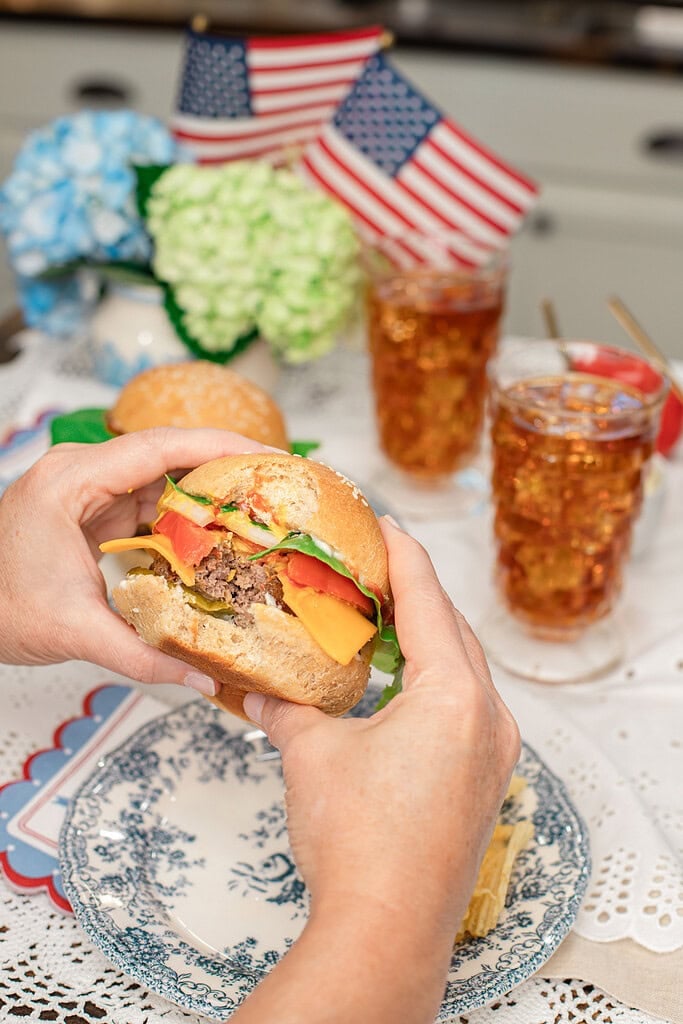
- Rest and serve – Transfer the burgers to a platter and let them rest for 3 to 5 minutes before serving on your favorite buns with your preferred toppings.
Grill Instructions – Preheat the grill to medium-high heat and lightly oil the grates. Grill the patties for 4 to 6 minutes per side, or until they reach an internal temperature of 160°F.
Cast Iron Skillet Instructions – Heat a cast iron skillet over medium-high heat. Cook the patties for 4 to 5 minutes per side, flipping once, until browned and the internal temperature reaches 160°F.
For Cheeseburgers – Add a slice of cheese during the last minute of cooking so it melts perfectly over the burger before serving.
Freezing and Storage
- Refrigerator – Store leftover cooked hamburger patties in an airtight container for up to 4 days. Reheat gently in the microwave, skillet, or air fryer until warmed through.
- Freezer – Arrange uncooked patties between sheets of parchment paper in a freezer-safe container or freezer bag. Freeze for up to 3 months.
- Cook from Frozen – Frozen patties can be cooked without thawing. Add approximately 2 to 3 minutes to the cooking time, and always verify the internal temperature reaches 160°F (71°C) before serving.
- Make Ahead – Shape the patties up to 24 hours in advance, cover tightly, and refrigerate until you’re ready to cook. This makes burger night quick and easy while giving the seasonings time to blend into the meat.
FAQ
Join The Community
Want More Cozy Recipes & Seasonal Inspiration?
Get cozy, from-scratch recipes, seasonal cottage living tips, and slow living inspiration delivered straight to your inbox.
More Recipes from the Cottage
⭐️ Rate This Recipe
Made this recipe? Leave a star ⭐️ rating below, it means the world to me and helps my recipes get found by more people like you. Tag me on Instagram @themoderndaycottage

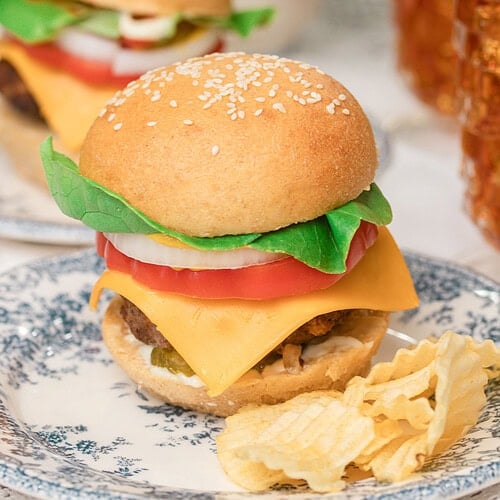
Homemade Hamburger Patties
 Prep:15 minutes Cook:12 minutes Total:27 minutes
 Equipment
- Large mixing bowl or stand mixer
- Kitchen scale (optional)
- Cutting Board
- Sharp knife
- Measuring Cups and Spoons
- Platter or 9×13-inch casserole dish with lid
- Air fryer or grill
- Instant-read meat thermometer
Ingredients
For the Burger Patties
- 3 pounds Black Angus ground beef or lean ground beef
- 1 teaspoon steak seasoning
- ½ cup yellow or white onion finely chopped, about 75 grams
- 2 tablespoons Worcestershire sauce about 30 grams
- 1 large egg
- 12 slices freshly milled bread or sourdough bread torn into small pieces
- 2 tablespoons dried minced onion
- 1 teaspoon freshly ground black pepper
- 1 teaspoon salt
Instructions
- Prepare the bread – Tear the bread into small pieces, or cut it into small cubes using a knife and cutting board.
- Combine the ingredients – Place the ground beef into a large mixing bowl or stand mixer. Add the egg, Worcestershire sauce, chopped onion, dried minced onion, steak seasoning, salt, pepper, and torn bread.
- Mix the meat – Mix just until all the ingredients are evenly incorporated. Avoid overmixing, which can make the burgers dense.
- Shape the patties – Divide the mixture into your preferred patty size using a kitchen scale or by eye. For even cooking, gently flatten each patty and press a small indentation into the center to help prevent shrinking while cooking.
- Prepare for cooking – Place the patties on a platter or in a covered casserole dish until ready to cook. If using an air fryer, you can cover the platter with plastic wrap while waiting.
- Air fry the burgers – Preheat the air fryer to 375–400°F. Cook the patties in a single layer for 10–12 minutes, flipping halfway through, until they reach an internal temperature of 160°F (71°C). Cook in batches if needed.
- Serve – Let the burgers rest for 3–5 minutes before serving on your favorite buns with your preferred toppings.
Notes

Emily Rider
Home miller since 1999 with fresh-milled flour & sourdough experience. Sharing from-scratch recipes and traditional kitchen skills, rooted in the seasons and inspired by everyday cottage living and seasonal rhythms.