
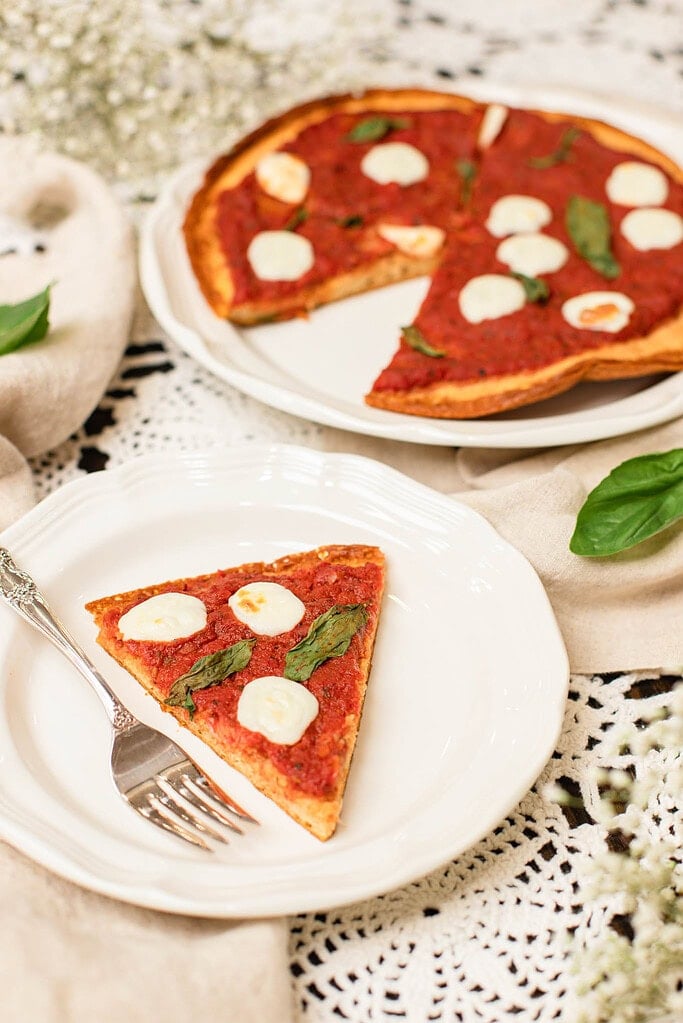
This cast iron sourdough discard pizza bakes up with a crisp, golden bottom and a tender center using sourdough discard, baking powder, and baking soda — no yeast, no fermentation timing, and no special dough prep required.
The batter stirs together in one bowl, pours into a fully preheated cast iron skillet, and par-bakes before toppings go on so the bottom crust has time to develop a crisp, golden finish before the cheese melts.
If you are building a full Italian dinner, this pizza pairs well with Italian Bruschetta and Tiramisu for dessert. New to sourdough? Start with the Beginner Sourdough Starter Recipe
Did you know you can convert your favorite recipes to freshly milled flour? Learn how to convert recipes and find more fresh flour guides at The Cottage Mill.
The Cottage Mill | Freshly Milled Flour Guides, Recipes, and More Await!
Why You’ll Love This Recipe

Ingredients
Variations & Add-Ins
Recipe Tips
Preheat the skillet fully before the batter goes in – A fully heated cast iron pan is what creates the crispy, golden bottom crust. Place the skillet in the oven while it preheats and leave it in for the full preheat time before adding any oil or batter.
Use room temperature discard – Cold discard can slow the reaction between the baking soda and baking powder, which reduces lift and produces a denser crust. Pull the discard out 20 to 30 minutes before mixing if it has been refrigerated.
Adjust the batter consistency before pouring – The batter should be thick enough to hold its shape but pourable enough to spread across the skillet without tearing. If the discard is very thick, stir in whole milk a tablespoon at a time until it reaches the right consistency.
Swirl the batter toward the edges – Pouring the batter into the center and nudging it toward the edges with a spatula creates a slightly thicker rim and a classic pan-style crust shape that holds toppings well.
Par-bake before adding toppings – Baking the crust for 8 to 10 minutes before adding sauce and cheese gives the bottom time to set and develop a golden, crisp texture. Skipping this step can result in a soft, undercooked center.
Keep toppings in a single, even layer – This is a batter-style crust rather than a kneaded dough. Heavy or uneven toppings weigh it down and prevent the center from baking through cleanly. Use ½ to 1 cup of sauce and 1 to 1½ cups of cheese as a starting point.
Rest before slicing – Let the pizza rest in the skillet for 3 to 5 minutes after the final bake. This allows the crumb to finish setting so slices hold together cleanly when cut.



Instructions
- Preheat the oven and skillet – Set the oven to 425°F and place a 10 to 12 inch cast iron skillet inside while it heats. Allow the skillet to preheat fully with the oven so the pan is hot before the batter goes in.
- Mix the batter – In a large bowl, stir together the sourdough discard, baking powder, baking soda, and salt until smooth and fully combined with no dry pockets remaining.
- Adjust the consistency – If the batter is very thick, stir in whole milk one tablespoon at a time until it reaches a pourable consistency that spreads easily but still holds its shape in the skillet.
- Prepare the skillet – Carefully remove the hot skillet from the oven using oven mitts and coat the bottom evenly with olive oil or butter, swirling to cover the entire surface including the lower edges.
- Pour and spread the batter – Pour the batter into the center of the hot skillet and use a spatula to spread it across the bottom, nudging it toward the edges to create a slightly thicker rim around the outside.
- Par-bake the crust – Return the skillet to the oven and bake for 8 to 10 minutes until the crust looks set and lightly golden across the surface. The edges should appear slightly pulled from the sides of the pan.
- Add the toppings – Spread ½ to 1 cup of pizza sauce evenly over the par-baked crust, then layer 1 to 1½ cups of shredded cheese and any additional toppings in a single, even layer.
- Finish baking – Return the skillet to the oven and bake for another 8 to 10 minutes until the cheese is melted and lightly browned at the edges and the crust is deeply golden on the bottom.
- Rest and slice – Let the pizza rest in the skillet for 3 to 5 minutes before slicing. This allows the crumb to finish setting so the slices hold together cleanly when cut and served.
Storage Suggestions
- Refrigerator – Allow leftover pizza to cool completely before storing. Transfer slices to an airtight container with a sheet of parchment paper between stacked slices and refrigerate for up to 3 days.
- Freezer – Wrap individual cooled slices tightly in plastic wrap, place in a freezer-safe bag, and freeze for up to 2 months. For a par-baked crust, cool completely, wrap tightly, and freeze flat until solid before transferring to a bag.
- Reheating – Warm refrigerated or thawed slices in a 350°F oven for 8 to 10 minutes until heated through and the cheese is melted. An air fryer at 350°F for 3 to 5 minutes also works well — watch closely and remove once the cheese is melted and the crust is heated through.

FAQ
Join The Community
Want More Cozy Recipes & Seasonal Inspiration?
Get cozy, from-scratch recipes, seasonal cottage living tips, and slow living inspiration delivered straight to your inbox.
More Dinner Recipes from the Cottage


Cast Iron Sourdough Discard Pizza
 Prep:5 minutes Cook:25 minutes Additional Time:5 minutes Total:35 minutes
 Equipment
- 10-inch to 12-inch cast iron skillet
- Large mixing bowl
- Wooden spoon or spatula
Ingredients
- 1 ½ cups sourdough discard 150 grams
- 2 teaspoons baking powder 8 grams
- 1 teaspoon baking soda 5 grams
- ½ teaspoon salt 3 grams
- 1 tablespoon olive oil or butter 14 grams
- ½ to 1 cup pizza sauce 120 to 240 grams
- 1 to 1 ½ cups shredded cheese 120 to 180 grams
- Toppings of choice used lightly
Instructions
- Preheat the oven and skillet – Set the oven to 425°F and place a 10 to 12 inch cast iron skillet inside while it heats. Allow the skillet to preheat fully with the oven so the pan is hot before the batter goes in.
- Mix the batter – In a large bowl, stir together the sourdough discard, baking powder, baking soda, and salt until smooth and fully combined with no dry pockets remaining.
- Adjust the consistency – If the batter is very thick, stir in whole milk one tablespoon at a time until it reaches a pourable consistency that spreads easily but still holds its shape in the skillet.
- Prepare the skillet – Carefully remove the hot skillet from the oven using oven mitts and coat the bottom evenly with olive oil or butter, swirling to cover the entire surface including the lower edges.
- Pour and spread the batter – Pour the batter into the center of the hot skillet and use a spatula to spread it across the bottom, nudging it toward the edges to create a slightly thicker rim around the outside.
- Par-bake the crust – Return the skillet to the oven and bake for 8 to 10 minutes until the crust looks set and lightly golden across the surface. The edges should appear slightly pulled from the sides of the pan.
- Add the toppings – Spread ½ to 1 cup of pizza sauce evenly over the par-baked crust, then layer 1 to 1½ cups of shredded cheese and any additional toppings in a single, even layer.
- Finish baking – Return the skillet to the oven and bake for another 8 to 10 minutes until the cheese is melted and lightly browned at the edges and the crust is deeply golden on the bottom.
- Rest and slice – Let the pizza rest in the skillet for 3 to 5 minutes before slicing. This allows the crumb to finish setting so the slices hold together cleanly when cut and served.
Video
Notes

Emily Rider
Home miller since 1999 with fresh-milled flour & sourdough experience. Sharing from-scratch recipes and traditional kitchen skills, rooted in the seasons and inspired by everyday cottage living and seasonal rhythms.