

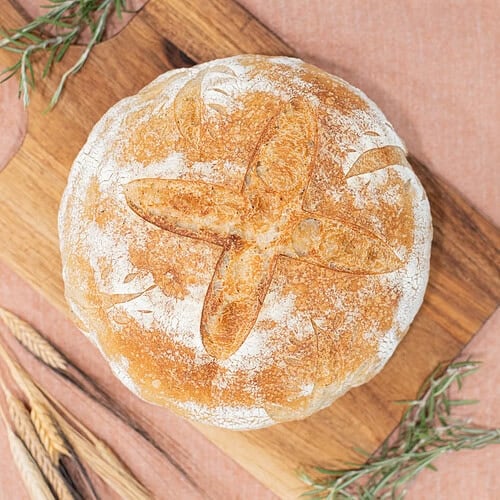
This rosemary sourdough bread is made with all-purpose flour, olive oil, honey, fresh or dried rosemary, and a sourdough starter or discard, baked in a Dutch oven until the crust is deeply golden and the crumb is open, chewy, and fragrant throughout.
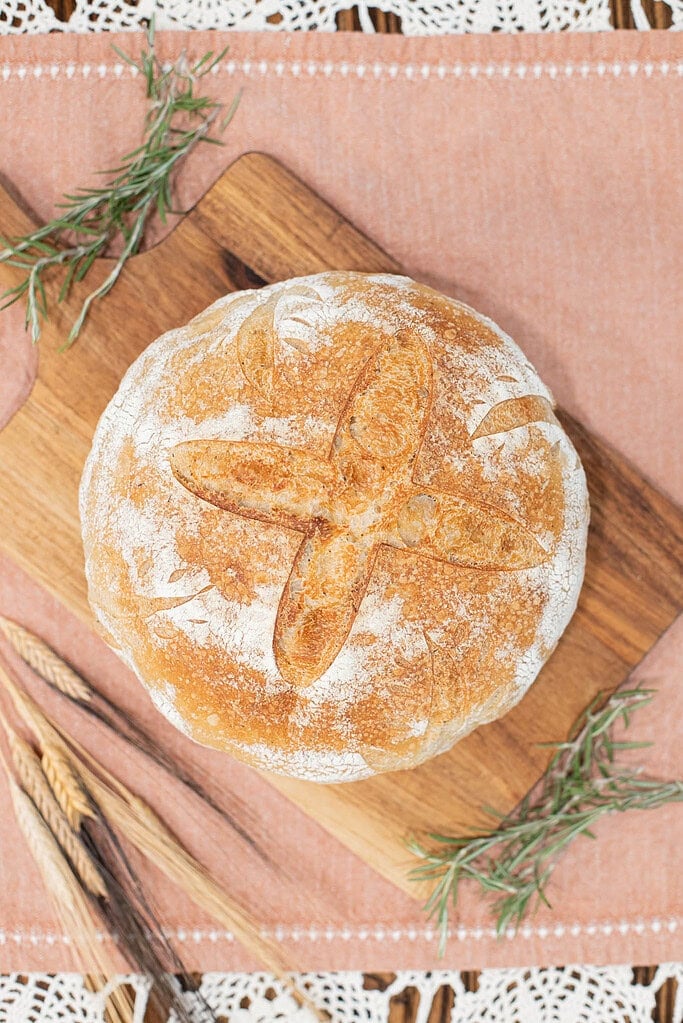
The dough comes together in one bowl, goes through a simple stretch and fold, then cold retards overnight (or you can bake same day) so the loaf is ready to bake the next morning.
It pairs beautifully with Italian Bruschetta Recipe and Sourdough Smoked Gouda Grilled Cheese Panini Sandwich, or slice it thick and serve alongside a bowl of soup. If you are new to sourdough, start with How to Make a Sourdough Starter or Freshly Milled Flour Sourdough Starter before you begin.
Did you know you can convert your favorite recipes to freshly milled flour? Learn how to convert recipes and find more fresh flour guides at The Cottage Mill.
The Cottage Mill | Freshly Milled Flour Guides, Recipes, and More Await!
Why You’ll Love This Recipe
Ingredients
Variations & Add-Ins
Recipe Tips
Use a kitchen scale – measuring flour by volume in sourdough leads to inconsistent hydration. Weighing 500g of flour and 357g of water every time ensures the dough behaves the same way each bake.
Salt after autolyse – add the sea salt only after the dough has rested for 30 minutes. Salt added too early slows the starter and can result in a sluggish fermentation, especially with discard.
Score decisively – use a razor blade or sharp lame and score at a 30 to 45 degree angle in one clean motion. A hesitant score drags the dough and closes before the oven spring can push through.
Watch the dough, not the clock – bulk fermentation runs 6 to 12 hours with active starter, 12 to 24 hours with discard. The dough is ready when it has grown 50 to 75 percent, the surface is domed, and bubbles are visible along the sides of the bowl.
Oven temperatures vary – Dutch ovens and home ovens can run hotter or cooler than the set temperature. If your crust is browning faster than expected, your oven may run hot. An inexpensive oven thermometer is the most reliable way to know your actual baking temperature. Always use the internal temperature of the loaf – 205 to 210°F – as your true doneness indicator rather than time alone.
Cold Dutch oven option – if you prefer not to handle a hot vessel, place the shaped dough directly into a cold Dutch oven and put it in a cold oven, then set it to 435°F. The crust will be slightly less dramatic but the crumb is equally open.
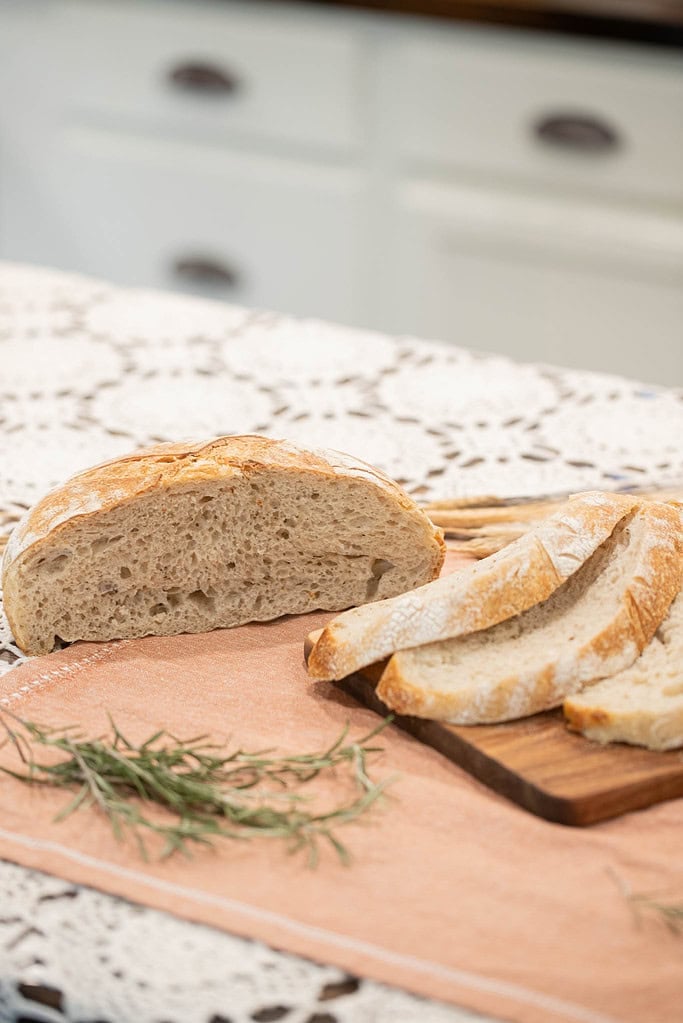
Let it cool fully – the crumb continues to set for 45 minutes to an hour after the loaf comes out of the oven. Slicing too early results in a gummy interior even when the crust looks perfect.
Use an Insta–Pot Wire Rack when cooking in a Dutch Oven – Use an Insta-Pot wire rack in the bottom of your Dutch Oven and place the sourdough loaf directly onto the wire rack using the parchment paper or a oven safe silicone bread sling to prevent burned bottoms. This one simple tip has truly been a great baking tip I use with sourdough boules in the Dutch Oven to get a nice crusted bottom that is not burned and just sun-kissed brown.
Instructions
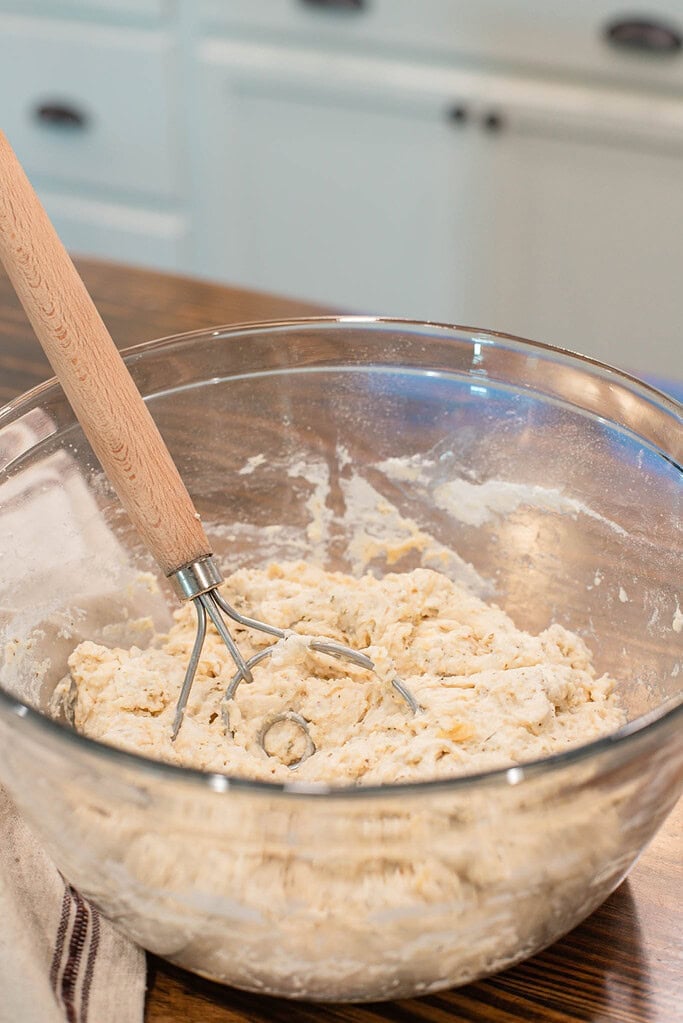
- Combine the dough – in a large bowl, whisk together 100g of active sourdough starter or 100g of sourdough discard, 357g of warm water, and 42g of honey until fully incorporated. Add 500g of unbleached all-purpose flour and mix with a dough whisk or wooden spoon until a shaggy dough forms with no dry patches. Cover with a tea towel and rest for 30 minutes to allow the flour to hydrate fully.
- Add the flavorings – after the rest, add 40g of olive oil, 9g of sea salt, 2 teaspoons of dried rosemary or 1 tablespoon of fresh rosemary finely chopped, 1 teaspoon of Italian seasoning, and 1/4 teaspoon of freshly ground black pepper. Add minced garlic and cayenne now if using. Fold everything into the dough using a dough scraper or wet hands until the additions are evenly distributed.
- Stretch and fold – perform 4 sets of stretch and folds, spaced 45 minutes apart. For each set, grab one side of the dough, stretch it up and fold it over the center, then rotate the bowl 90 degrees and repeat until all four sides are folded. Cover the bowl between sets. The dough will tighten and smooth with each set.
- Bulk ferment – after the final fold, cover the bowl with an airtight lid or plastic wrap and leave it at room temperature to ferment. With active starter, expect 6 to 12 hours. With discard, allow 12 to 24 hours. The dough is ready when it has risen 50 to 75 percent, the surface is domed and slightly jiggly, and bubbles are visible along the sides.
- Shape the loaf – turn the dough onto a lightly floured surface. Fold the edges toward the center to build surface tension, then flip the dough and use a bench scraper to drag it toward you in short strokes, tightening the boule. Let it rest uncovered on the counter for 20 minutes.
- Cold retard – transfer the shaped loaf into a floured banneton or a bowl lined with a floured tea towel, seam side up. Cover and refrigerate for 8 to 12 hours. This overnight rest deepens the flavor and firms the dough for a cleaner score.
- Preheat the oven – place your Dutch oven inside the oven and preheat to 435°F for at least 45 minutes. If using the cold Dutch oven method, skip preheating the Dutch oven.
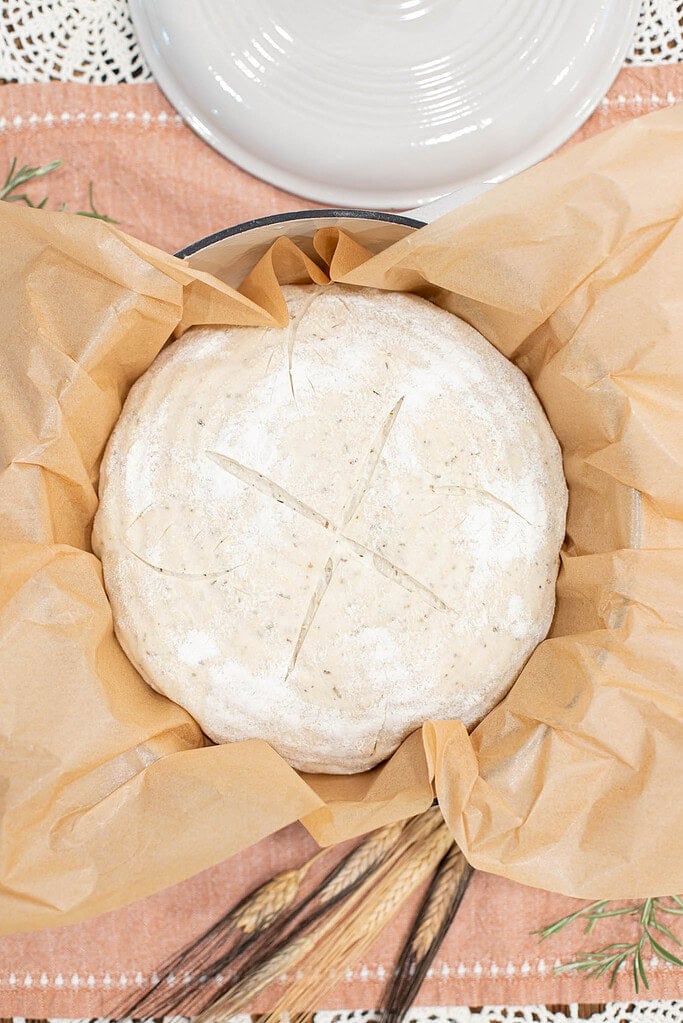
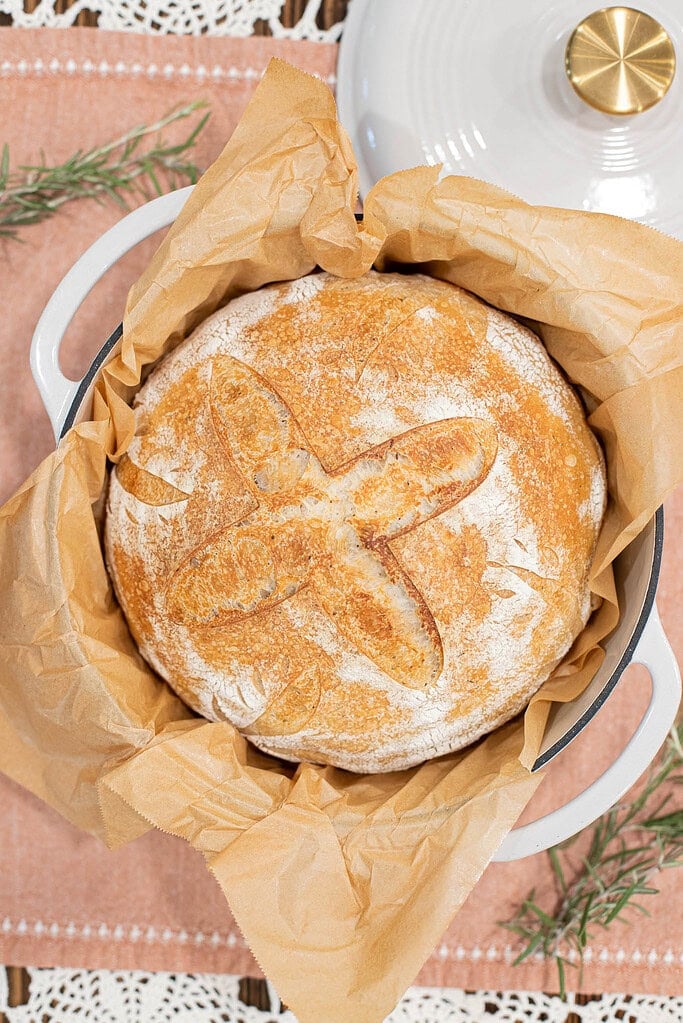
- Score and bake – remove the dough from the refrigerator. Turn it out onto a piece of parchment paper and score the top with a razor blade at a 30 to 45 degree angle. Carefully lower the parchment and dough into the hot Dutch oven, replace the lid, and bake covered for 30 minutes. Remove the lid and bake for an additional 15 minutes until the crust is deeply golden and the internal temperature reads 205 to 210°F.
- Cool and serve – transfer the loaf to a wire rack and rest for at least 45 minutes before slicing. Serve with butter, alongside Italian Bruschetta Recipe, or sliced for Sourdough Smoked Gouda Grilled Cheese Panini Sandwich.
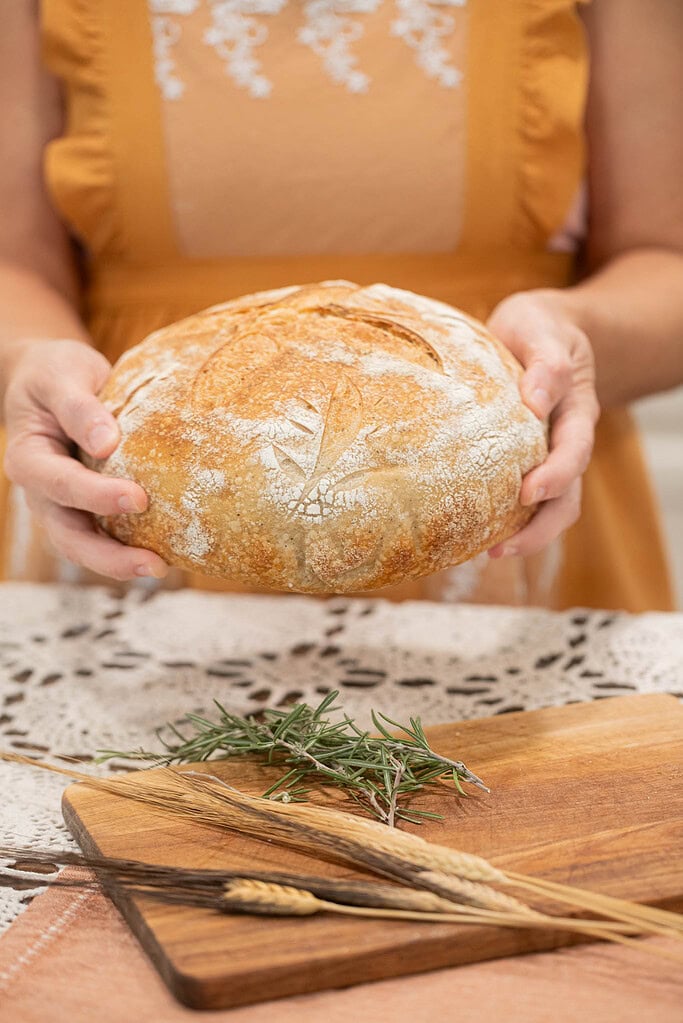
Gifting & Sharing
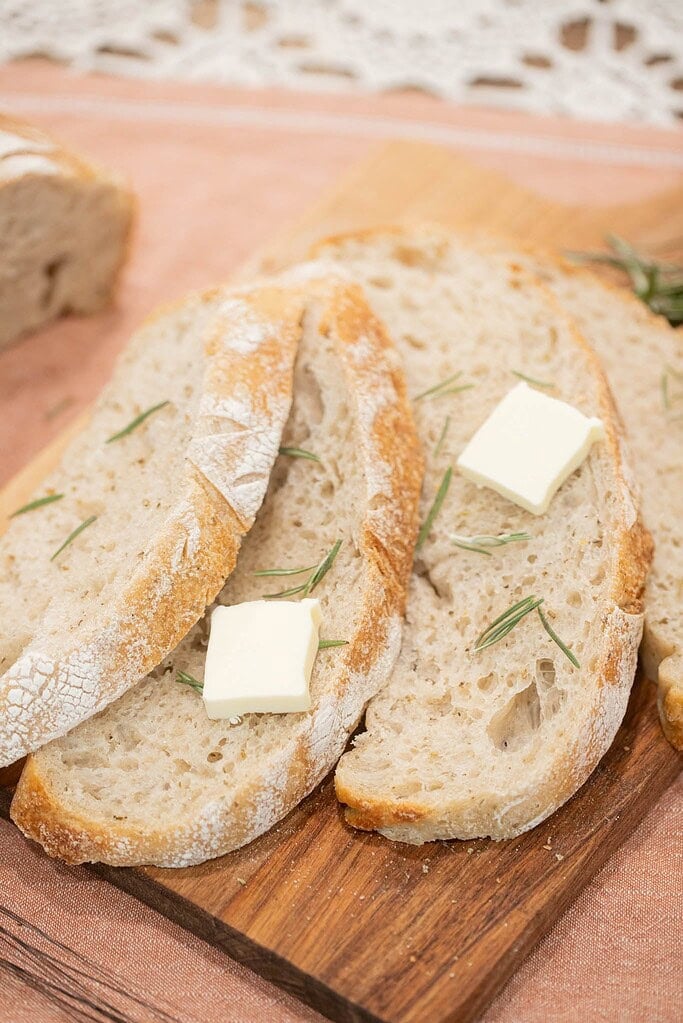
Freezing and Storage
- Room temperature – wrap the cooled loaf in a clean tea towel or beeswax wrap and store at room temperature for up to 3 days. Avoid plastic wrap, which softens the crust.
- Refrigerator – store in an airtight container or zip bag for up to 5 days. Bring to room temperature or warm in a 300°F oven for 10 minutes before serving.
- Freezer – slice the cooled loaf before freezing so you can pull individual slices as needed. Wrap tightly in plastic wrap, then place in a freezer-safe bag for up to 3 months.
- Reheating – reheat slices in a toaster or a 300°F oven for 8 to 10 minutes directly from frozen. The crust crisps back up beautifully.
FAQ
Join The Community
Want More Cozy Recipes & Seasonal Inspiration?
Get cozy, from-scratch recipes, seasonal cottage living tips, and slow living inspiration delivered straight to your inbox.
More Sourdough Recipes from the Cottage
⭐️ Rate This Recipe
Made this recipe? Leave a star ⭐️ rating below, it means the world to me and helps my recipes get found by more people like you. Tag me on Instagram @themoderndaycottage

Rosemary Sourdough Bread
 Prep:12 hours Cook:45 minutes Additional Time:12 hours Total:1 day 45 minutes
 Equipment
- 1 Large mixing bowl
- 1 dough whisk or wooden spoon
- 1 Bench scraper
- 1 banneton or medium bowl with tea towel
- 1 Dutch oven with lid 5 to 6 quart
- 1 razor blade or lame
- 1 Wire rack
Ingredients
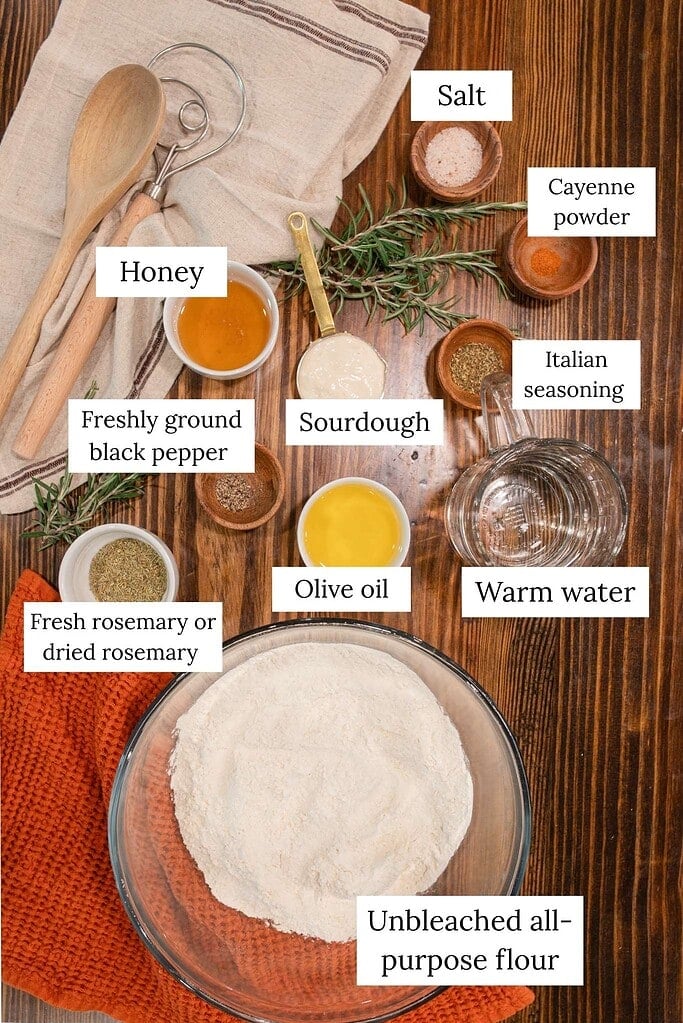
- 1 ½ cups warm water 357 grams
- ½ cup active sourdough starter or sourdough discard 100 grams
- 4 cups unbleached all-purpose flour 500 grams
- 2 tablespoons honey 42 grams
- 3 tablespoons olive oil extra virgin, 40 grams
- 1 ½ teaspoons sea salt 9 grams
- ¼ teaspoon freshly ground black pepper 1.5 grams
- 2 teaspoons dried rosemary 2.4 grams, or 1 tablespoon fresh rosemary, finely chopped, 2 grams
- 1 teaspoon Italian seasoning 3 grams
- 4 to 8 cloves garlic minced, optional
- ⅛ teaspoon cayenne powder optional
Instructions
- Combine the dough – in a large bowl, whisk together 100g of active sourdough starter or 100g of sourdough discard, 357g of warm water, and 42g of honey until fully incorporated. Add 500g of unbleached all-purpose flour and mix with a dough whisk or wooden spoon until a shaggy dough forms with no dry patches. Cover with a tea towel and rest for 30 minutes to allow the flour to hydrate fully.
- Add the flavorings – after the rest, add 40g of olive oil, 9g of sea salt, 2 teaspoons of dried rosemary or 1 tablespoon of fresh rosemary finely chopped, 1 teaspoon of Italian seasoning, and 1/4 teaspoon of freshly ground black pepper. Add minced garlic and cayenne now if using. Fold everything into the dough using a dough scraper or wet hands until the additions are evenly distributed.
- Stretch and fold – perform 4 sets of stretch and folds, spaced 45 minutes apart. For each set, grab one side of the dough, stretch it up and fold it over the center, then rotate the bowl 90 degrees and repeat until all four sides are folded. Cover the bowl between sets. The dough will tighten and smooth with each set.
- Bulk ferment – after the final fold, cover the bowl with an airtight lid or plastic wrap and leave it at room temperature to ferment. With active starter, expect 6 to 12 hours. With discard, allow 12 to 24 hours. The dough is ready when it has risen 50 to 75 percent, the surface is domed and slightly jiggly, and bubbles are visible along the sides.
- Shape the loaf – turn the dough onto a lightly floured surface. Fold the edges toward the center to build surface tension, then flip the dough and use a bench scraper to drag it toward you in short strokes, tightening the boule. Let it rest uncovered on the counter for 20 minutes.
- Cold retard – transfer the shaped loaf into a floured banneton or a bowl lined with a floured tea towel, seam side up. Cover and refrigerate for 8 to 12 hours. This overnight rest deepens the flavor and firms the dough for a cleaner score.
- Preheat the oven – place your Dutch oven inside the oven and preheat to 435°F for at least 45 minutes. If using the cold Dutch oven method, skip preheating the Dutch oven.
- Score and bake – remove the dough from the refrigerator. Turn it out onto a piece of parchment paper and score the top with a razor blade at a 30 to 45 degree angle. Carefully lower the parchment and dough into the hot Dutch oven, replace the lid, and bake covered for 30 minutes. Remove the lid and bake for an additional 15 minutes until the crust is deeply golden and the internal temperature reads 205 to 210°F.
Video
Notes

Emily Rider
Home miller since 1999 with fresh-milled flour & sourdough experience. Sharing from-scratch recipes and traditional kitchen skills, rooted in the seasons and inspired by everyday cottage living and seasonal rhythms.


A wonderful different taste with a moist interior and a crunchy exterior. The baking tips are first class and hard to find; e.g. baking the loaf on an Instant Pot rack to keep the bottom from getting thick and hard.
Thank you so much, Randy! It’s wonderful to see you back trying another recipe! I’m so glad you enjoyed the rosemary sourdough bread and that the baking tips have been helpful. That little Instant Pot rack trick really does make such a difference with the bottom crust. I always enjoy hearing how the recipes turn out for you, and I really appreciate you taking the time to come back and share your experience!
Happy sourdough baking!
Warmly,
Emily
Yes recipe is great BUT DO NOT BAKE FOR THIS LONG!!!!!! I SPENT 2 DAYS ANTICIPATING THIS BREAD FOR IT TO BURN!
20 minutes in your Dutch oven, and then 10 with no lid- dont listen to the directions. I am so sad my bread burnt! All this time just wasted!
Dear S.d.,
Oh, I’m so sorry your loaf burned, two days of anticipating a fresh sourdough and that happening is genuinely heartbreaking, and I don’t take that lightly. I do want to gently clarify, though, because I want you to have a successful bake: the recipe calls for 30 minutes covered and 15 uncovered at 435°F, which is the timing I’ve used across well over a decade of baking this loaf with consistently good results.
I’d actually caution against shortening the covered time significantly, as that steam phase is what gives the bread its rise and open crumb.
What may be happening is that your oven or Dutch oven runs hotter than the dial reads, this is really common and can cause browning much faster than expected.
I’d recommend using an oven thermometer if you haven’t already, and checking the internal temperature of the loaf rather than going purely by time. It should read 205–210°F when done.
I truly hope you give it another try, this bread recipe is so worth it when it comes out right, and I’m happy to help troubleshoot if you want to share more about your setup!
Warmly,
Emily