Homemade Poultry Seasoning Recipe: Simple & Flavorful

This homemade poultry seasoning recipe is a savory blend of thyme, paprika, oregano, garlic powder, onion powder, and black pepper that comes together in one bowl in under 5 minutes and stores in a glass jar for up to 6 months.

This blend skips the sage intentionally – without it, the seasoning stays versatile enough to reach for all year long, not just at Thanksgiving, and works as naturally on roast chicken and pork chops as it does on stuffing and holiday turkey.

Keep a jar alongside Easy Homemade Pumpkin Pie Spice Recipe in the cottage kitchen spice cabinet and reach for both all fall long.
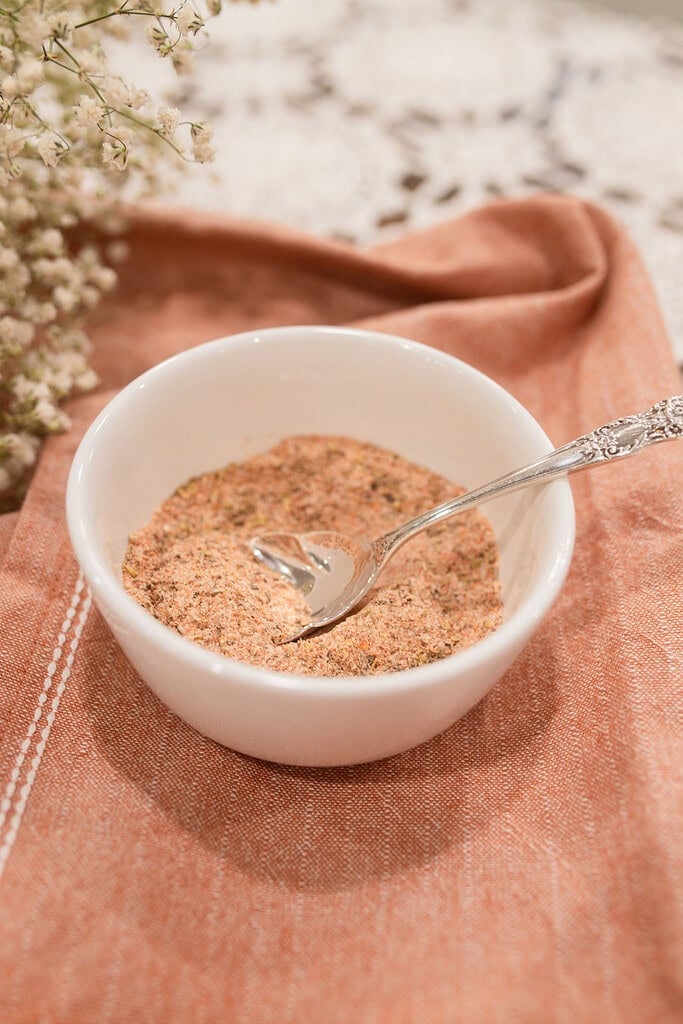
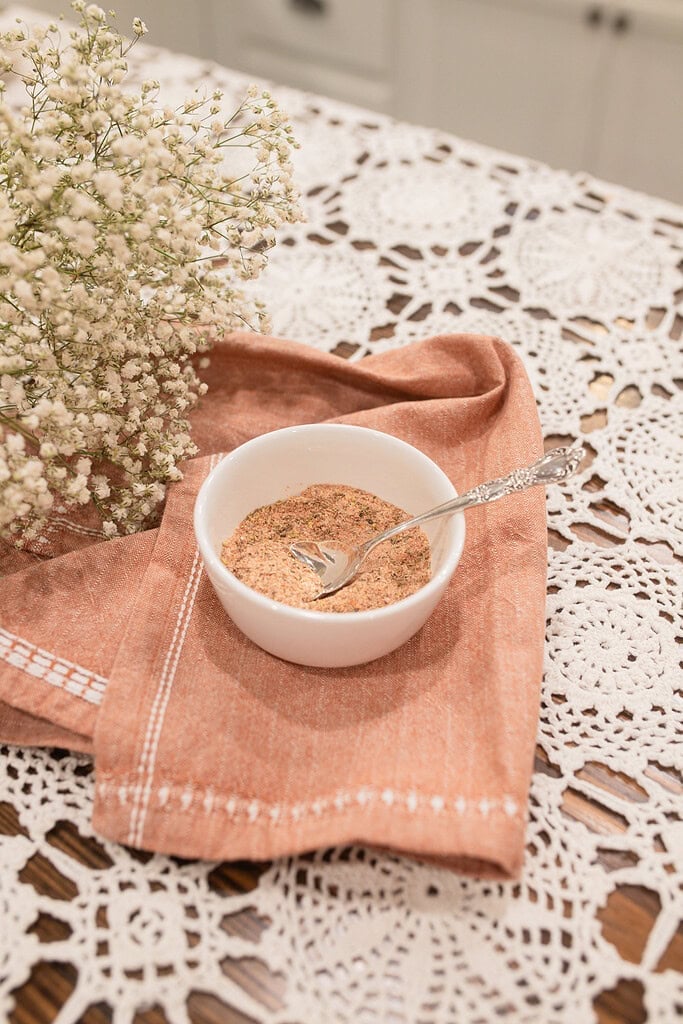
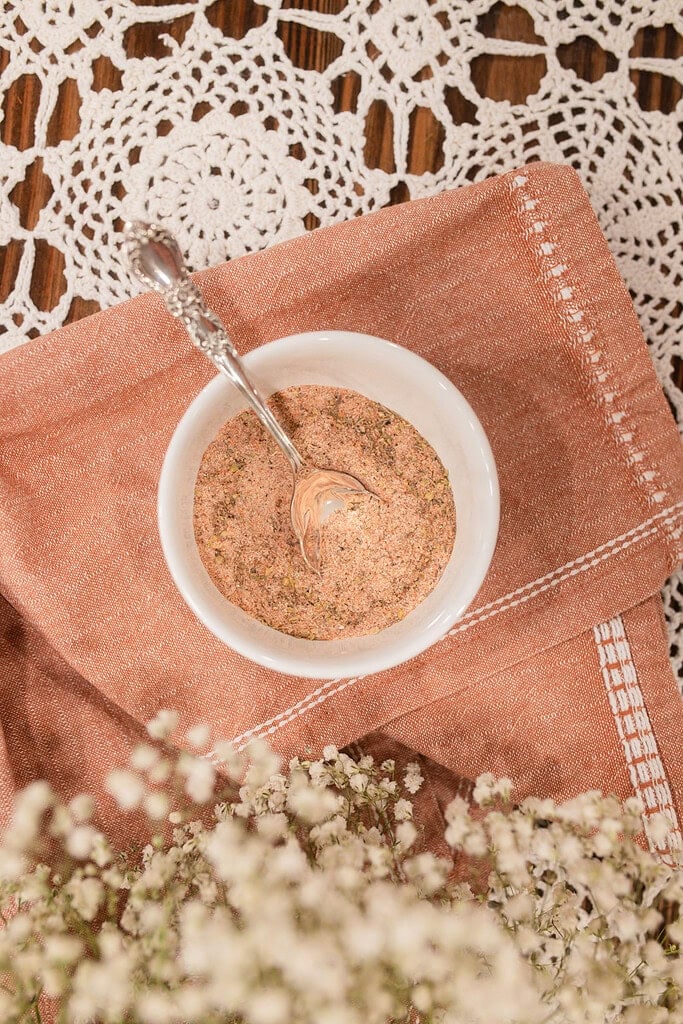
A small white ramekin filled with homemade poultry seasoning blend and a silver vintage spoon, styled on a dusty rose linen with dried baby's breath and a lace doily in the background.

Why You’ll Love This Recipe

  • Sage-free for year-round use – Most poultry seasoning blends are built around sage, which gives them an unmistakably Thanksgiving flavor profile. This blend skips the sage so the seasoning works naturally on roast chicken, pork chops, soups, and vegetables all year without tasting like the holiday table every time.
  • Five minutes, one bowl, one jar – All dry ingredients measured, stirred, and transferred to a glass spice jar. No grinding, no toasting, no special equipment required unless you want to grind whole dried herbs for a finer texture and more aromatic result.
  • Fully customizable – Add two tablespoons of ground sage when making Thanksgiving turkey or stuffing. Add cayenne for heat. Swap oregano for marjoram. The base blend is a starting point, not a fixed formula.
  • A pantry staple worth keeping stocked – A jar of this blend in the spice cabinet means roast chicken, turkey, stuffing, soups, and pork chops are always one reach away from being well-seasoned without measuring seven individual spices every time.

Ingredients

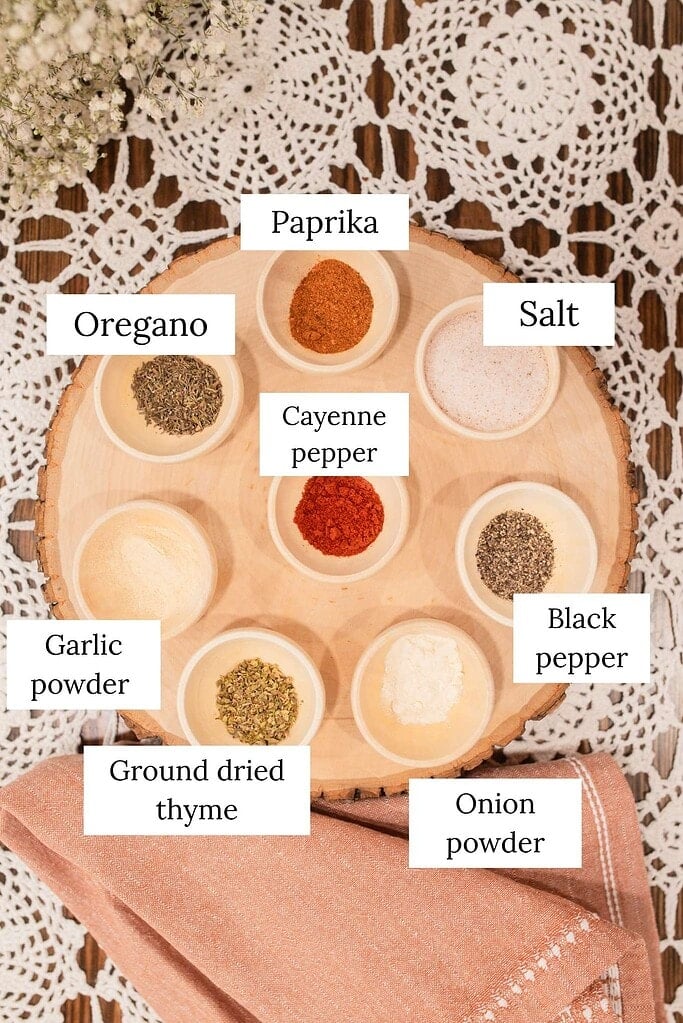
  • Ground dried thyme – The foundational herb in this blend. Thyme is warm, slightly floral, and earthy in a way that reads as savory without being sharp. It carries the blend and ties all the other spices together.
  • Paprika – Two teaspoons of ground paprika adds mild warmth and a slightly sweet depth that rounds out the thyme and oregano. It also gives the finished blend a warm reddish color that looks beautiful in a glass jar. Sweet paprika is the right choice here – smoked paprika would shift the flavor profile too far toward barbecue.
  • Onion powder – One teaspoon adds savory depth and a background sweetness that enhances whatever protein or vegetable this blend goes on. Onion powder distributes more evenly in a dry blend than dried minced onion.
  • Garlic powder – One teaspoon adds a mild garlic note that works in every application from turkey to roasted potatoes. Use garlic powder rather than garlic salt to keep the salt level controlled separately.
  • Black pepper – One teaspoon adds mild heat and sharpness that lifts every other flavor in the blend. Use freshly ground black pepper for the most aromatic result.
  • Oregano – One teaspoon adds an herbaceous, slightly peppery note that complements thyme beautifully and keeps the blend from tasting flat. Oregano can be swapped for an equal amount of dried marjoram for a more traditional poultry seasoning profile.
  • Cayenne pepper – One teaspoon is listed as optional and produces a noticeably spicy blend. Start with half a teaspoon if you prefer mild heat and increase from there. Skip entirely for a heat-free blend suitable for all ages at the holiday table.
  • Fine sea salt – Two tablespoons seasons the blend and sharpens every other flavor. This is on the saltier side of a seasoning blend – adjust to your preference or reduce if you plan to add additional salt separately when cooking.
A small white ramekin of homemade poultry seasoning with a silver spoon resting on a folded dusty rose linen, surrounded by dried baby's breath on a lace doily in a cottage kitchen.

Variations & Add-Ins

  • Thanksgiving version with sage – Add 2 tablespoons of ground dried sage to the base blend before mixing for a classic Thanksgiving poultry seasoning with the full traditional flavor profile. Use this version specifically for holiday turkey, stuffing, and cornbread dressing.
  • Without marjoram substitution – If marjoram is unavailable, use an equal amount of dried oregano. The flavor is slightly bolder and less floral than marjoram but works well in every application this blend is designed for.
  • Southern-style blend – Add ½ teaspoon of dried celery seed and ¼ teaspoon of ground white pepper to the base blend for a slightly more complex, Southern-inflected poultry seasoning that works especially well in chicken soups, cornbread dressing, and slow-cooked chicken.
  • Turkey rub variation – Mix 2 tablespoons of this seasoning blend with 2 tablespoons of softened salted butter and rub generously under and over the skin of a whole turkey before roasting. The butter carries the seasoning directly into the meat rather than sitting only on the surface.

Recipe Tips

Use fresh spices for the most aromatic result – Dried spices lose their potency over time as their essential oils dissipate. If any of the individual spices in this blend have been sitting in the cabinet for more than a year, replace them before mixing. A fresh batch of thyme and paprika makes a noticeably more aromatic blend than one made from old pantry spices.

Grind whole dried herbs for a finer texture – If you have whole dried thyme leaves or dried oregano rather than pre-ground, a quick pulse in an electric spice grinder produces a smoother, more evenly distributed blend that coats meat and vegetables more evenly than a coarser texture.

Label and date the jar – Homemade seasoning blends look similar in glass jars. Label the jar with the name and the date mixed so you know exactly what is in it and when to make a fresh batch.

Store in a cool dark place – Heat, light, and moisture are the enemies of dried herbs and spices. Keep the jar in a spice cabinet or pantry away from the stove and direct sunlight. A cool dark spot preserves potency for the full 6-month window.

Double the batch for Thanksgiving season – This blend disappears quickly once fall arrives and there is turkey, stuffing, soup, and roasted vegetables all happening at once. A double batch made in September means the jar never runs out at the moment it is needed most.

Mix with butter for a turkey rub – For the most flavorful roast poultry, combine 2 tablespoons of this seasoning blend with 2 tablespoons of softened salted butter and work it under the skin of the bird before roasting. The butter carries the seasoning directly into the meat as it melts during cooking.
Instructions

  1. Gather the ingredients – Measure out all spices before beginning so the blend comes together quickly and evenly.
  2. Grind whole herbs if needed – If using whole dried thyme leaves or whole peppercorns rather than pre-ground, pulse briefly in an electric spice grinder until finely ground. This step produces a smoother, more evenly distributed blend.
  3. Combine all spices – In a small mixing bowl, add the ground dried thyme, paprika, onion powder, garlic powder, black pepper, oregano, cayenne pepper if using, and fine sea salt. Add the ground sage now if making the Thanksgiving version.
  4. Stir until evenly blended – Use a small spoon or whisk to stir the spices together until the colors are fully combined and no visible streaks remain. The finished blend should be an even, warm reddish-brown.
  5. Transfer to a glass jar – Carefully spoon or pour the blend into a clean airtight glass spice jar. Tap the jar gently to settle the blend.
  6. Label and store – Write the name and date on the jar label. Store in a cool dark place like a spice cabinet or pantry for up to 6 months.

Using The Poultry Seasoning

  • Roast chicken – Rub generously over a whole chicken or chicken pieces before roasting, either dry or mixed with olive oil or softened butter for a richer crust.
  • Thanksgiving turkey – Add 2 tablespoons of ground sage to the blend, then mix with softened butter and work under and over the skin before roasting for a deeply seasoned holiday bird.
  • Stuffing and cornbread dressing – Add 1 tablespoon of this blend per 4 cups of bread cubes. Add 2 tablespoons of ground sage to the blend first for a more traditional stuffing flavor.
  • Chicken soup and stews – Add 1 to 2 teaspoons to the pot along with aromatics at the beginning of cooking for a deeply savory base flavor that builds throughout the cook time.
  • Pork chops and pork roast – Rub generously over the surface before searing or roasting. This blend works on pork as naturally as it does on poultry.
  • Roasted vegetables – Toss root vegetables, potatoes, or carrots with olive oil and 1 teaspoon of this blend before roasting for a savory, herbaceous side dish.
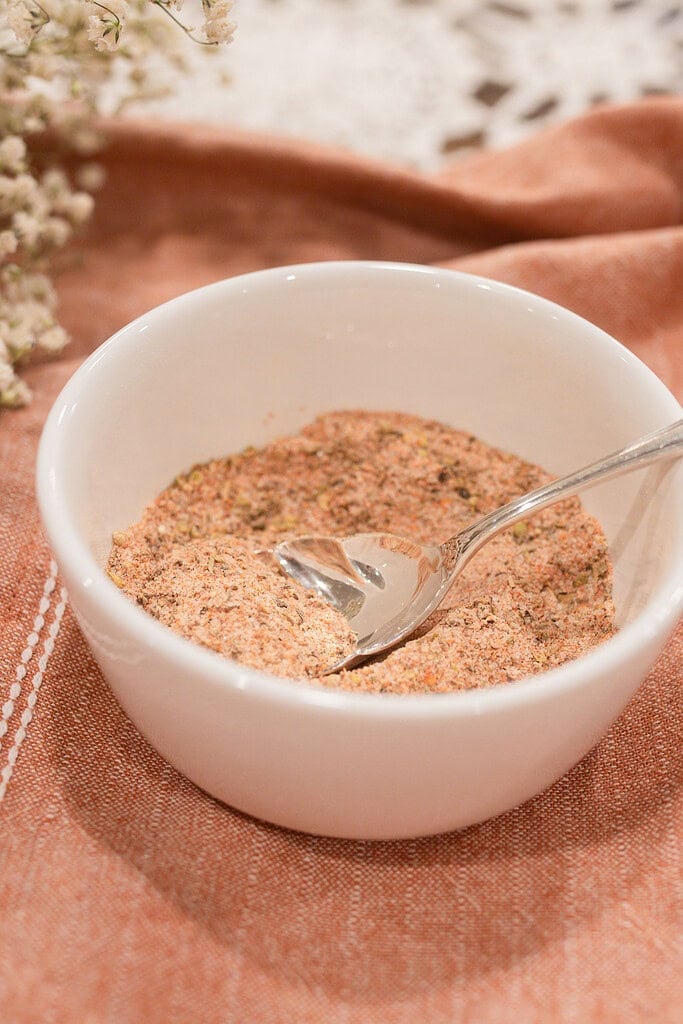
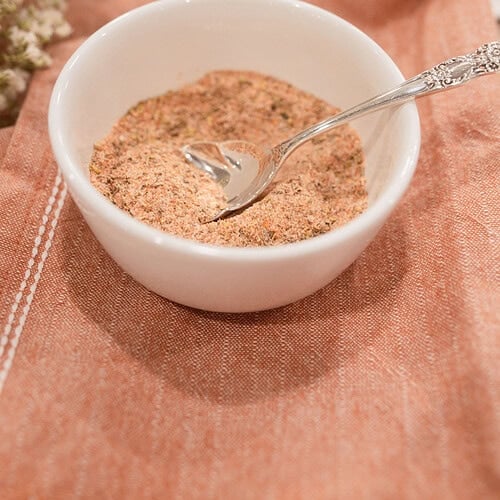
Close-up of a white ramekin filled with homemade poultry seasoning blend and a silver vintage spoon, on a dusty rose linen with dried baby's breath softly blurred in the background.

Gifting Ideas

  • In a labeled glass spice jar – Spoon the blend into a small glass spice jar, tie a ribbon around the neck, and attach a handwritten tag with the blend name, date, and one or two quick serving suggestions. It looks like something from a specialty kitchen shop and costs almost nothing to put together.
  • Paired with a recipe card for roast chicken – Tuck a ribbon-tied jar of the seasoning alongside a handwritten recipe card for a simple herb roast chicken. It is a practical, warm gift that gives someone a from-scratch dinner waiting to happen.
  • In a Thanksgiving spice set – Fill two small matching jars — one with this poultry seasoning and one with the sage-forward Thanksgiving version — label both clearly, and nestle them in a small crate or basket with a card explaining which to reach for and when. It is a thoughtful host gift that arrives before the holiday rush.
  • As a Friendsgiving hostess gift – Bring a ribbon-tied jar to the door alongside a handwritten note suggesting the turkey rub variation with softened butter. It is a specific, useful gift that a holiday cook will actually reach for the morning of the meal.

Freezing and Storage

  • Glass spice jar at room temperature – Store in an airtight glass spice jar in a cool dark place like a spice cabinet or pantry for up to 6 months. Avoid storing near the stove where heat and steam can degrade the spices faster.
  • Refrigerator – Not necessary for a dry spice blend but if your kitchen runs warm, refrigerating in an airtight jar extends the potency slightly beyond 6 months.
  • Freezer – Freeze a large batch in a freezer-safe airtight container for up to 1 year. Portion into smaller jars for convenient use without repeated thawing.
  • Freshness check – Rub a small pinch of the blend between your fingers before using. A fresh, aromatic smell means the blend is still at full potency. A faint or musty smell means it is time to make a fresh batch.

FAQ

Traditional poultry seasoning is a dried herb and spice blend built around sage, thyme, marjoram, and rosemary with black pepper and nutmeg. This cottage kitchen version skips the sage intentionally for a more versatile year-round blend that adds savory herb depth to poultry, pork, soups, and vegetables without the distinctly Thanksgiving flavor profile that sage produces. Add 2 tablespoons of ground sage back in when making holiday turkey or stuffing.

The closest single-ingredient substitute for poultry seasoning is rubbed dried sage — it has the strongest flavor association with traditional poultry seasoning. For a more complete substitution, combine equal parts dried thyme, dried sage, and dried marjoram. If marjoram is unavailable, dried oregano works as a direct swap. Italian seasoning can also substitute in a pinch, it shares thyme, oregano, and rosemary with most poultry seasoning blends, though the flavor profile is slightly different.

Poultry seasoning is a traditional American spice blend built around dried herbs, primarily sage, thyme, marjoram, and rosemary, and is used across all poultry from chicken to turkey to Cornish hens. Chicken seasoning tends to be broader and more variable by brand, often including garlic, onion, paprika, and sometimes citrus or chili notes. Poultry seasoning is the more traditional and specifically herbaceous of the two.

Yes, this blend works on anything that benefits from warm, savory herb flavor. Pork chops and pork roast take it especially well. Root vegetables and potatoes roasted with this blend and olive oil are a natural pairing. Meat loaf, soups, and stews all benefit from a teaspoon or two added early in cooking. The sage-free formulation in this recipe makes it genuinely versatile across seasons and proteins rather than tasting specifically like a holiday bird every time.

A general starting point is ½ teaspoon of poultry seasoning per pound of turkey when using it as a dry rub on the surface. For a more deeply seasoned result, mix 2 tablespoons of the blend with 2 tablespoons of softened butter and work it under the skin of the bird before roasting. The butter carries the seasoning directly into the meat as it melts during cooking and produces a more evenly flavored result than a surface rub alone.

Join The Community


Want More Cozy Recipes & Seasonal Inspiration?

Get cozy, from-scratch recipes, seasonal cottage living tips, and slow living inspiration delivered straight to your inbox.

More Recipes from the Cottage

⭐️ Rate This Recipe

Made this recipe? Leave a star ⭐️ rating below, it means the world to me and helps my recipes get found by more people like you.

A small white ramekin filled with homemade poultry seasoning blend and a silver vintage spoon, styled on a dusty rose linen with dried baby's breath and a lace doily in the background.
5 from 1 vote

Homemade Poultry Seasoning Recipe

Author: Emily Rider
This homemade poultry seasoning recipe is a savory blend of thyme, paprika, oregano, garlic, and onion powder that comes together in one bowl in under 5 minutes. Made without sage for a year-round versatile seasoning that works on roast chicken, turkey, stuffing, soups, and pork all season long.
Prep:5 minutes
Total:5 minutes
Course: Condiments and Seasonings
Cuisine: American
Servings: 12

Equipment

  • 1 Small Mixing Bowl
  • 1 small spoon or whisk
  • 1 airtight glass spice jar
  • 1 set measuring spoons

Ingredients

  • 1 teaspoon ground dried thyme 1 gram
  • 2 teaspoons ground paprika 5 grams
  • 1 teaspoon onion powder 3 grams
  • 1 teaspoon garlic powder 3 grams
  • 1 teaspoon black pepper 3 grams (freshly ground preferred)
  • 1 teaspoon dried oregano 1 gram
  • 1 teaspoon cayenne pepper 3 grams (optional, for heat)
  • 2 tablespoons fine sea salt 36 grams

For Thanksgiving Version:

  • 2 tablespoons ground dried sage 6 grams (add to base blend)

Instructions

  1. Grind whole herbs if needed – If using whole dried thyme or whole peppercorns, pulse briefly in an electric spice grinder until finely ground.
  2. Combine all spices – Add all ingredients to a small mixing bowl. Add ground sage now if making the Thanksgiving version.
  3. Stir until blended – Stir until the colors are fully combined and no streaks remain. The blend should be an even warm reddish-brown.
  4. Transfer to jar – Spoon the blend into a clean airtight glass spice jar and tap gently to settle.
  5. Label and store – Write the name and date on the jar. Store in a cool dark place for up to 6 months.

Notes

Skip the sage for year-round use – This blend is formulated without sage so it works on chicken, pork, soups, and vegetables all year. Add 2 tablespoons of ground sage when making Thanksgiving turkey or stuffing.
Use fresh spices – Dried spices older than one year produce a noticeably less aromatic blend. Replace any old pantry spices before mixing for the best result.
Label and date the jar – Homemade blends look similar. Label immediately so you know exactly when to make a fresh batch.
Mix with butter for turkey – Combine 2 tablespoons of this blend with 2 tablespoons of softened butter and work under the skin before roasting for a deeply seasoned result.

Nutrition

Serving: 1tsp., Calories: 5kcal, Carbohydrates: 1g, Protein: 0.2g, Fat: 0.1g, Saturated Fat: 0.05g, Polyunsaturated Fat: 0.1g, Monounsaturated Fat: 0.02g, Sodium: 1163mg, Potassium: 24mg, Fiber: 0.5g, Sugar: 0.1g, Vitamin A: 260IU, Vitamin C: 0.3mg, Calcium: 13mg, Iron: 0.4mg
Close-up of a woman in a peach blouse smiling and leaning against a kitchen counter, with fresh flour and wheat berries visible beside her.

Emily Rider

Home miller since 1999 with fresh-milled flour & sourdough experience. Sharing from-scratch recipes and traditional kitchen skills, rooted in the seasons and inspired by everyday cottage living and seasonal rhythms.


More From The Cottage...

Leave a Reply

Your email address will not be published. Required fields are marked *

Rate This Recipe


This site uses Akismet to reduce spam. Learn how your comment data is processed.