

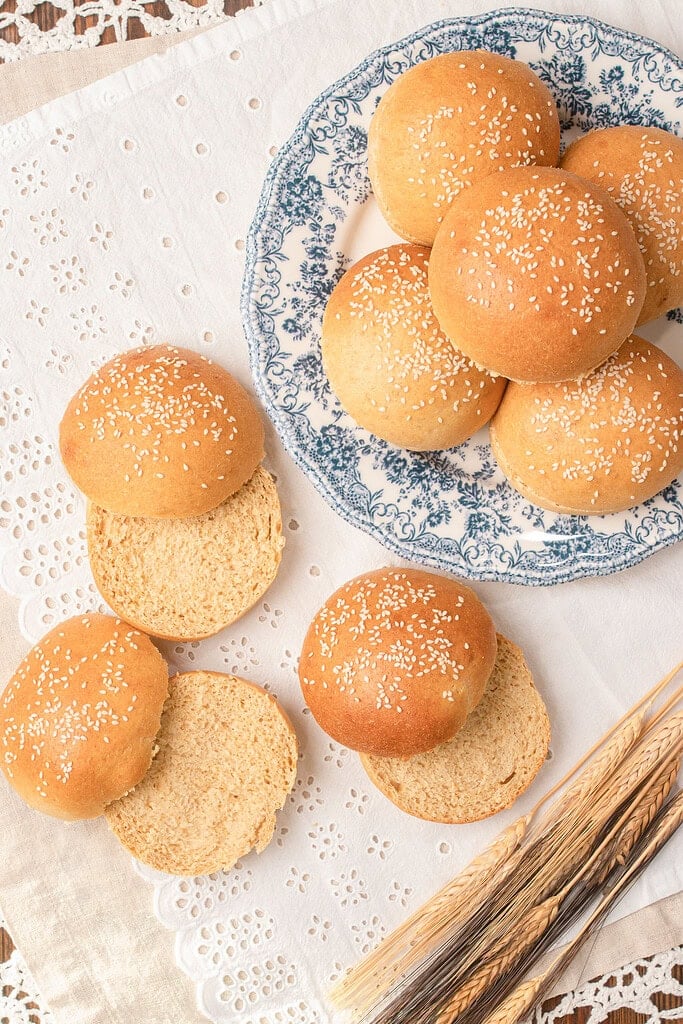
Hamburger buns with freshly milled flour are soft enough for juicy burgers, sturdy enough to hold all your favorite toppings, and simple enough to bake at home with everyday pantry ingredients. Whether you’re planning a backyard cookout, making pulled pork sandwiches, or preparing breakfast sandwiches for the freezer, these homemade buns have a tender crumb and a mild whole wheat flavor that pairs well with just about anything.
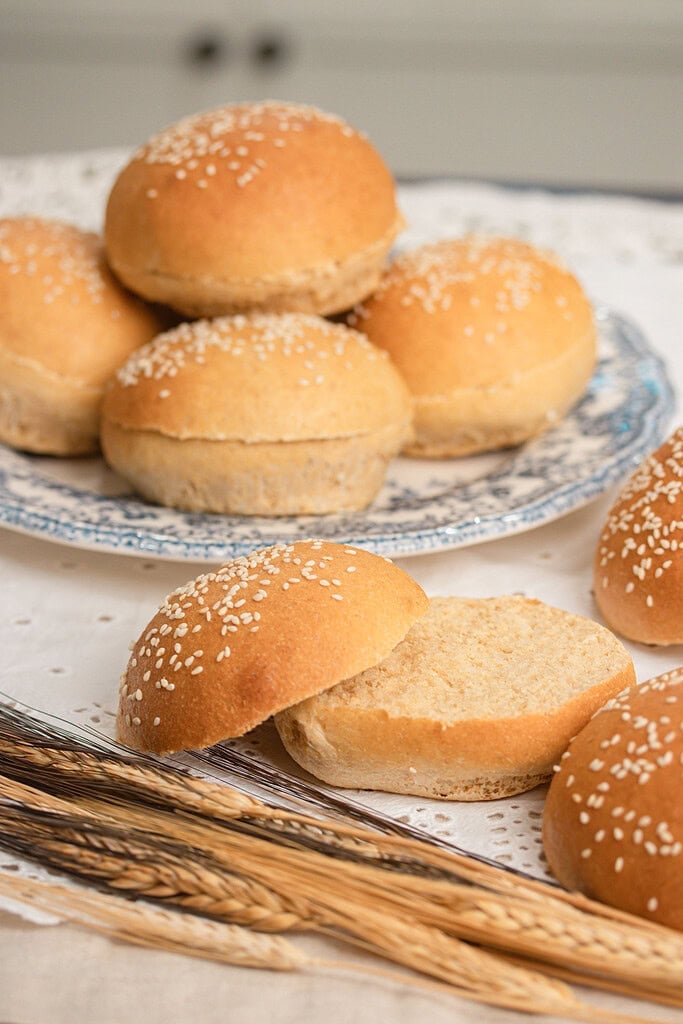
What makes this recipe different is the focus on dough development instead of relying on extra yeast. Scalding the milk creates a softer crumb, lemon juice helps strengthen the gluten, and allowing the dough to fully develop produces beautifully soft buns with excellent structure. Freshly milled flour behaves differently than store-bought flour, but once you understand a few simple techniques, you’ll be baking homemade buns with confidence.
If you’re new to baking with fresh flour, I recommend reading What is Fresh Milled Flour | A Beginner’s Guide, How to Bake with Freshly Milled Flour, and Best Whole Grains to Mill at Home | Beginner’s Guide. They answer many of the common questions about milling, hydration, and working with whole grain flour before you begin.
Why You’ll Love This Recipe
Ingredients
Variations & Add-Ins
Recipe Tips
Scald the milk for a softer crumb – Heating the milk to 180°F changes the whey proteins, helping create a softer crumb and stronger dough. Once the milk has cooled to 105 to 110°F, it’s ready to use. If you prefer, warm water works well too, though the buns won’t be quite as soft or stay fresh as long.
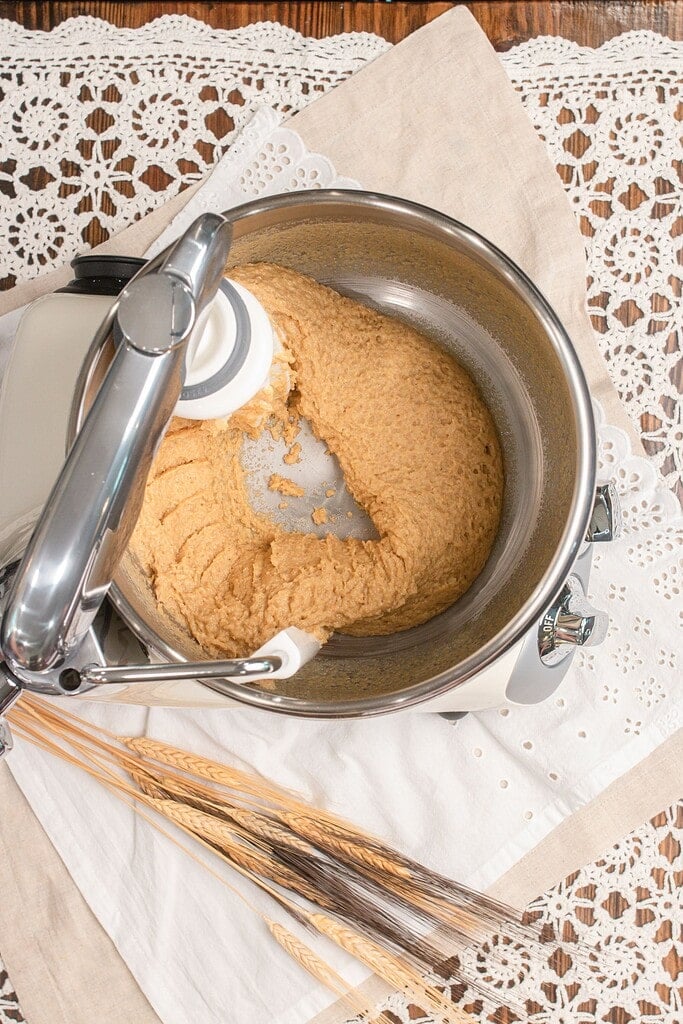
Mill a little extra flour before you begin – This recipe starts with 420 grams of freshly milled hard white wheat flour, but I recommend milling up to 500 grams. Freshly milled flour can vary depending on the wheat variety, growing conditions, humidity, milling fineness, and even the size of your eggs. Let the dough mix and absorb the liquid before deciding it needs more flour. If it still feels overly wet after several minutes of kneading, add additional flour about 30 grams at a time until the dough is soft and slightly tacky. Freshly milled dough should never feel dry or stiff.
Don’t skip the lemon juice – You won’t taste it in the finished buns. The small amount of acid helps improve gluten development when working with freshly milled flour, creating a softer crumb and stronger dough without changing the flavor.
Good dough development is more important than extra yeast – You may notice this recipe uses less yeast than many hamburger bun recipes. Through testing, I found that 2 teaspoons of instant yeast provides excellent rise when the dough is properly kneaded and allowed to fully ferment. Instead of relying on more yeast, focus on developing the gluten and giving the dough enough time to rise.
Watch the dough, not the clock – Every kitchen is different. Temperature, humidity, and freshly milled flour all affect how quickly dough rises. Rather than following exact times, look for dough that has doubled in size and feels light and airy. Learning to recognize properly proofed dough will improve every loaf and bun you bake.
Shape with surface tension – Gently tucking the edges underneath each bun creates surface tension, encouraging the buns to rise upward instead of spreading too much. After shaping, lightly flatten each bun to about ½ inch thick for a classic hamburger bun shape.
Freshly milled flour browns faster – Begin checking the buns around the 15-minute mark. If they’re browning more quickly than you’d like, loosely tent them with aluminum foil while they finish baking.
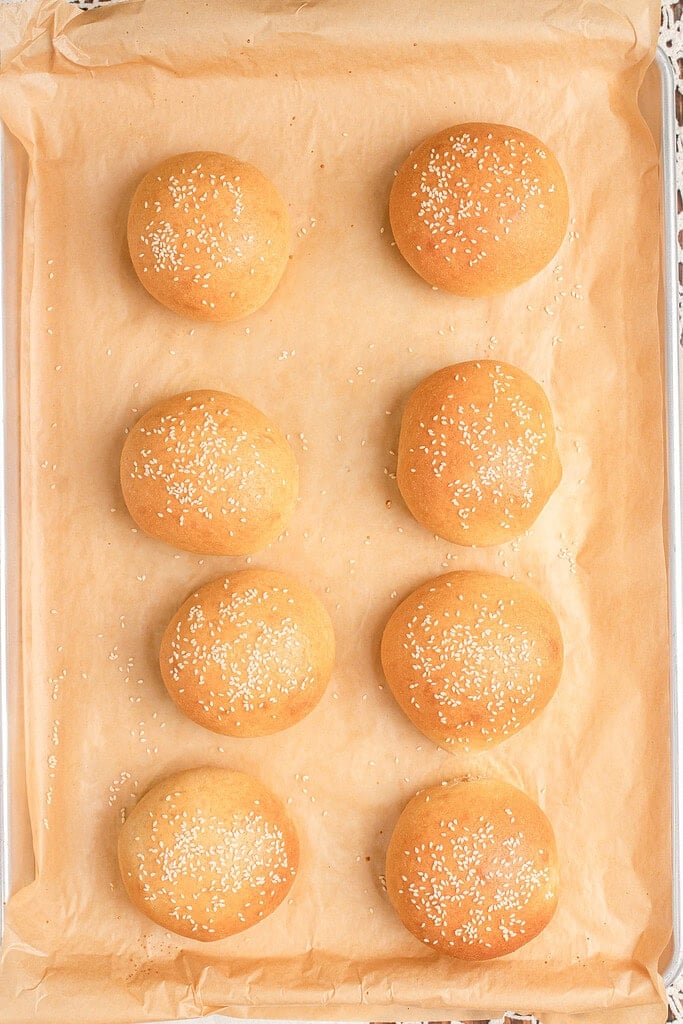
Instructions
- Mill the flour – Mill enough hard white wheat berries to produce 420 grams of freshly milled flour. I recommend milling up to 500 grams so you have extra available if your dough needs a little more during mixing.
- Scald the milk – Heat the whole milk to 180°F, then remove it from the heat and allow it to cool to 105 to 110°F. If using water instead, simply warm it to the same temperature.
- Prepare the yeast – If using active dry yeast, stir it into the warm milk with the sugar and let it sit for about 10 minutes, or until foamy. If using instant yeast, skip this step and add it with the dry ingredients in Step 5.
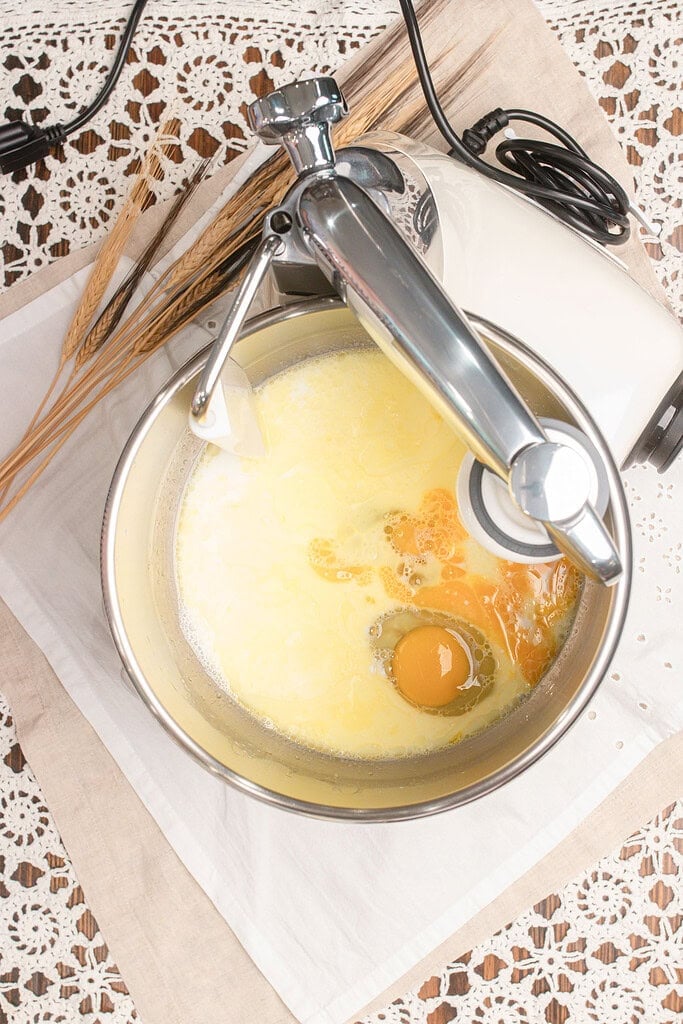
- Mix the wet ingredients – In the bowl of a stand mixer fitted with the dough hook, combine the cooled milk, 1 egg, cooled melted butter (or oil), and lemon juice. If you bloomed active dry yeast, add it now.
- Add the dry ingredients – Add the 420 grams of freshly milled flour, sugar, salt, and instant yeast (if using). Mix on low speed until a shaggy dough forms.
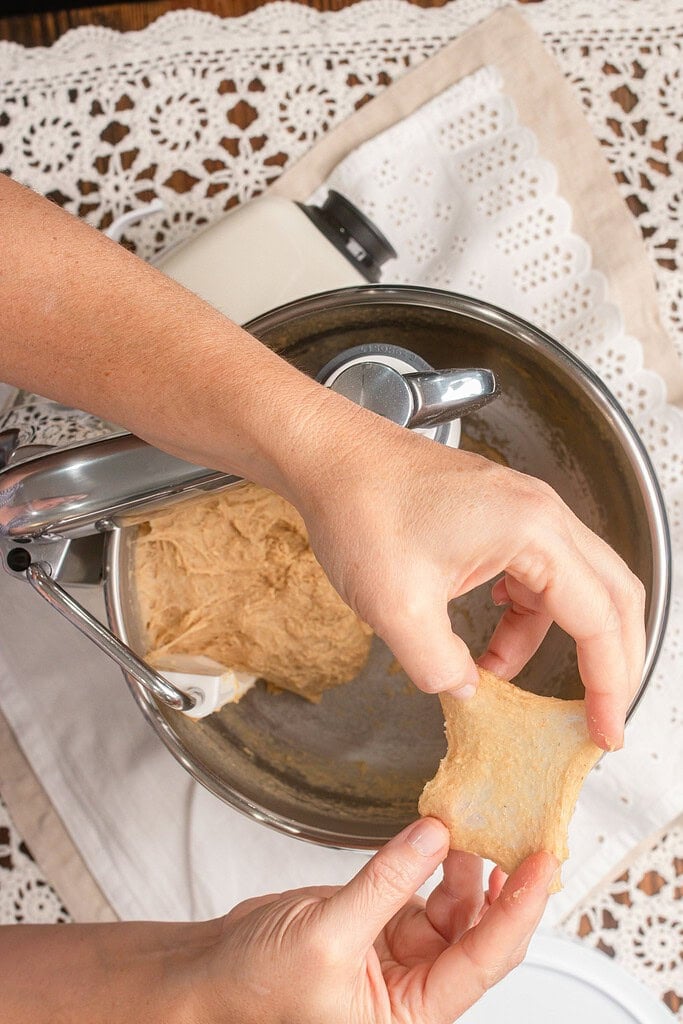
- Knead the dough – Knead on low speed for 6 to 8 minutes, or until the dough is soft, elastic, and slightly tacky. Freshly milled dough won’t feel exactly like dough made with store-bought flour, so resist adding extra flour too quickly. If needed, add additional flour about 30 grams at a time after several minutes of mixing.
- First rise – Lightly oil a clean bowl, place the dough inside, and turn it once to coat. Cover and let the dough rise until doubled in size. Depending on your kitchen, this usually takes about 25 minutes, but always watch the dough instead of the clock.
- Prepare the baking sheet – Line a baking sheet with parchment paper.
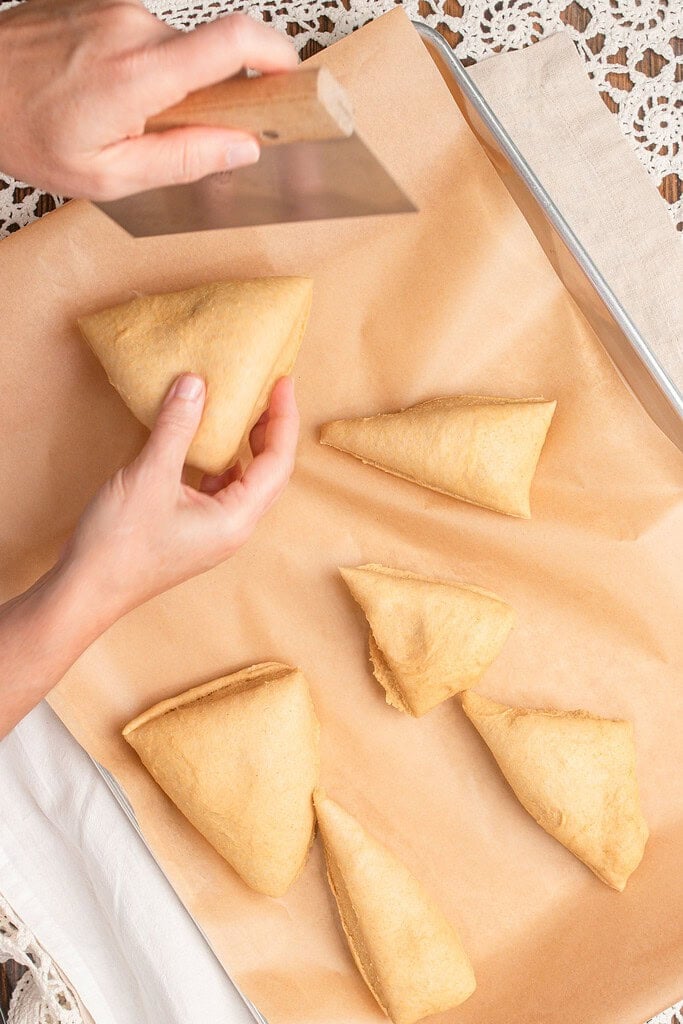
- Divide and shape – Turn the dough onto a lightly floured surface and gently press out any large air bubbles. Weigh the dough, divide it into 8 equal portions, and shape each piece into a smooth ball by tucking the edges underneath. Gently flatten each ball to about ½ inch thick.
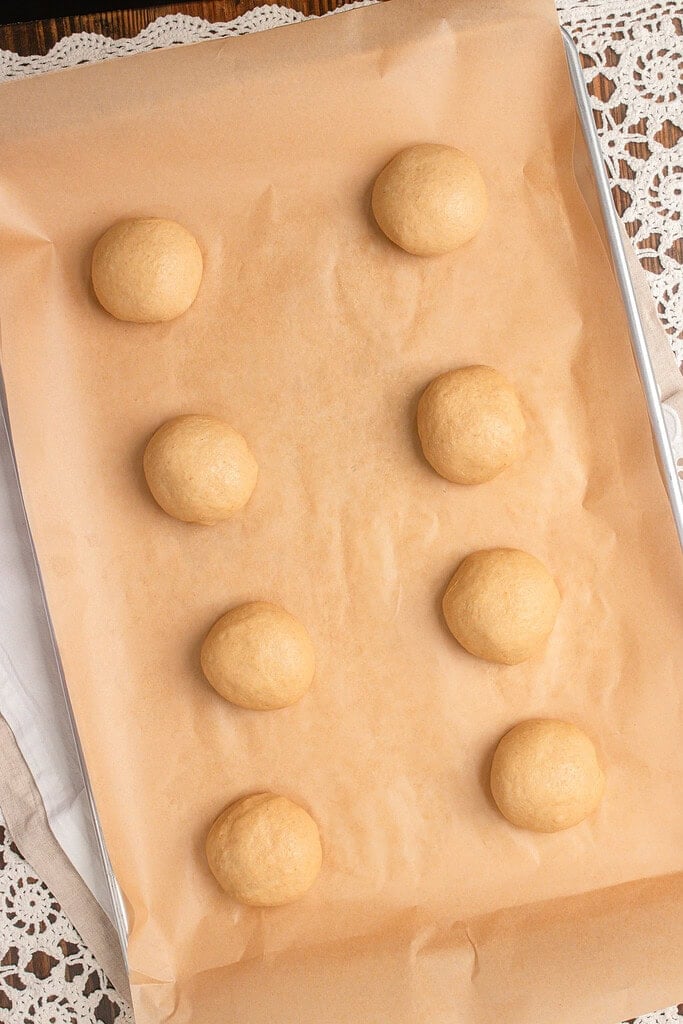
- Second rise – Arrange the buns on the prepared baking sheet, leaving space between each one. Cover loosely and let them rise until noticeably puffy and nearly doubled.
- Prepare the egg wash – Beat the remaining egg with 2 tablespoons of milk. Brush the tops of the buns with the egg wash and sprinkle with sesame seeds if desired.
- Bake – Bake in a preheated 350°F oven for 15 to 20 minutes, or until the tops are golden brown. If they’re browning too quickly, loosely tent them with aluminum foil.
- Cool – Let the buns cool on the baking sheet for several minutes before transferring them to a wire rack. Cool completely before slicing.
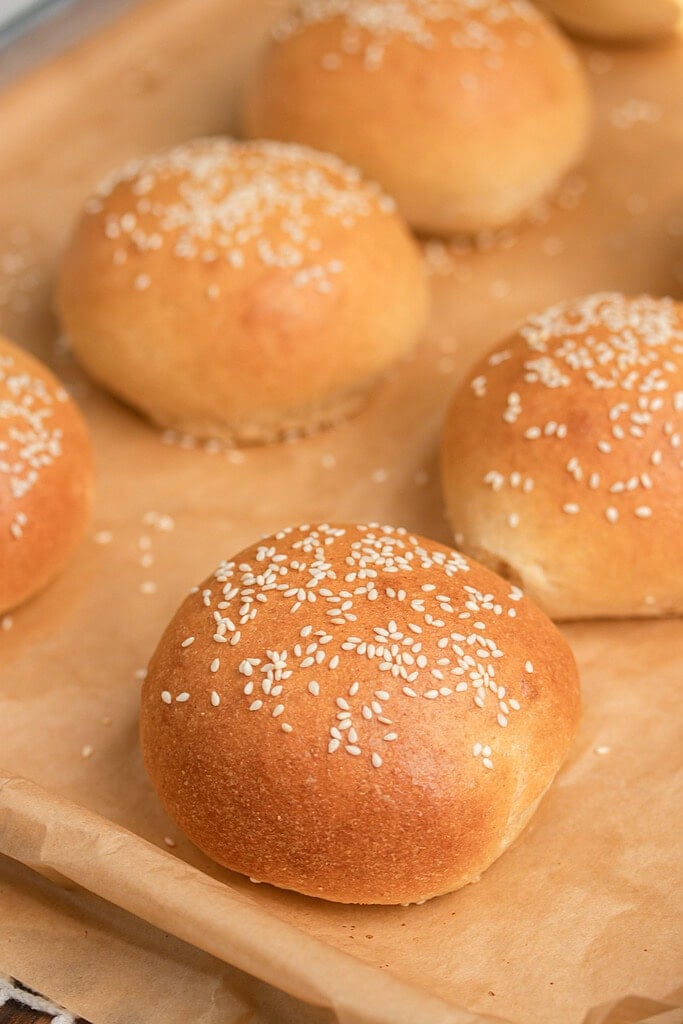
Freezing and Storage
- Room Temperature – Store completely cooled buns in an airtight bread bag or container for up to 3 days.
- Refrigerator– While you can refrigerate the buns for up to 5 days, refrigeration speeds up staling. For the best texture, I recommend freezing any buns you won’t use within a few days.
- Freezer – Once the buns have cooled completely, wrap them individually or place them in a freezer-safe bag and freeze for up to 3 months. Individual wrapping makes it easy to thaw only what you need.
- To Reheat – Let frozen buns thaw at room temperature, or warm them in a 300°F oven for 5 to 10 minutes until soft and heated through.
- Perfect for Meal Prep – I love keeping a batch of these buns in the freezer so homemade burgers, pulled pork sandwiches, and breakfast sandwiches are always just minutes away.
Did you know you can convert your favorite recipes to freshly milled flour? Learn how to convert recipes and find more fresh flour guides at The Cottage Mill.
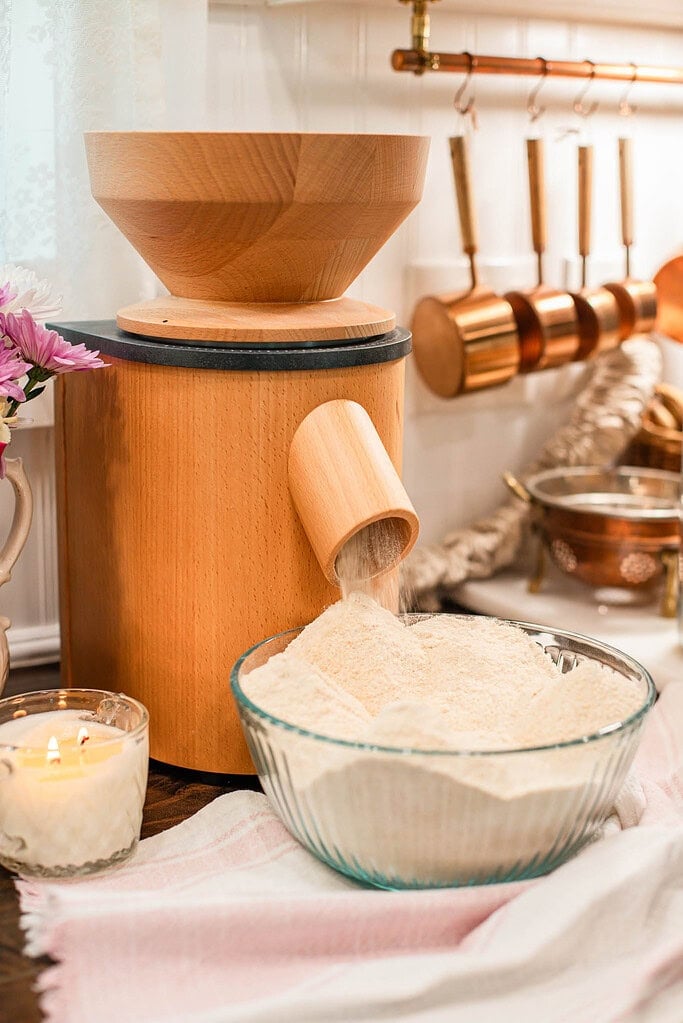
The Cottage Mill | Freshly Milled Flour Guides, Recipes, and More Await!
FAQ
Join The Community
Want More Cozy Recipes & Seasonal Inspiration?
Get cozy, from-scratch recipes, seasonal cottage living tips, and slow living inspiration delivered straight to your inbox.
More Recipes from the Cottage
⭐️ Rate This Recipe
Made this recipe? Leave a star ⭐️ rating below, it means the world to me and helps my recipes get found by more people like you. Tag me on Instagram @themoderndaycottage

Hamburger Buns with Freshly Milled Flour
 Prep:40 minutes Cook:15 minutes Rising Time and Autolyse Time:30 minutes Total:3 hours 30 minutes
 Equipment
- Grain Mill
- Kitchen scale
- Small saucepan
- Stand mixer with dough hook
- Mixing bowls
- Measuring Cups and Spoons
- Bench scraper
- Baking sheet
- Parchment Paper
- Pastry brush
- Cooling rack
Ingredients
For the Dough
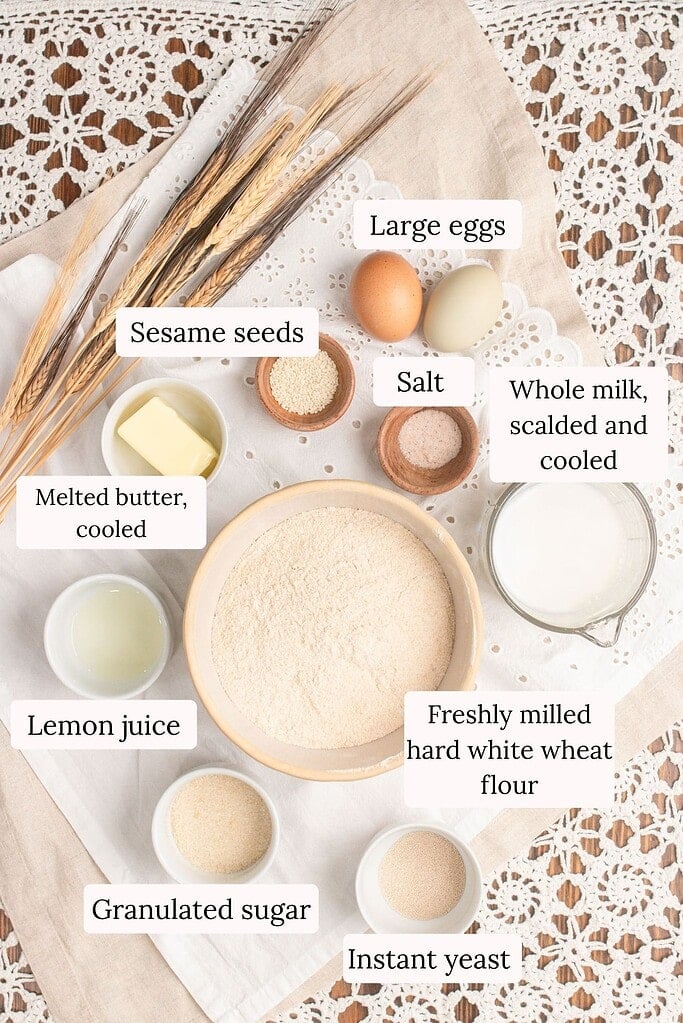
- 420 grams freshly milled hard white wheat flour Mill enough hard white wheat berries to produce 420 grams of freshly milled flour. I recommend milling up to 500 grams so you have extra available if your dough needs a little more during mixing.
- 1 cup whole milk scalded and cooled to 105–110°F, 240 grams
- 2 large eggs
- 4½ tablespoons granulated sugar 56 grams
- 4 tablespoons butter melted and cooled, 57 grams
- 1 tablespoon lemon juice 15 grams
- 2 tsp instant yeast 6 grams
- 2 teaspoons salt 12 grams
For the Egg Wash
- 1 large egg
- 1 tablespoon milk 15 grams
Optional Topping
- 1 teaspoon sesame seeds 3 grams
Instructions
- Mill the flour – Mill enough hard white wheat berries to produce 500 grams of freshly milled flour. You will use 420 grams for the dough and the extra only if needed. If the flour feels warm after milling, let it cool for about 5 minutes before mixing.
- Scald the milk – Heat the milk to 180°F, then allow it to cool to 105–110°F. If using warm water instead, warm it to the same temperature.
- Prepare the yeast – If using active dry yeast, combine it with the warm milk and sugar. Let it sit for about 10 minutes until foamy. If using instant yeast, skip this step.
- Mix the wet ingredients – In the bowl of a stand mixer, whisk together the cooled milk, melted butter, sugar, lemon juice, and 2 eggs until well combined. If using active dry yeast, add the bloomed yeast mixture now.
- Add the dry ingredients – Add the freshly milled flour, instant yeast (if using), and salt. Mix on low speed until no dry flour remains and a shaggy dough forms.
- Rest the dough – Cover the bowl and let the dough rest for 30–45 minutes. This hydration rest allows the freshly milled flour to absorb the liquid and softens the bran.
- Knead the dough – Knead on medium-low speed for 8–10 minutes, or until the dough is smooth, elastic, and stretches into a slightly cloudy windowpane. Freshly milled dough won't produce the same clear windowpane as dough made with white flour.
- First rise – Transfer the dough to a lightly oiled bowl, cover, and let rise until doubled in size, about 1–2 hours.
- Divide and shape – Turn the dough onto a lightly oiled work surface. Divide the dough into 8 equal portions and shape each into a smooth ball by tucking the edges underneath. Gently flatten each bun to about ½ inch thick and place them on a parchment-lined baking sheet.
- Second rise – Cover loosely and let the buns rise until noticeably puffy and nearly doubled.
- Prepare the egg wash – Whisk together the remaining egg and 1 tablespoon of milk. Brush the tops of the buns evenly and sprinkle with sesame seeds, if desired.
- Bake – Bake in a preheated 350°F oven for 15–20 minutes, or until the buns are golden brown. If they're browning too quickly, loosely tent them with aluminum foil.
- Brush with butter – Remove the buns from the oven and immediately brush the tops with melted butter for an extra soft, flavorful crust.
- Cool – Let the buns cool on the baking sheet for 5 minutes before transferring them to a wire rack to cool completely.
Notes
Nutrition

Emily Rider
Home miller since 1999 with fresh-milled flour & sourdough experience. Sharing from-scratch recipes and traditional kitchen skills, rooted in the seasons and inspired by everyday cottage living and seasonal rhythms.



I started making these Hamburger Buns this morning when I realized we were having burgers for dinner and I was bun-less. This recipe was easy to follow, I had all of the ingredients in the house, and they came together with out too much fuss. I double milled Stardust berries (on the finest setting on my MockMill 200).
I can honestly say that these burger buns are the BEST I have made, and I have tried many recipes over the past year. The crumb was so light and delicate, the buns were fluffy but still held up to everything my husband piled on them (burger, mayo, fresh tomato and lettuce, ketchup, and pickles). I will never go back to any of the old burger bun recipes. This one is a winner and will be showing up on my picnic table again soon! Thank you Emily for your tireless work to provide us with such good recipes to feed our families!
Barbara, this absolutely made my day! Thank you so much for taking the time to come back and share how the buns turned out. Hearing that they were light and fluffy but still sturdy enough to hold up to a fully loaded burger is exactly what I hoped for with this recipe!
And I love hearing that you used Stardust berries and double milled them. That is so helpful for anyone else reading through the comments and wanting to try them.
Your encouragement means more to me than you know, especially during these busy weeks of testing, baking, and working on new recipes. I’m so happy these earned a permanent spot on your picnic table. Thank you again for such a detailed, sweet review and honest feedback, Barbara!
With love and gratitude from the cottage,
Emily
Hello Emily,
I made your fresh milled flour hamburger bun recipe today, and I think there is an error.
To be fair, I have only made a few hundred loaves of sourdough bread the last 2+years, and I only began my FMF baking a few months ago. I have made only about 20 loaves with FMF so far.
However, the recipe list calls for 540g flour, but the written / description recipe calls for 420.
I did 540g, and added extra warm water and increased my knead time and bake time considerably to try to accommodate my VERY dry dough.
I basically have 8 mini loaves of bread. Quite dense and definitely not like the sourdough discard buns I have made in the past.
I adore your website and free advice! Many thanks!
Hi Lisa,
Thank you so much for letting me know. You were right, the recipe card listed 540 grams of flour when it should have been 420 grams, and I’m sorry that error cost you a batch. I’ve corrected the recipe card so it now matches the written directions.
Since you’re newer to fresh-milled flour, I want to share what I’d do any time a dough feels dry or stiff, no matter what a recipe says. Add liquid, not knead time or bake time. Let the dough rest 30 to 45 minutes so the flour can fully hydrate. If it still feels stiff after that, work in warm water 1 tablespoon at a time until the dough is soft and slightly tacky. Extra kneading won’t loosen a dry dough, and a longer bake will dry the buns out even more, which is likely why yours turned out dense.
Fresh-milled dough behaves differently from dough made with store-bought flour, so trusting the feel of the dough will serve you well in every recipe. A little water goes a long way. You can always add more, but you can’t take it out!
I truly hope you’ll give these buns another try with the correct 420 grams. And don’t skip the lemon juice. It’s one of my favorite little tricks for softer fresh-milled bread!
With love from the cottage,
Emily
PS: The Recipe card has been corrected. Thank you for letting me know I truly appreciate it so much!!
Thanks so much for the advice! I will remake these buns again, and use the first batch as bread crumbs. I really appreciate your time and expertise!
You are so welcome, Lisa! And turning that first batch into breadcrumbs is a great way to save them. I’m really glad they won’t go to waste!
Thank you again for being so gracious about the mistake and, especially, for taking the time to let me know so I could get it corrected for everyone else. I hope you’ll come back and let me know how round two turns out!
With love and gratitude from the cottage,
Emily