
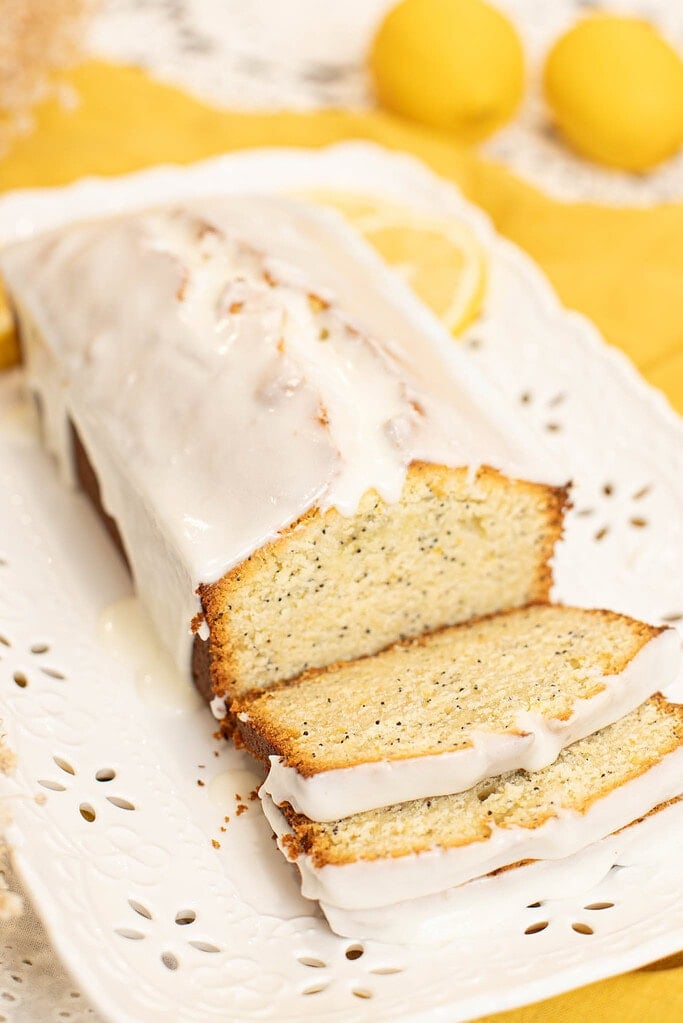
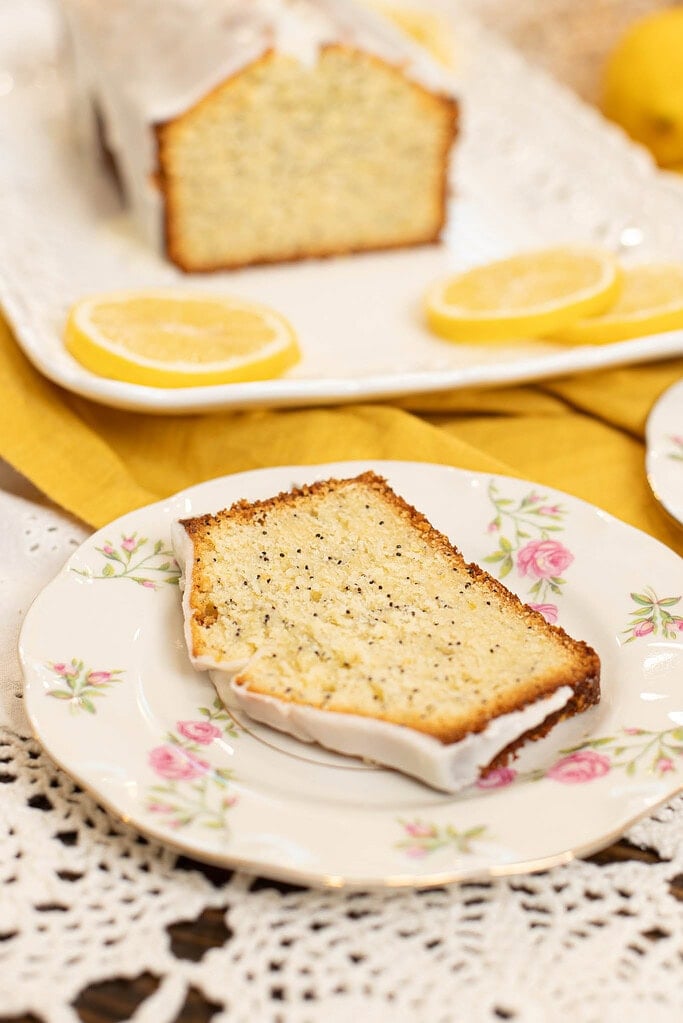
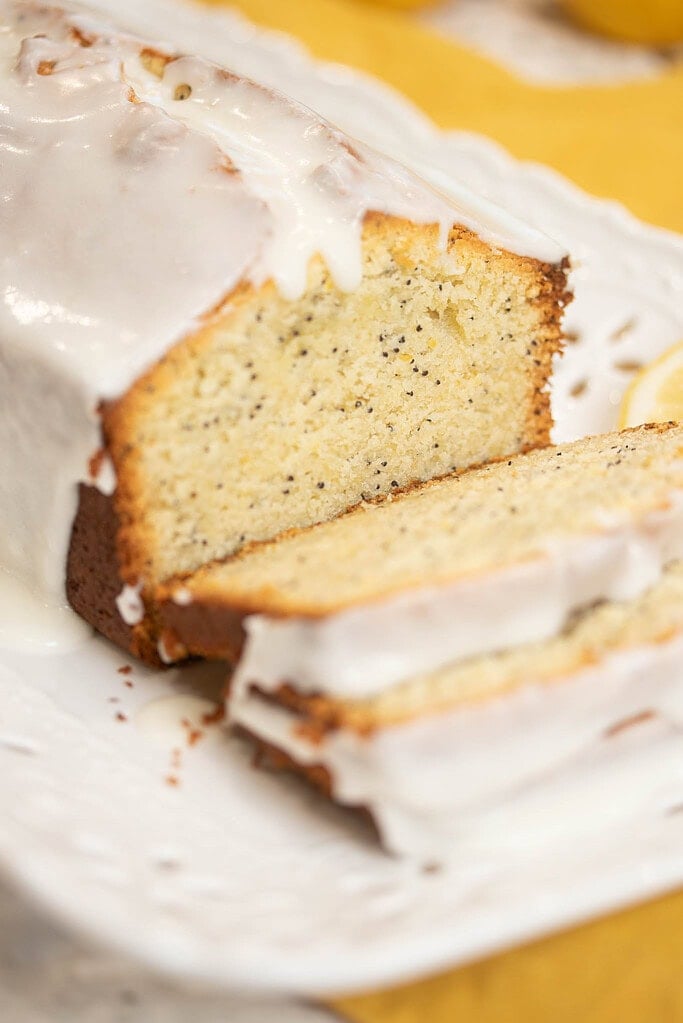
This sourdough lemon poppy seed pound cake is the kind of recipe I reach for when I want something special without the fuss. Moist crumb, bright lemon flavor, and a simple glaze that sets beautifully.
The sourdough discard keeps the crumb tender and moist without any sour taste. Fresh lemon zest and juice bring vibrant citrus flavor that holds up perfectly through baking, while the poppy seeds add gentle texture in every bite.
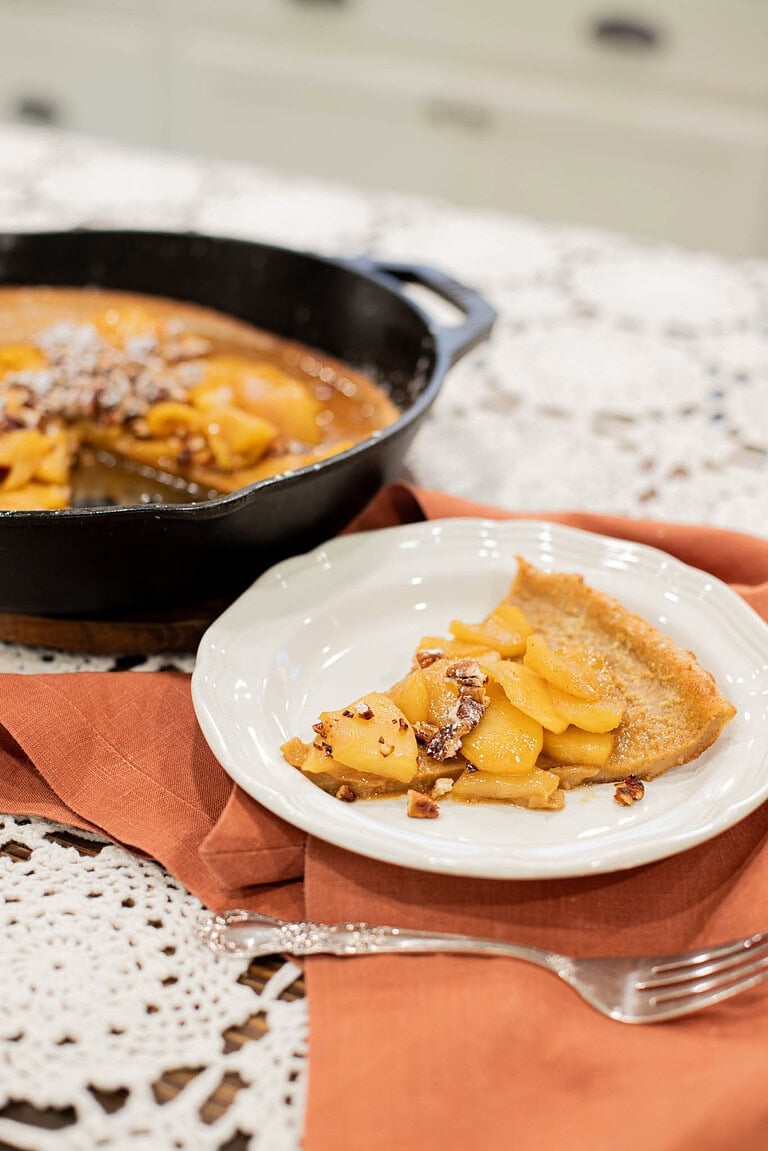
If you love sourdough discard baking, you might also enjoy Sourdough Banana Nut Muffins | Discard or Starter, Sourdough Waffles and Pancakes, and Sourdough Animal Crackers with Freshly Milled Flour.
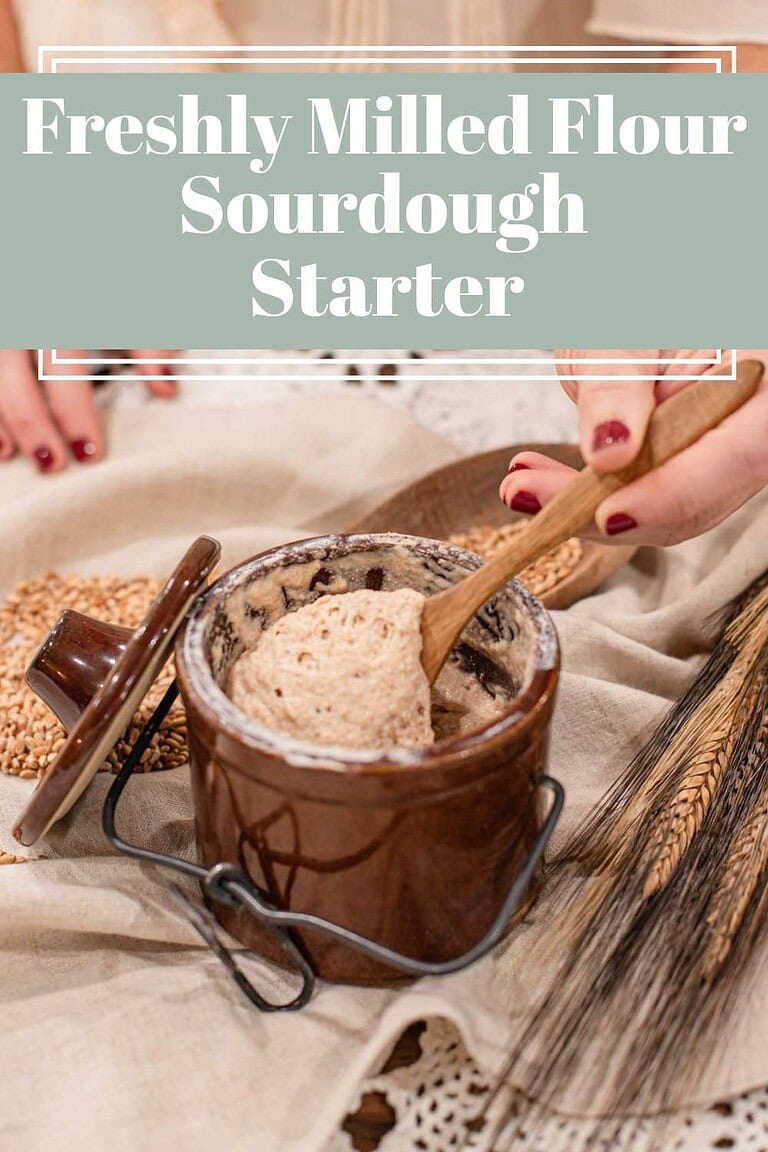
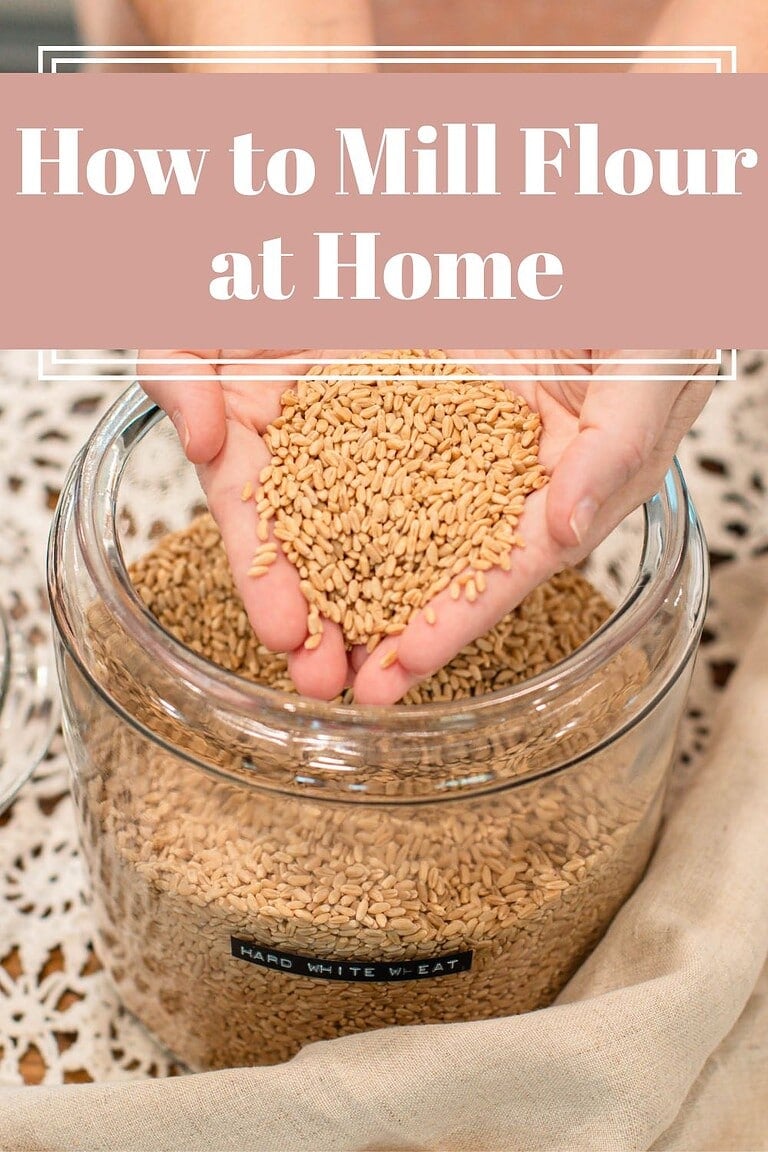
Did you know you can convert your favorite recipes to freshly milled flour? Learn how to convert recipes and find more fresh flour guides at The Cottage Mill.
The Cottage Mill | Freshly Milled Flour Guides, Recipes, and More Await!
Why You’ll Love This Recipe
Absolutely amazing. Intense lemon flavour. ~Summermustic75 on Pinterest
Ingredients
Variations & Add-Ins
Recipe Tips
Use room temperature ingredients – Softened butter, room temperature eggs, and discard blend more smoothly and create a uniform batter with an even crumb from edge to center.
Cream the butter and sugar thoroughly – Beat for a full 2 to 3 minutes until the mixture looks light and noticeably increased in volume. This step incorporates air and builds the foundation for a tender pound cake crumb.
Measure the discard precisely – Use exactly ⅓ cup (100 grams) of sourdough discard for the best texture. Too much discard adds excess moisture and can cause the center to sink or the crumb to feel gummy.
Mix gently after adding flour – Stir until no dry flour remains visible and stop there. Overmixing after the flour goes in develops gluten and produces a tough crumb rather than a tender one.
Check doneness near the center – Insert a toothpick into the middle of the loaf rather than the edges. The center takes longest to bake through, and the edges will always appear done before the crumb is fully set.
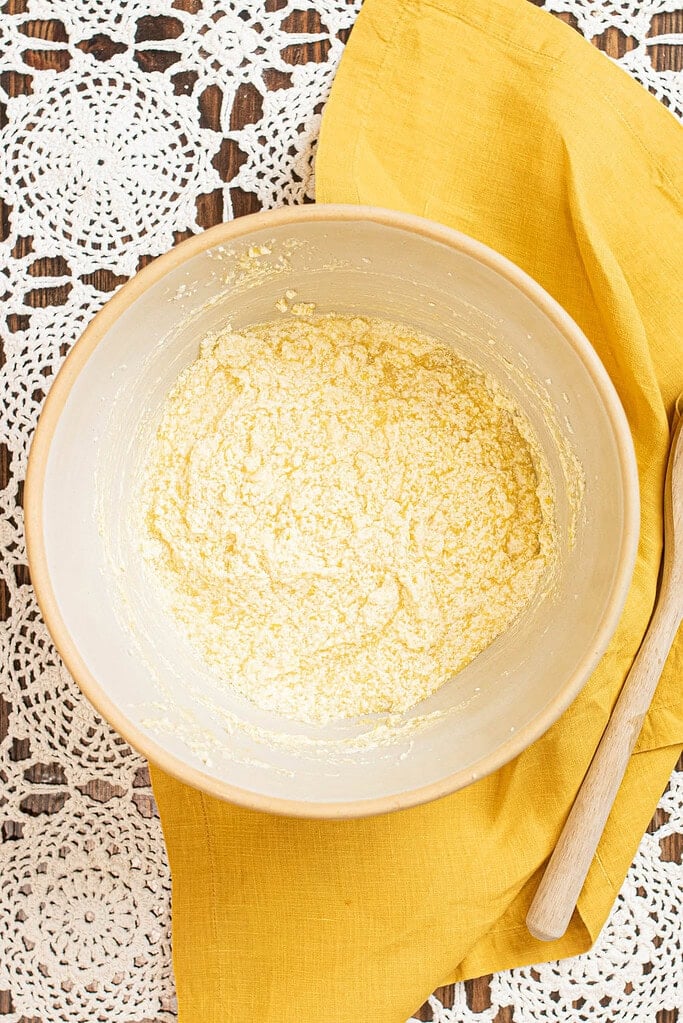
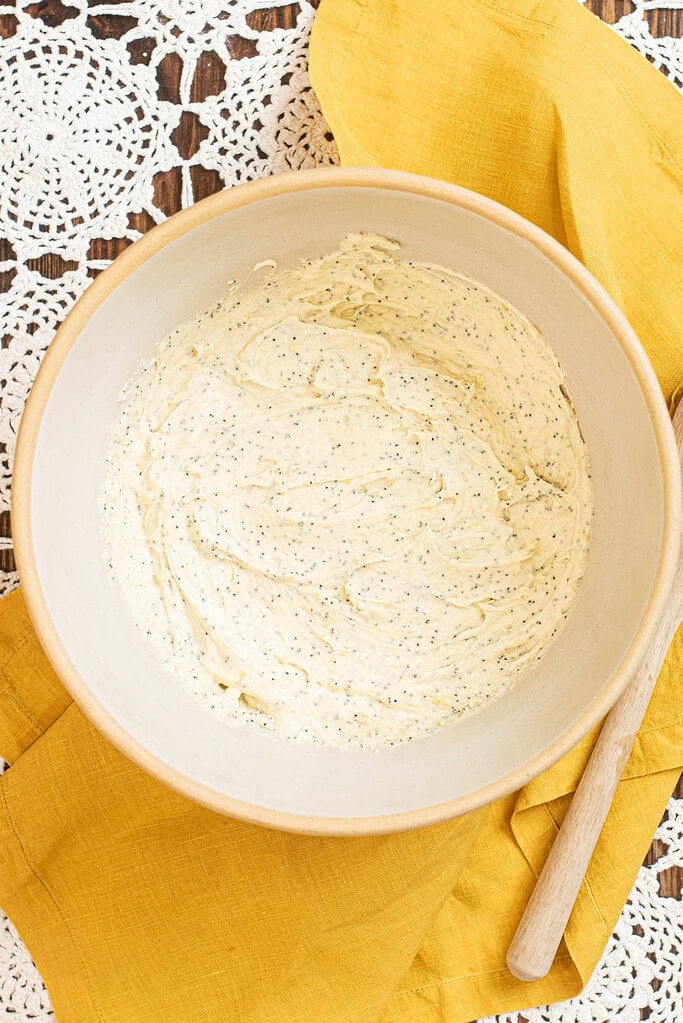
Expect slight batter separation – The batter may look slightly curdled before baking due to the acidity in the sourdough discard. This is normal and bakes into a smooth, even crumb.
Tent if browning too quickly – If the top darkens before the center is done, lay a loose piece of aluminum foil over the pan for the last 15 to 20 minutes to protect the color while the crumb finishes baking.
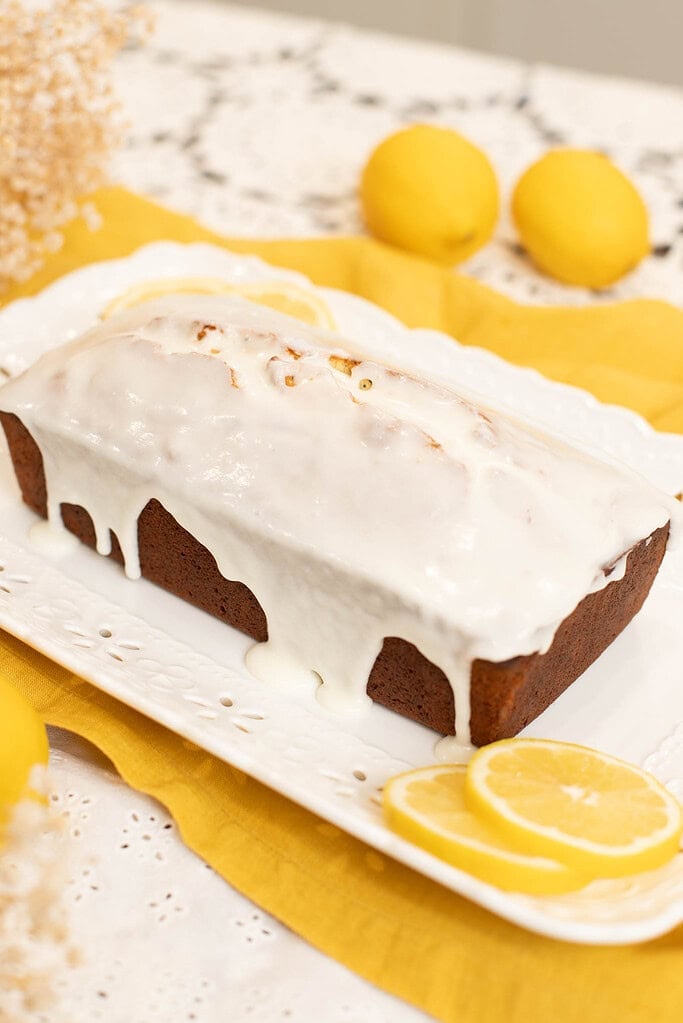
Cool completely before glazing – A warm cake will absorb the glaze rather than letting it set on the surface. Cooling fully first creates that smooth, glossy finish rather than a soaked-in glaze.
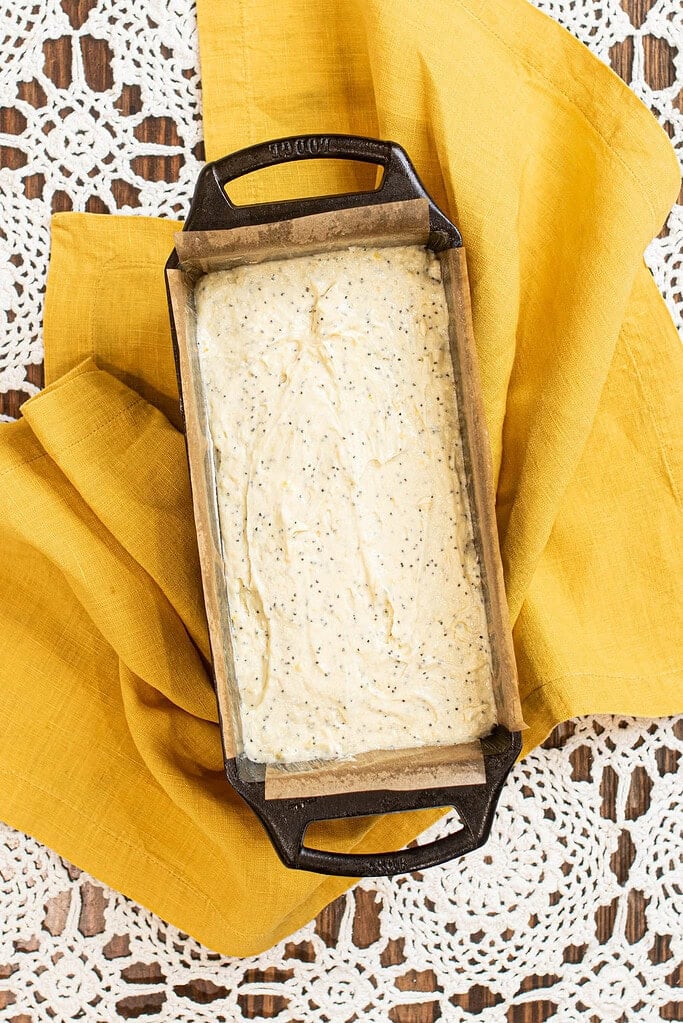
Watch cast-iron pans – Cast iron browns faster than other pans. You might need to tent the loaf with foil partway through if the edges are darkening too quickly.
Instructions
- Preheat and prepare the pan – Heat your oven to 350°F. Grease a standard 9×5-inch loaf pan and line it with parchment paper so the cake releases cleanly after baking.
- Cream butter and sugar – In a large bowl, beat the softened butter and granulated sugar together for 2 to 3 minutes until the mixture looks light and noticeably increased in volume. This builds the foundation for a tender pound cake crumb.
- Add eggs and flavorings – Beat in the eggs one at a time, mixing well after each addition. Add the sourdough discard, lemon zest, lemon juice, and vanilla extract and mix until everything looks smooth and well combined.
- Mix in dry ingredients – In a separate bowl, whisk together the all-purpose flour, baking powder, and salt. Add this to the wet ingredients and mix gently until no dry flour remains visible.
- Fold in poppy seeds – Gently fold the poppy seeds through the batter until evenly distributed. Stop mixing as soon as they are incorporated to avoid overworking the batter.
- Fill the pan and bake – Pour the batter into the prepared loaf pan and smooth the top with a spatula. Bake for 55 to 60 minutes until the top is golden and a toothpick inserted in the center comes out clean. If the top darkens before the center is done, lay a loose piece of foil over the pan for the last 15 to 20 minutes.
- Make the glaze – Whisk together the powdered sugar, lemon juice, and heavy cream in a small bowl until smooth and fully combined. The glaze should be pourable but thick enough to coat the back of a spoon.
- Cool and glaze – Let the cake cool completely in the pan on a wire rack before removing it. Once fully cool, pour the glaze evenly over the top and allow it to set before slicing.
Gifting & Sharing
Freezing & Storage
- Room temperature. Keep the cooled cake in an airtight container at room temperature for up to 2 to 3 days. The combination of butter and sourdough discard helps maintain moisture naturally without drying out between servings.
- Refrigerator. For storage beyond 3 days, transfer to an airtight container and refrigerate for up to 5 days. Let slices come to room temperature for 15 to 20 minutes before serving for the best crumb texture.
- Freezer. Wrap the whole loaf or individual slices tightly in plastic wrap, then a layer of aluminum foil, and freeze for up to 2 months. Freeze without the glaze and add it fresh after thawing for the best finish.
- Thawing. Thaw individual slices at room temperature for 30 to 45 minutes. For the whole loaf, thaw overnight in the refrigerator and bring to room temperature before glazing and serving.
Recipe FAQs
Join The Community
Want More Cozy Recipes & Seasonal Inspiration?
Get cozy, from-scratch recipes, seasonal cottage living tips, and slow living inspiration delivered straight to your inbox.
More Sourdough Dessert Recipes from the Cottage


Sourdough Lemon Poppy Seed Pound Cake
 Prep:10 minutes Cook:55 minutes Additional Time:1 hour Total:2 hours 5 minutes
 Equipment
- 1 Large mixing bowl
- 1 Medium Mixing Bowl
- 1 Whisk
- 1 Spatula
- 1 9×5 Loaf Pan
- 1 Parchment Paper
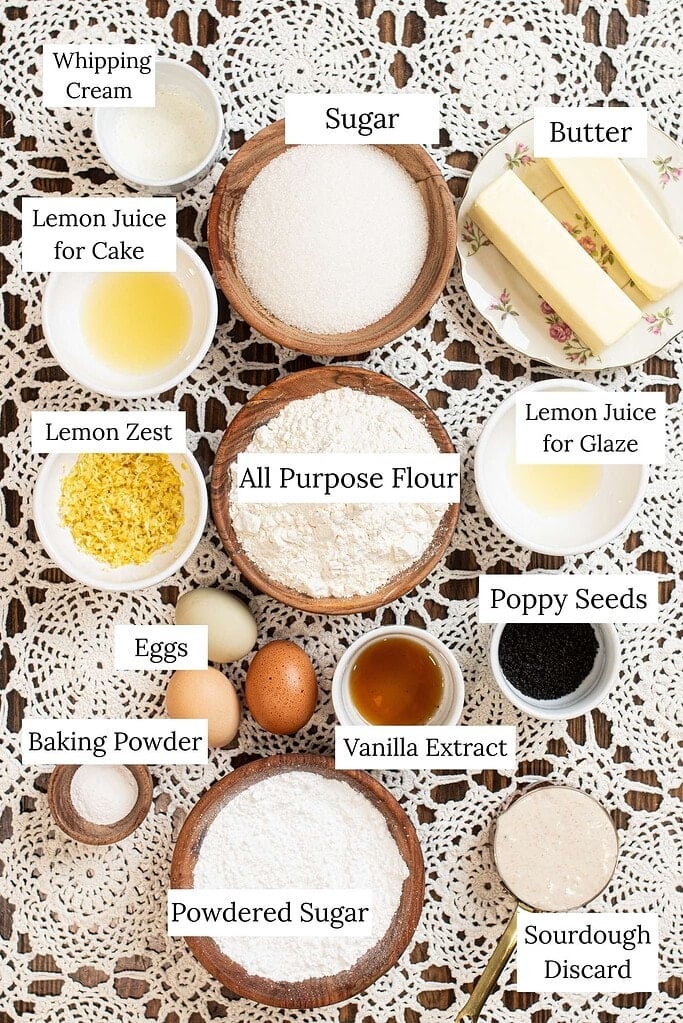
Ingredients
Cake Batter
- 1¼ cups all-purpose flour 148 grams
- 1½ teaspoons baking powder 7 grams
- ½ teaspoon salt 3 grams
- 1 cup salted butter (can use unsalted) softened 226 grams
- 1 cup granulated sugar 200 grams
- 3 large eggs room temperature 130 grams
- ⅓ cup sourdough discard 100 grams
- 3 tablespoons lemon juice 45 grams
- 3 tablespoons lemon zest
- 1 teaspoon vanilla extract 4 grams
- 2 tablespoons poppy seeds 17 grams
Glaze
- 1 cup powdered sugar 120 grams
- 3½ teaspoons lemon juice 17 grams
- 1 tablespoon heavy cream 15 grams
Instructions
- Preheat and prepare the pan – Heat your oven to 350°F. Grease a standard 9×5-inch loaf pan and line it with parchment paper so the cake releases cleanly after baking.
- Cream butter and sugar – In a large bowl, beat the softened butter and granulated sugar together for 2 to 3 minutes until the mixture looks light and noticeably increased in volume. This builds the foundation for a tender pound cake crumb.
- Add eggs and flavorings – Beat in the eggs one at a time, mixing well after each addition. Add the sourdough discard, lemon zest, lemon juice, and vanilla extract and mix until everything looks smooth and well combined.
- Mix in dry ingredients – In a separate bowl, whisk together the all-purpose flour, baking powder, and salt. Add this to the wet ingredients and mix gently until no dry flour remains visible.
- Fold in poppy seeds – Gently fold the poppy seeds through the batter until evenly distributed. Stop mixing as soon as they are incorporated to avoid overworking the batter.
- Fill the pan and bake – Pour the batter into the prepared loaf pan and smooth the top with a spatula. Bake for 55 to 60 minutes until the top is golden and a toothpick inserted in the center comes out clean. If the top darkens before the center is done, lay a loose piece of foil over the pan for the last 15 to 20 minutes.
- Make the glaze – Whisk together the powdered sugar, lemon juice, and heavy cream in a small bowl until smooth and fully combined. The glaze should be pourable but thick enough to coat the back of a spoon.
- Cool and glaze – Let the cake cool completely in the pan on a wire rack before removing it. Once fully cool, pour the glaze evenly over the top and allow it to set before slicing.
Video
Notes
Nutrition

Emily Rider
Home miller since 1999 with fresh-milled flour & sourdough experience. Sharing from-scratch recipes and traditional kitchen skills, rooted in the seasons and inspired by everyday cottage living and seasonal rhythms.